

The world is filled with breathtaking destinations, but some places remain famous for reasons that science still cannot fully explain. From the mysterious disappearances in the Bermuda Triangle to the giant Nazca Lines carved into the Peruvian desert and the ancient stones of Stonehenge, these locations continue to fascinate historians, archaeologists, scientists, and travelers alike. In this guide, you’ll discover 11 of the most mysterious places in the world, learn the history behind each site, explore the leading theories, and find out why millions of people visit these extraordinary destinations every year.
If you’re also looking for famous landmarks to add to your travel bucket list, explore our guide to Top 10 Tourist Attractions in the World.
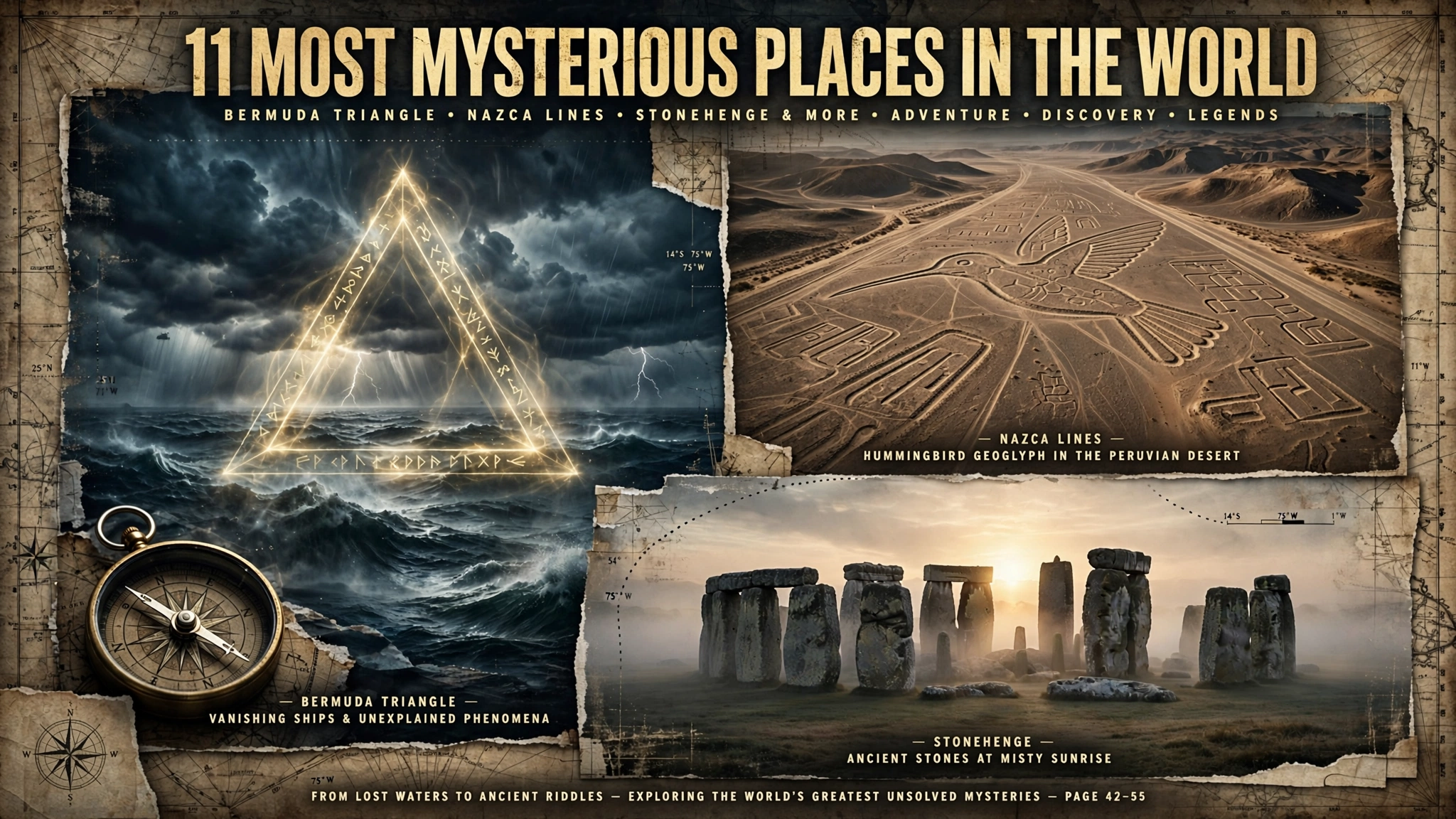
11 Mysterious Places in the World at a Glance
If you’re short on time, here’s a quick overview of the world’s most mysterious places. The table below highlights each destination, its location, and the mystery that continues to intrigue scientists, historians, and travelers.
| Mysterious Place | Country | Why It's Mysterious |
|---|---|---|
| Bermuda Triangle | Atlantic Ocean | Unexplained disappearances of ships and aircraft. |
| Lost City (Ciudad Perdida) | Colombia | An ancient city hidden deep in the jungle for centuries. |
| Nazca Lines | Peru | Massive geoglyphs that can only be fully seen from the sky. |
| Stonehenge | England | A prehistoric stone circle with an unknown original purpose. |
| Easter Island | Chile | Home to hundreds of giant Moai statues carved centuries ago. |
| Spotted Lake | Canada | Mineral-rich waters form colorful circular spots each summer. |
| Paris Catacombs | France | Underground tunnels containing the remains of millions of people. |
| Devil's Bridge | Germany | Perfect circular reflection inspired myths and legends. |
| Door to Hell | Turkmenistan | A natural gas crater that has been burning since 1971. |
| Crooked Forest | Poland | Pine trees mysteriously bent near their base. |
| Great Pyramid of Giza | Egypt | An engineering marvel with construction methods still debated. |
1. Bermuda Triangle – The World’s Most Famous Mystery
The Bermuda Triangle is one of the most famous mysterious places in the world. Located in the western North Atlantic Ocean, the triangle is roughly bounded by Miami (Florida), Bermuda, and San Juan (Puerto Rico). For decades, it has fascinated scientists, historians, sailors, and travelers because of the many reports of ships and aircraft disappearing under unusual circumstances.
The mystery gained worldwide attention during the 20th century when stories of unexplained disappearances began appearing in newspapers and books. One of the most well-known incidents involved Flight 19, a group of five U.S. Navy aircraft that disappeared during a training mission in 1945. Despite extensive search efforts, neither the planes nor their crew were ever found, adding to the legend surrounding the area.
Learn more about the scientific explanations behind the Bermuda Triangle
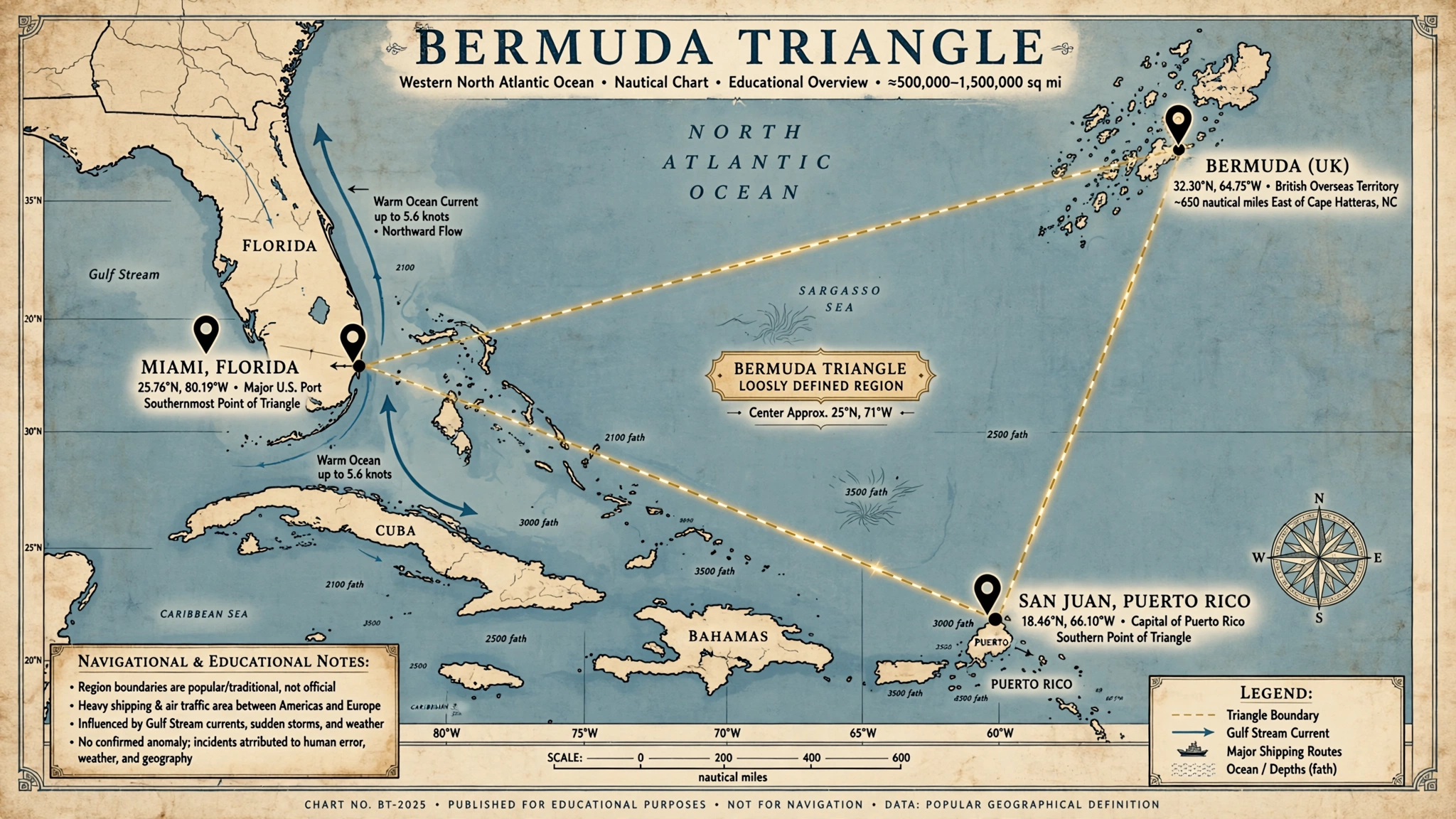


Interesting Facts
- Location: North Atlantic Ocean
- Famous For: Unexplained disappearances of ships and aircraft.
- Nickname: Devil's Triangle.
- Best Time to Visit Nearby: December to April.
- Can You Visit? Yes. Cruise ships and flights regularly travel through the region.
Did You Know?
Despite its mysterious reputation, many scientists believe the Bermuda Triangle is not statistically more dangerous than other busy shipping routes around the world. Its legend grew mainly through books, media coverage, and popular culture.
2. Lost City (Ciudad Perdida), Colombia
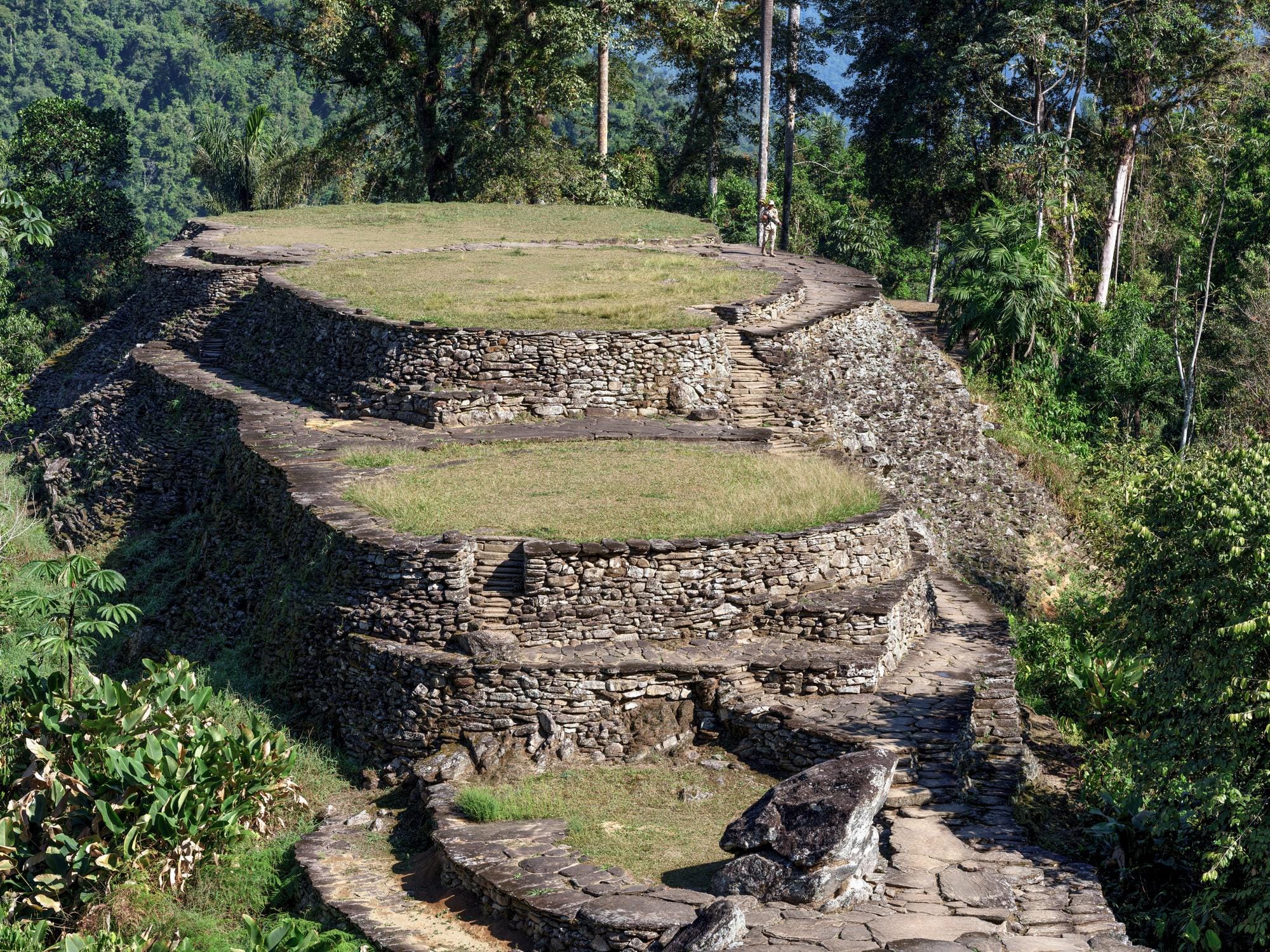
The Lost City, locally known as Ciudad Perdida, is one of the most mysterious places in the world. Hidden deep within the Sierra Nevada de Santa Marta mountains of northern Colombia, this ancient archaeological site remained concealed beneath dense rainforest for centuries. Long before it became a popular trekking destination, the city was surrounded by legends, forgotten by the outside world, and known only to the region’s Indigenous communities.
Archaeologists believe Ciudad Perdida was founded around 800 CE, making it several centuries older than Peru’s famous Machu Picchu. It was built by the Tairona civilization, an advanced society known for its remarkable engineering, agriculture, and stone architecture. The city once served as an important political, cultural, and trading center before it was abandoned during the Spanish conquest in the 16th century.
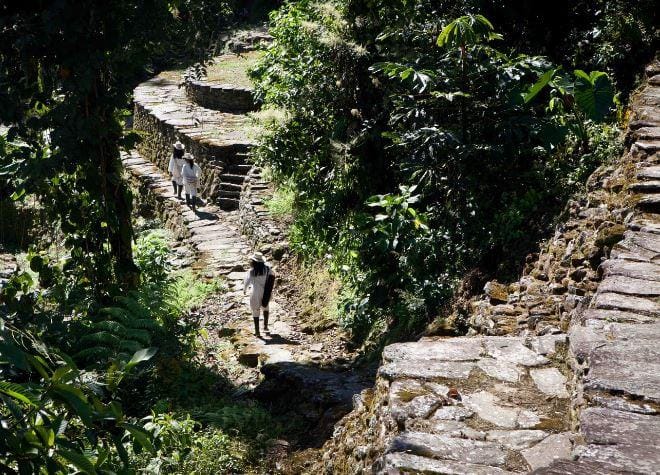
The Lost City remained hidden until the early 1970s, when treasure hunters searching for ancient artifacts stumbled upon a series of stone steps leading into the jungle. Their discovery attracted archaeologists, who began carefully excavating and restoring the site. Today, visitors can explore impressive stone terraces, ceremonial plazas, stairways, and pathways that reveal the ingenuity of the Tairona people.
Reaching Ciudad Perdida is an adventure in itself. Unlike many famous archaeological sites, there are no roads leading directly to the ruins. Travelers must complete a four- to six-day trek through tropical rainforest, crossing rivers, climbing more than 1,200 ancient stone steps, and passing remote Indigenous villages. The challenging journey is one of the reasons the site has retained its mysterious atmosphere.
Today, the Lost City is recognized as one of Colombia’s greatest archaeological treasures. While many myths surround its disappearance, historians believe the city was abandoned because of disease, conflict, and the social disruption that followed the arrival of Spanish colonizers rather than suddenly vanishing without explanation.
Visitors planning the trek can find practical travel information on the official Colombia Travel guide to Ciudad Perdida.
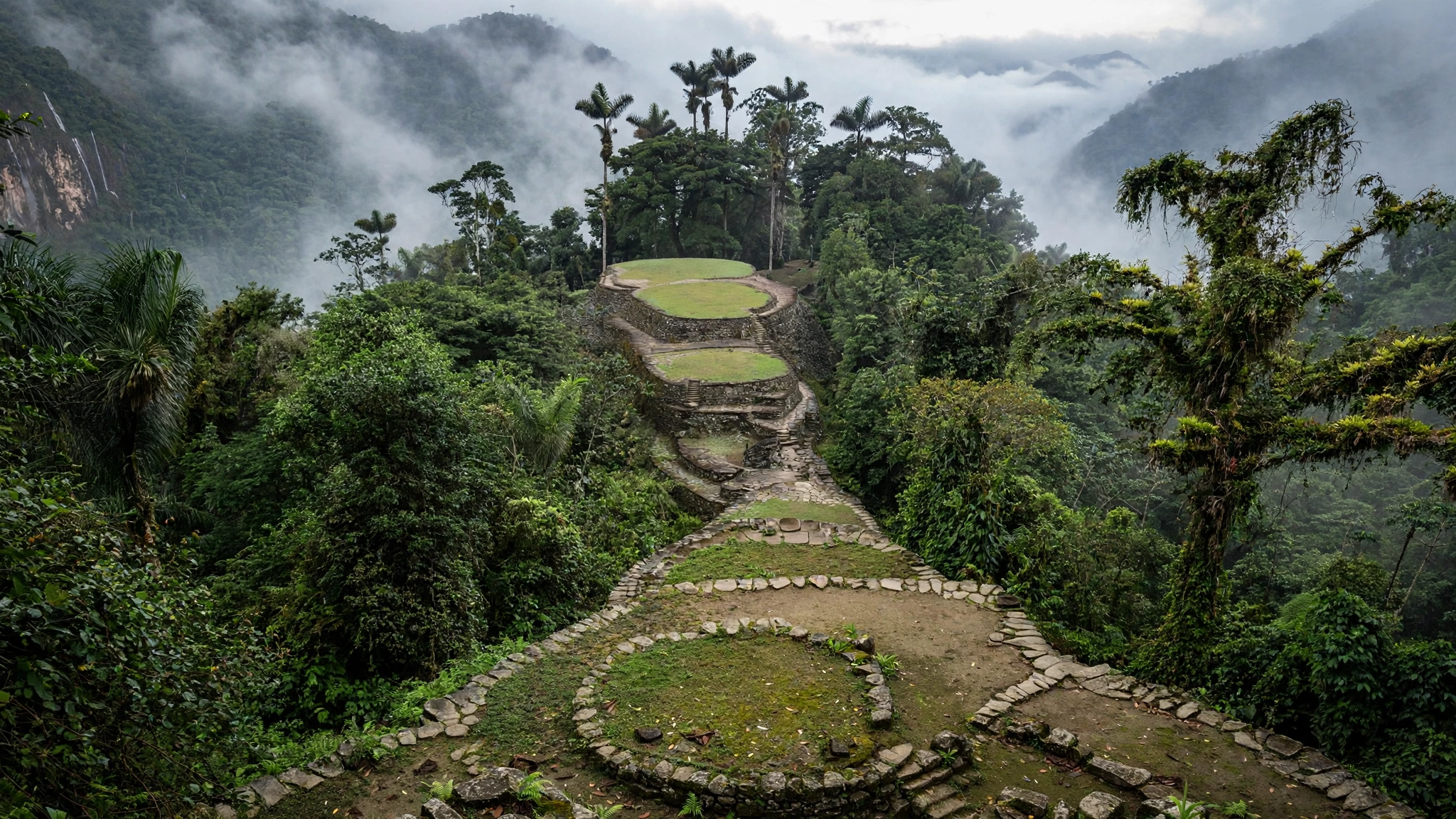
Interesting Facts
- Location: Sierra Nevada de Santa Marta, Colombia.
- Built By: The ancient Tairona civilization around 800 CE.
- Estimated Age: More than 1,200 years old.
- How to Reach: A guided 4–6 day trek through tropical rainforest.
- Why It's Mysterious: The city remained hidden beneath dense jungle for centuries before being rediscovered in the early 1970s.
Did You Know?
Ciudad Perdida, also known as the Lost City of Colombia, is believed to be more than 600 years older than Machu Picchu. Despite its historical importance, only a limited number of visitors reach the site each year because the ancient city can only be accessed by a challenging multi-day jungle hike.
Nazca Lines, Peru – Giant Desert Drawings That Still Baffle Experts
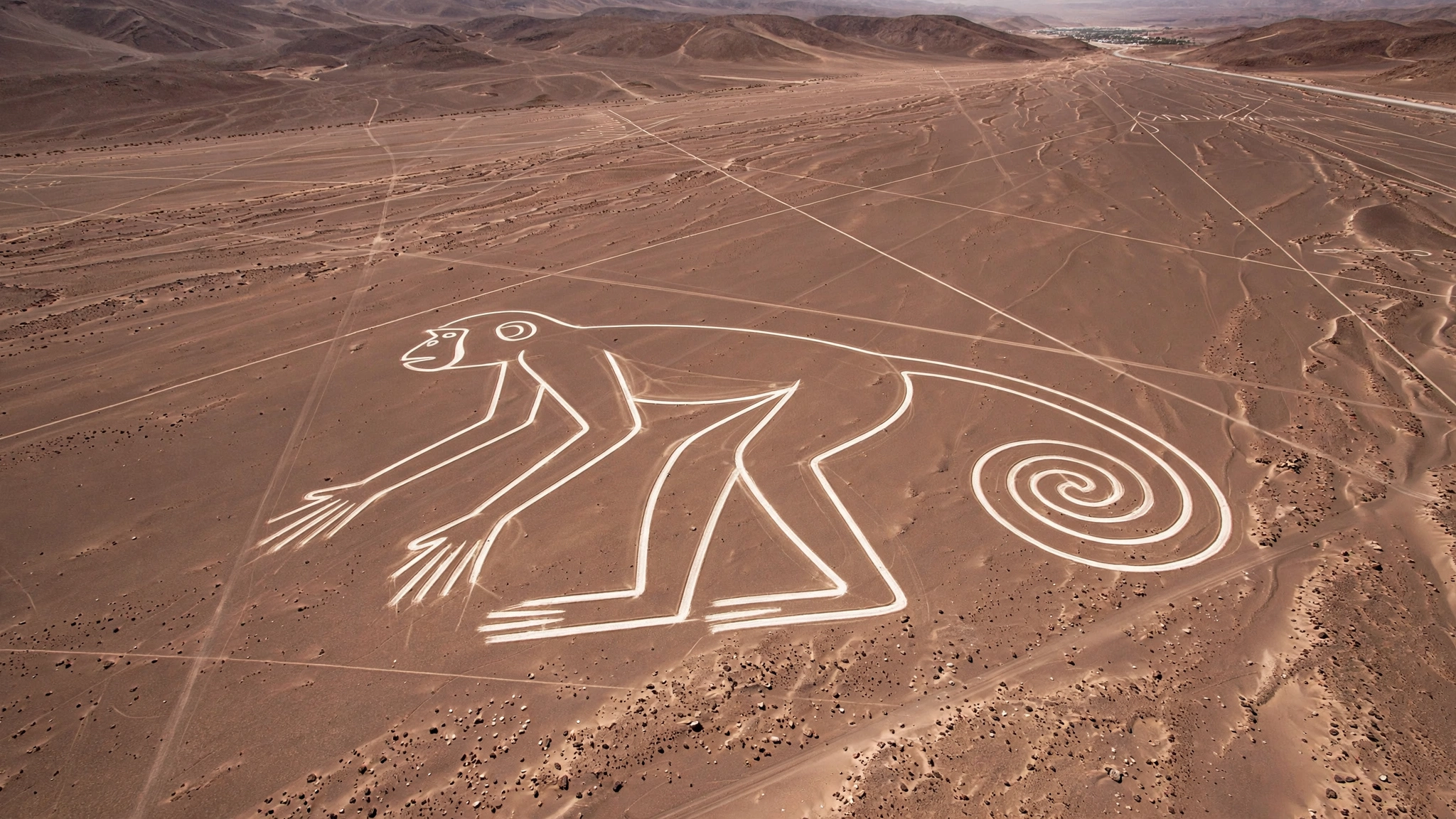
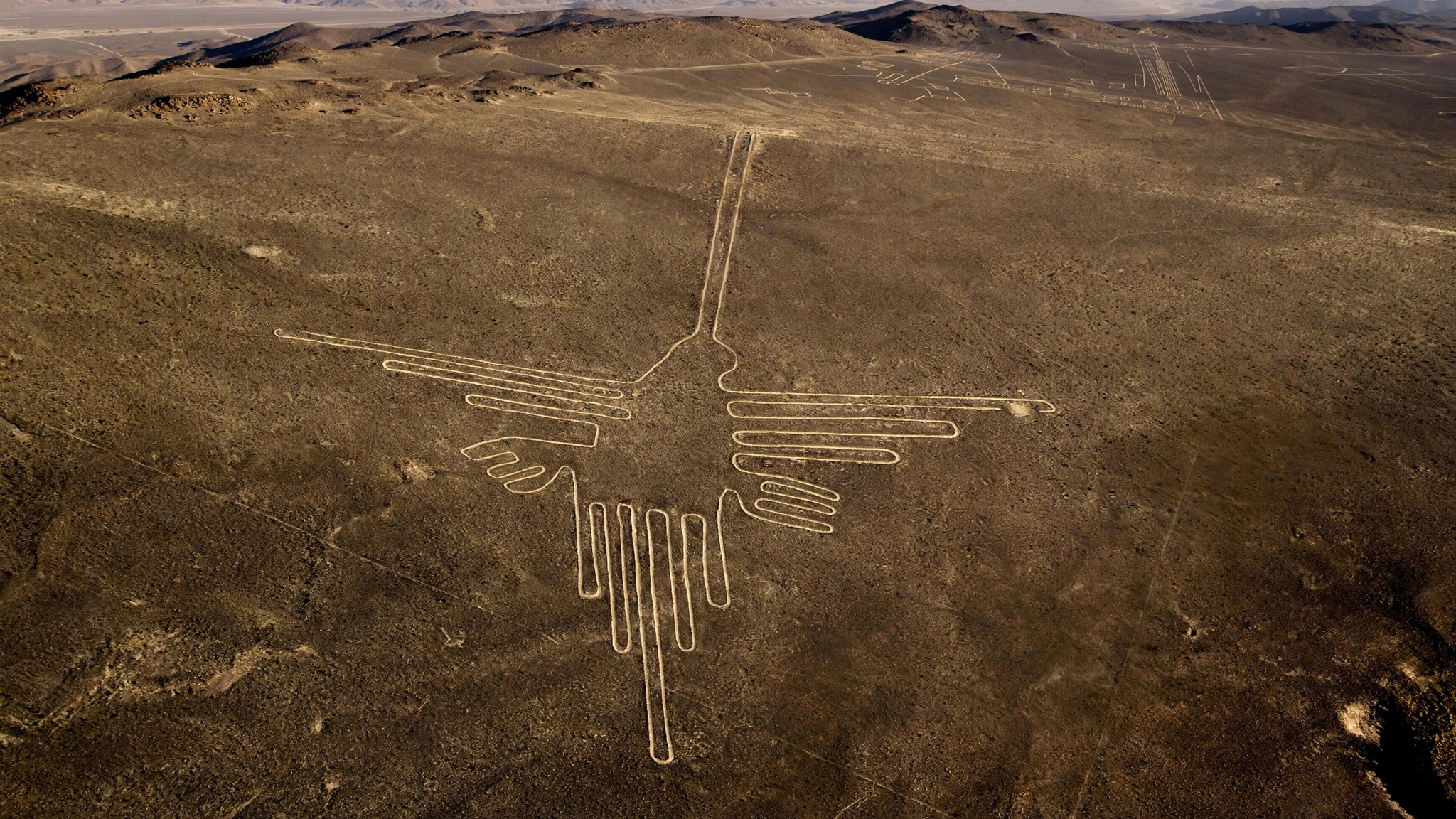
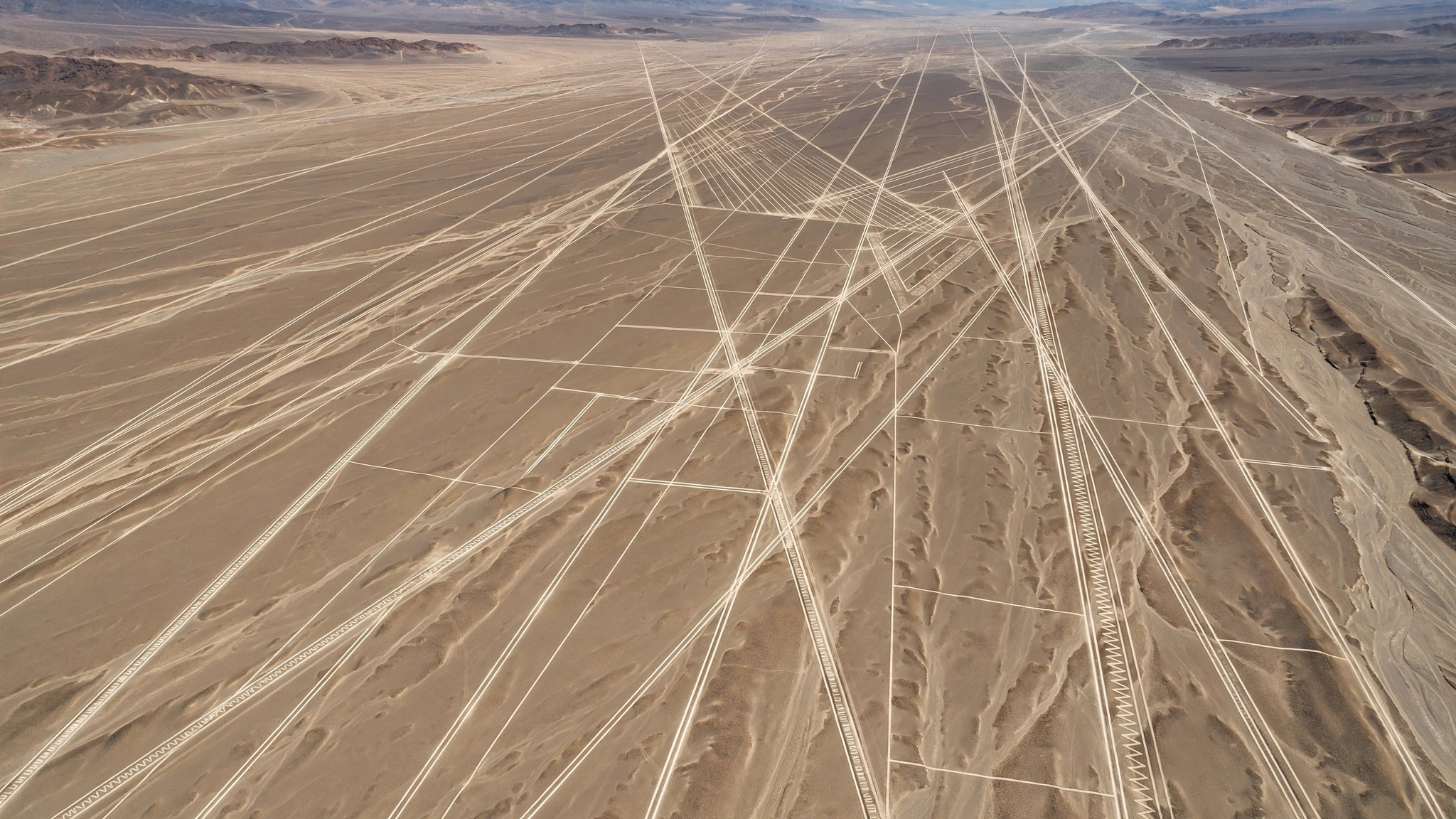
Archaeologists believe the Nazca culture created these remarkable designs between 500 BCE and 500 CE by carefully removing the dark surface stones to reveal the lighter-colored soil beneath. Although the technique seems simple, the incredible precision and massive scale of the drawings continue to amaze researchers.
The greatest mystery surrounding the Nazca Lines is their purpose. Since many of the figures are best viewed from high above, experts have proposed numerous theories over the years. Some believe the lines were used in religious ceremonies or rituals connected to water and fertility, while others suggest they marked astronomical events or served as ceremonial pathways. More imaginative theories have linked the geoglyphs to extraterrestrials, but no scientific evidence supports those claims.
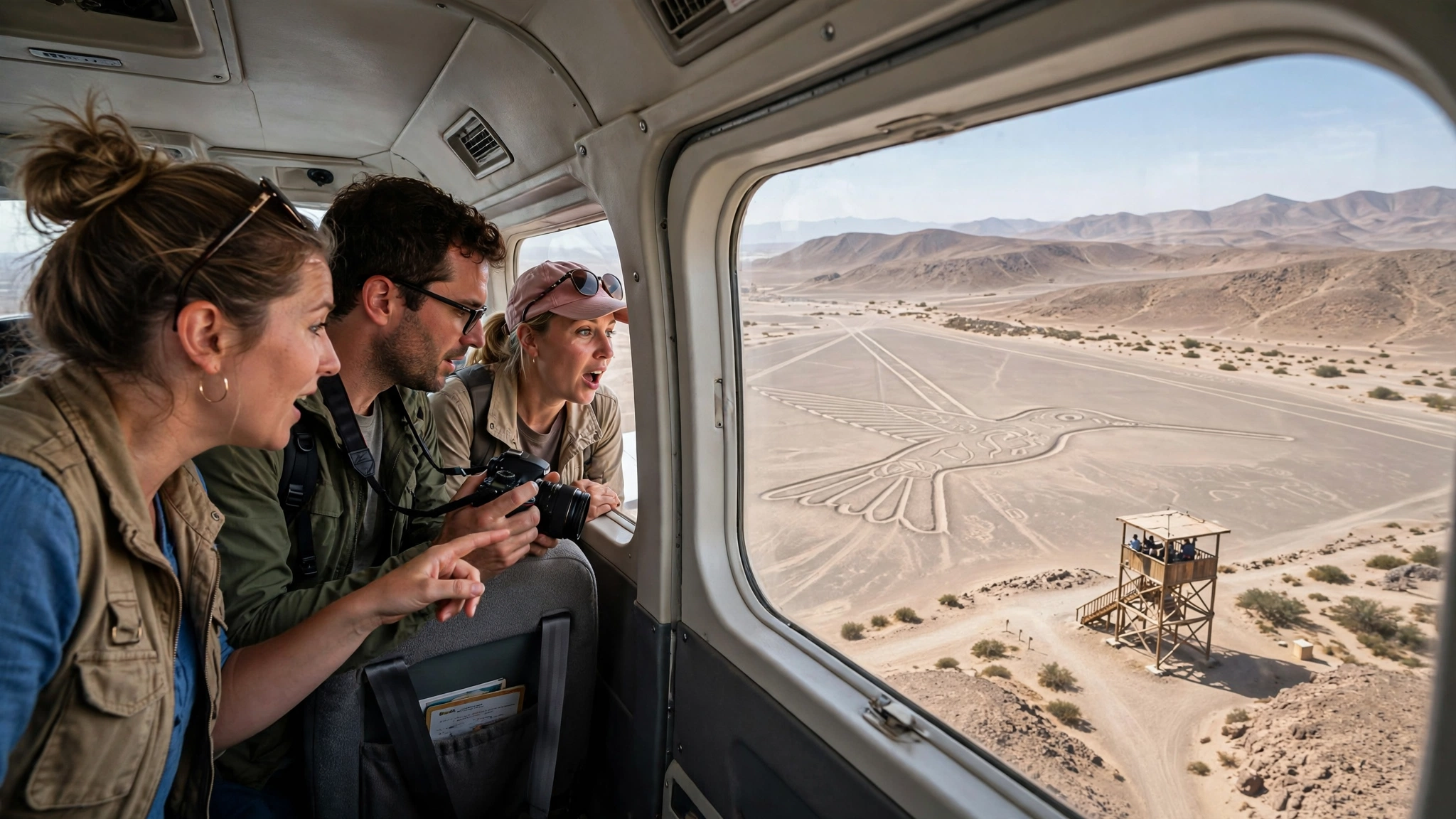
Thanks to Peru’s dry climate and almost windless conditions, the Nazca Lines have remained remarkably well preserved for nearly 2,000 years. Today, visitors can admire a few figures from observation towers, but the best views are enjoyed on short sightseeing flights over the desert, where the giant artwork becomes fully visible.
Recognized as a UNESCO World Heritage Site, the Nazca Lines continue to challenge historians and archaeologists, making them one of the world’s most enduring unsolved mysteries.
Interesting Facts
- Location: Nazca Desert, southern Peru.
- Created By: The Nazca civilization between 500 BCE and 500 CE.
- UNESCO Status: World Heritage Site since 1994.
- Best Way to See Them: Scenic flights provide the clearest aerial views.
- Why It's Mysterious: Hundreds of giant geoglyphs were created with remarkable accuracy, yet their true purpose remains unknown.
Did You Know?
The largest Nazca geoglyphs measure more than 300 meters (984 feet) long. Because Peru's desert receives very little rain and almost no wind, many of these ancient drawings have survived for nearly 2,000 years.
4. Stonehenge, England – The Ancient Stone Circle Full of Mystery
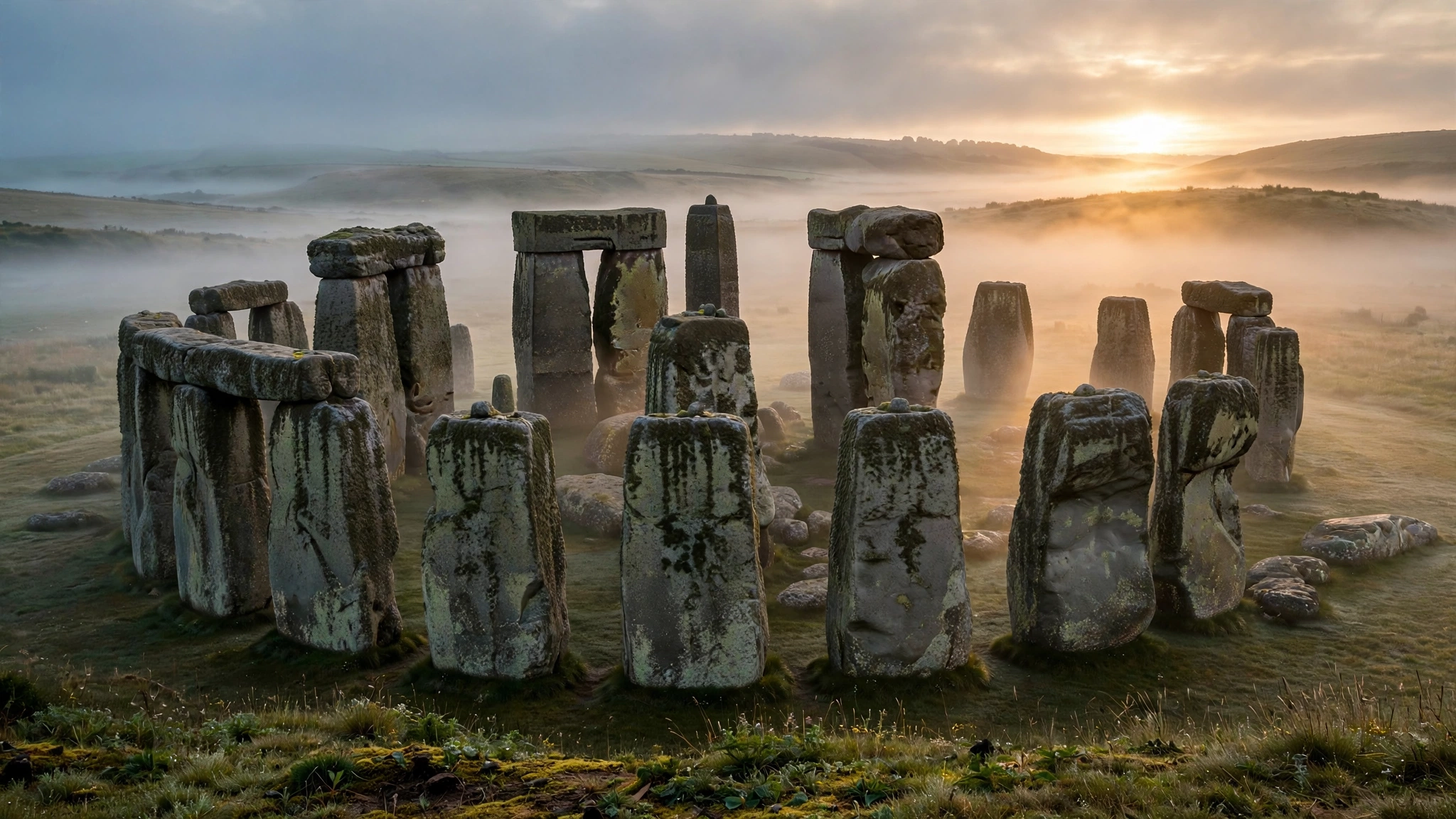
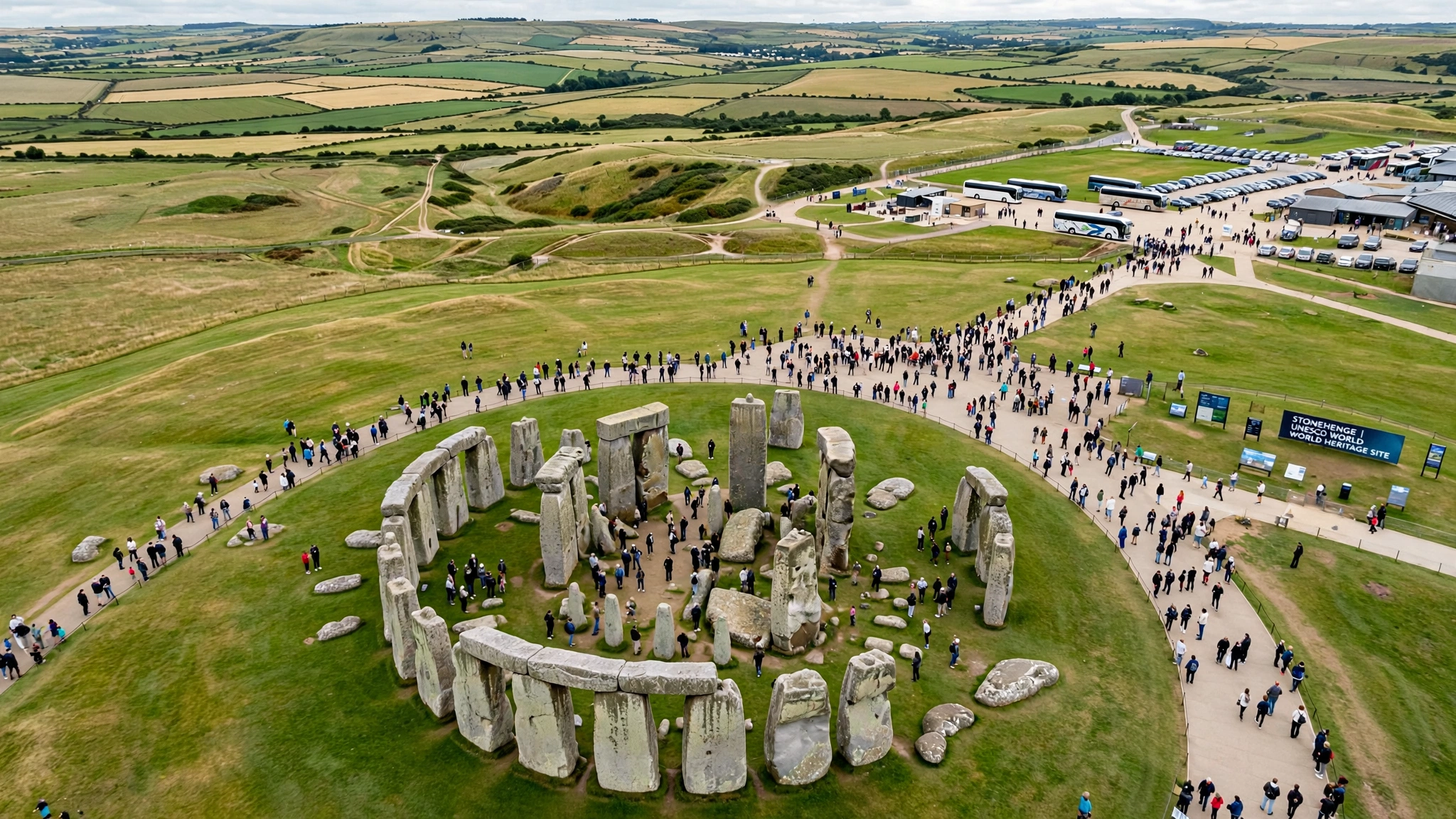
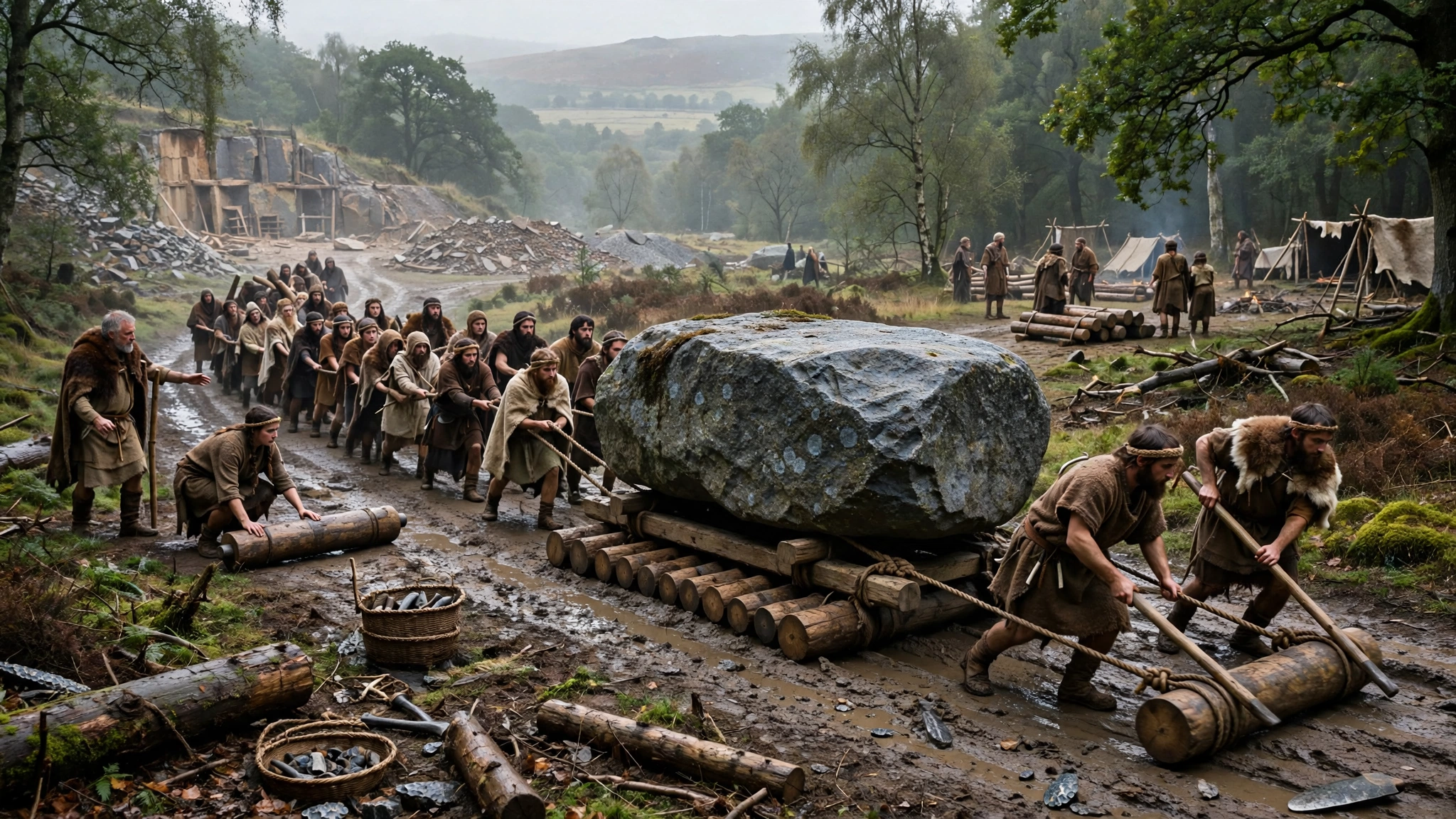
Experts believe Stonehenge was built in several stages between 3000 BCE and 2000 BCE, making it more than 4,500 years old. The monument consists of massive standing stones, some weighing up to 25 tons, arranged in a circular pattern with impressive precision. Even with modern technology, researchers continue to debate how ancient people transported these enormous stones from quarries located many miles away.
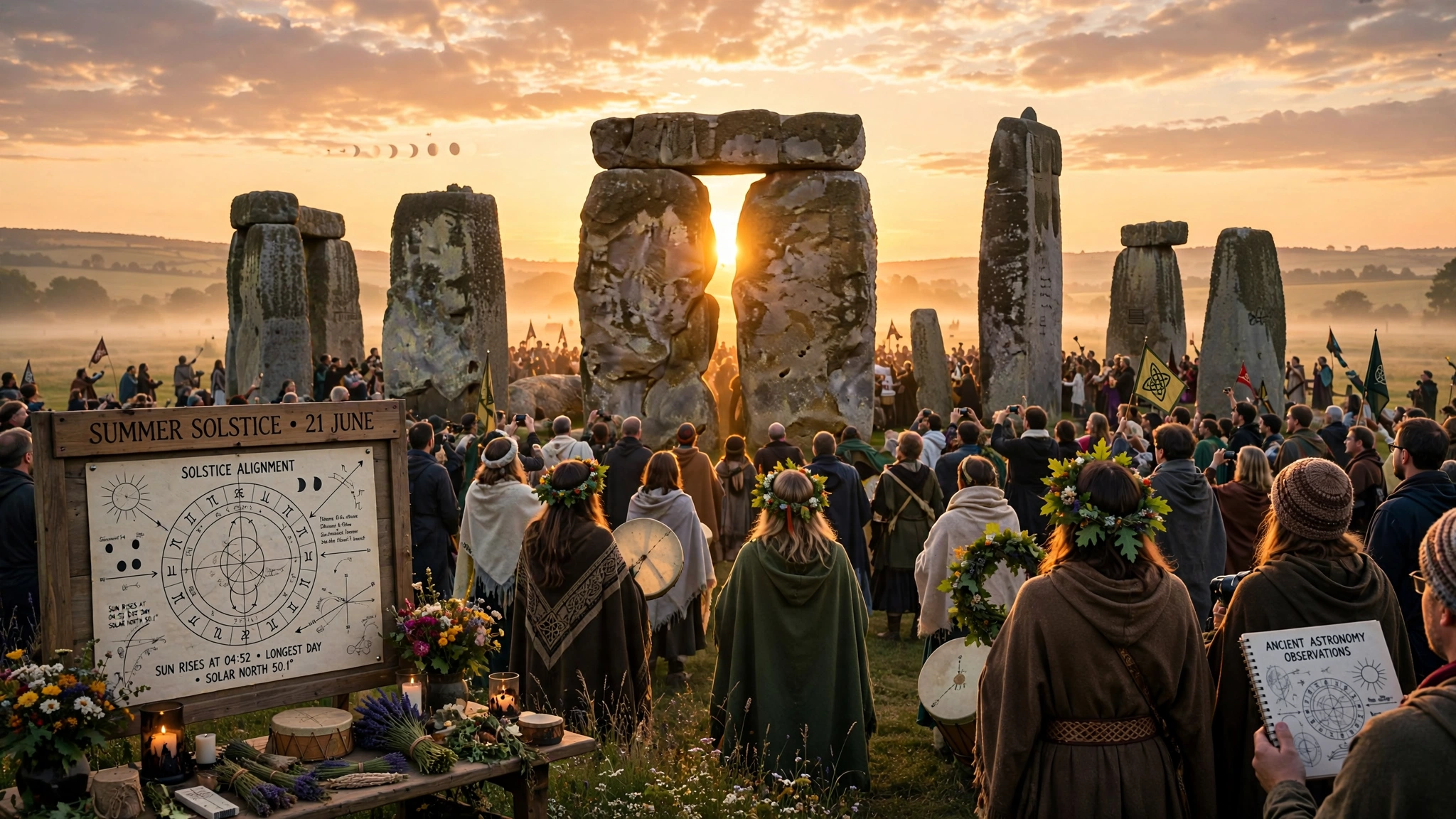
Although Stonehenge has been studied for centuries, its original purpose remains uncertain. Some archaeologists believe it served as a ceremonial or religious site, while others think it functioned as an ancient burial ground or an astronomical calendar used to track the movement of the sun and seasons. During the summer and winter solstices, the sun aligns almost perfectly with parts of the monument, suggesting that its builders possessed an advanced understanding of astronomy.
Adding to the mystery is the fact that Stonehenge was constructed long before cranes, modern machinery, or even the widespread use of the wheel in Britain. The engineering skills required to build such a monument continue to amaze researchers today.
Stonehenge was designated a UNESCO World Heritage Site in 1986 and welcomes more than a million visitors each year. Whether viewed at sunrise, sunset, or during the famous summer solstice celebrations, it remains one of the world’s greatest archaeological wonders and an enduring symbol of ancient human ingenuity.
Interesting Facts
- Location: Wiltshire, England.
- Estimated Age: More than 4,500 years old.
- UNESCO Status: World Heritage Site since 1986.
- Stone Weight: Some stones weigh up to 25 tons.
- Why It's Mysterious: Its original purpose and the methods used to transport and position the massive stones remain subjects of ongoing research.
Did You Know?
Every year during the summer solstice, thousands of visitors gather at Stonehenge to watch the sunrise align perfectly with the monument. This remarkable alignment suggests that its ancient builders had an impressive understanding of astronomy thousands of years ago.
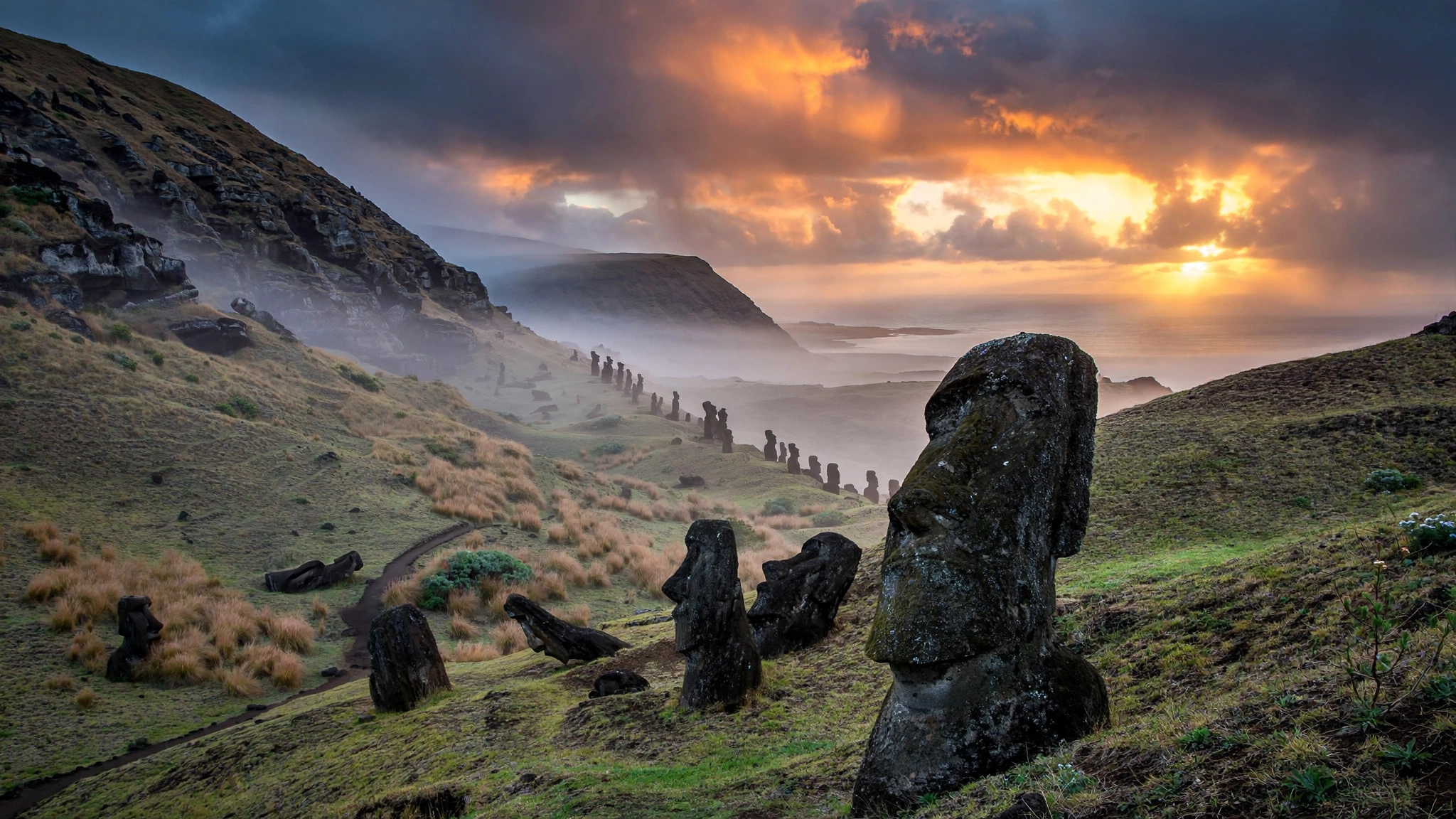
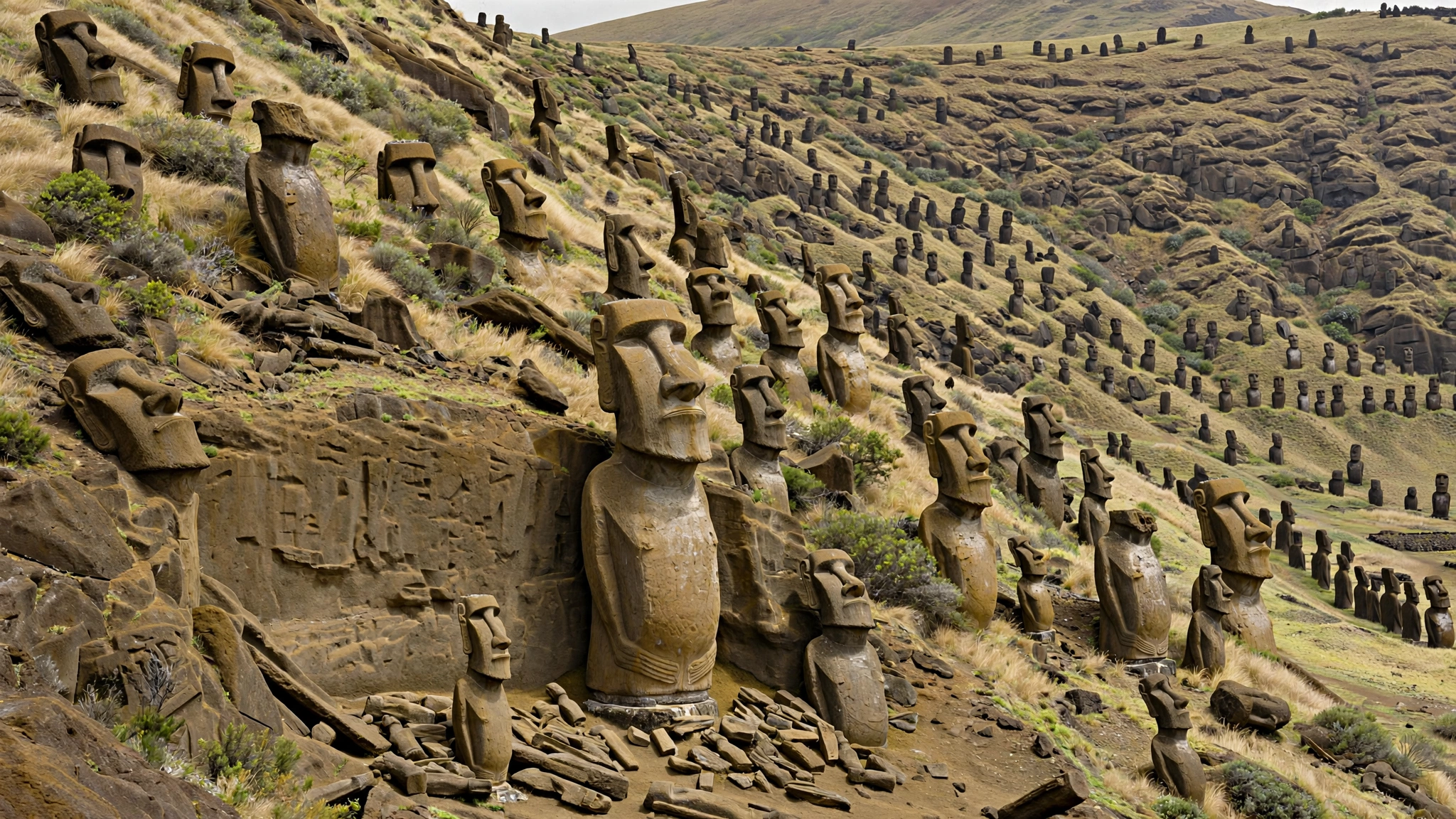
5. Easter Island, Chile – The Mystery of the Giant Moai Statues
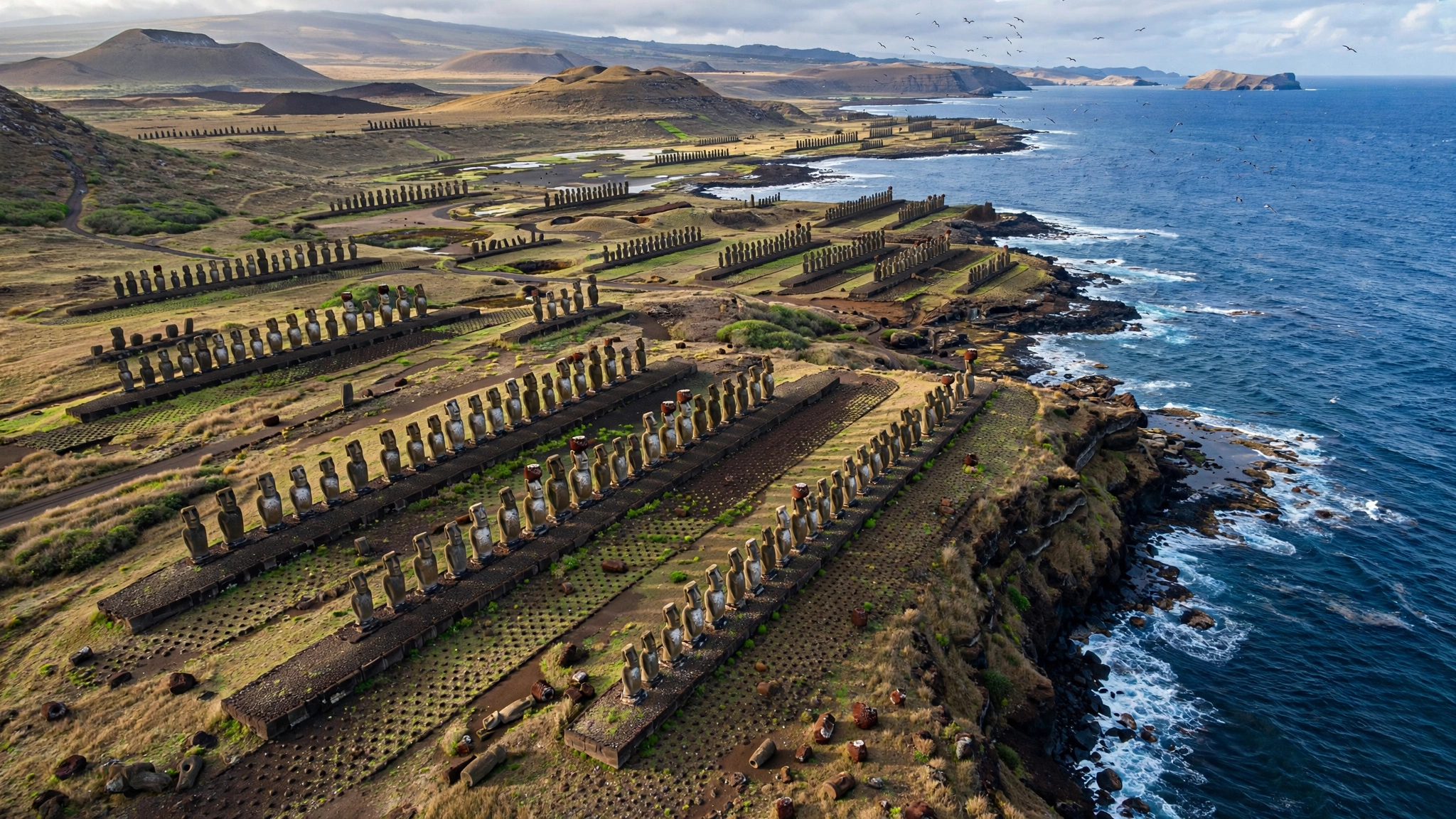
The island is known by its Indigenous name, Rapa Nui, while the name Easter Island was given by Dutch explorer Jacob Roggeveen, who arrived there on Easter Sunday in 1722. Long before European explorers reached the island, the Rapa Nui people had built a thriving civilization that created nearly 1,000 Moai statues between the 13th and 16th centuries.
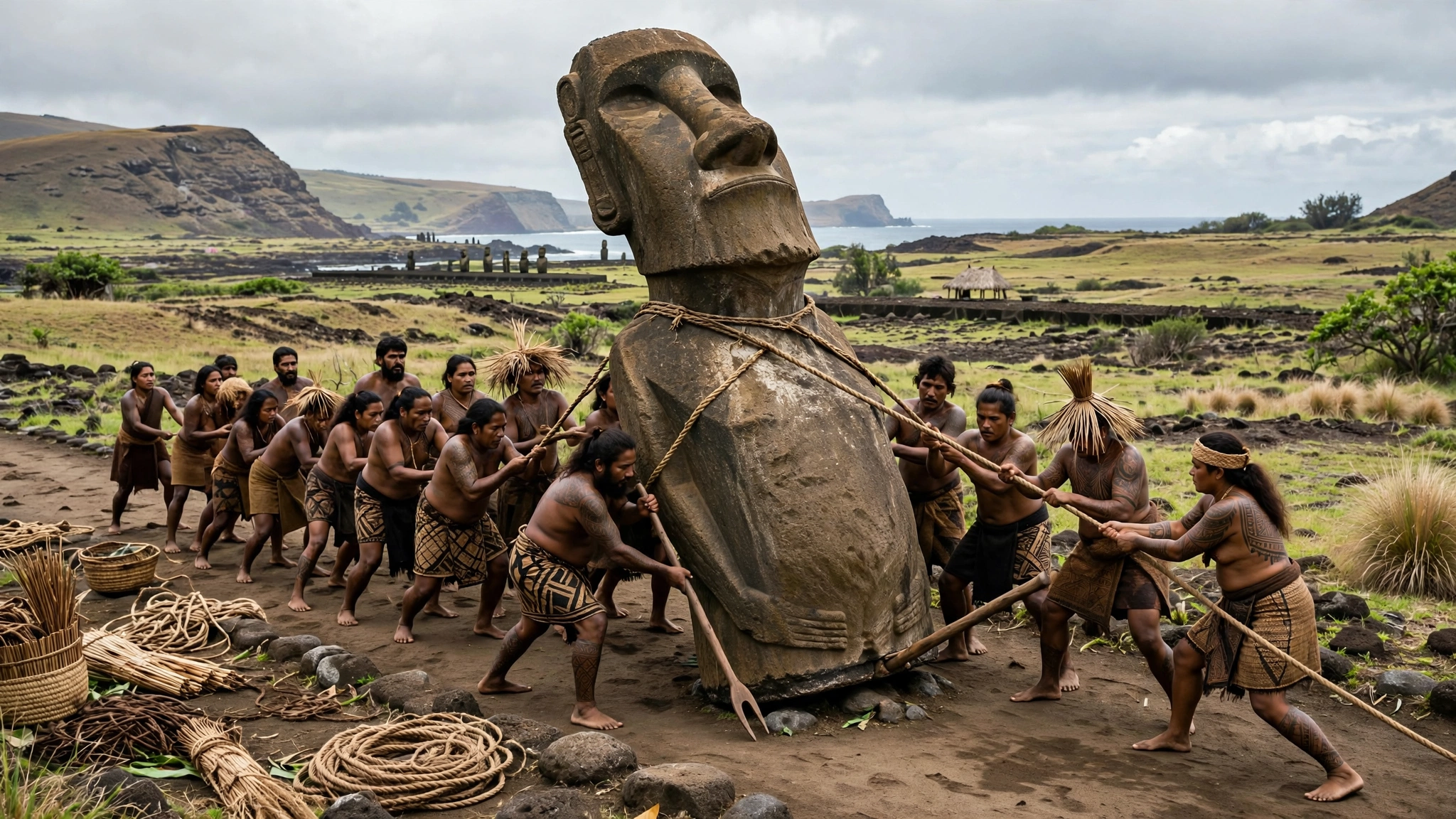
The greatest mystery is how these enormous statues were carved, transported, and erected without modern machinery. Many Moai weigh several tons, while the largest unfinished statue is estimated to weigh more than 80 tons. Researchers believe the statues were carved from volcanic rock at the Rano Raraku quarry before being moved across the island using ingenious techniques. Although several transportation theories exist, the exact methods remain a topic of ongoing research.
Another mystery involves the sudden decline of the Rapa Nui civilization. Historians suggest that a combination of environmental changes, resource depletion, internal conflict, and later European diseases contributed to the island’s population decline. However, many questions about its history remain unanswered.
Today, Easter Island is recognized as a UNESCO World Heritage Site and attracts visitors from around the world who come to admire its breathtaking landscapes and the iconic Moai statues. As one of the world’s greatest archaeological treasures, it continues to inspire curiosity and debate.
Interesting Facts
- Location: Rapa Nui (Easter Island), Chile.
- Famous For: Nearly 1,000 giant Moai stone statues.
- UNESCO Status: World Heritage Site since 1995.
- Largest Moai: The biggest unfinished statue is estimated to weigh over 80 tons.
- Why It's Mysterious: Researchers still debate exactly how the massive statues were transported and erected centuries ago.
Did You Know?
Archaeologists have discovered that many Moai statues have complete bodies buried beneath the ground, not just heads. Excavations revealed detailed carvings on their backs, providing valuable insights into the culture and craftsmanship of the ancient Rapa Nui people.
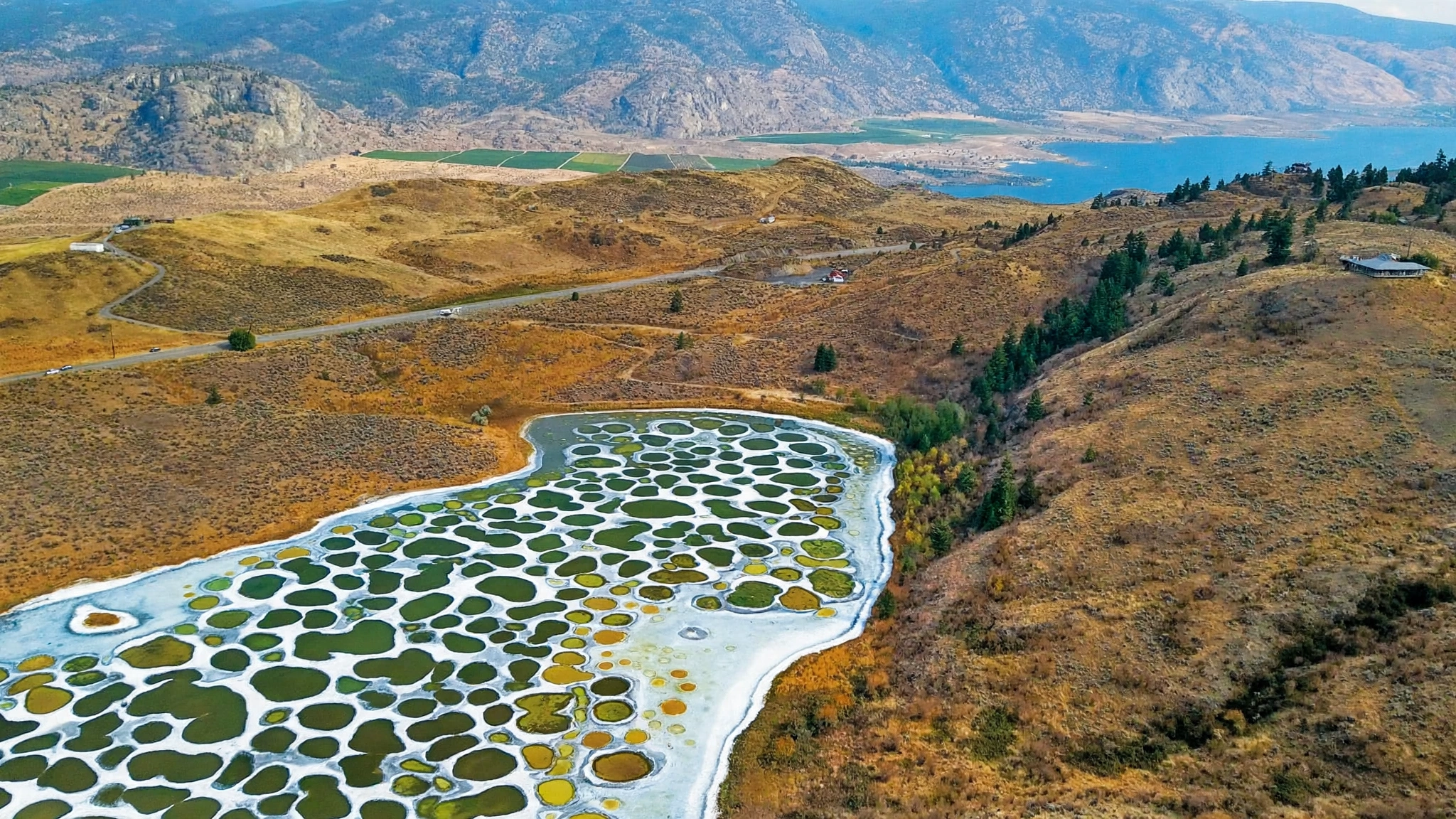
6. Spotted Lake, Canada – Nature’s Colorful Mystery
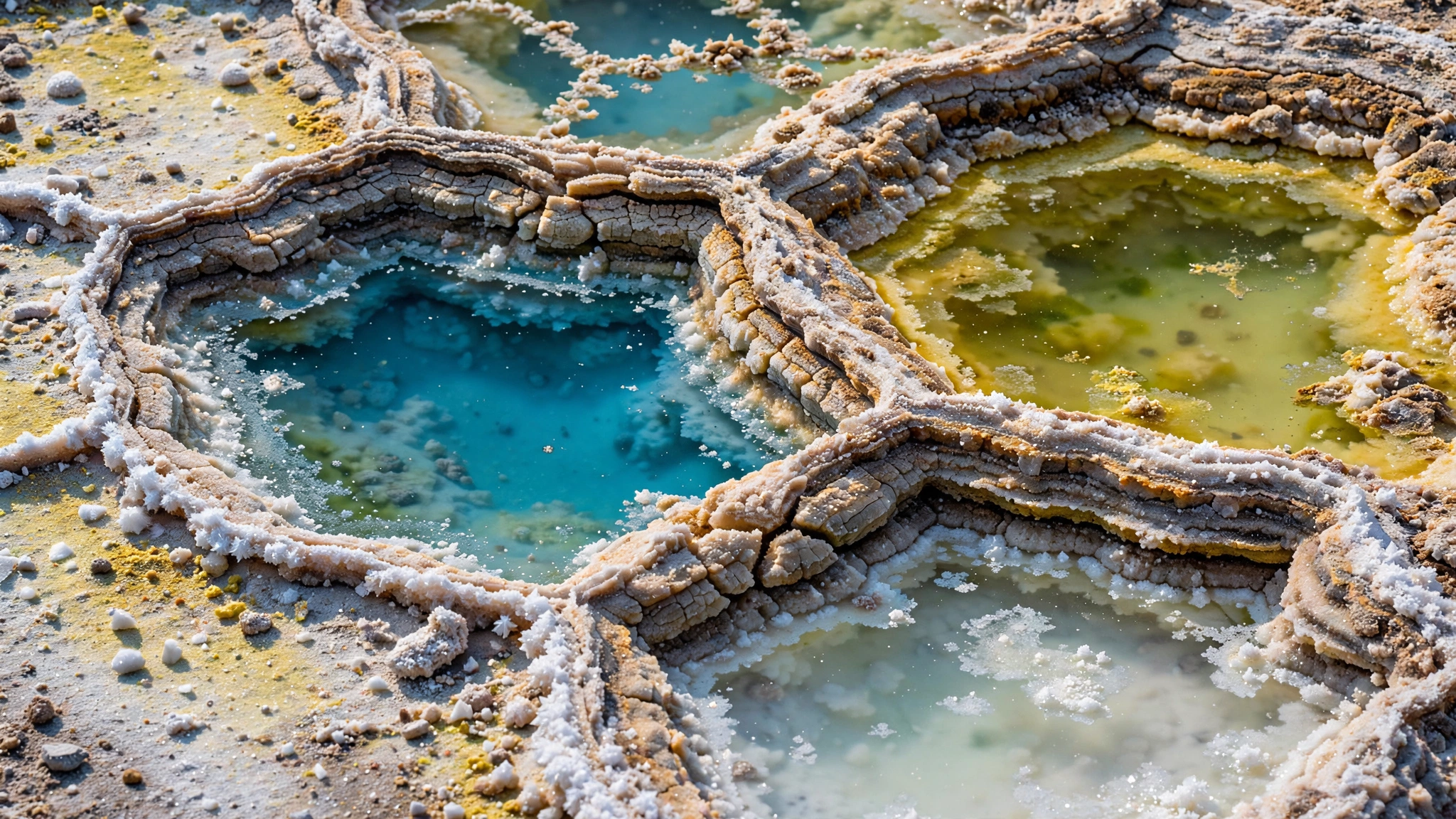
Unlike ordinary lakes, Spotted Lake contains exceptionally high concentrations of minerals, including magnesium sulfate, calcium, sodium sulfate, and other natural elements. During hot weather, much of the water evaporates, leaving behind hundreds of mineral-rich pools separated by natural ridges. Each spot can vary in color depending on its mineral composition, creating one of the world’s most unique natural landscapes.
For centuries, the lake has held great cultural and spiritual significance for the Syilx (Okanagan) First Nations people, who consider it a sacred site. According to local traditions, the lake’s mineral-rich waters were believed to possess healing properties, and different pools were used for various purposes. Today, the area is protected, and visitors are encouraged to admire the lake respectfully from designated viewpoints rather than entering the site.
Scientists have explained the colorful patterns through natural geological processes, but the lake’s striking appearance continues to amaze visitors from around the world. Its rare beauty has earned it a place among Canada’s most remarkable natural attractions and one of the planet’s most unusual landscapes.
Whether viewed from the roadside or captured from above, Spotted Lake remains a fascinating reminder of nature’s ability to create breathtaking wonders that seem almost too extraordinary to be real.
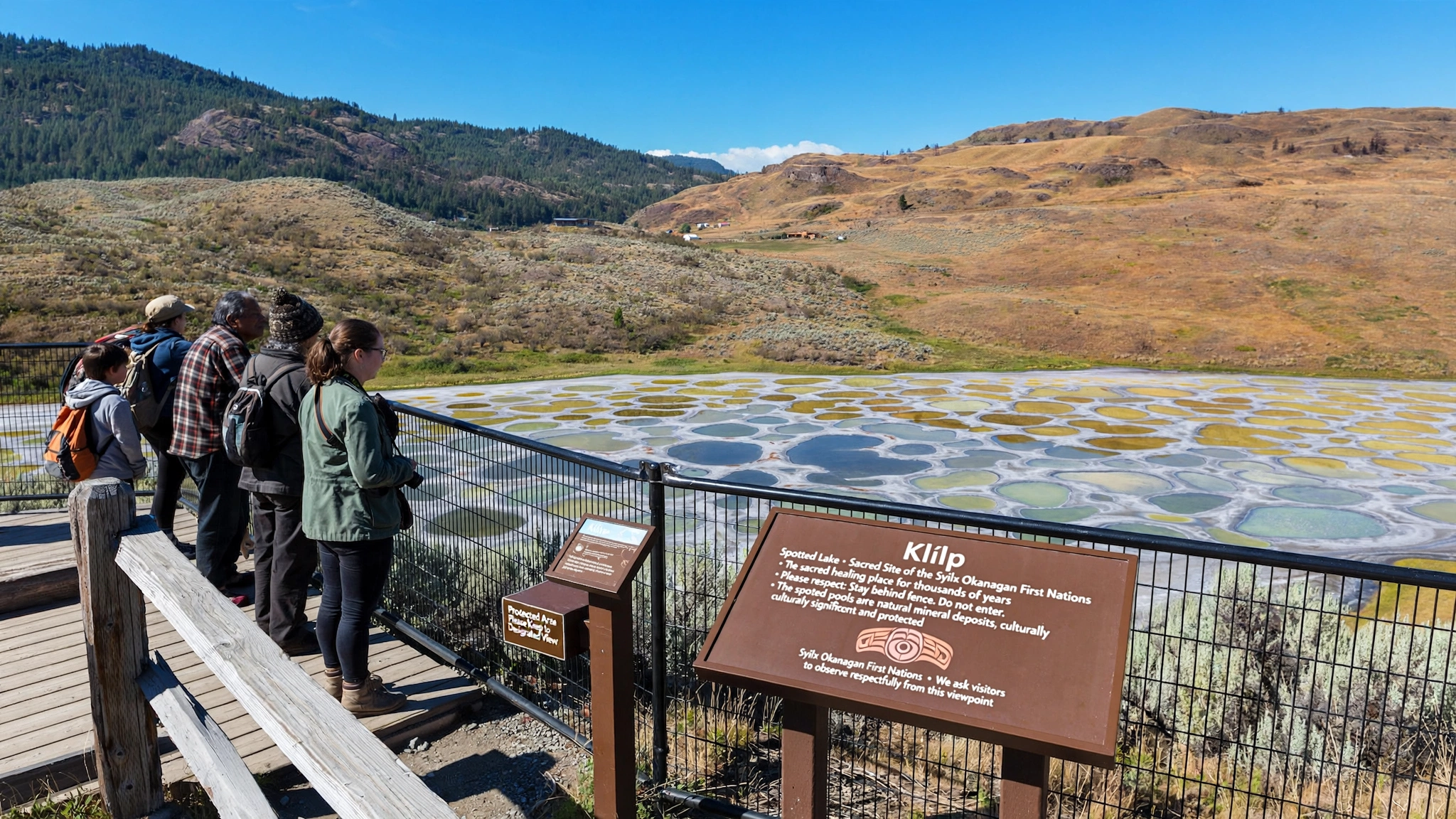
Interesting Facts
- Location: Near Osoyoos, British Columbia, Canada.
- Famous For: Hundreds of colorful mineral-rich spots that appear during summer.
- Best Time to Visit: July to September, when evaporation reveals the colorful circles.
- Protected Site: The lake is considered sacred by the Syilx (Okanagan) First Nations people.
- Why It's Mysterious: Its naturally occurring colorful patterns make it look like a giant artist's palette.
Did You Know?
During the hottest months of the year, Spotted Lake can display more than 300 colorful mineral pools. The size, shape, and color of each spot change depending on the weather and the concentration of minerals, making every summer view slightly different.
7. Paris Catacombs, France – The Underground City of Bones
he Paris Catacombs are among the most mysterious places in the world, attracting millions of visitors with their eerie tunnels lined with the remains of more than six million people. Hidden beneath the busy streets of Paris, France, this vast underground labyrinth stretches for hundreds of kilometers, although only a small section is open to the public.
The story of the Catacombs began in the late 18th century when Paris faced a serious public health crisis. Overcrowded cemeteries had become unsafe, causing unpleasant odors and contaminating nearby water supplies. To solve the problem, officials transferred human remains from several city cemeteries into abandoned limestone quarries beneath Paris. The carefully arranged bones and skulls eventually transformed the tunnels into one of the world’s most unusual historical sites.
Walking through the Catacombs today is a haunting experience. Narrow passageways, dim lighting, and walls built from neatly stacked skulls and bones create an unforgettable atmosphere. At the entrance to the ossuary, visitors are greeted by a famous warning in French that translates to “Stop! This is the Empire of the Dead.”
Over the years, countless legends have surrounded the Catacombs. Stories of hidden chambers, lost explorers, ghosts, and unexplained sounds have fueled its mysterious reputation. While most of these tales remain folklore, the underground tunnels continue to capture the imagination of historians, paranormal enthusiasts, and adventure seekers alike.
Today, the Paris Catacombs are one of France’s most popular attractions, offering a fascinating glimpse into the city’s history while reminding visitors of the challenges faced by Paris centuries ago.
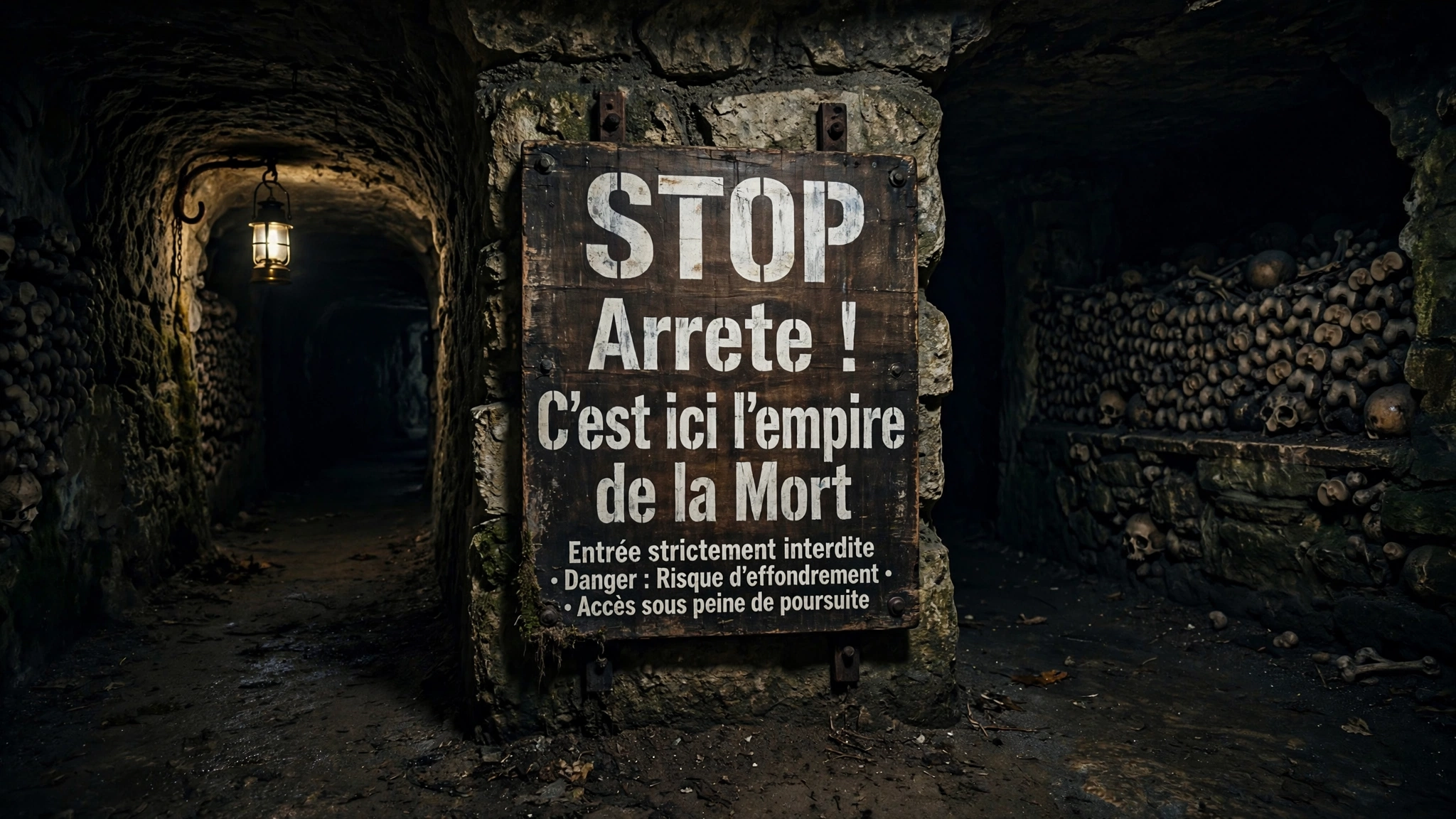
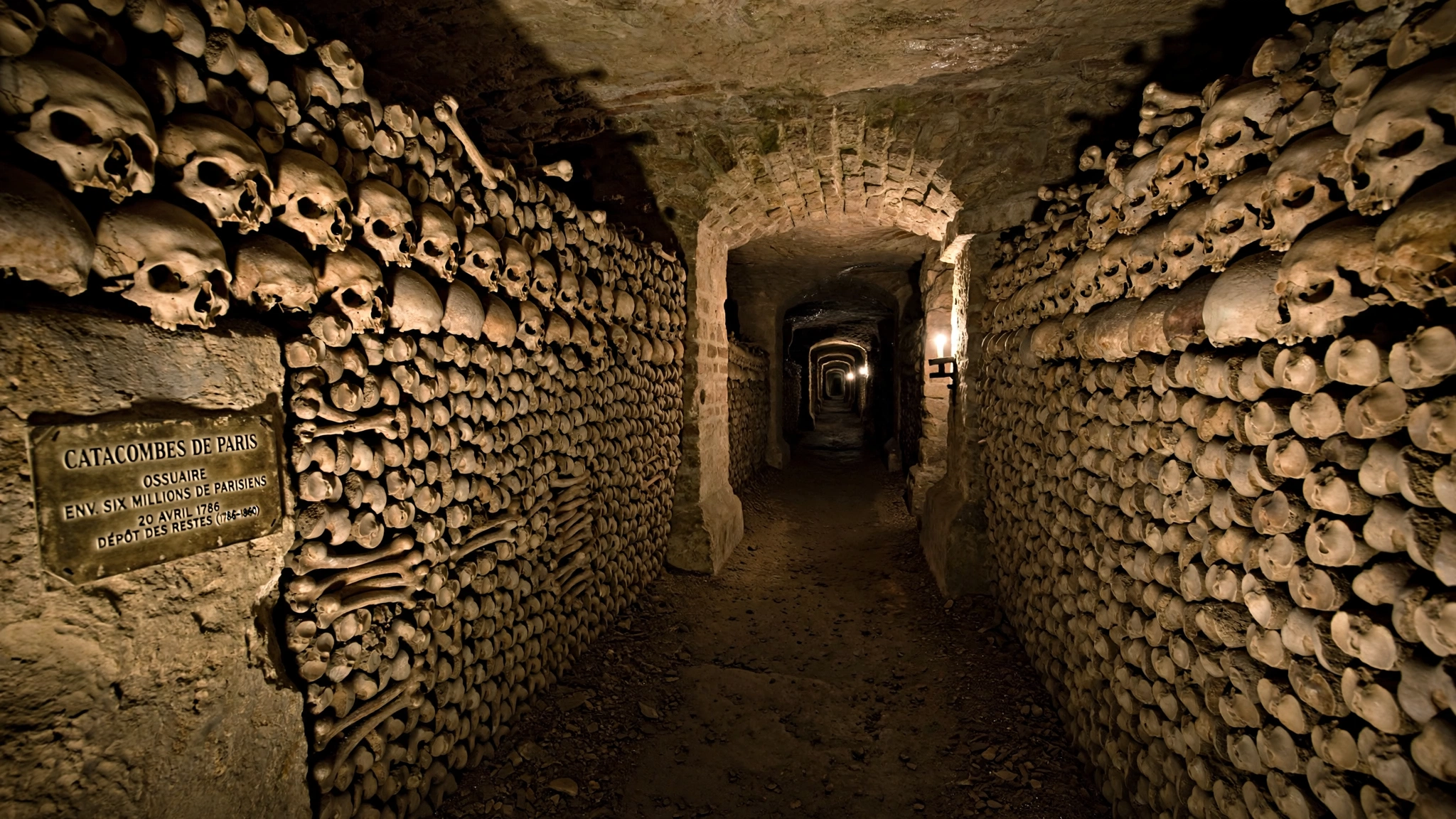
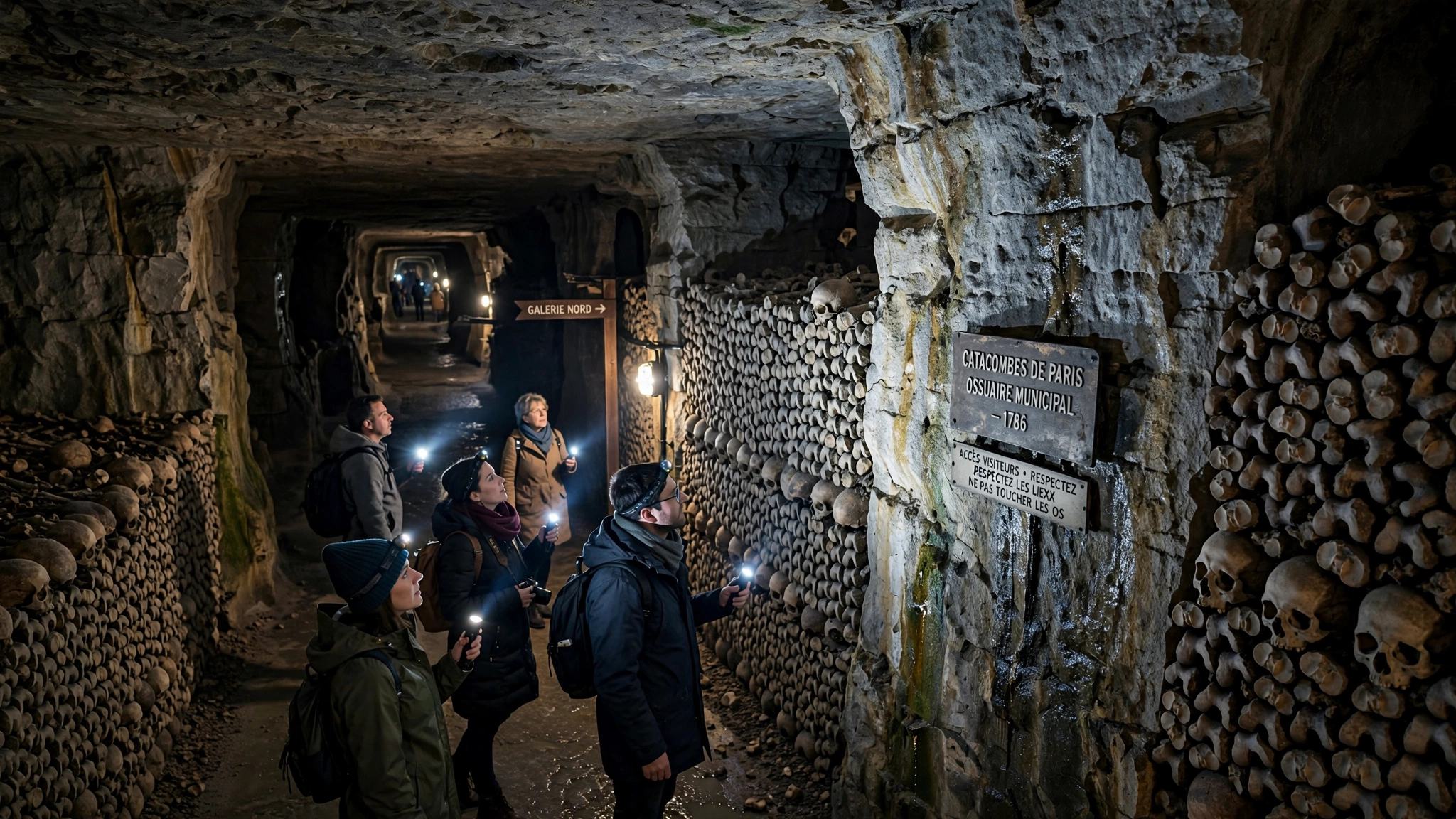
Interesting Facts
- Location: Paris, France.
- Estimated Remains: More than 6 million people.
- Length: The underground tunnel network extends for over 300 kilometers (186 miles).
- Open to Visitors: Only a small portion of the Catacombs can be explored on guided tours.
- Why It's Mysterious: Hidden passages, centuries-old legends, and the vast underground maze continue to inspire mystery and curiosity.
Did You Know?
Although the Paris Catacombs stretch for more than 300 kilometers (186 miles), visitors can explore only about 1.5 kilometers (1 mile). The remaining tunnels are restricted to protect the historic site and ensure public safety.
8. Devil’s Bridge (Rakotzbrücke), Germany – The Bridge Surrounded by Legends
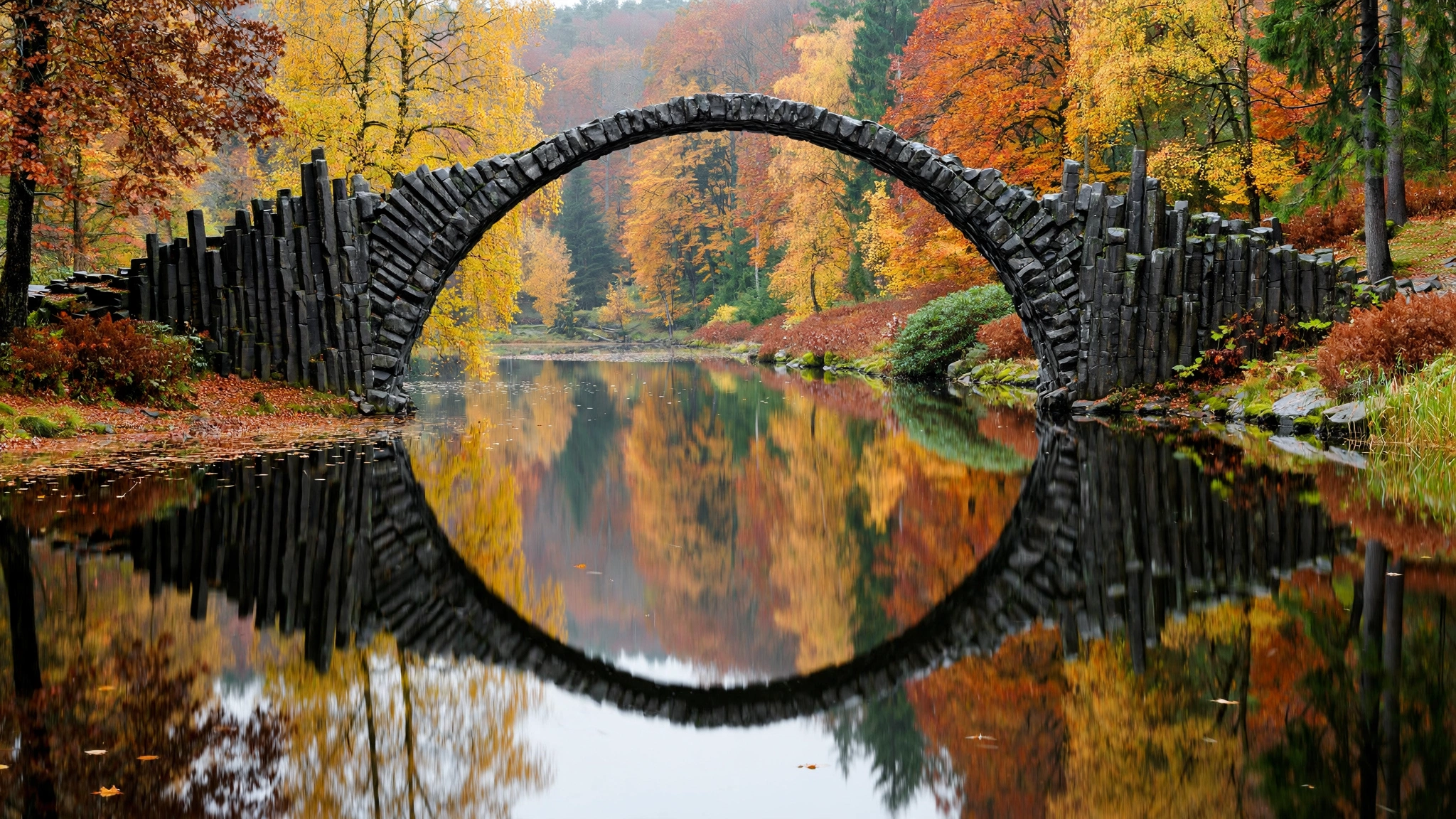
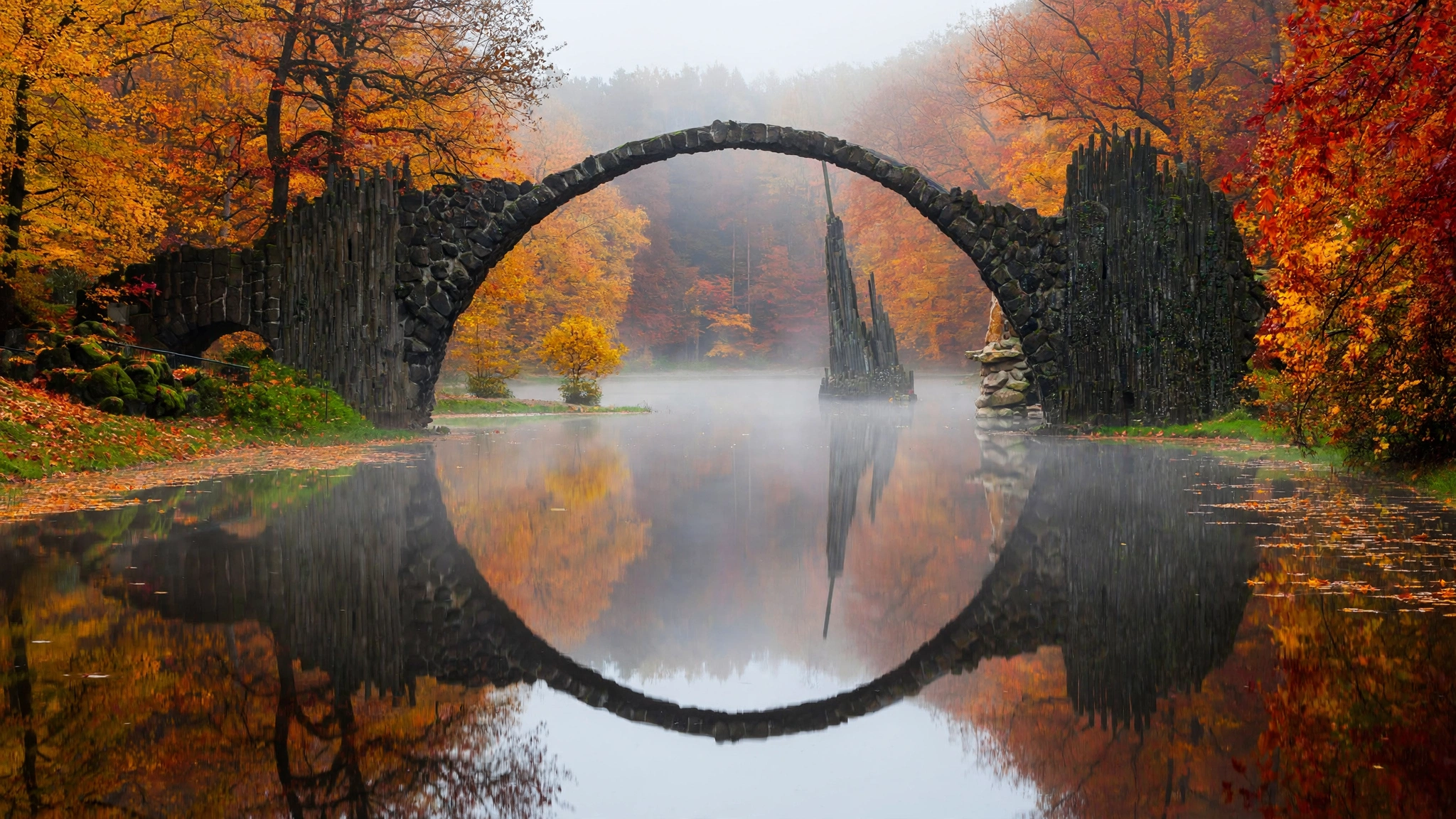
Built in 1860, Rakotzbrücke was commissioned by local landowner Friedrich Hermann Rötschke as part of an ornamental landscape park. Skilled craftsmen used carefully selected basalt columns and natural stones to create the bridge’s dramatic appearance, blending it seamlessly into the surrounding scenery.
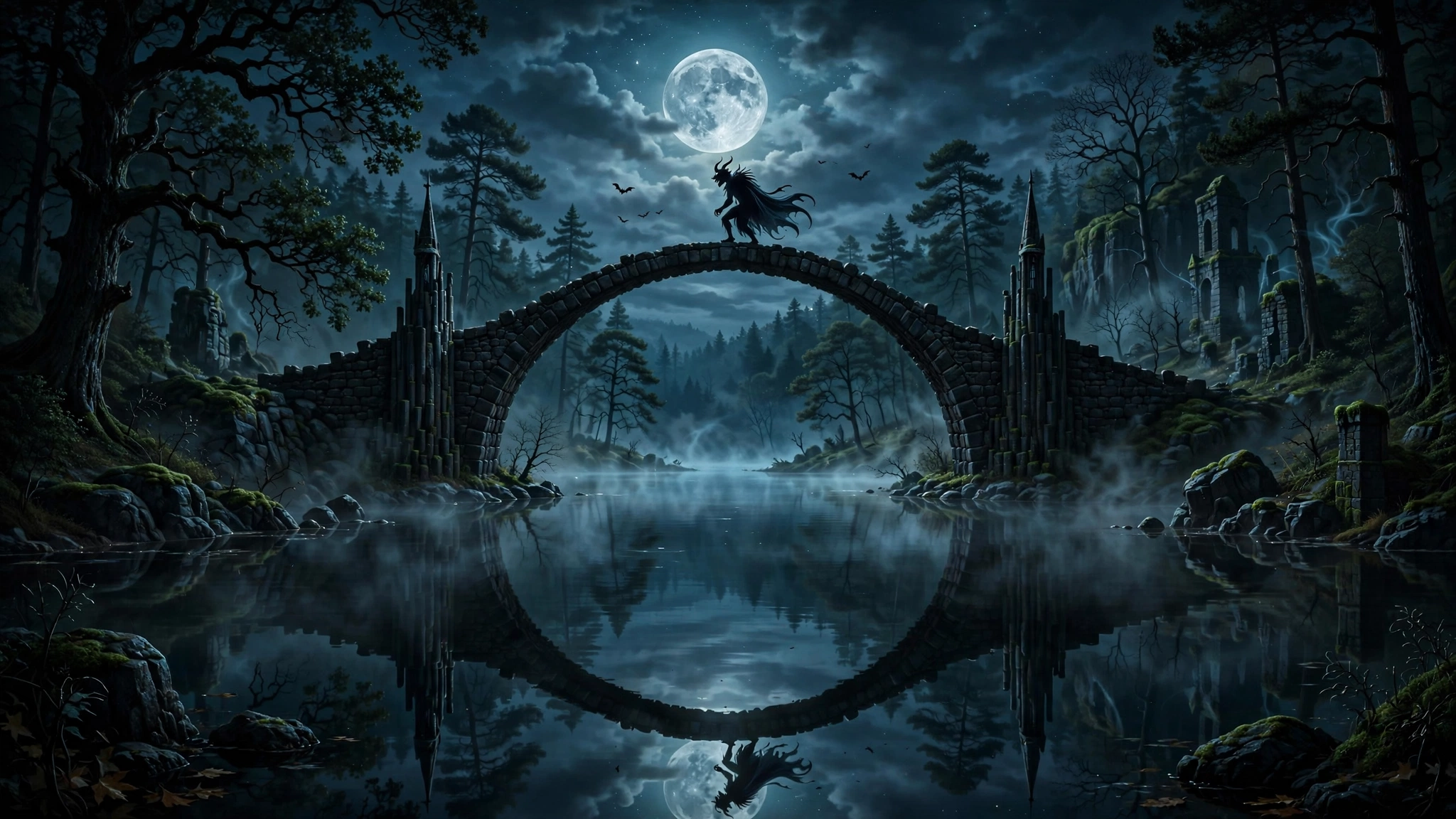
Like many old European bridges, Rakotzbrücke became associated with local folklore. According to legend, the bridge was so perfectly constructed that people believed only the devil himself could have built it. One popular story claims that the first person to cross the bridge would have their soul claimed by the devil, while another suggests the devil demanded a sacrifice in exchange for helping complete the structure. Although these tales are purely mythical, they continue to add to the bridge’s mysterious reputation.
Today, visitors are no longer allowed to walk across Rakotzbrücke in order to preserve this historic monument. Instead, they can admire its spectacular reflection from nearby viewing areas, especially during autumn when the colorful trees create one of Germany’s most picturesque landscapes.
With its fairytale appearance, fascinating legends, and remarkable engineering, Devil’s Bridge remains one of Europe’s most enchanting and mysterious attractions.
Many mysterious places are surrounded by fascinating legends that have been passed down through generations. If you enjoy mythical stories, read our article on Some of the World’s Ancient Myths.
Interesting Facts
- Location: Kromlau Park, Gablenz, Germany.
- Built: 1860.
- Famous For: Its perfect circular reflection in the water.
- Visitor Tip: Walking on the bridge is prohibited to help preserve the historic structure.
- Why It's Mysterious: Its unique design and centuries-old legends have earned it the nickname "Devil's Bridge."
Did You Know?
Rakotzbrücke is carefully designed so that its arch and its reflection create an almost perfect stone circle. This remarkable optical illusion has made it one of Germany's most photographed bridges and a favorite destination for landscape photographers.
9. Door to Hell (Darvaza Gas Crater), Turkmenistan – The Fire That Never Stops Burning
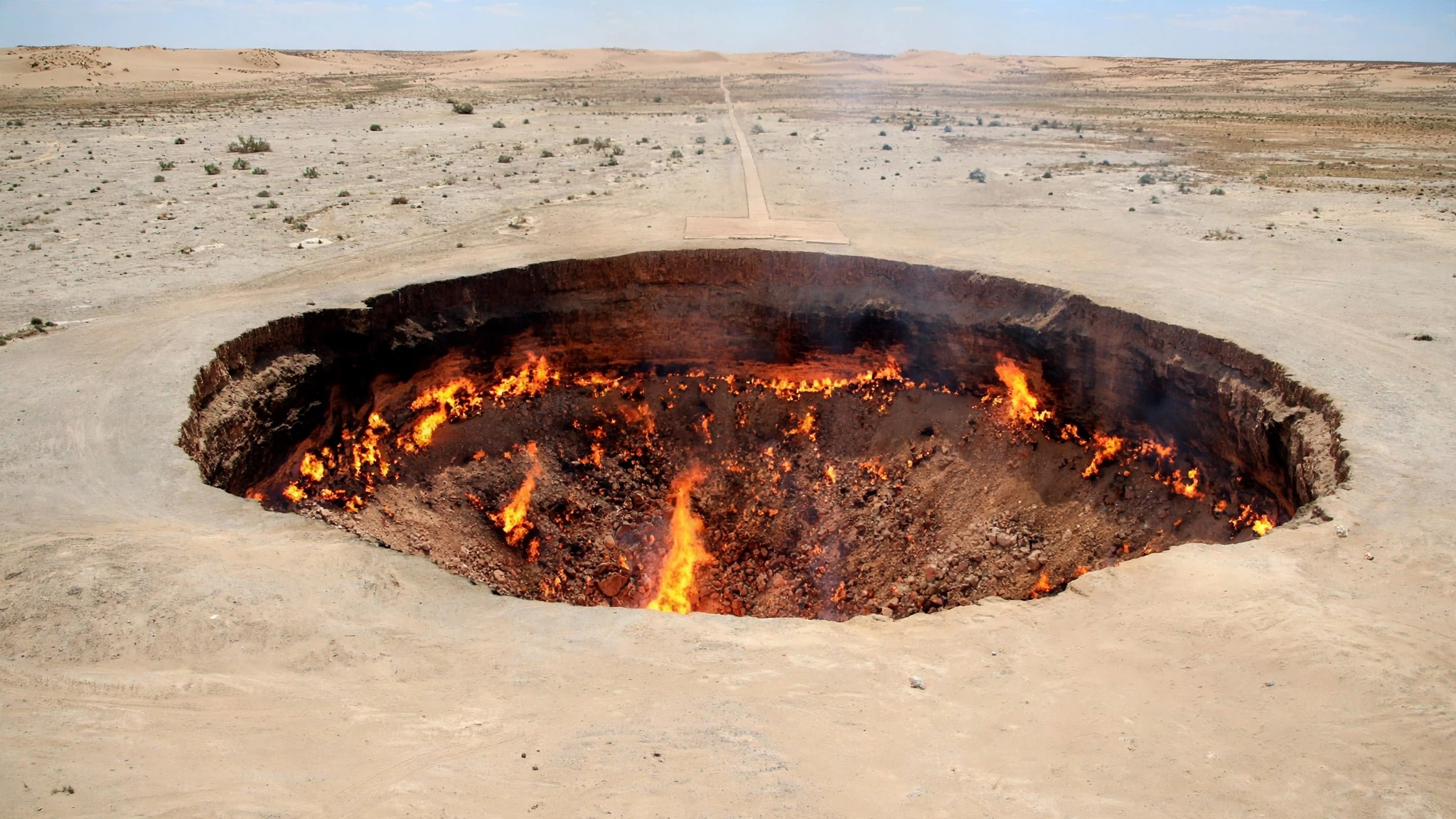
The Door to Hell, officially known as the Darvaza Gas Crater, is one of the most mysterious places in the world. Located in the heart of the Karakum Desert in Turkmenistan, this massive fiery crater has been burning continuously for more than five decades, creating one of the world’s most unusual natural attractions.
The story began in 1971 when Soviet geologists were drilling for natural gas in the area. During the operation, the ground beneath the drilling rig collapsed, forming a large crater and releasing significant amounts of methane gas. Concerned that the gas could spread and pose environmental and safety risks, the engineers decided to set it on fire, believing the flames would burn out within a few days.
However, the fire never stopped.
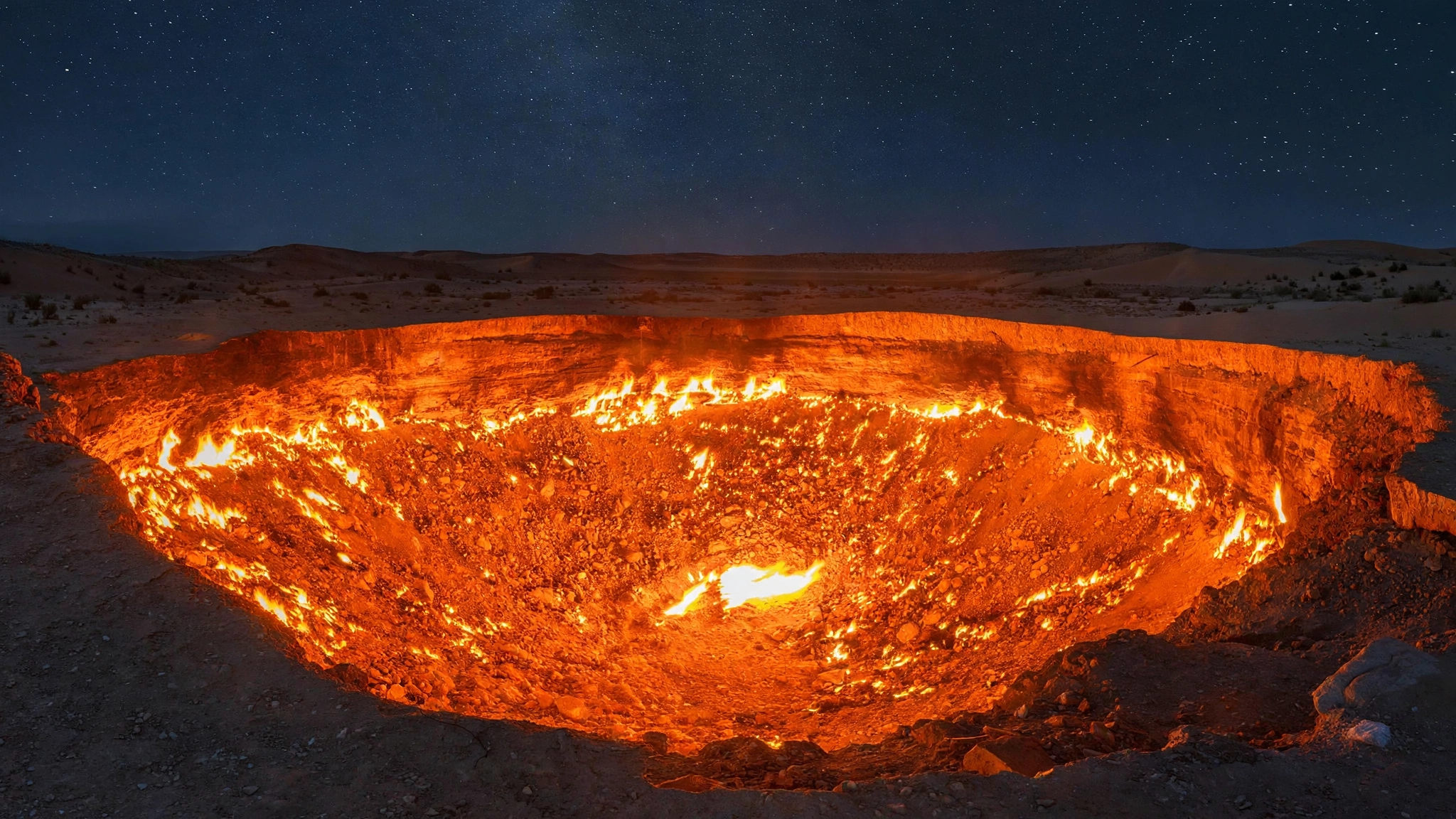
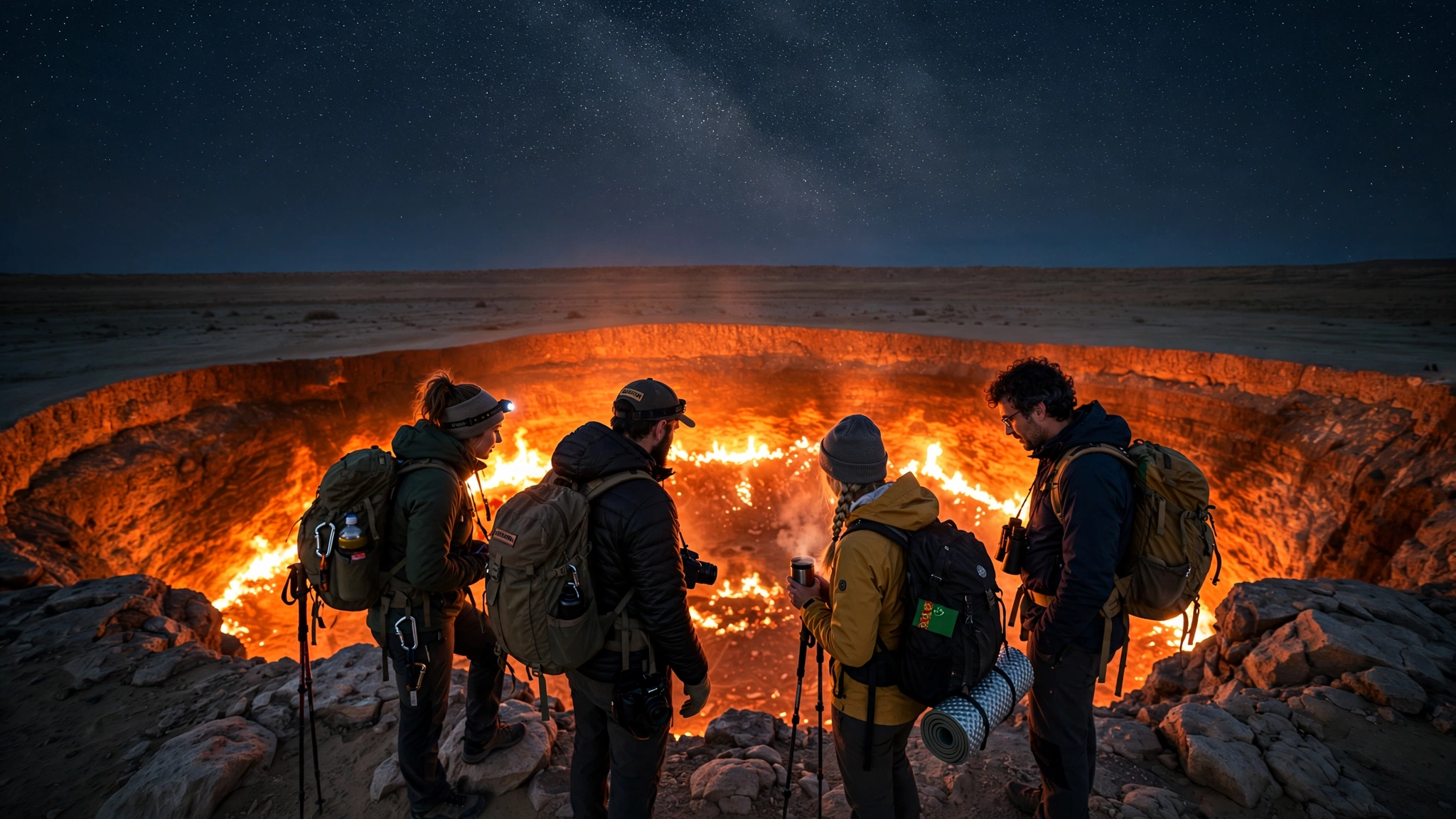
More than 50 years later, the crater continues to burn day and night, earning the nickname “Door to Hell.” Measuring approximately 70 meters (230 feet) wide and about 30 meters (98 feet) deep, the glowing crater creates an unforgettable sight, especially after sunset when the flames illuminate the surrounding desert.
Although the crater’s origin is well documented, the mystery lies in how long it has continued burning. Scientists estimate that the underground natural gas reserves are still feeding the flames, but exactly how much gas remains beneath the desert is unknown. In recent years, Turkmenistan has explored ways to reduce the fire due to environmental concerns, yet the crater remains one of the country’s most famous landmarks.
Today, adventurous travelers from around the world visit the Darvaza Gas Crater to witness its spectacular nighttime glow and experience one of Earth’s most extraordinary geological phenomena.
Interesting Facts
- Location: Karakum Desert, Turkmenistan.
- Nickname: Door to Hell.
- Created: 1971 after a natural gas drilling accident.
- Crater Size: Approximately 70 meters (230 feet) wide and 30 meters (98 feet) deep.
- Why It's Mysterious: The crater has burned continuously for more than 50 years, far longer than engineers originally expected.
Did You Know?
The Darvaza Gas Crater is best experienced after dark, when the glowing flames can be seen from miles across the Karakum Desert. Its dramatic appearance has earned it a place among the world's most unusual travel destinations.
10. Crooked Forest, Poland – The Mystery of the Curved Trees
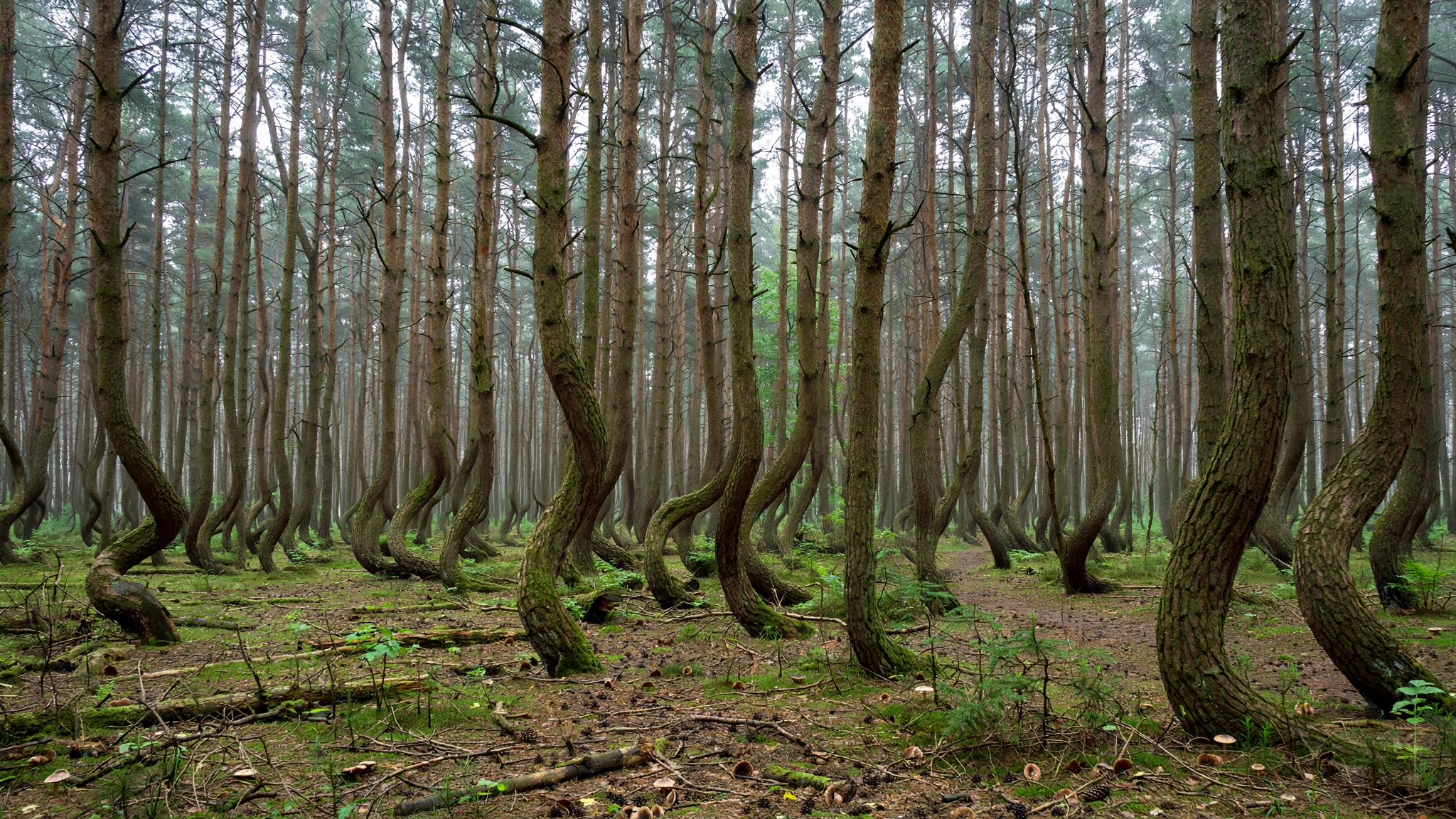
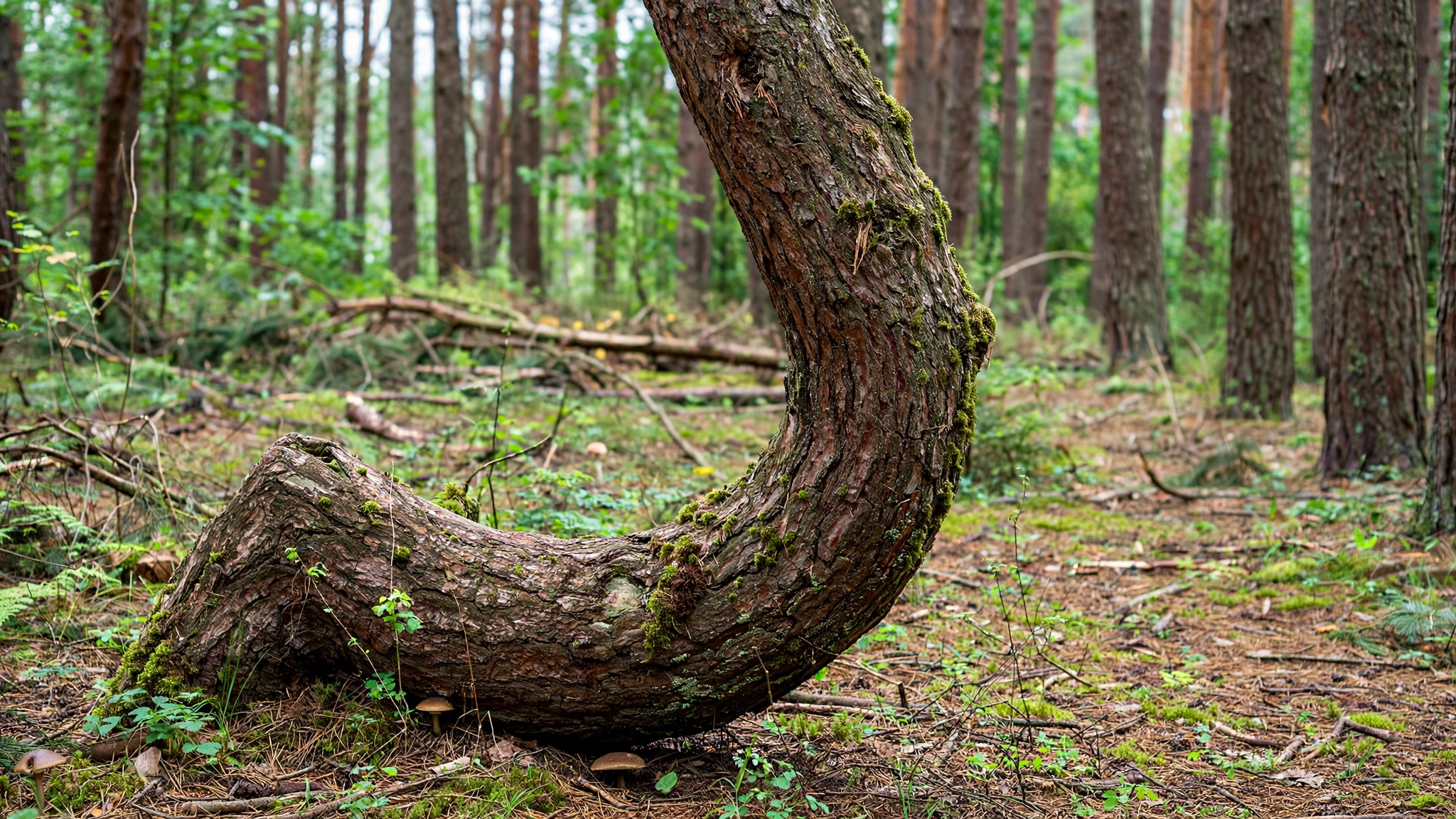
The trees were planted around 1930, but shortly after they began to grow, their trunks developed the same unusual curve. What makes the forest even more mysterious is that the surrounding pine trees outside the area grew normally, suggesting that something unique happened only within this small section of the forest.
Over the years, numerous theories have been proposed to explain the phenomenon. Some researchers believe local farmers may have intentionally bent the young trees to produce naturally curved timber for furniture, boat building, or construction. Others suggest that heavy snowfall, unusual weather conditions, or damage to the young trees may have caused the bends. Despite these explanations, no historical records have confirmed the true cause, leaving the mystery unsolved.
Today, the Crooked Forest has become a popular destination for photographers, nature lovers, and curious travelers. Its peaceful setting and unusual appearance make it one of Poland’s most fascinating natural attractions and a favorite stop for those interested in unexplained places around the world.
Whether shaped by human hands or natural forces, the Crooked Forest continues to inspire curiosity and remains one of Europe’s most intriguing natural mysteries.

Interesting Facts
- Location: Near Gryfino, western Poland.
- Local Name: Krzywy Las (Crooked Forest).
- Number of Trees: Approximately 400 uniquely curved pine trees.
- Estimated Age: The trees were planted around 1930.
- Why It's Mysterious: No one knows with certainty why every tree in this small forest developed the same unusual bend.
Did You Know?
Although the trees bend sharply near their bases, they continue growing perfectly straight upward. This unusual growth pattern is one of the biggest reasons the Crooked Forest remains an unsolved natural mystery.
11. Great Pyramid of Giza, Egypt – The Ancient Wonder That Still Amazes the World
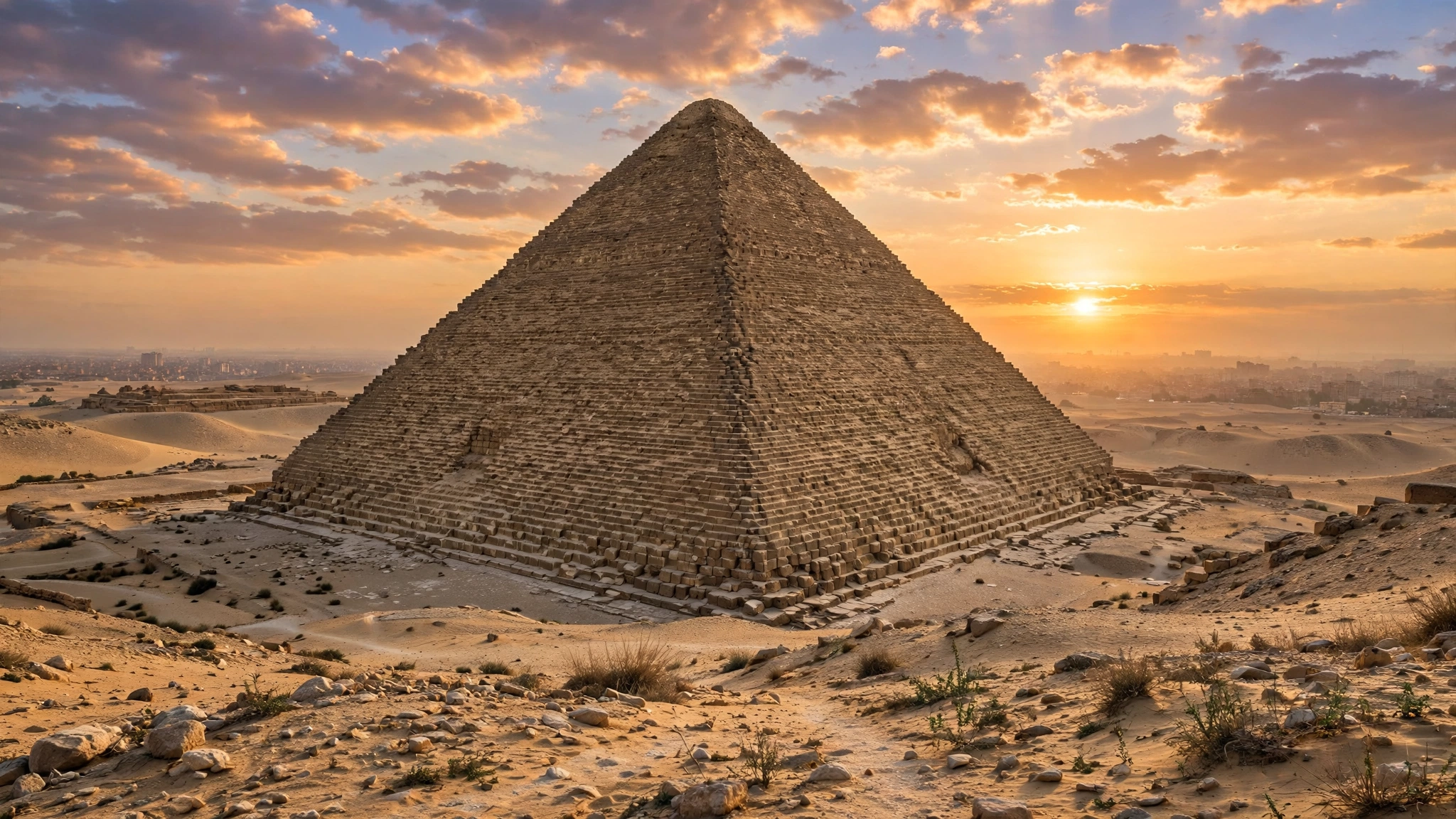
The Great Pyramid of Giza is one of the most mysterious places in the world and the only surviving monument of the Seven Wonders of the Ancient World. Located on the Giza Plateau near Cairo, Egypt, this extraordinary structure has fascinated historians, engineers, and travelers for more than 4,500 years.
Also known as the Pyramid of Khufu or the Great Pyramid, it was built during the reign of the Egyptian Pharaoh Khufu around 2560 BCE. Originally standing about 146.6 meters (481 feet) tall, it remained the tallest man-made structure on Earth for nearly 3,800 years. The pyramid is estimated to contain approximately 2.3 million limestone and granite blocks, many weighing several tons.
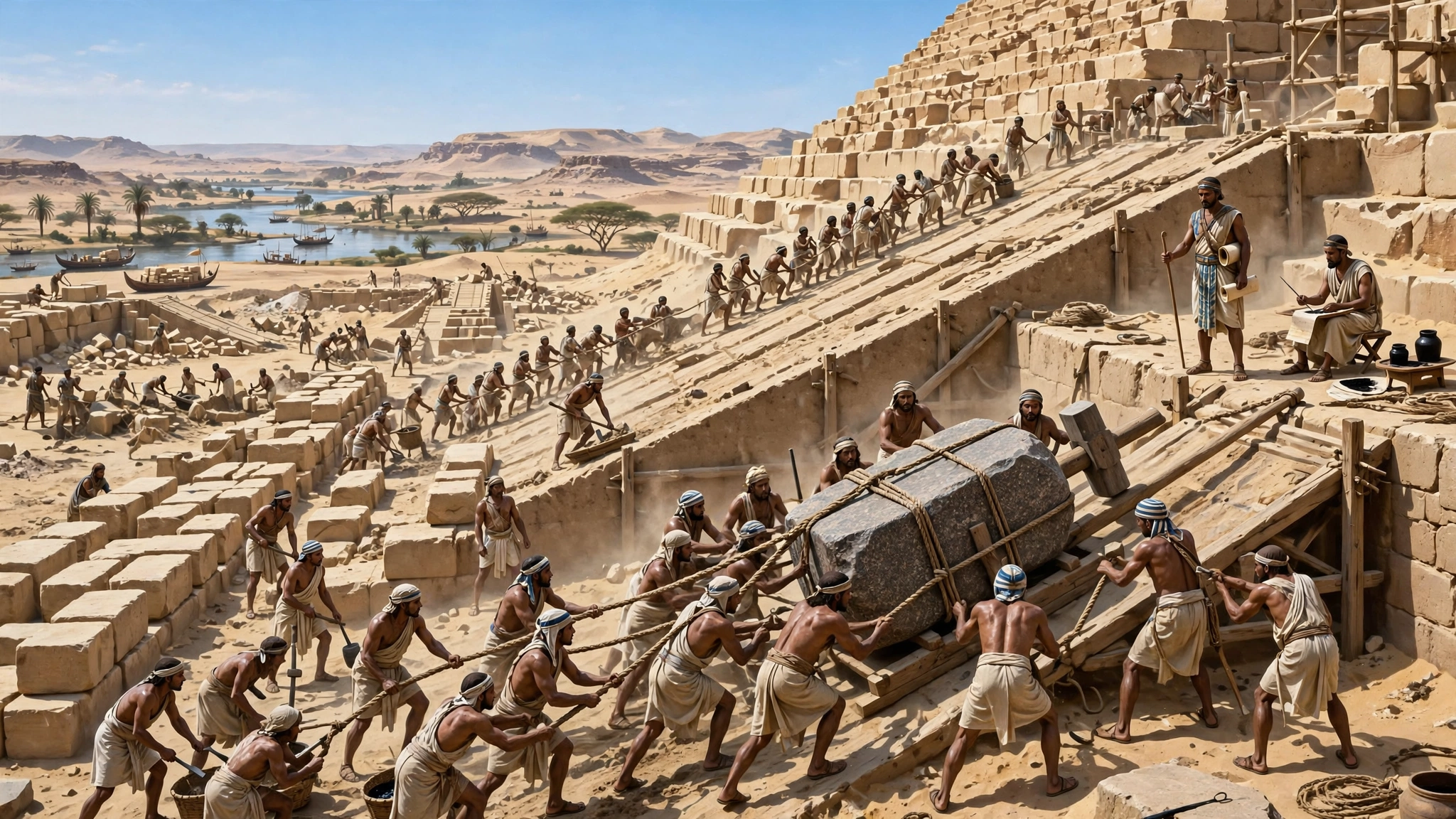
One of the greatest mysteries surrounding the Great Pyramid is how ancient Egyptians managed to construct such an enormous monument with remarkable precision using the technology available at the time. Historians have proposed several theories involving ramps, sledges, and highly organized labor forces, but the exact construction techniques are still debated. The pyramid’s nearly perfect alignment with the cardinal directions further demonstrates the impressive engineering and astronomical knowledge of ancient Egyptian builders.
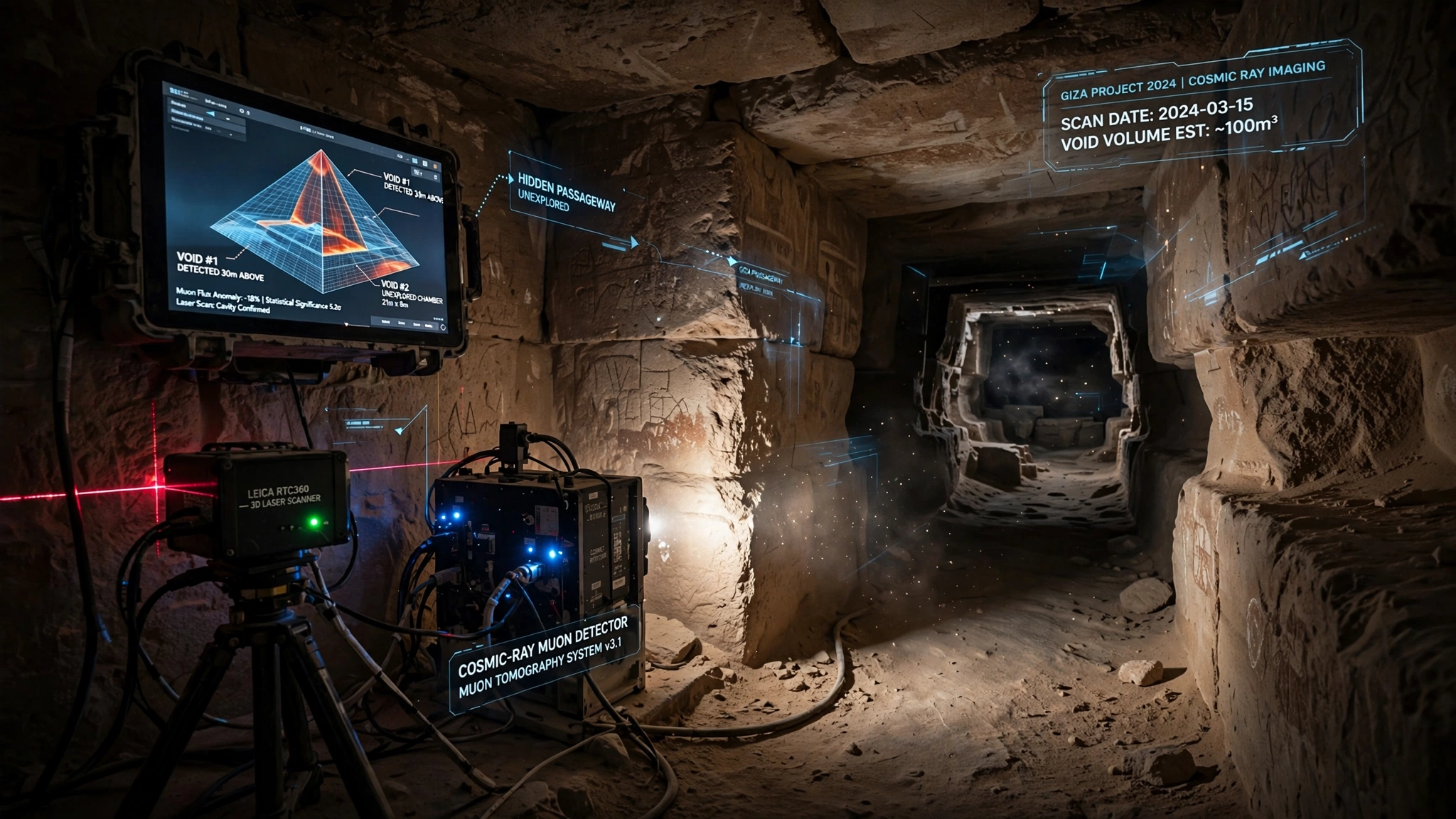
Beyond its remarkable construction, the Great Pyramid continues to intrigue researchers because of its hidden chambers, narrow passageways, and unexplored spaces. Modern technologies, including laser scanning and cosmic-ray imaging, have revealed previously unknown voids within the pyramid, suggesting there may still be secrets waiting to be discovered.
Today, the Great Pyramid of Giza is one of the world’s most visited archaeological sites and remains a symbol of ancient human achievement. Its enduring mystery and architectural brilliance continue to inspire scientists, archaeologists, and millions of travelers every year.
Interesting Facts
- Location: Giza Plateau, near Cairo, Egypt.
- Built For: Pharaoh Khufu around 2560 BCE.
- Height: Originally 146.6 meters (481 feet).
- Construction: Built using approximately 2.3 million stone blocks.
- Why It's Mysterious: Its precise construction, hidden chambers, and unknown building methods continue to fascinate researchers.
Did You Know?
The Great Pyramid of Giza remained the tallest man-made structure in the world for nearly 3,800 years. Even today, researchers continue using advanced technologies to search for hidden chambers and uncover new secrets inside this ancient wonder.
Why Do Mysterious Places Continue to Fascinate Us?
From ancient civilizations to unexplained natural phenomena, mysterious places have always captured the human imagination. Whether it’s a stone circle built thousands of years ago, a forest with strangely curved trees, or a crater that has been burning for decades, these remarkable destinations remind us that not every question has an easy answer.
Many of the world’s greatest mysteries inspire researchers to study history, archaeology, geology, and astronomy in search of answers. Every new discovery helps us understand these places better, yet some questions remain unanswered. This balance between scientific investigation and enduring mystery is one of the reasons these destinations continue to attract millions of visitors each year.
Mysterious places also offer a unique travel experience. Instead of simply admiring beautiful scenery, visitors have the opportunity to explore ancient cultures, hear fascinating local legends, and witness extraordinary natural wonders firsthand. From the towering Great Pyramid of Giza to the colorful Spotted Lake and the legendary Bermuda Triangle, each destination tells a story that blends history, science, and folklore.
While some mysteries have reasonable scientific explanations, others continue to spark debate among historians and researchers. Rather than diminishing their appeal, these discoveries often make the places even more interesting by revealing just how advanced ancient civilizations and natural processes can be.
Whether you’re a history enthusiast, an adventure traveler, or simply curious about the unknown, exploring the most mysterious places in the world offers an unforgettable journey into some of humanity’s greatest unsolved puzzles.
Travel Tips for Visiting Mysterious Places
- ✔ Research local rules and opening hours before your visit.
- ✔ Respect historical monuments and protected natural sites.
- ✔ Book guided tours for archaeological sites to learn their history.
- ✔ Wear comfortable walking shoes, especially for hiking destinations like Ciudad Perdida.
- ✔ Carry water, sunscreen, and weather-appropriate clothing for outdoor attractions.
- ✔ Follow local safety advice and avoid entering restricted areas.
- ✔ Bring a camera, but always follow photography regulations at heritage sites.
Frequently Asked Questions
The Bermuda Triangle is often considered the most mysterious place in the world because of its long history of unexplained ship and aircraft disappearances. Other famous mysterious places include Stonehenge, the Great Pyramid of Giza, the Nazca Lines, and Easter Island.
The Bermuda Triangle gained its mysterious reputation after reports of ships and aircraft disappearing under unusual circumstances. While many scientific explanations have been suggested, the mystery continues to attract worldwide attention.
Yes. Most of the mysterious places featured in this article, including Stonehenge, Easter Island, the Great Pyramid of Giza, the Nazca Lines, and the Paris Catacombs, are open to visitors. Some locations require guided tours or special permits.
Stonehenge, the Nazca Lines, Easter Island (Rapa Nui National Park), and the Great Pyramid of Giza are among the mysterious places recognized as UNESCO World Heritage Sites.
The Great Pyramid of Giza, built around 2560 BCE, is one of the oldest mysterious places in the world. It is also the only surviving Wonder of the Ancient World.
Most mysterious places are safe to visit when travelers follow local guidelines, stay within designated areas, and book tours through reputable operators where required.
Mysterious places combine history, science, archaeology, and local legends, making them fascinating destinations for travelers who enjoy exploring ancient civilizations and natural wonders.
If you're visiting Europe, Stonehenge or the Paris Catacombs are excellent choices. For South America, the Nazca Lines and Ciudad Perdida offer unforgettable experiences, while the Great Pyramid of Giza remains one of the world's most iconic historical sites.
Conclusion
The most mysterious places in the world continue to captivate travelers, historians, and scientists with their fascinating stories and unanswered questions. From the legendary Bermuda Triangle and the ancient Nazca Lines to the remarkable Great Pyramid of Giza, each destination offers a unique glimpse into the mysteries of our planet. While modern research has uncovered some explanations, many secrets remain unsolved, making these extraordinary places even more intriguing.
Whether you're planning your next adventure or simply enjoy learning about history's greatest enigmas, these incredible destinations prove that the world is still full of wonders waiting to be explored. Every mysterious place has its own story, blending history, culture, science, and local legends into unforgettable experiences that continue to inspire curiosity across generations.
Which of these mysterious places in the world would you love to visit first? Share your thoughts in the comments below, and if you enjoyed this guide, don't forget to share it with fellow travelers and mystery enthusiasts.



0 Comments