
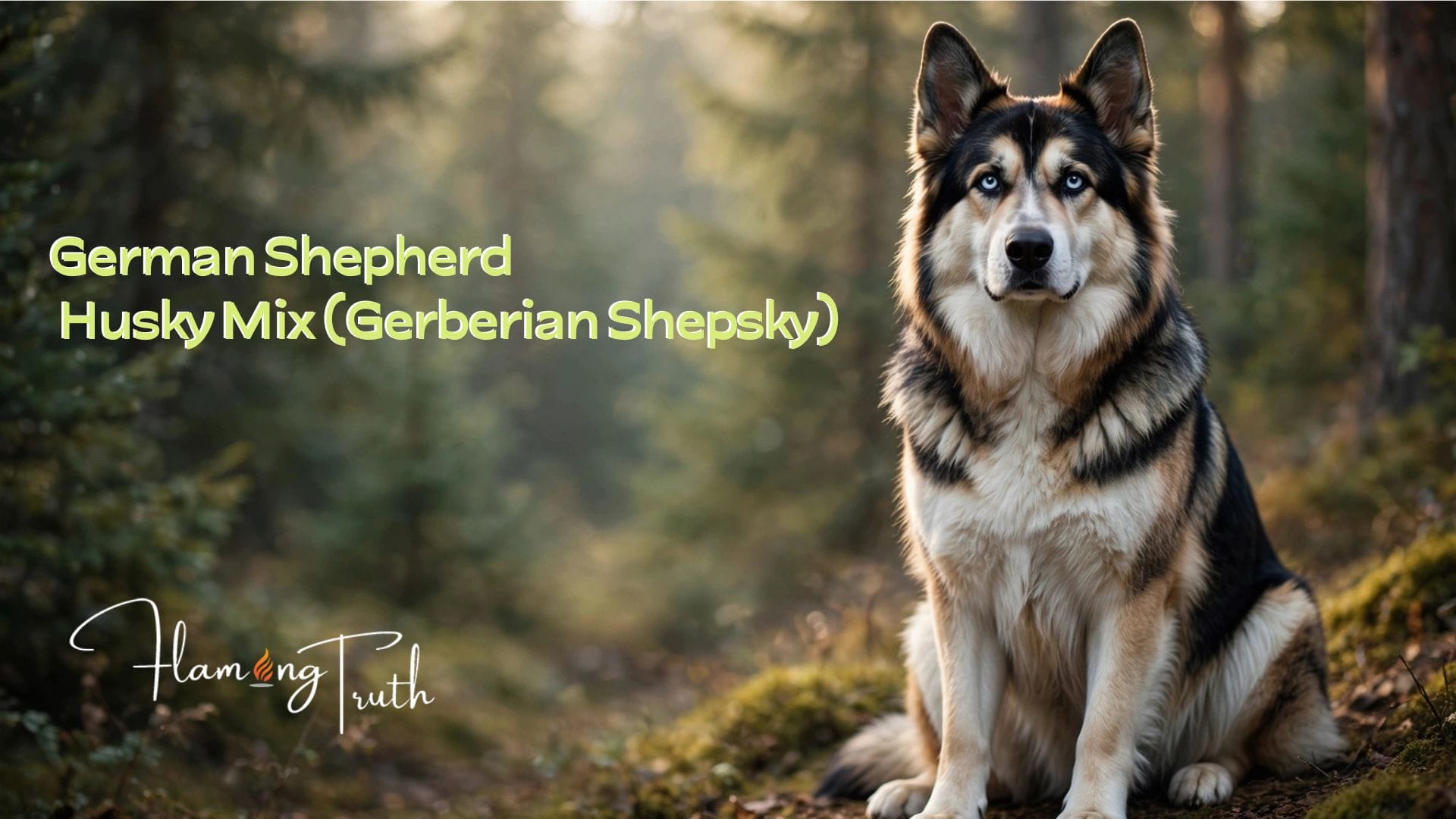

What Is a German Shepherd Husky Mix (Gerberian Shepsky)?
The German Shepherd Husky Mix, commonly known as the Gerberian Shepsky, is a hybrid dog breed created by crossing a purebred German Shepherd with a Siberian Husky. This cross combines two of the world’s most intelligent and hardworking breeds, producing a dog that is loyal, energetic, and highly trainable.
Originally bred to combine the German Shepherd’s protective instincts with the Siberian Husky’s endurance and athletic ability, the Gerberian Shepsky has become increasingly popular among active families and experienced dog owners. While it is not recognized as an official purebred by major kennel clubs, it is widely appreciated for its intelligence, striking appearance, and versatility.
Every German Shepherd Husky Mix is unique. Some puppies inherit more traits from their German Shepherd parent, while others resemble the Siberian Husky. Their coat color, eye color, size, and personality can vary significantly, making each Gerberian Shepsky one of a kind.
Because both parent breeds were originally developed as working dogs, this hybrid thrives on physical activity and mental stimulation. They enjoy learning new commands, participating in outdoor adventures, and forming strong bonds with their families. When properly trained and socialized from an early age, they can become affectionate companions, dependable watchdogs, and excellent family pets.
Although many people confuse the Alaskan Husky with the Siberian Husky, they are different breeds with unique characteristics.
Did You Know?
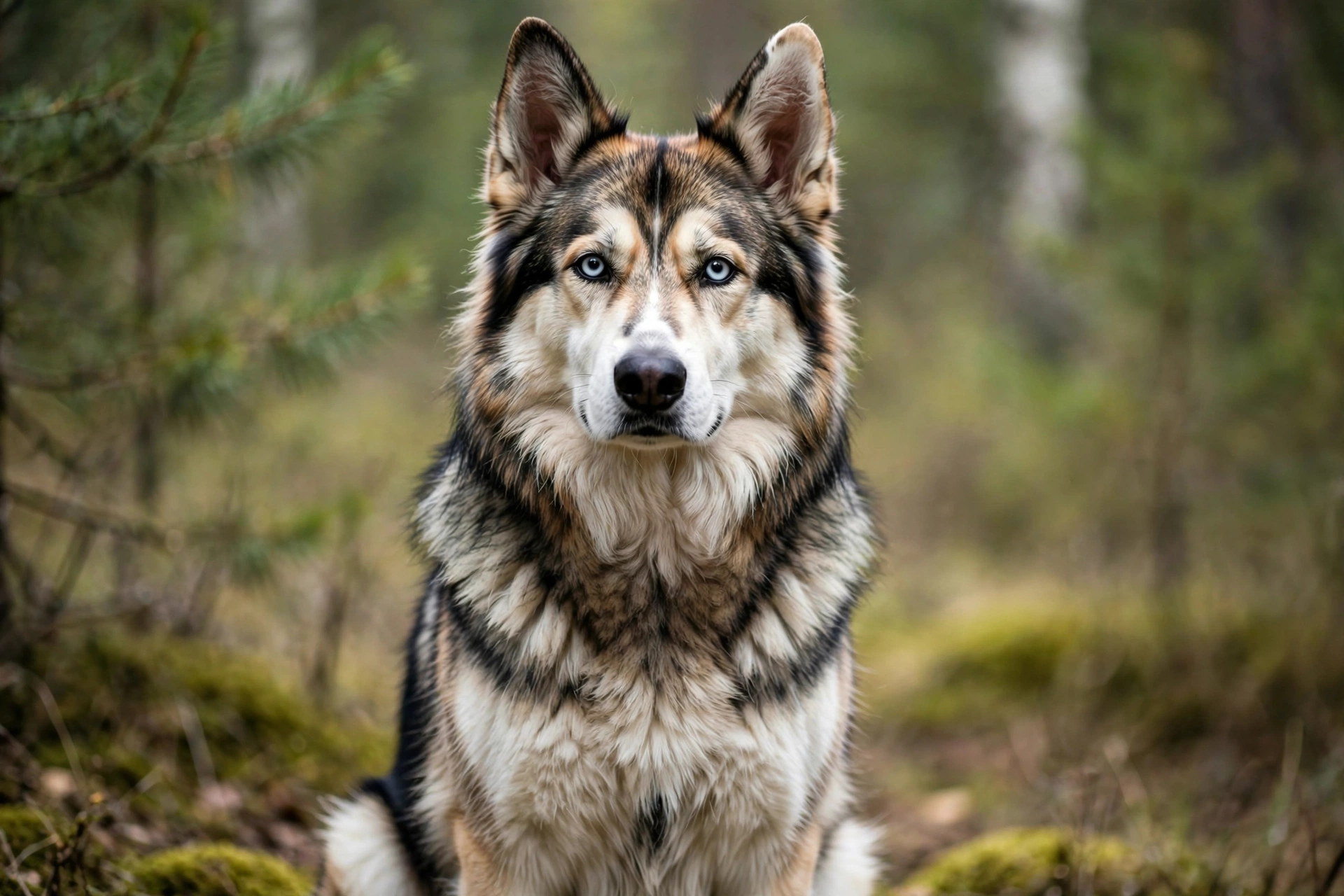
The Gerberian Shepsky often inherits the Husky’s striking blue eyes or even heterochromia, a rare condition in which each eye is a different color. Combined with the German Shepherd’s confident posture, this gives the breed its distinctive wolf-like appearance.
Why Is It Called a Gerberian Shepsky?
The German Shepherd Husky Mix is most commonly known as the Gerberian Shepsky, a name created by combining “German Shepherd” and “Siberian Husky.” Although many people use the terms interchangeably, both names refer to the same hybrid dog.
You may also come across names such as German Shepherd Husky Cross, Shepsky, or German Shepherd Siberian Husky Mix. Regardless of the name, these dogs inherit traits from both parent breeds, making each one unique in appearance, temperament, and personality.
The German Shepherd contributes intelligence, loyalty, and protective instincts to the hybrid. If you’d like to learn more about the breed’s history and personality, read our guide to interesting facts about German Shepherds.
German Shepherd Husky Mix Quick Facts
| Category | Details |
|---|---|
| Breed Name | German Shepherd Husky Mix (Gerberian Shepsky) |
| Also Known As | Gerberian Shepsky |
| Parent Breeds | German Shepherd × Siberian Husky |
| Breed Type | Hybrid / Designer Dog |
| Height | 20–26 inches (51–66 cm) |
| Weight | 45–88 lbs (20–40 kg) |
| Lifespan | 10–14 years |
| Temperament | Intelligent, Loyal, Protective, Energetic, Affectionate |
| Energy Level | ★★★★★ High |
| Trainability | ★★★★★ Excellent |
| Shedding | ★★★★★ Heavy |
| Good with Children | Yes, with early socialization |
| Apartment Friendly | Not Ideal |
| Exercise Needs | 90–120 minutes daily |
| Best For | Active families, experienced owners, and homes with large yards |
German Shepherd Husky Mix Appearance
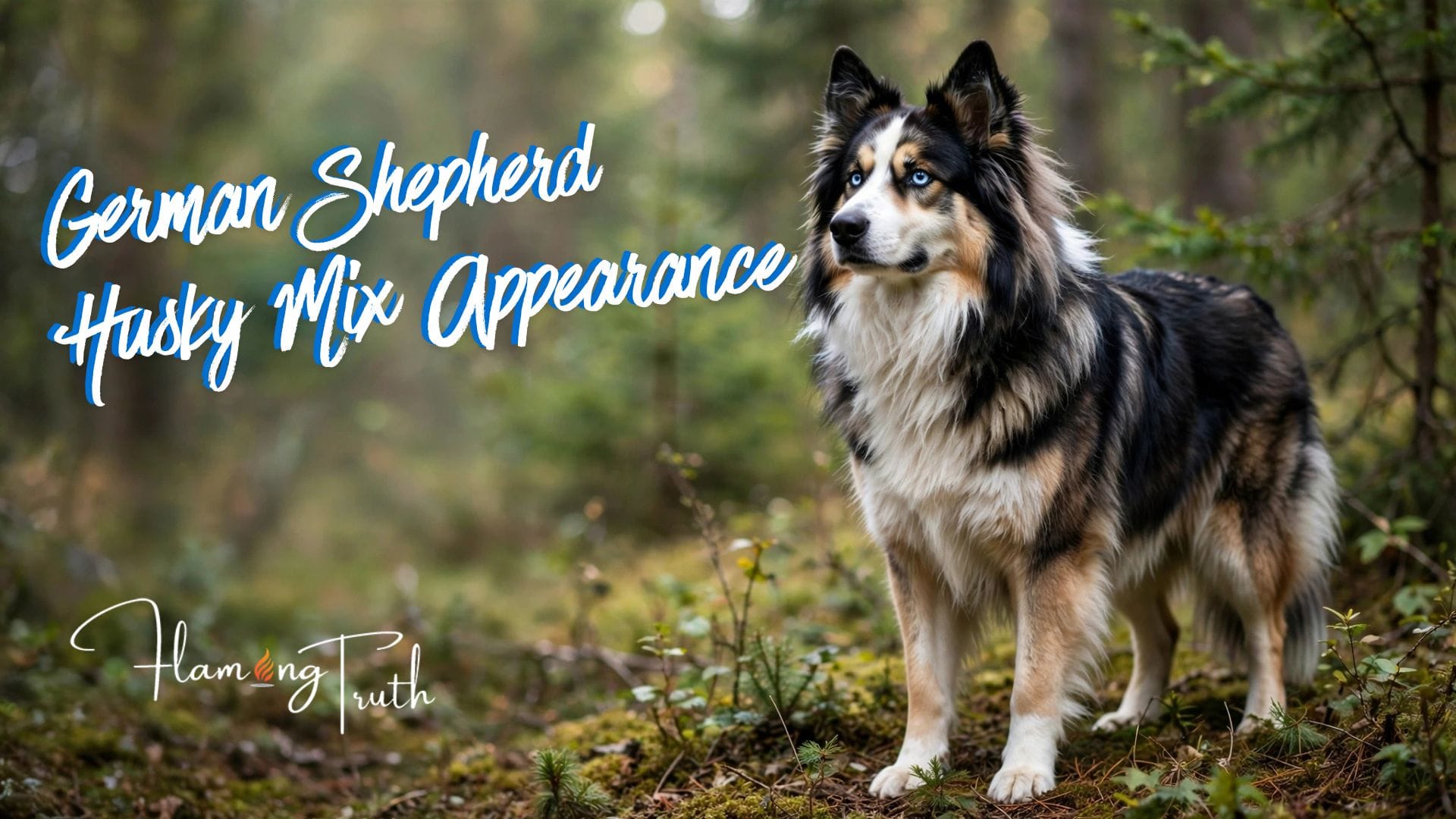
The German Shepherd Husky Mix is one of the most striking hybrid dog breeds thanks to its unique combination of German Shepherd strength and Siberian Husky beauty. Because it inherits traits from two different purebred parents, no two Gerberian Shepskies look exactly alike.
Most German Shepherd Husky Mix dogs have a muscular, athletic body with a deep chest, long legs, and a bushy tail. Their upright ears, wolf-like facial features, and expressive eyes often make them resemble wild wolves, which is one reason they attract so much attention.
Their coat is usually thick and double-layered, helping them stay warm in colder climates. While they can adapt to warmer regions, regular grooming is essential because they shed throughout the year and experience heavier shedding during seasonal coat changes.
If you’re interested in Husky hybrids, you may also enjoy learning about the Samoyed Husky Mix.
German Shepherd Husky Mix Size & Weight
Adult German Shepherd Husky Mix dogs are considered medium-to-large breeds. Their final size depends on genetics, diet, exercise, and overall health.
Coat Colors
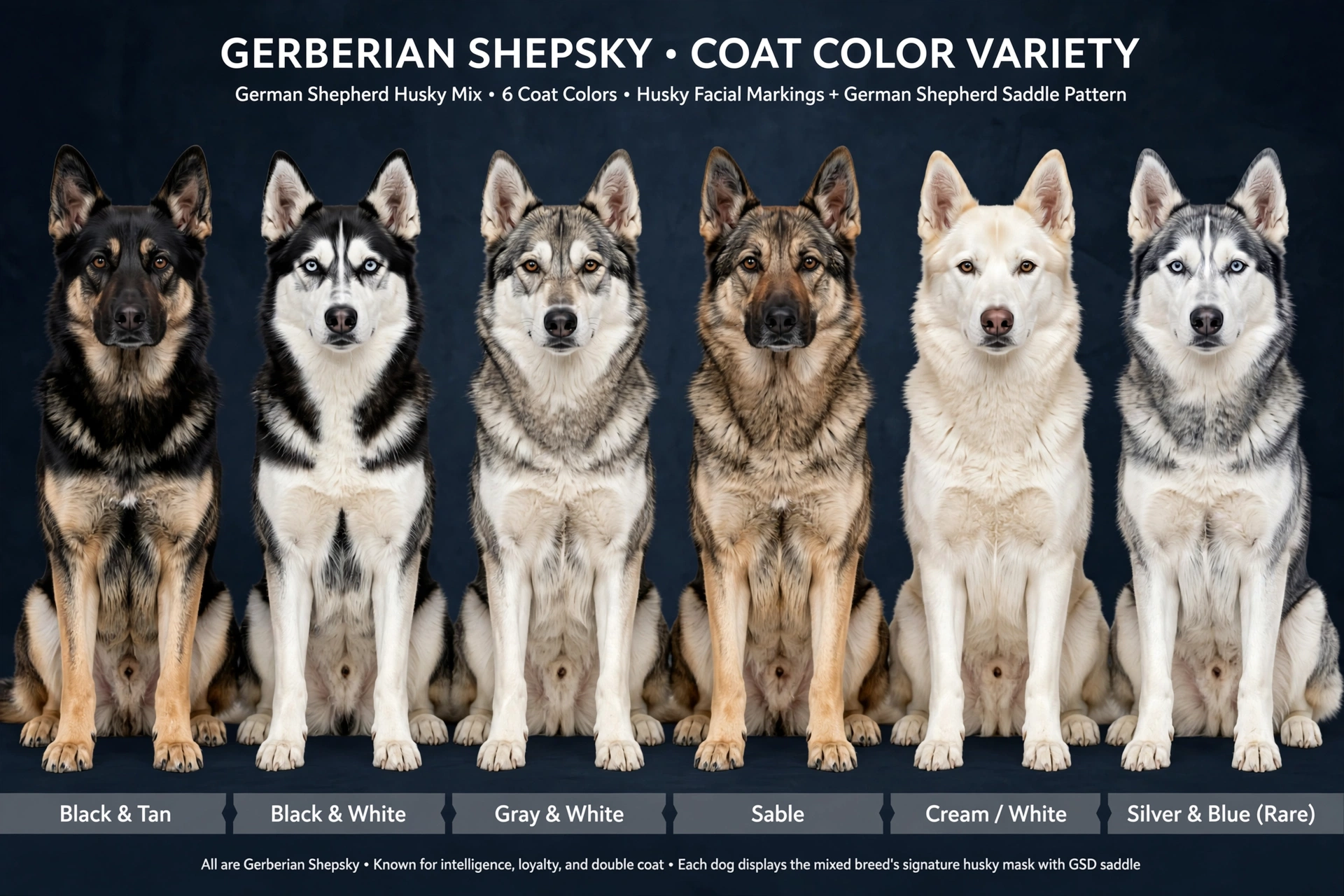
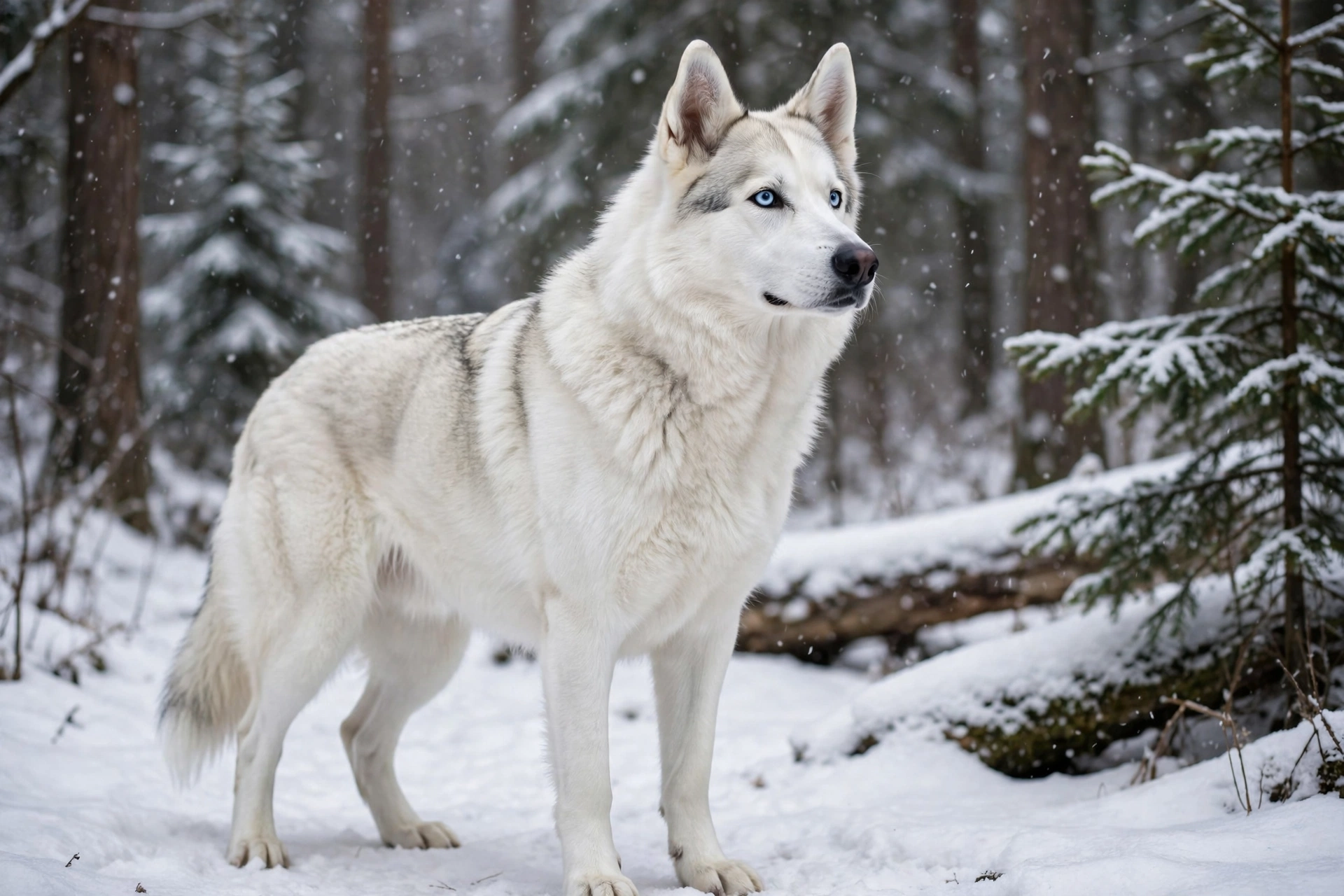
One of the most exciting characteristics of the German Shepherd Husky Mix is the wide variety of coat colors. Depending on which parent they inherit more traits from, they may display beautiful color combinations.
Common coat colors include:
- Black and Tan
- Black and White
- Gray and White
- Sable
- Cream
- White
- Brown
- Red
- Silver
- Blue (rare)
Some puppies even develop facial markings similar to a Siberian Husky while keeping the classic German Shepherd saddle pattern.
Coat Type
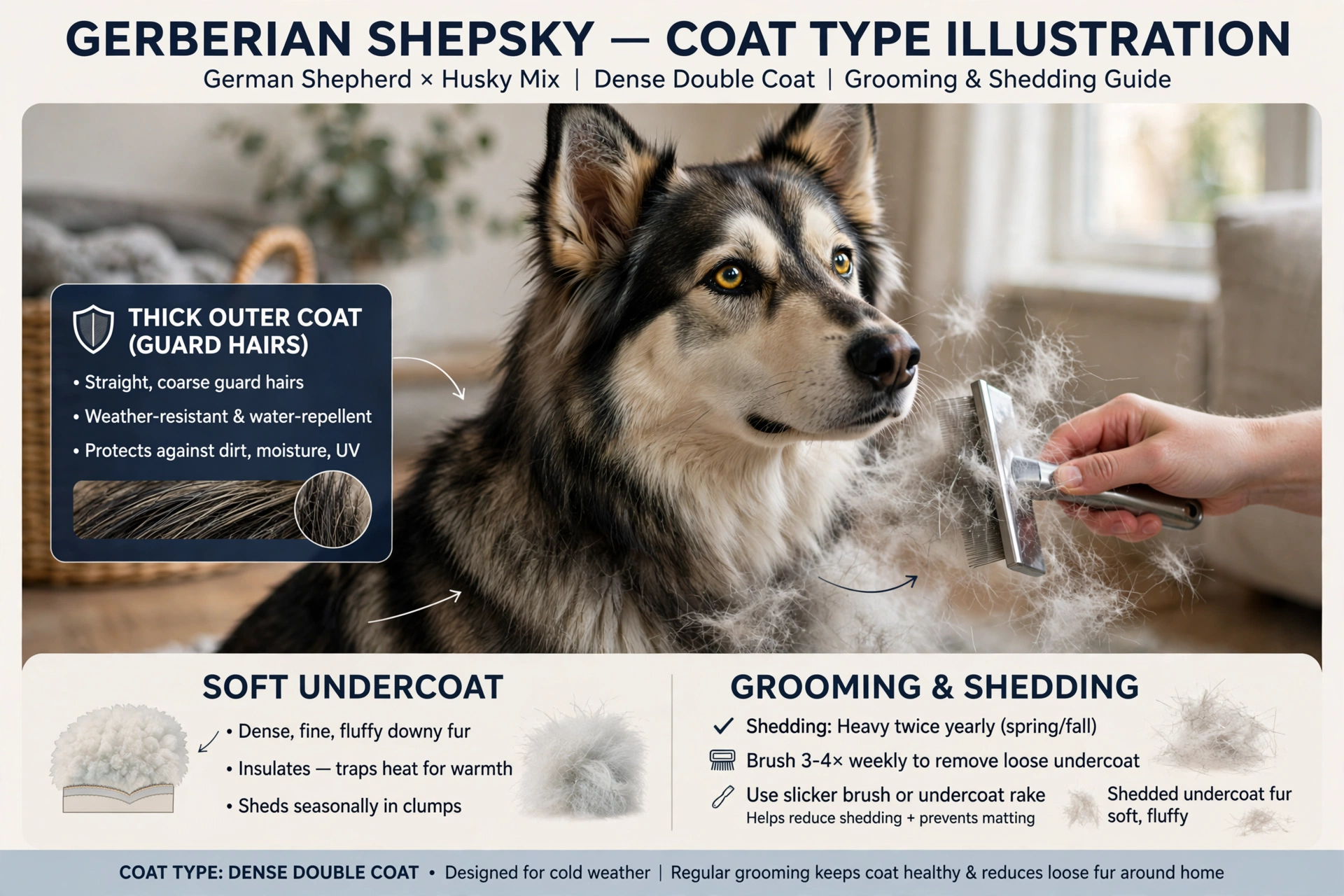
The Gerberian Shepsky usually inherits a dense double coat that provides insulation in both cold and moderately warm weather. Their outer coat is straight and weather-resistant, while the soft undercoat helps regulate body temperature.
Because of this thick coat, owners should brush their dog at least 2–3 times per week, increasing to daily brushing during shedding seasons.
Eye Colors
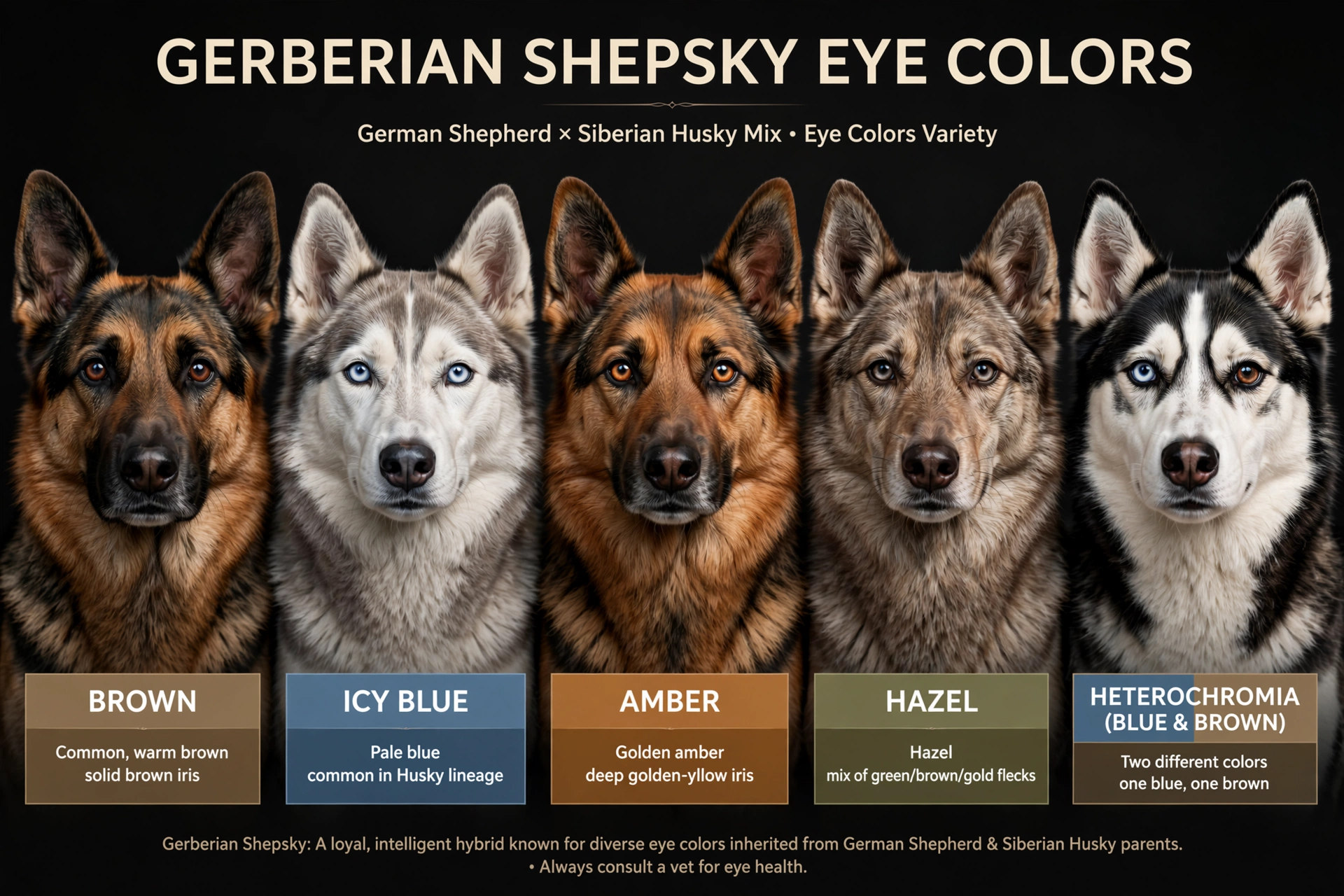
The eyes are one of the breed’s most recognizable features.
A German Shepherd Husky Mix may have:
- Brown eyes
- Blue eyes
- Amber eyes
- Hazel eyes
- One blue and one brown eye (heterochromia)
The stunning blue eyes inherited from the Siberian Husky are among the most sought-after features of this hybrid breed, although many puppies develop darker eye colors as they mature.
German Shepherd Husky Mix Temperament
One of the biggest reasons people choose a German Shepherd Husky Mix is its outstanding temperament. This hybrid combines the German Shepherd’s intelligence, confidence, and protective instincts with the Siberian Husky’s playful, energetic, and friendly personality. The result is a dog that is loyal, affectionate, and always eager to be part of family life.
Although every Gerberian Shepsky has a unique personality, most inherit the best qualities of both parent breeds. They are highly intelligent, quick learners, and enjoy having a purpose. Whether it’s learning new commands, hiking with their owners, or playing interactive games, these dogs thrive when they are mentally and physically engaged.
Because they form strong bonds with their families, German Shepherd Husky Mix dogs don’t enjoy being left alone for long periods. Without enough attention or daily exercise, they may become bored and develop unwanted behaviors such as chewing, digging, or excessive barking.

Are German Shepherd Husky Mix Dogs Good Family Pets?
Yes. A German Shepherd Husky Mix can make an excellent family dog when it receives proper training, early socialization, and regular exercise.
These dogs are naturally loyal and protective of the people they love. They often develop close relationships with every member of the household and enjoy participating in daily family activities. Their playful personality also makes them wonderful companions for older children who understand how to interact respectfully with dogs.
Because this is a large and energetic breed, interactions between young children and the dog should always be supervised. Teaching children how to approach, play with, and respect the dog’s space helps create a safe and positive relationship.
Families who enjoy outdoor activities such as walking, jogging, hiking, or camping will usually find the Gerberian Shepsky to be an enthusiastic companion.
Are German Shepherd Husky Mix Dogs Aggressive?
A well-trained and properly socialized German Shepherd Husky Mix is not naturally aggressive.
German Shepherds are known for being protective, while Siberian Huskies are generally more outgoing and friendly. This combination often produces a confident dog that is alert without being unnecessarily aggressive.
Like any breed, behavior depends largely on training, socialization, and the environment in which the dog is raised. Puppies exposed to different people, places, sounds, and animals from an early age usually grow into calm and confident adults.
Aggression is more commonly the result of fear, neglect, poor training, or lack of socialization rather than the breed itself.
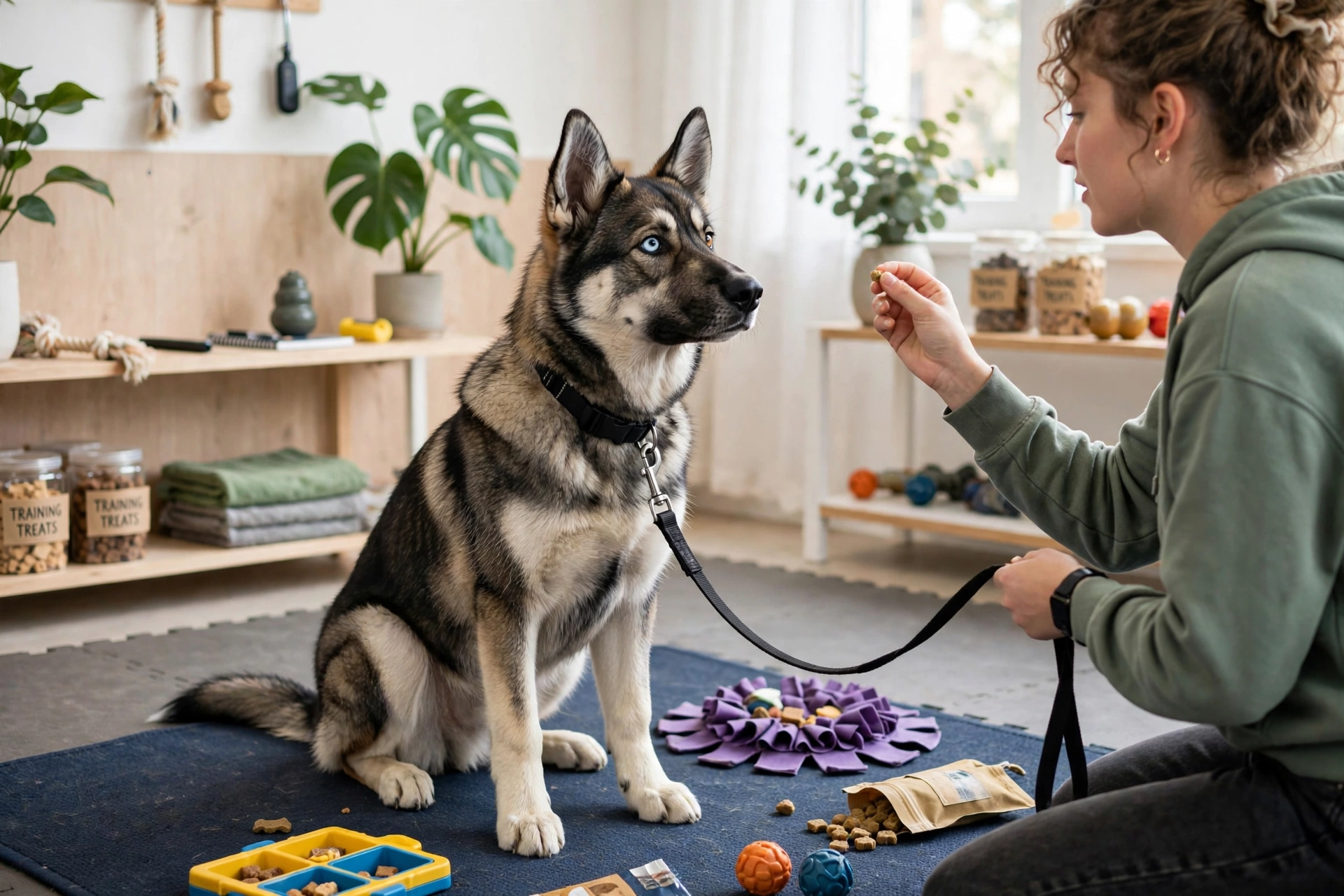
Are They Easy to Train?
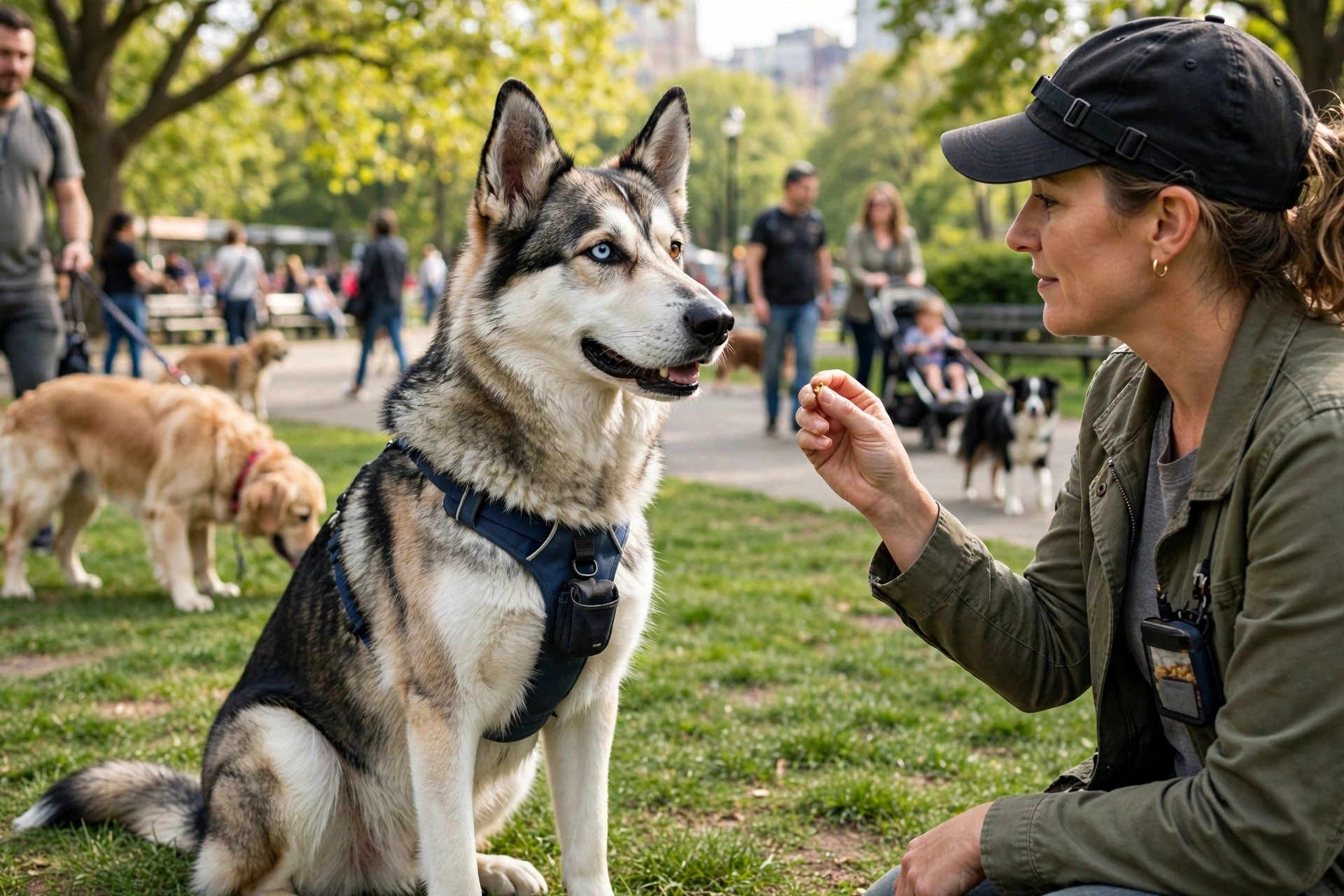
The German Shepherd Husky Mix is considered one of the more trainable hybrid breeds thanks to the intelligence of both parent dogs.
They enjoy learning new commands, solving problems, and having a job to do. Positive reinforcement using praise, treats, and toys works much better than harsh correction.
Training should begin as early as possible and include:
- Basic obedience commands.
- Leash training.
- Recall training.
- Socialization with people and other animals.
- Mental enrichment through puzzle toys and interactive games.
Consistent training not only improves behavior but also strengthens the bond between you and your dog.
Do German Shepherd Husky Mix Dogs Bark a Lot?
German Shepherd Husky Mix dogs are generally moderate barkers, but their vocal behavior depends on which parent breed they take after.
German Shepherds tend to bark when alerting their owners to unfamiliar people or unusual sounds. Siberian Huskies, on the other hand, are famous for howling, talking, and making a variety of vocal sounds instead of barking excessively.
A bored or under-exercised Gerberian Shepsky may bark or howl more often. Providing enough daily exercise, mental stimulation, and companionship usually keeps excessive vocalization under control.
Can a German Shepherd Husky Mix Be Left Alone?
This breed is happiest when spending time with its family and generally does not enjoy being left alone for long periods.
If left alone too often, a German Shepherd Husky Mix may become anxious or frustrated, leading to destructive behaviors such as chewing furniture, digging, or escaping from the yard.
If your work schedule requires extended absences, consider providing:
- Interactive puzzle toys
- Daily exercise before leaving home
- A secure outdoor area
- A dog walker or pet sitter for longer days
- Plenty of companionship whenever possible
Meeting both the physical and emotional needs of your dog helps prevent boredom and separation-related behaviors.
German Shepherd Husky Mix Exercise & Activity Requirements
The German Shepherd Husky Mix is one of the most energetic hybrid dog breeds you can own. Since both the German Shepherd and the Siberian Husky were originally bred as working dogs, the Gerberian Shepsky inherits an impressive amount of stamina, intelligence, and enthusiasm for physical activity.
This is not a breed that enjoys spending the entire day indoors. Without enough exercise and mental stimulation, a German Shepherd Husky Mix can quickly become bored, leading to behaviors such as excessive barking, chewing furniture, digging holes in the yard, or attempting to escape from fenced areas.
For owners with an active lifestyle, however, this hybrid makes an outstanding companion. Whether it’s hiking, jogging, long walks, or interactive games, the German Shepherd Husky Mix enjoys having a daily job and spending quality time with its family.
Looking for another large Husky crossbreed? Check out the Great Dane Husky Mix.
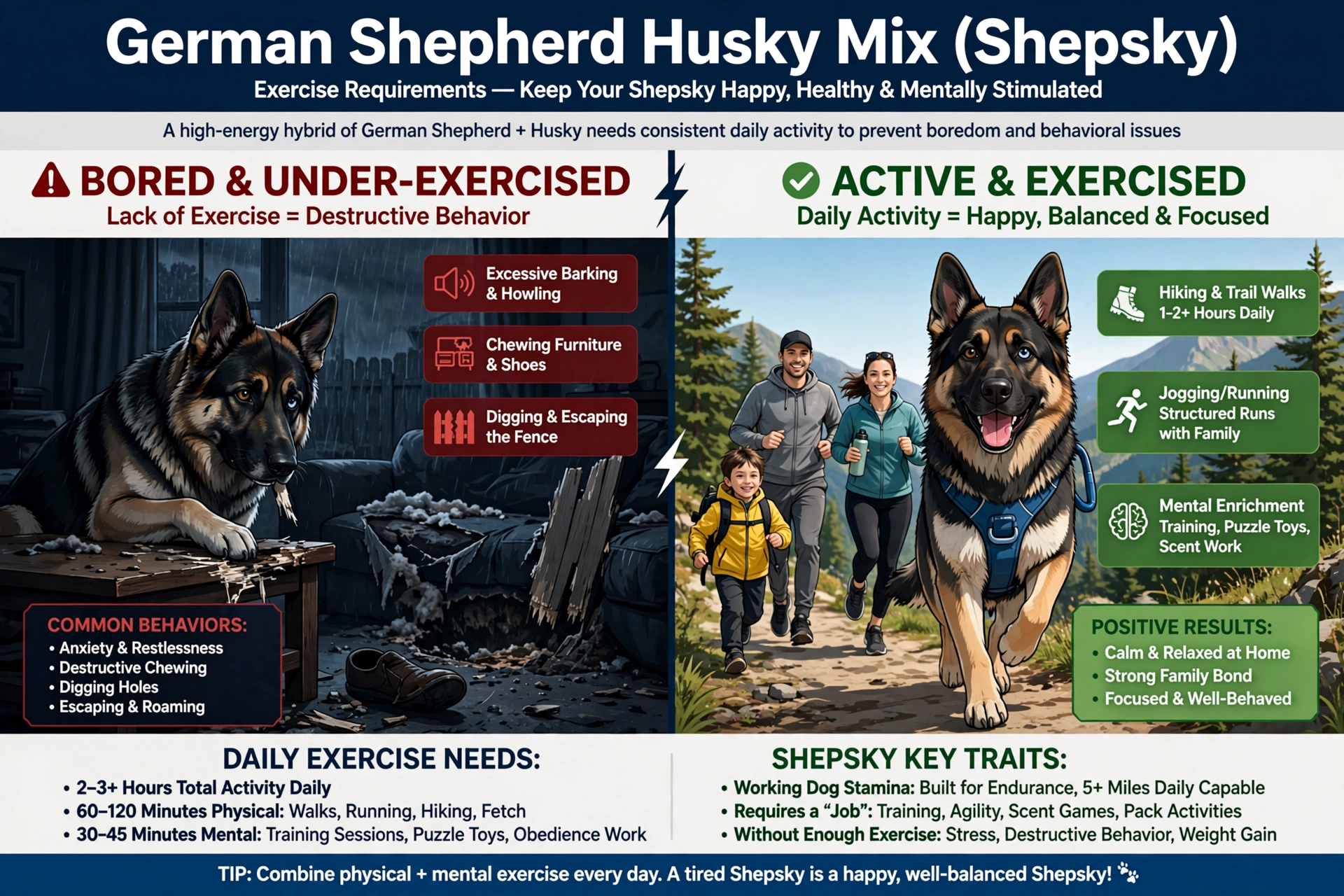
How Much Exercise Does a German Shepherd Husky Mix Need?
An adult German Shepherd Husky Mix typically requires 90 to 120 minutes of exercise every day. This doesn’t have to be completed all at once. Splitting activity into two or three sessions helps keep your dog physically fit while preventing boredom.
A balanced daily routine may include:
- A 30–45 minute morning walk or jog.
- Fetch or interactive play during the afternoon.
- An evening walk or light training session.
- Free play in a secure, fenced yard.
Puppies should exercise in shorter sessions to protect their developing joints, while senior dogs may need lower-impact activities based on their health and mobility.
Mental Stimulation Is Just as Important
Exercise alone isn’t enough for this intelligent hybrid. Because both parent breeds are known for their problem-solving abilities, the Gerberian Shepsky also needs regular mental challenges.
Activities that help keep their minds active include:
- Obedience training.
- Puzzle feeders and interactive toys.
- Hide-and-seek games.
- Agility courses.
- Scent and tracking games.
- Learning new tricks and commands.
Providing mental stimulation reduces boredom and encourages positive behavior, making your dog happier and easier to manage.
Can a German Shepherd Husky Mix Live in an Apartment?
Although it’s possible, apartment living is not ideal for a German Shepherd Husky Mix.
Their large size, high energy levels, and need for daily exercise mean they generally do better in homes with access to a securely fenced yard. If you live in an apartment, you’ll need to commit to multiple outdoor walks, regular play sessions, and plenty of mental enrichment every day.
With dedicated owners who meet these needs, some Gerberian Shepskies adapt well to apartment life. However, a lack of exercise can quickly lead to frustration and destructive behavior.
Best Activities for a Gerberian Shepsky
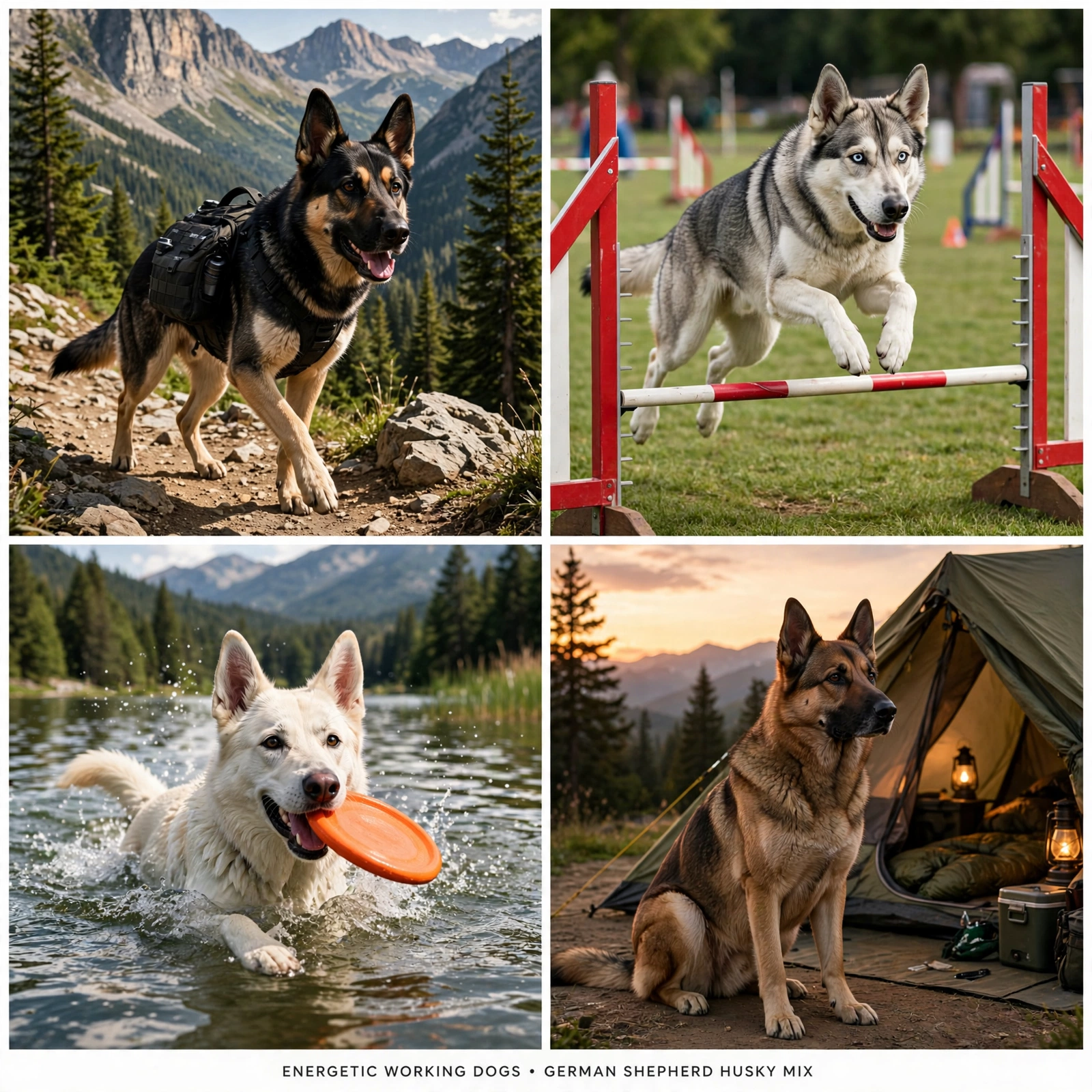
Because this breed was developed from two athletic working dogs, it enjoys a wide variety of physical activities.
Some of the best options include:
- Hiking and trail walking.
- Running or jogging.
- Swimming (if introduced gradually).
- Fetch and frisbee.
- Agility training.
- Search-and-find games.
- Obedience competitions.
- Camping and outdoor adventures.
Keeping exercise varied not only improves physical fitness but also prevents boredom and strengthens the bond between you and your dog.
What Happens If They Don’t Get Enough Exercise?
A German Shepherd Husky Mix that doesn’t receive enough daily activity may develop several unwanted behaviors.
Common signs of insufficient exercise include:
- Excessive barking or howling.
- Digging in the yard.
- Chewing furniture or household items.
- Hyperactivity inside the home.
- Pulling on the leash.
- Escaping from the yard.
- Weight gain.
- Restlessness or anxiety.
Most of these issues can be greatly reduced by providing consistent exercise, mental stimulation, and quality time with the family.
Quick Exercise Guide
| Age | Recommended Daily Exercise |
|---|---|
| 2–6 Months | 20–40 minutes |
| 6–12 Months | 45–60 minutes |
| Adult (1–7 Years) | 90–120 minutes |
| Senior (7+ Years) | 45–60 minutes (Low Impact) |
Owner Tip
A tired German Shepherd Husky Mix is usually a happy and well-behaved dog. Combining physical exercise with mental enrichment every day is one of the best ways to prevent behavioral problems and help your Gerberian Shepsky thrive.
German Shepherd Husky Mix Diet & Nutrition
A healthy diet plays a vital role in the growth, energy levels, and overall well-being of a German Shepherd Husky Mix. Since the Gerberian Shepsky inherits the athletic build of both the German Shepherd and the Siberian Husky, it requires a balanced diet rich in high-quality protein, healthy fats, vitamins, and essential minerals.
The exact amount of food your dog needs depends on several factors, including age, weight, activity level, metabolism, and overall health. Highly active dogs generally require more calories than less active companions, while puppies need specially formulated food to support healthy growth and bone development.
Choosing nutritious food and maintaining a consistent feeding schedule can help your German Shepherd Husky Mix maintain a healthy weight, support strong muscles and joints, and reduce the risk of obesity-related health problems.
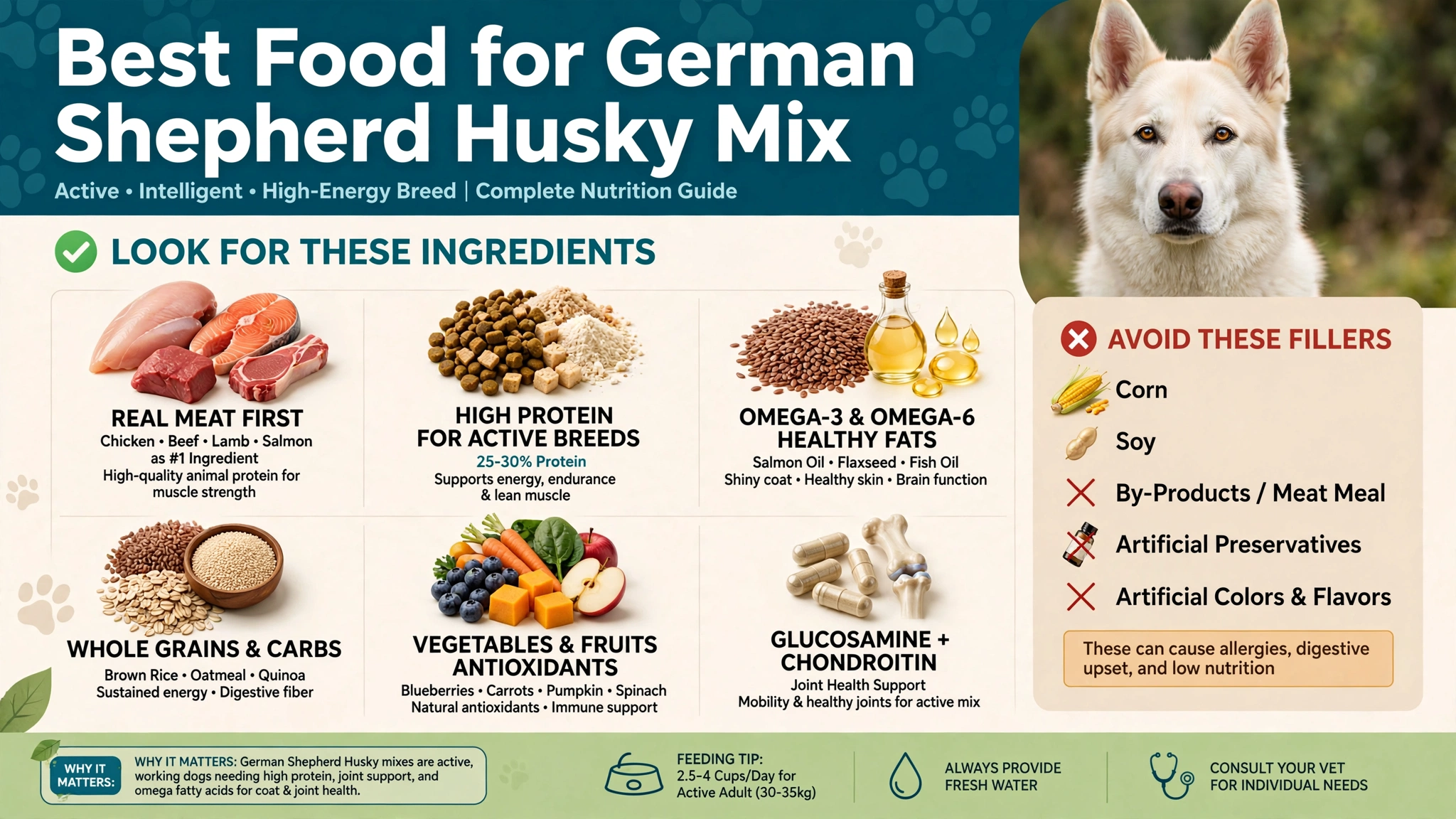
What Is the Best Food for a German Shepherd Husky Mix?
The best diet for a German Shepherd Husky Mix is one that provides complete and balanced nutrition using high-quality ingredients.
Look for dog food that includes:
- Real meat such as chicken, beef, lamb, turkey, or salmon as the first ingredient.
- Protein content suitable for active breeds.
- Healthy fats, including omega-3 and omega-6 fatty acids.
- Whole grains or easily digestible carbohydrates.
- Vegetables and fruits that provide natural vitamins and antioxidants.
- Glucosamine and chondroitin to help support healthy joints.
Avoid foods that rely heavily on fillers, artificial preservatives, excessive corn, soy, or unnamed meat by-products.
Feeding Guide by Age
A German Shepherd Husky Mix has different nutritional requirements throughout its life.
Puppy (2–12 Months)
Growing puppies require nutrient-rich food specially formulated for large-breed puppies. During this stage, they should be fed three to four small meals each day to support healthy development.
Adult (1–7 Years)
Healthy adults usually thrive on two balanced meals per day. Their diet should contain enough protein and healthy fats to maintain muscle mass and provide energy for daily activities.
Senior (7+ Years)
Older dogs often become less active and may require fewer calories while still receiving adequate protein, vitamins, and joint-supporting nutrients. Regular veterinary checkups can help determine the best diet as your dog ages.
Foods to Avoid
Some human foods can be dangerous or even toxic to dogs. Never intentionally feed your German Shepherd Husky Mix the following:
- Chocolate
- Grapes and raisins
- Onions and garlic
- Avocados
- Alcohol
- Caffeine
- Macadamia nuts
- Xylitol (found in sugar-free products)
- Cooked bones
- Excessively salty or spicy foods
If your dog accidentally consumes any of these foods, contact your veterinarian immediately.
How Much Water Does a German Shepherd Husky Mix Need?
Fresh, clean drinking water should always be available.
An active German Shepherd Husky Mix drinks more water after exercise, during warm weather, and while eating dry kibble. Proper hydration supports healthy digestion, regulates body temperature, and helps maintain healthy joints and organs.
Always monitor your dog’s water intake during outdoor activities, especially in hot climates.
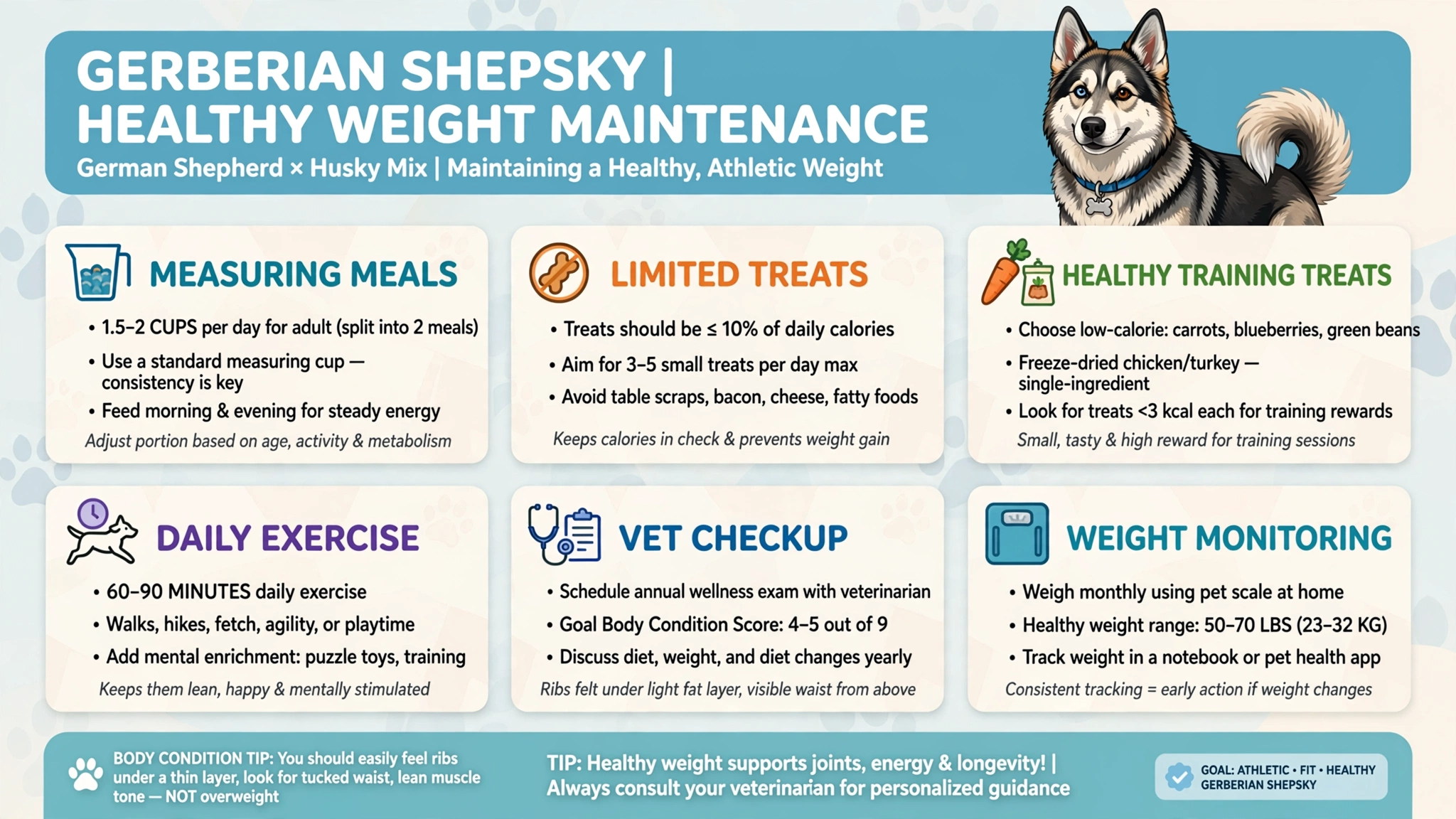
Maintaining a Healthy Weight
Because this breed is naturally athletic, maintaining a healthy body condition is just as important as providing regular exercise.
To help your dog stay fit:
- Measure meals instead of free-feeding.
- Limit treats to occasional rewards.
- Choose healthy training treats.
- Exercise daily.
- Schedule regular veterinary checkups.
- Monitor body weight every few months.
If your dog begins gaining excess weight, consult your veterinarian before making major dietary changes.
Quick Feeding Guide
| Life Stage | Meals Per Day | Diet Focus |
|---|---|---|
| Puppy (2–6 Months) | 3–4 | Large-breed puppy food |
| Puppy (6–12 Months) | 3 | High-protein growth formula |
| Adult | 2 | Balanced high-quality diet |
| Senior | 2 | Joint support & controlled calories |
Owner Tip
Avoid sudden changes to your dog’s diet. When switching to a new food, gradually mix the new food with the old over 7–10 days. This helps reduce the risk of digestive upset and allows your dog to adjust comfortably.
German Shepherd Husky Mix Grooming & Shedding
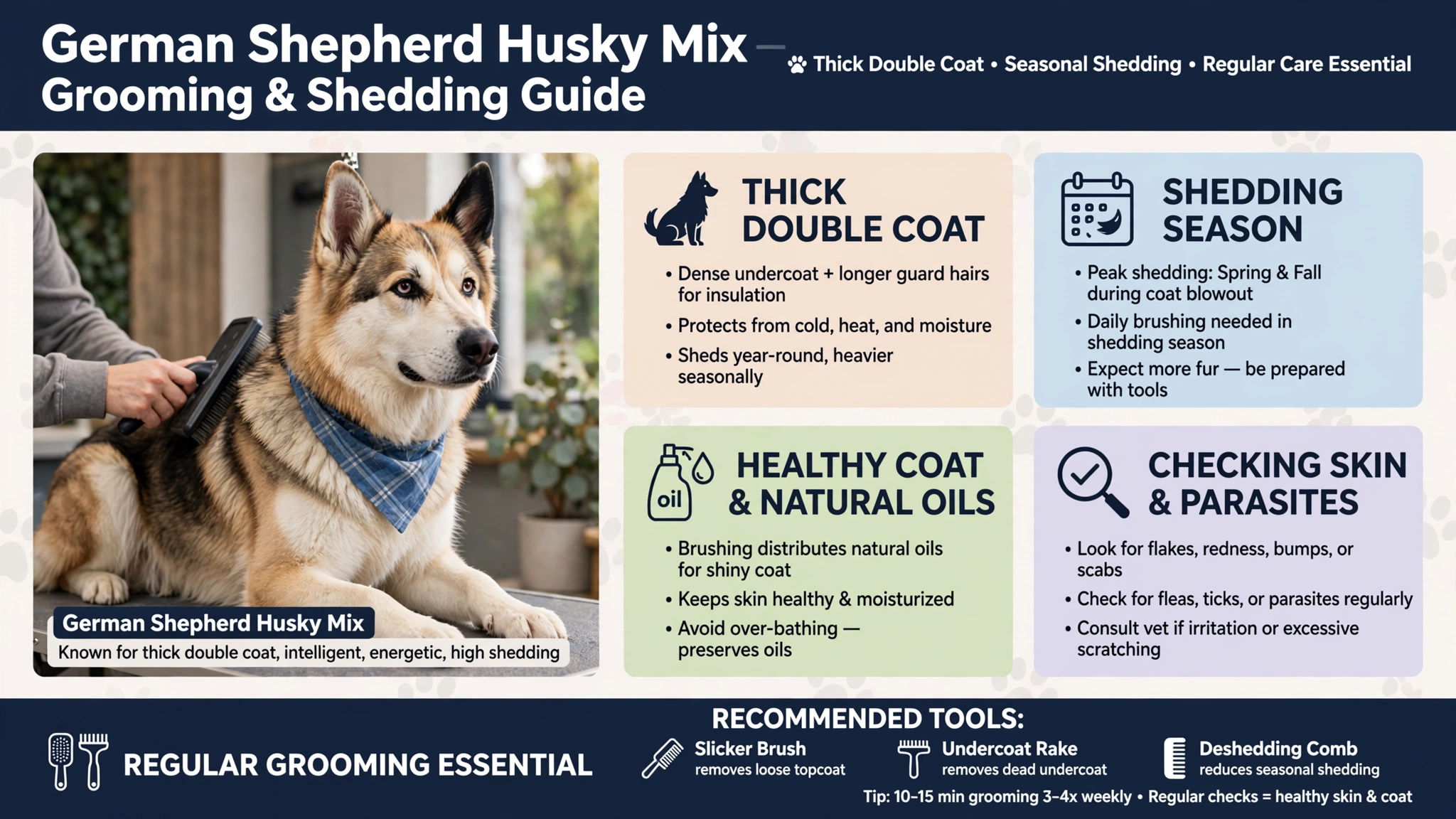
The German Shepherd Husky Mix is a beautiful dog with a thick double coat inherited from both the German Shepherd and the Siberian Husky. While this dense coat helps protect the breed from cold weather and harsh outdoor conditions, it also means regular grooming is essential throughout the year.
Many first-time owners underestimate how much maintenance a Gerberian Shepsky requires. Fortunately, with a consistent grooming routine, keeping their coat healthy and reducing loose hair around the home becomes much more manageable.
Besides improving appearance, regular grooming also helps distribute natural oils, remove dirt, prevent tangles, and gives you the opportunity to check for skin problems, parasites, or unusual lumps.
Do German Shepherd Husky Mix Dogs Shed a Lot?
Yes. The German Shepherd Husky Mix is considered a heavy shedder.
Both parent breeds have thick double coats designed to protect them from extreme weather, so their offspring naturally inherit the same characteristic. While shedding occurs throughout the year, it becomes significantly heavier during spring and autumn when they “blow” their undercoat.
During these seasonal shedding periods, it’s completely normal to see much more loose hair than usual. Daily brushing during these times helps remove dead fur before it spreads throughout your home.
If you’re looking for a low-maintenance or hypoallergenic dog, the Gerberian Shepsky is probably not the best choice.
How Often Should You Brush a Gerberian Shepsky?
Regular brushing is one of the easiest ways to keep your dog’s coat healthy and reduce shedding.
A general grooming schedule includes:
- 2–3 times per week during normal months.
- Daily brushing during seasonal shedding.
- Use a slicker brush or undercoat rake to remove loose fur.
- Finish with a grooming comb to smooth the outer coat.
Brushing not only reduces loose hair but also stimulates healthy skin and improves blood circulation.
Bathing and Coat Care
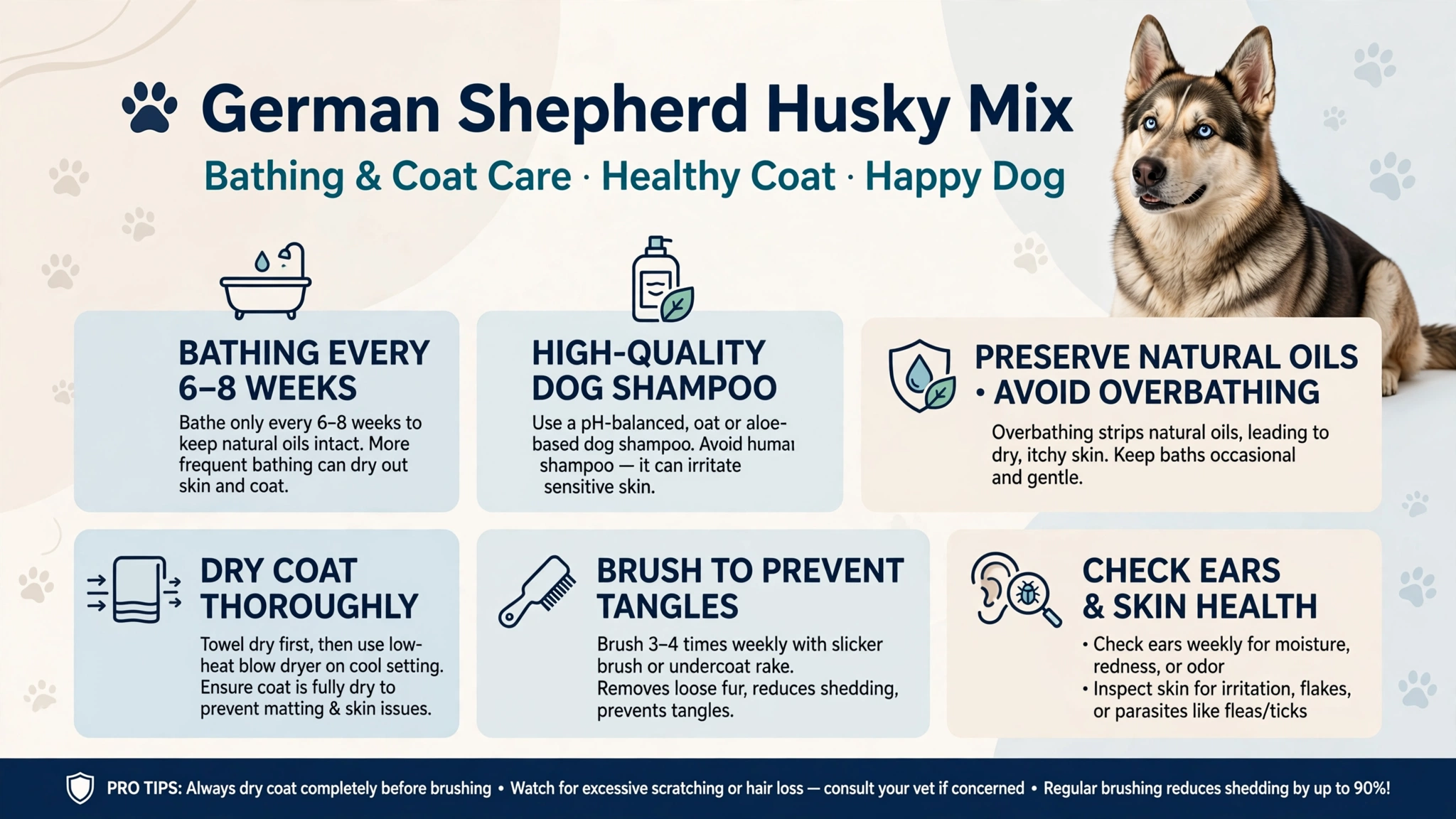
Unlike some breeds, the German Shepherd Husky Mix doesn’t require frequent baths.
Bathing every 6–8 weeks, or whenever your dog becomes especially dirty, is usually sufficient. Using a high-quality dog shampoo helps preserve the coat’s natural oils and prevents dry skin.
Avoid excessive bathing, as it can strip away protective oils and lead to skin irritation.
After each bath:
- Dry the coat thoroughly.
- Brush the fur to prevent tangles.
- Check the ears for moisture.
- Inspect the skin for irritation or parasites.
Nail, Ear, and Dental Care
Grooming isn’t just about the coat. A complete care routine should also include regular maintenance of your dog’s nails, ears, and teeth.
Nail Care
Trim the nails every 3–4 weeks, or whenever you hear them clicking on hard floors. Overgrown nails can affect your dog’s posture and cause discomfort while walking.
Ear Care
Check the ears weekly for dirt, redness, unpleasant odors, or excessive wax buildup. Cleaning the ears with a veterinarian-approved solution helps reduce the risk of infection.
Dental Care
Brush your dog’s teeth 2–3 times each week using dog-safe toothpaste. Good dental hygiene helps prevent plaque buildup, gum disease, and bad breath while supporting your dog’s overall health.

Essential Grooming Tools
Keeping the right tools at home makes grooming easier and more effective.
Recommended grooming supplies include:
- Slicker brush
- Undercoat rake
- Stainless steel grooming comb
- Dog nail clippers or grinder
- Dog shampoo
- Ear-cleaning solution
- Dog toothbrush and toothpaste
- Absorbent microfiber towel
Investing in quality grooming tools saves time and helps maintain your dog’s coat in excellent condition throughout the year.
Weekly Grooming Checklist
📅 Weekly Grooming Checklist
- Brush the coat 2–3 times
- Check and clean the ears
- Brush the teeth
- Inspect the paws and paw pads
- Check the eyes for irritation or discharge
- Remove loose undercoat
- Clean the collar and leash
- Refill grooming supplies if needed
Grooming Schedule
| Grooming Task | Recommended Frequency |
|---|---|
| Brushing | 2–3 times per week |
| Seasonal Brushing | Daily |
| Bathing | Every 6–8 weeks |
| Nail Trimming | Every 3–4 weeks |
| Ear Cleaning | Weekly |
| Teeth Brushing | 2–3 times per week |
| Professional Grooming | Every 2–3 months (Optional) |
Grooming Tip
Never shave a German Shepherd Husky Mix. Their double coat helps regulate body temperature in both hot and cold weather. Shaving can interfere with this natural protection and may even affect how the coat grows back.
German Shepherd Husky Mix Health Problems & Lifespan
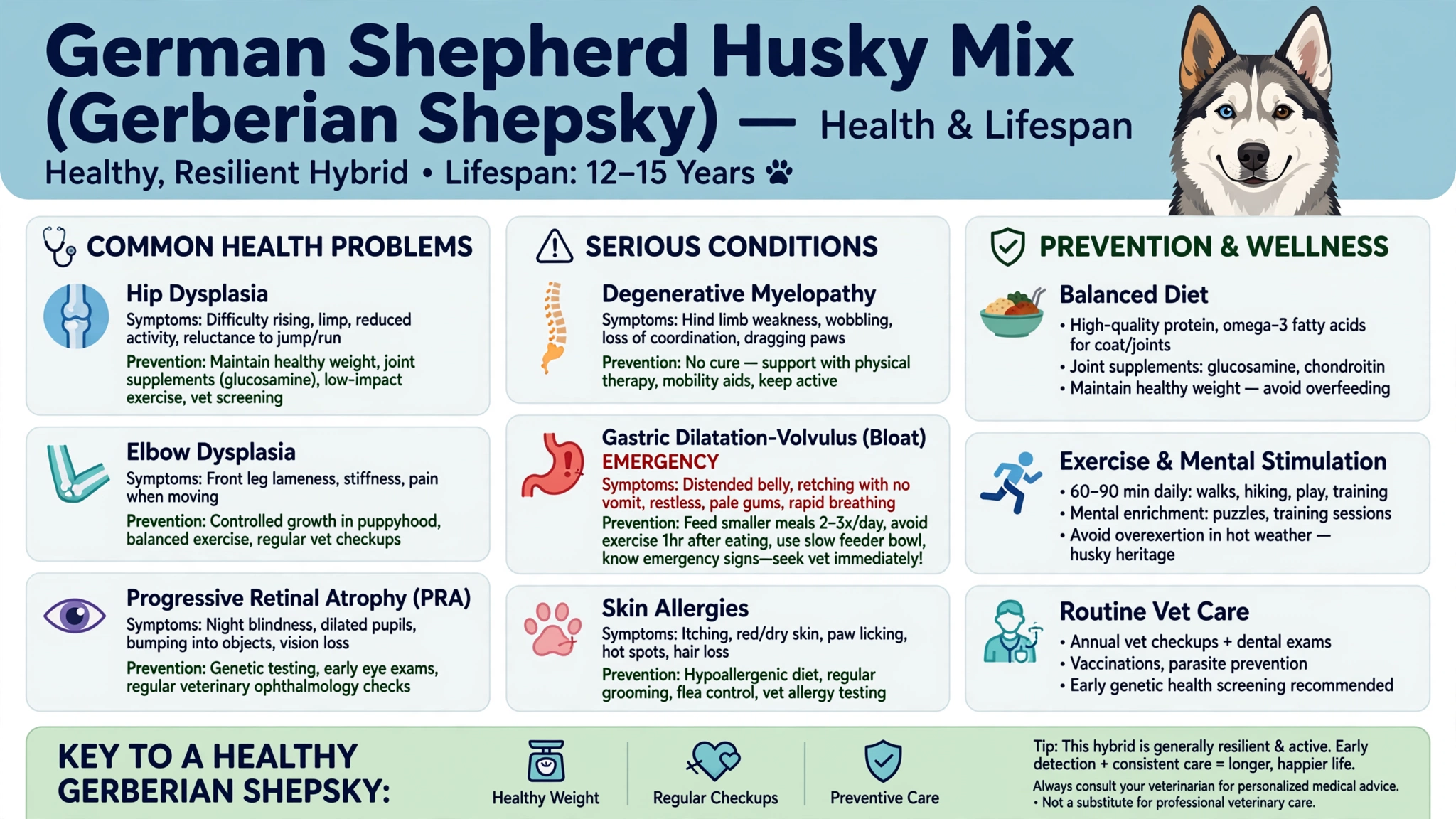
The German Shepherd Husky Mix is generally a healthy and resilient hybrid breed, especially when it comes from responsible breeders who prioritize health testing. Like all dogs, however, the Gerberian Shepsky can inherit certain genetic conditions from either the German Shepherd or the Siberian Husky.
Understanding these potential health issues allows owners to recognize early warning signs, seek timely veterinary care, and make informed decisions about preventive healthcare. Regular veterinary checkups, a balanced diet, daily exercise, and maintaining a healthy weight all contribute to a longer and healthier life.
While not every German Shepherd Husky Mix will develop these conditions, being aware of the risks helps you provide the best possible care throughout your dog’s life.
Hip Dysplasia
Hip dysplasia is one of the most common inherited orthopedic conditions affecting large dog breeds, including the German Shepherd Husky Mix.
It occurs when the hip joint does not develop properly, causing the bones to rub against each other instead of moving smoothly. Over time, this can lead to pain, inflammation, reduced mobility, and arthritis.
Common signs include:
- Difficulty standing after resting.
- Limping or stiffness.
- Reluctance to jump or climb stairs.
- Reduced activity levels.
- Bunny-hopping while running.
Maintaining a healthy weight, providing regular low-impact exercise, and scheduling routine veterinary examinations can help reduce stress on the joints and improve long-term mobility.
Elbow Dysplasia
Elbow dysplasia affects the elbow joint and is another condition sometimes seen in large, active breeds.
Dogs with elbow dysplasia may show:
- Front leg limping.
- Pain after exercise.
- Swollen elbows.
- Difficulty getting up.
Early diagnosis often improves treatment options and helps slow the progression of arthritis.
Progressive Retinal Atrophy (PRA)
Progressive Retinal Atrophy (PRA) is an inherited eye disease that gradually damages the retina, eventually leading to vision loss.
Early symptoms may include:
- Difficulty seeing in low light.
- Hesitation in unfamiliar places.
- Bumping into furniture.
- Dilated pupils.
Although there is currently no cure for PRA, regular eye examinations can help detect the condition early and allow owners to adapt their dog’s environment to maintain a good quality of life.
Degenerative Myelopathy
Degenerative Myelopathy is a progressive neurological disorder that mainly affects older dogs.
Symptoms usually develop slowly and may include:
- Weakness in the back legs.
- Dragging the paws.
- Difficulty standing.
- Loss of coordination.
While there is no cure, physical therapy, controlled exercise, and supportive veterinary care may help maintain mobility for longer.
Gastric Dilatation-Volvulus (Bloat)
Large, deep-chested breeds such as the German Shepherd Husky Mix can be at risk of Gastric Dilatation-Volvulus (GDV), commonly known as bloat.
This is a life-threatening emergency that requires immediate veterinary treatment.
Warning signs include:
- Swollen abdomen.
- Repeated attempts to vomit without producing anything.
- Excessive drooling.
- Restlessness.
- Difficulty breathing.
- Collapse.
To help reduce the risk:
- Feed two or more smaller meals daily.
- Avoid vigorous exercise immediately before or after meals.
- Prevent rapid eating by using a slow-feeder bowl if necessary.
Skin Allergies
Some German Shepherd Husky Mix dogs develop allergies related to food, pollen, dust mites, or flea bites.
Common symptoms include:
- Excessive scratching.
- Red or inflamed skin.
- Ear infections.
- Hair loss.
- Constant licking of the paws.
If allergy symptoms persist, consult your veterinarian to identify the underlying cause and determine the most appropriate treatment.
German Shepherd Husky Mix Lifespan
A healthy German Shepherd Husky Mix typically lives between 10 and 14 years, although some dogs exceed this range when they receive excellent care throughout their lives.
Several factors influence life expectancy, including genetics, nutrition, exercise, preventive veterinary care, and maintaining a healthy body weight.
Owners can help their Gerberian Shepsky live a longer and healthier life by:
- Feeding a balanced, high-quality diet.
- Providing daily physical exercise.
- Keeping the dog mentally stimulated.
- Maintaining a healthy weight.
- Scheduling annual veterinary checkups.
- Keeping vaccinations and parasite prevention up to date.
- Brushing teeth regularly to support dental health.
- Addressing health concerns as soon as symptoms appear.
Although genetics cannot be changed, responsible daily care has a significant impact on both lifespan and overall quality of life.
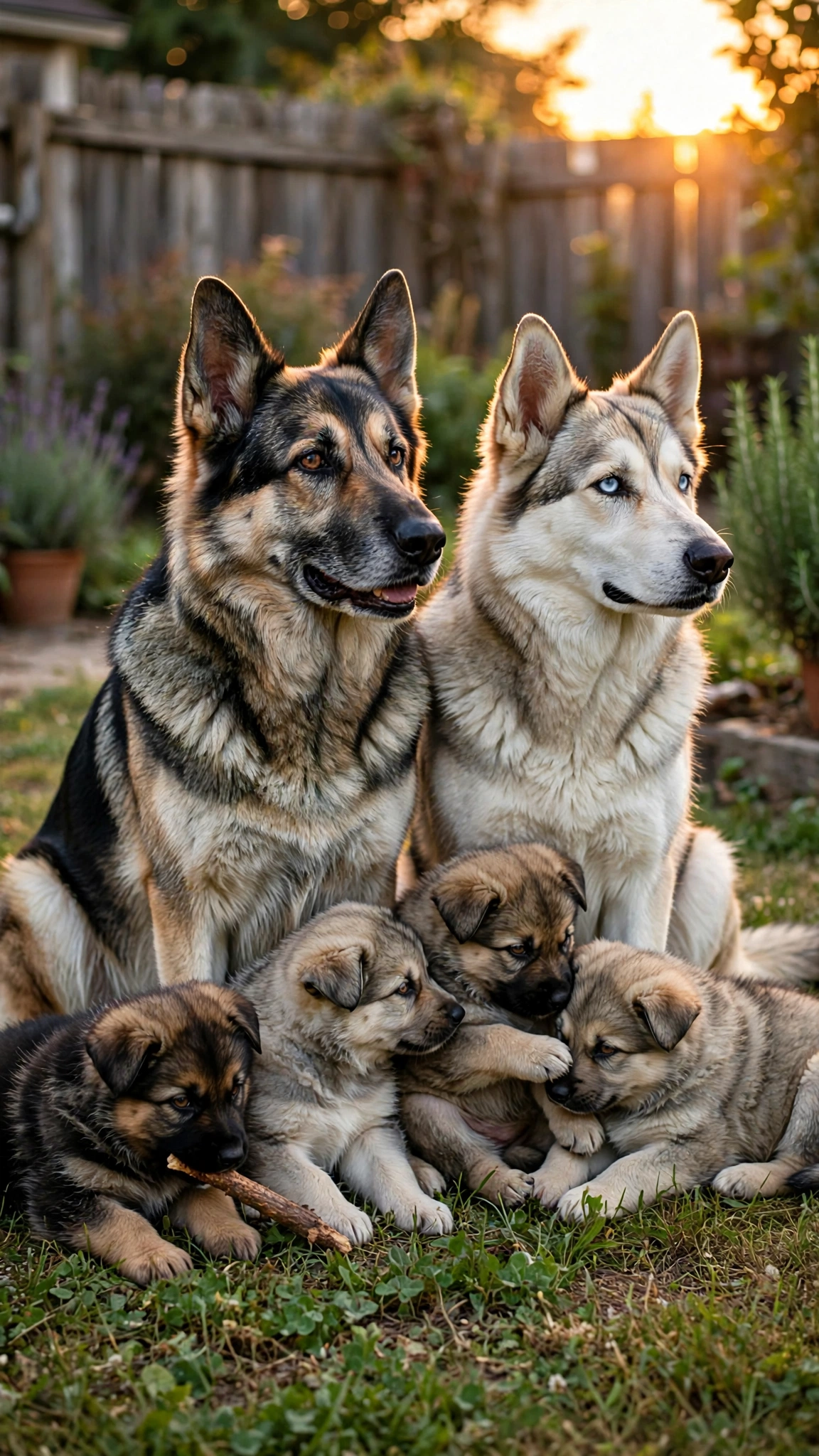
Health at a Glance
| Health Condition | Risk Level | Can It Be Managed? |
|---|---|---|
| Hip Dysplasia | Moderate | Often manageable |
| Elbow Dysplasia | Moderate | Often manageable |
| Progressive Retinal Atrophy (PRA) | Low–Moderate | Symptoms can be managed |
| Degenerative Myelopathy | Low | Supportive care available |
| Bloat (GDV) | Moderate | Emergency veterinary treatment required |
| Skin Allergies | Moderate | Usually manageable |
Preventive Care Checklist
✔ Schedule yearly veterinary examinations.
✔ Maintain a healthy body weight.
✔ Feed a high-quality, balanced diet.
✔ Provide daily exercise and mental stimulation.
✔ Keep vaccinations current.
✔ Use year-round flea, tick, and parasite prevention.
✔ Brush your dog’s teeth regularly.
✔ Watch for changes in movement, vision, appetite, or behavior.
Owner Tip
When choosing a puppy, ask the breeder whether the parent dogs have undergone health screening for hip dysplasia, elbow dysplasia, and inherited eye conditions. Responsible breeding practices can significantly reduce the likelihood of passing genetic disorders to future generations.
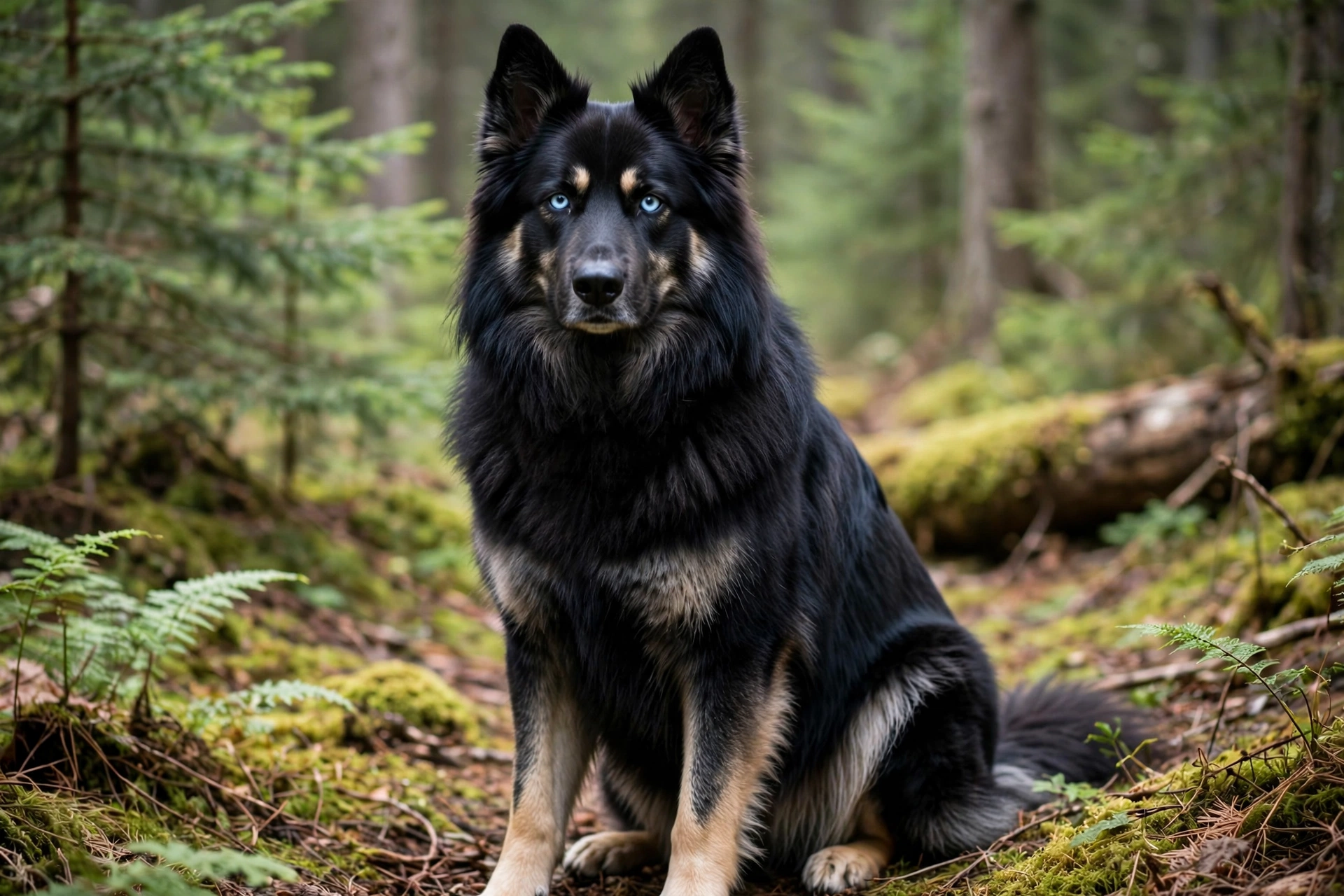
German Shepherd Husky Mix Puppy Price & Cost of Ownership
The cost of owning a German Shepherd Husky Mix goes far beyond the initial purchase price. While the price of a Gerberian Shepsky puppy varies depending on location, breeder reputation, pedigree, and health testing, prospective owners should also budget for food, veterinary care, grooming, training, and other ongoing expenses.
Although this hybrid breed can be a rewarding companion, it is also a long-term financial commitment. Understanding these costs before bringing a puppy home helps ensure you’re prepared to provide the care your dog deserves.
How Much Does a German Shepherd Husky Mix Puppy Cost?
The price of a German Shepherd Husky Mix puppy varies depending on several factors, including the breeder’s reputation, the puppy’s bloodline, coat color, eye color, and whether the parents have undergone health testing.
On average, you can expect to pay:
| Source | Estimated Price (USD) | Example Source |
|---|---|---|
| Adoption or Rescue | $100–$500 | Petfinder |
| Reputable Breeder | $800–$2,000+ | AKC Marketplace |
| Champion Bloodlines | $2,500+ | AKC Marketplace |
Remember that the cheapest puppy isn’t always the best value. Responsible breeders typically invest in health screening, vaccinations, proper nutrition, and early socialization, which can reduce future health and behavioral problems.
First-Year Expenses
The first year is usually the most expensive because you’ll need to purchase supplies and complete your puppy’s initial veterinary care.
Common first-year expenses include:
- Puppy vaccinations
- Microchipping
- Spaying or neutering (if applicable)
- Crate
- Bed
- Food and water bowls
- Collar and leash
- Puppy food
- Toys
- Grooming tools
- Training classes
- Veterinary health checks
These costs can add up quickly, so it’s wise to plan a realistic budget before bringing your puppy home.
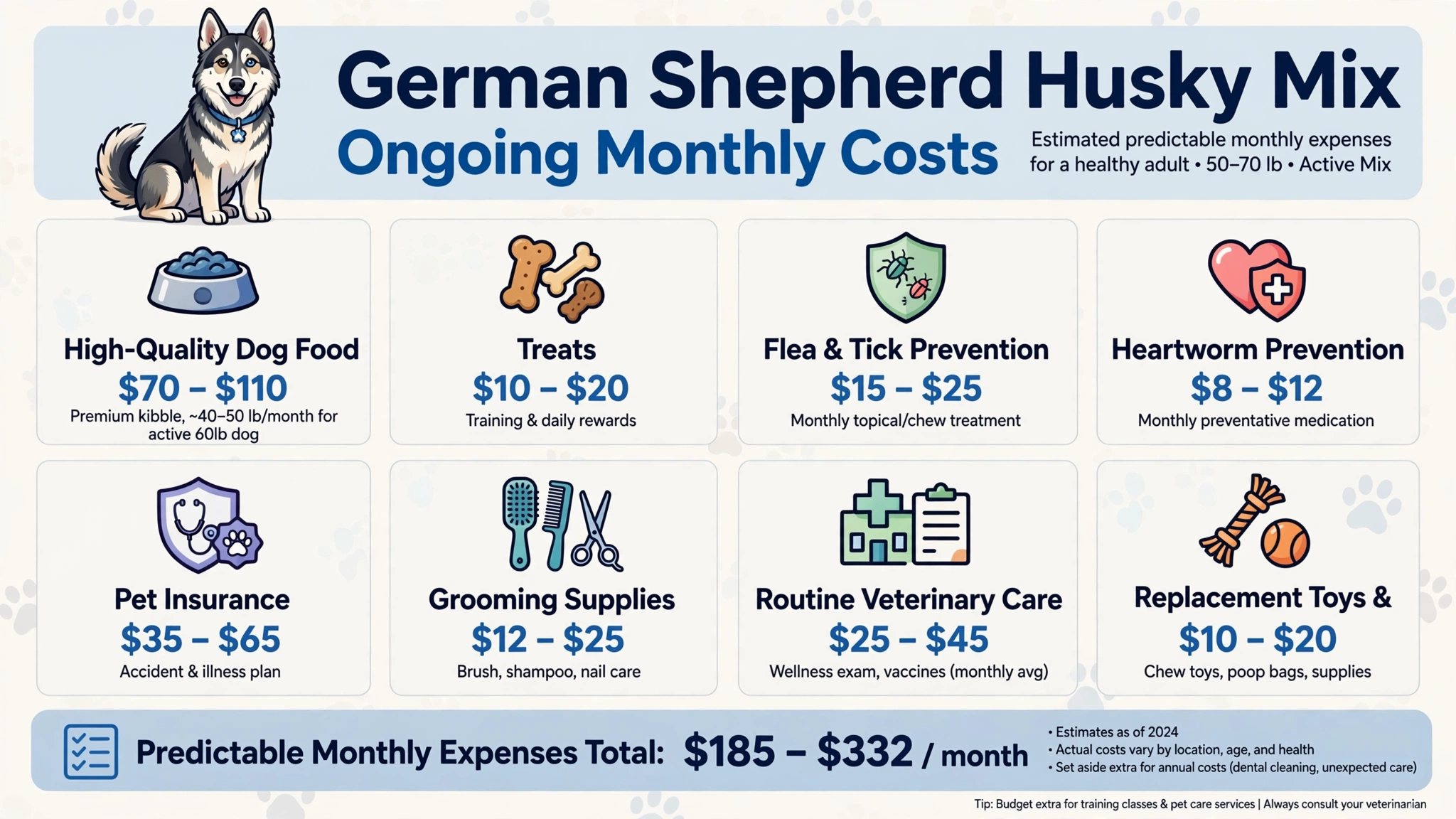
Ongoing Monthly Costs
After the first year, your monthly expenses become more predictable.
Typical ongoing costs include:
- High-quality dog food
- Treats
- Flea and tick prevention
- Heartworm prevention (where recommended)
- Pet insurance (optional)
- Grooming supplies
- Routine veterinary care
- Replacement toys and accessories
The exact amount depends on your location, your dog’s health, and the level of care you choose to provide.
Should You Buy or Adopt?
Both options have advantages.
Buying from a reputable breeder allows you to learn about the puppy’s parents, health history, and early socialization. Always choose breeders who perform health testing and raise puppies in a clean, caring environment.
Adopting from a rescue or shelter gives a deserving dog a second chance while often costing significantly less. Many rescue organizations also provide vaccinations, microchipping, and basic health checks before adoption.
Whichever option you choose, avoid purchasing puppies from irresponsible breeders or puppy mills that prioritize profit over animal welfare.
Estimated Annual Cost of Ownership
| Expense | Estimated Annual Cost (USD) | Typical Source |
|---|---|---|
| Food | $600–$1,000 | Chewy |
| Routine Veterinary Care | $300–$800 | AVMA |
| Grooming Supplies | $100–$300 | Chewy |
| Toys & Accessories | $150–$400 | Chewy |
| Preventive Medications | $200–$500 | American Heartworm Society |
| Training (Optional) | $150–$500 | American Kennel Club |
| Estimated Total | $1,500–$3,500+ | Varies by location |
Note: Annual ownership costs vary depending on your location, your dog’s health, food quality, veterinary fees, grooming needs, and whether you choose professional training or pet insurance.
Ways to Save Money Without Compromising Care
You don’t have to spend excessively to keep your German Shepherd Husky Mix healthy and happy.
Consider these money-saving tips:
- Buy high-quality food in larger bags when practical.
- Brush your dog regularly to reduce professional grooming costs.
- Keep vaccinations and preventive care up to date to avoid expensive health issues later.
- Invest in durable toys that last longer.
- Schedule regular veterinary checkups to catch problems early.
- Consider adopting from a reputable rescue if you’re open to an adult dog.
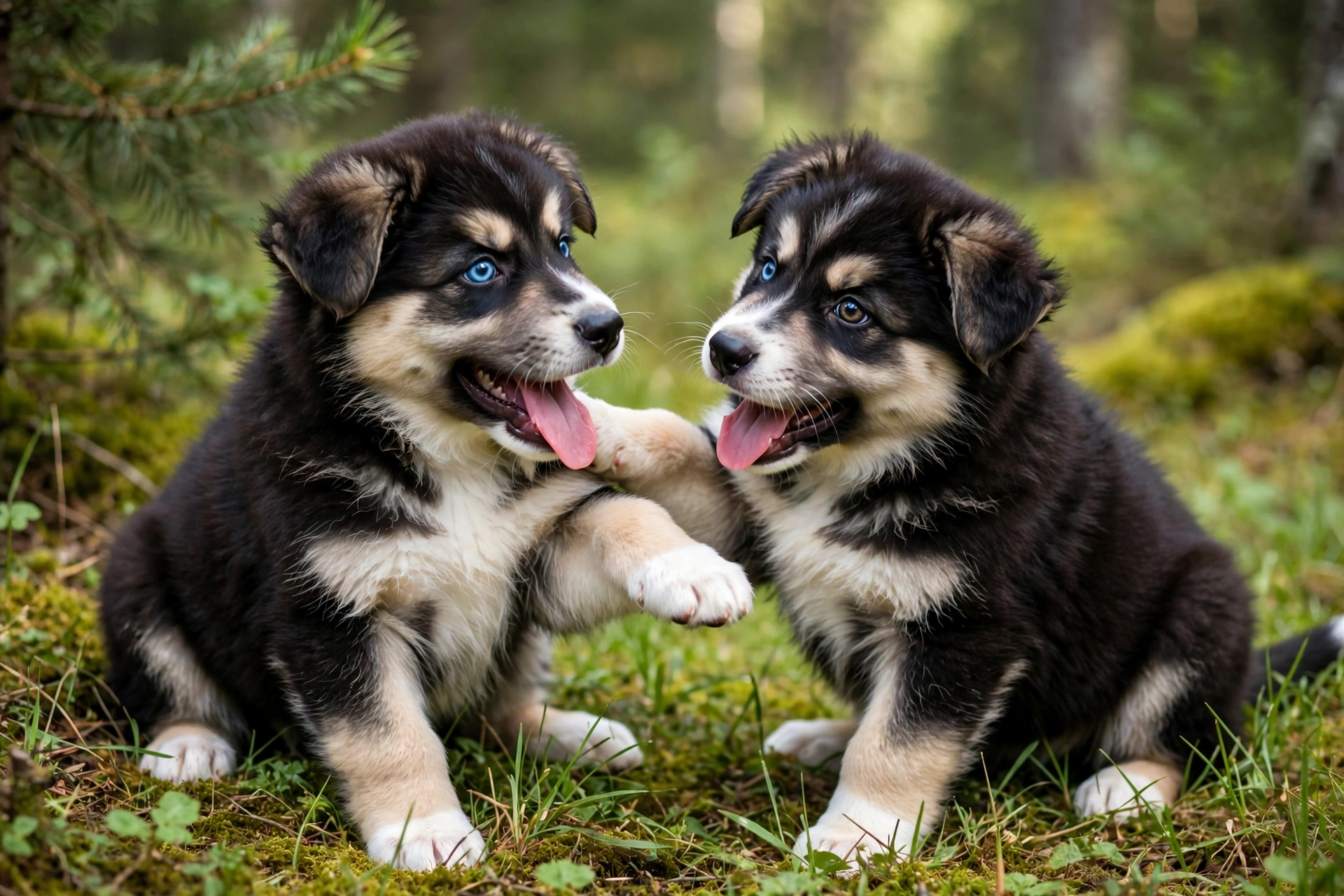
Owner Tip
When comparing puppies, don’t focus only on the purchase price. A responsibly bred puppy with documented health testing may cost more initially but can help reduce the risk of expensive inherited health conditions in the future.
Pros & Cons of Owning a German Shepherd Husky Mix
The German Shepherd Husky Mix is an intelligent, athletic, and loyal companion, but like every dog breed, it comes with both advantages and challenges. Before bringing home a Gerberian Shepsky, it’s important to understand whether this energetic hybrid matches your lifestyle, living space, and daily routine.
If you’re an active owner who enjoys outdoor activities and has time for training and companionship, this breed can be an incredibly rewarding family pet. However, if you’re looking for a low-maintenance dog that requires minimal exercise or grooming, you may want to consider another breed.
The following comparison highlights the most important pros and cons to help you decide if a German Shepherd Husky Mix is the right dog for you.
Pros & Cons at a Glance
| ✔ Pros | ⚠ Cons |
|---|---|
| Highly intelligent and quick to learn | Requires 90–120 minutes of daily exercise |
| Loyal and protective of its family | Heavy seasonal shedding |
| Excellent guard dog with proper training | Needs regular grooming |
| Affectionate and forms strong family bonds | Can become destructive if bored |
| Athletic and ideal for hiking or running | Not ideal for owners who are away all day |
| Usually good with children when socialized | May inherit stubborn Husky traits |
| Thrives in obedience and agility training | Requires early socialization and consistent training |
| Beautiful wolf-like appearance | Better suited to homes with outdoor space |
Who Should Own a German Shepherd Husky Mix?
A German Shepherd Husky Mix is best suited for owners who can meet its physical and mental needs.
This breed is an excellent choice for:
- Active individuals or families.
- People who enjoy hiking, jogging, or outdoor adventures.
- Owners with previous experience handling medium to large dogs.
- Families willing to invest time in training and socialization.
- Homes with a securely fenced yard.
With the right environment and consistent care, a Gerberian Shepsky becomes a loyal companion that enjoys spending time with its family and participating in daily activities.
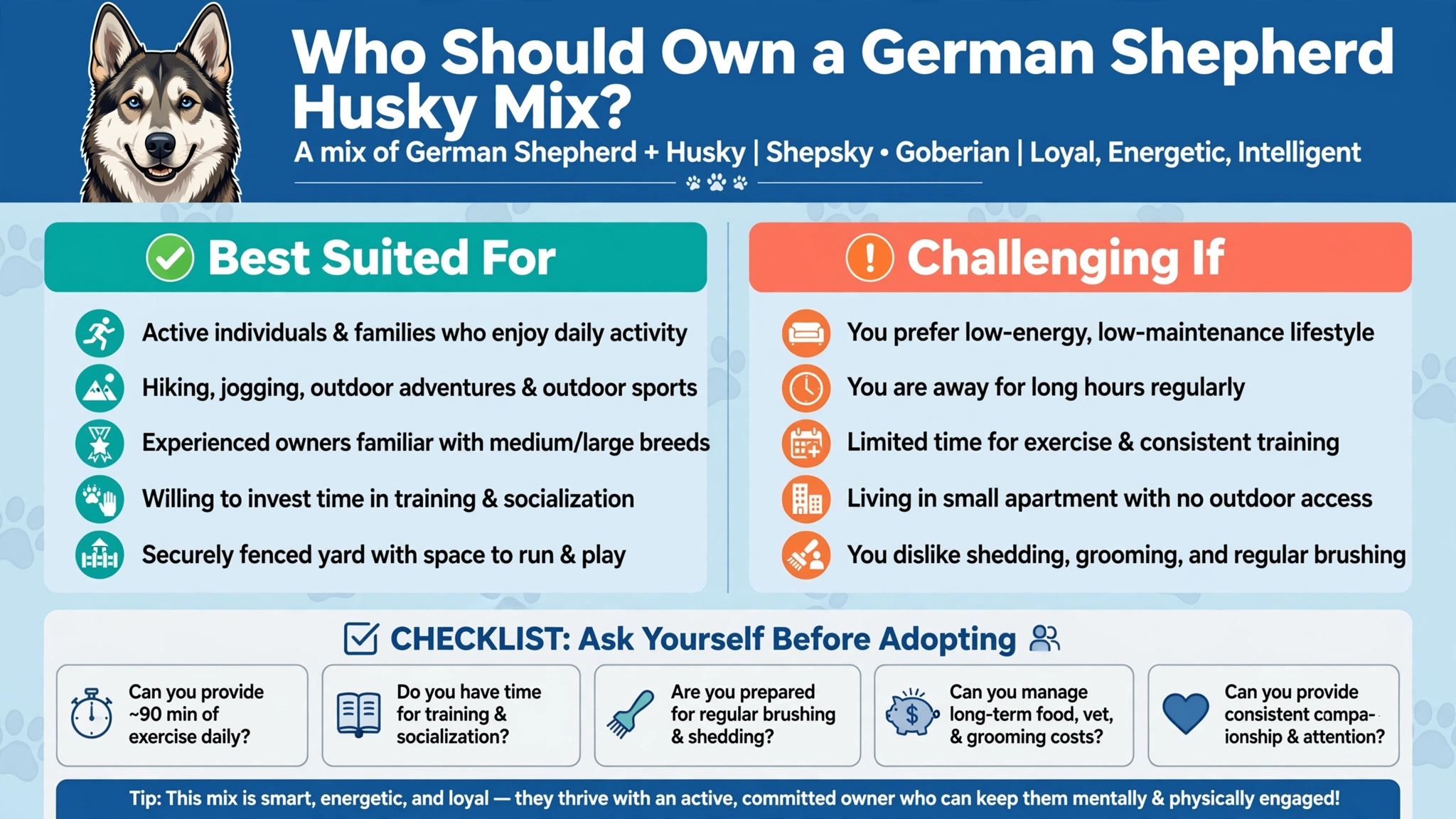
Who Might Find This Breed Challenging?
Although this hybrid has many wonderful qualities, it isn’t the perfect match for everyone.
You may find a German Shepherd Husky Mix challenging if you:
- Prefer a low-energy or low-maintenance dog.
- Spend long hours away from home every day.
- Have limited time for exercise or training.
- Live in a small apartment without regular access to outdoor activities.
- Dislike shedding or frequent grooming.
Without enough physical activity and mental stimulation, this intelligent breed can become bored and develop unwanted behaviors such as chewing, digging, excessive barking, or attempting to escape.
Is the German Shepherd Husky Mix Right for You?
Before choosing any dog breed, it’s important to consider your lifestyle rather than simply falling in love with its appearance.
Ask yourself the following questions:
- Can I provide at least 90 minutes of exercise every day?
- Do I have enough time for training and socialization?
- Am I prepared for regular brushing and seasonal shedding?
- Can I comfortably manage the long-term costs of ownership?
- Will my dog receive enough companionship throughout the day?
If you answered yes to most of these questions, a German Shepherd Husky Mix could be an excellent addition to your family.
Quick Decision Guide
| Your Lifestyle | Is This Breed a Good Match? |
|---|---|
| Active Family with Children | ★★★★★ |
| Outdoor Enthusiast | ★★★★★ |
| Experienced Dog Owner | ★★★★★ |
| First-Time Owner Willing to Train | ★★★★☆ |
| Apartment Living with Daily Exercise | ★★★☆☆ |
| Busy Professional Away All Day | ★★☆☆☆ |
| Looking for a Low-Maintenance Pet | ★☆☆☆☆ |
Owner Tip
The German Shepherd Husky Mix is happiest when it has both a job to do and people to spend time with. Daily exercise, consistent training, and family interaction are the keys to raising a confident, well-behaved companion.
Frequently Asked Questions About the German Shepherd Husky Mix
What is a German Shepherd Husky Mix called?
A German Shepherd Husky Mix is most commonly called a Gerberian Shepsky. Some people also refer to this hybrid as a Shepsky, German Shepherd Husky Cross, or German Shepherd Siberian Husky Mix. Regardless of the name, it is a cross between a purebred German Shepherd and a Siberian Husky.
How big does a German Shepherd Husky Mix get?
Most adult German Shepherd Husky Mix dogs stand 20 to 26 inches (51–66 cm) tall at the shoulder and typically weigh 45 to 80 pounds (20–36 kg). Their exact size depends on genetics, diet, and whether they inherit more traits from the German Shepherd or the Siberian Husky parent.
Is a German Shepherd Husky Mix a good family dog?
Yes. A well-trained and properly socialized German Shepherd Husky Mix can be an excellent family companion. They are loyal, intelligent, and protective while also being playful and affectionate with the people they trust. Like all large breeds, interactions with young children should always be supervised.
Are German Shepherd Husky Mix dogs aggressive?
No. A German Shepherd Husky Mix is not naturally aggressive. Most behavioral problems are linked to poor socialization, lack of training, fear, or insufficient exercise rather than the breed itself. Early training and positive reinforcement help develop a confident and well-mannered dog.
Do German Shepherd Husky Mix dogs shed a lot?
Yes. This hybrid has a thick double coat and is considered a heavy shedder, especially during spring and autumn when it sheds its undercoat. Regular brushing several times a week—and daily during seasonal shedding—helps manage loose hair and keeps the coat healthy.
How much exercise does a German Shepherd Husky Mix need?
An adult German Shepherd Husky Mix usually requires 90 to 120 minutes of physical activity every day. Long walks, running, hiking, obedience training, and interactive play all help meet their exercise and mental stimulation needs.
Can a German Shepherd Husky Mix live in an apartment?
Apartment living is possible but not ideal. Because this is a large, energetic breed, owners must provide multiple daily walks, regular playtime, and mental enrichment. A home with a securely fenced yard is generally a better fit.
What is the average lifespan of a German Shepherd Husky Mix?
With proper care, a healthy German Shepherd Husky Mix typically lives between 10 and 14 years. A balanced diet, regular exercise, preventive veterinary care, and maintaining a healthy weight all contribute to a longer, healthier life.
Is a German Shepherd Husky Mix easy to train?
Yes. Thanks to the intelligence of both parent breeds, this hybrid learns quickly and responds well to positive reinforcement. However, some dogs inherit the Siberian Husky’s independent streak, so consistency, patience, and early training are important.
How much does a German Shepherd Husky Mix puppy cost?
The price of a German Shepherd Husky Mix puppy varies depending on the breeder, location, pedigree, and health testing. Puppies from reputable breeders generally cost $800 to $2,000 or more, while adoption from a rescue organization is often a more affordable option.
Final Thoughts
The German Shepherd Husky Mix, also known as the Gerberian Shepsky, is an intelligent, energetic, and loyal companion that combines many of the best qualities of the German Shepherd and the Siberian Husky. Its striking appearance, protective instincts, and affectionate personality make it a popular choice for active individuals and families.
However, owning this remarkable hybrid also comes with responsibilities. Regular exercise, consistent training, proper grooming, and a balanced diet are essential to keeping your dog healthy and happy. Prospective owners should also be prepared for heavy seasonal shedding and the time required to meet this breed’s physical and mental needs.
For those willing to invest the necessary time and care, the German Shepherd Husky Mix can become a devoted family member, a reliable protector, and an enthusiastic companion for many years.



Great,,,,,,,,,,,, informative
Fantastic goods from you, man. I’ve understand
your stuff previous to and you’re just extremely excellent.
I actually like what you have acquied here, really like what
you are stating and the way in which you say it. You make it enjoyable and you still care for to keep itt sensible
Good post. It’s difficult to find good quality writing these days.
I truly appreciate people like you! Take care.
Appreciate it!!
Hi, just wanted to tell you, I enjoyed this blog post.
It was inspiring. Keep on posting!! Thank you
Heya i’m for the first time here. I came across this
board and I find It truly useful & it helped me out much.
I hope to give something back and aid others like you helped me.
Hey there, I’m certainly pleased I stumbled upon it and I’ll be book-marking it and checking back often! Many
thanks for the article!
Sweet blog! I found it while surfing around on Yahoo
News. Do you have any suggestions on how to get listed in Yahoo News?
I’ve been trying for a while but I never seem to get there!
Thanks
Have you ever considered about including a little bit more than just your articles?
I mean, what you say is valuable and all. But imagine if you added some great visuals or video clips to
give your posts more, “pop”! Your content is excellent but with
pics and video clips, this blog could undeniably be one of the greatest in its niche.
Very good blog!
Wow! After all I got a weblog from where I be able to
really take useful data concerning my study and knowledge.
A legend can sprout up out of nothing and morph into something larger than life.
Whether it is the new comer or encounter people all have a possibility to
win sport. Give yourself a spending limit and stick in it.
Write more, thats all I have to say. Literally,
it seems as though you relied on the video to make your point.
You obviously know what youre talking about, why waste your intelligence on just posting
videos to your site when you could be giving us something enlightening
to read?
Excellent read, Positive website, where did u come up with
the information on this posting? I’ve read some of the
articles on your site now, and I really like your style.
King regards,
Thomassen Zacho
Very valuable information, it is not at all sites that we find this, congratulations
I was looking for something like that and found it here.
Best regards,
Boswell Zacho
It’s remarkable to visit this website and reading the views of
all mates regarding this post, while I am also keen of getting experience.
Just wanted to mention keep up the good job! Appreciate it for the article!
Howdy! This post could not be written any better!
Reading through this post reminds me of my previous room mate!
He always kept chatting about this. I will forward this page to him.
Fairly certain he will have a good read. Many
thanks for sharing!
I am no longer positive where you’re getting your info, but
good topic. I needs to spend a while studying much more or figuring out more.
Thanks for magnificent info I used to be in search of this information for my mission.
I was able to find good info from your blog articles.
That is very fascinating, You’re an overly professional blogger.
I have joined your rss feed and sit up for in search of extra of your magnificent post.
Also, I have shared your website in my social networks!
I have been examinating out some of your posts and it’s nice stuff.
I will make sure to bookmark your blog.
Having read this I believed it was extremely informative.
I appreciate you spending some time and effort to put this content together.
I once again find myself personally spending a significant amount of time both reading and posting comments.
But so what, it was still worthwhile!
Thanks for sharing such a fastidious thought, post is good, thats why i have read
it completely
Hi, I found your post by mistake when i was searching bing for this issue, I have to say your post is really helpful I also love the theme, its amazing!. I dont have that much time to read all your post at the moment but I have saved it and also add your RSS feeds. I will be back in a day or two. thank you for a huge article.
I’m not that much of a internet reader to be honest but your blogs really nice,
keep it up! I’ll go ahead and bookmark your site to come back later on. Many thanks
Some truly fantastic info , Glad I noticed this. “Someone’s boring me. I think it’s me.” by Dylan Thomas.
naturally like your website however you have to take a look at the spelling on several of your posts. Several of them are rife with spelling problems and I to find it very troublesome to tell the truth however I’ll definitely come back again.