

Can turtles eat bread? It’s a common question among turtle owners and people who enjoy feeding turtles at local ponds. While turtles may eat bread if it is offered or accidentally found, it is not a healthy or recommended food. Bread lacks the essential nutrients turtles need to grow and stay healthy, and feeding it regularly can lead to nutritional imbalances. Understanding what turtles should eat instead is the key to keeping both pet and wild turtles healthy.
Quick Answer
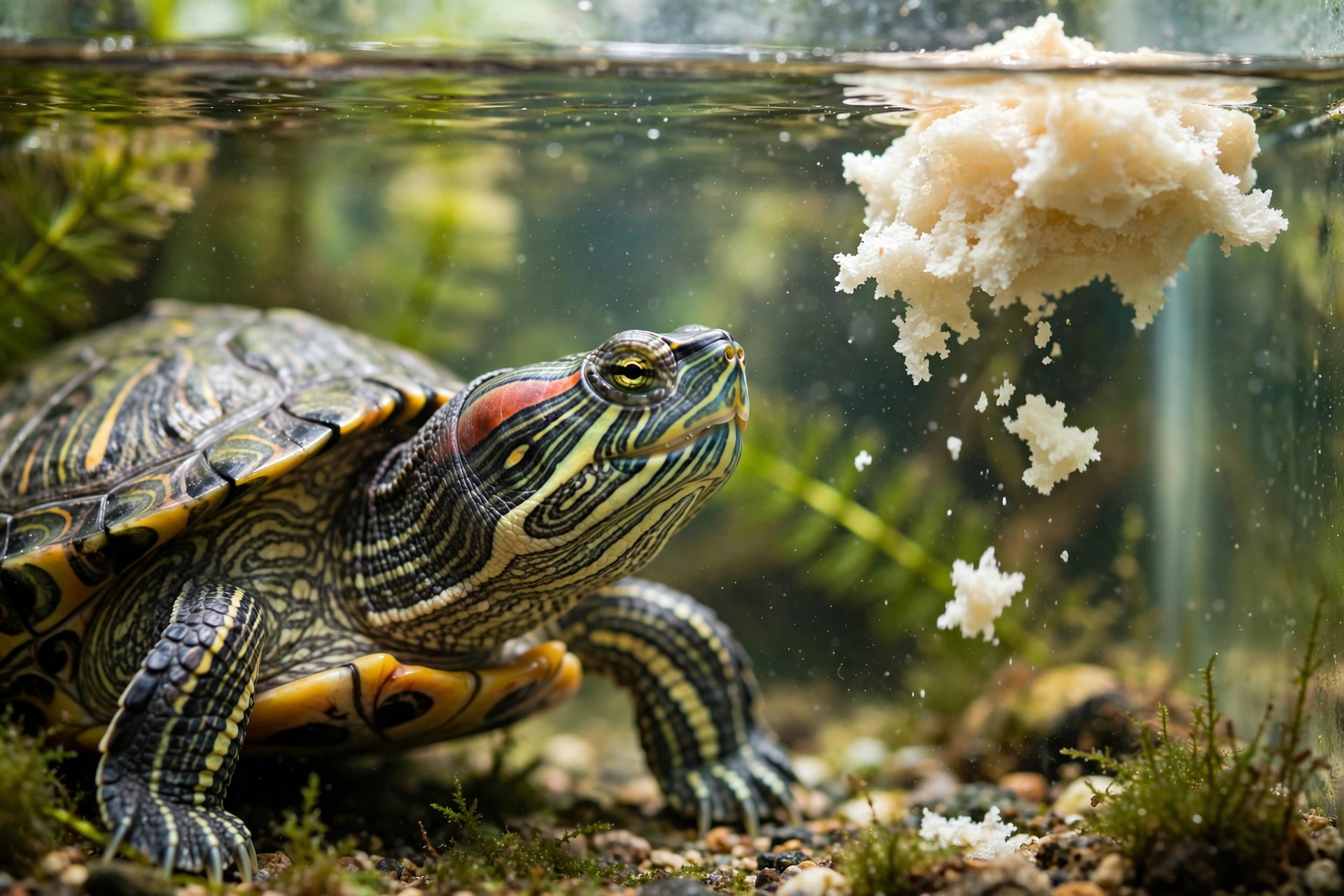
No, turtles should not eat bread. Although a small piece of bread is unlikely to poison a healthy turtle, it provides almost no nutritional value and should never be part of a turtle’s regular diet. Instead, offer species-appropriate foods such as leafy greens, aquatic plants, insects, fish, and high-quality turtle pellets.
Why Is Bread Bad for Turtles?
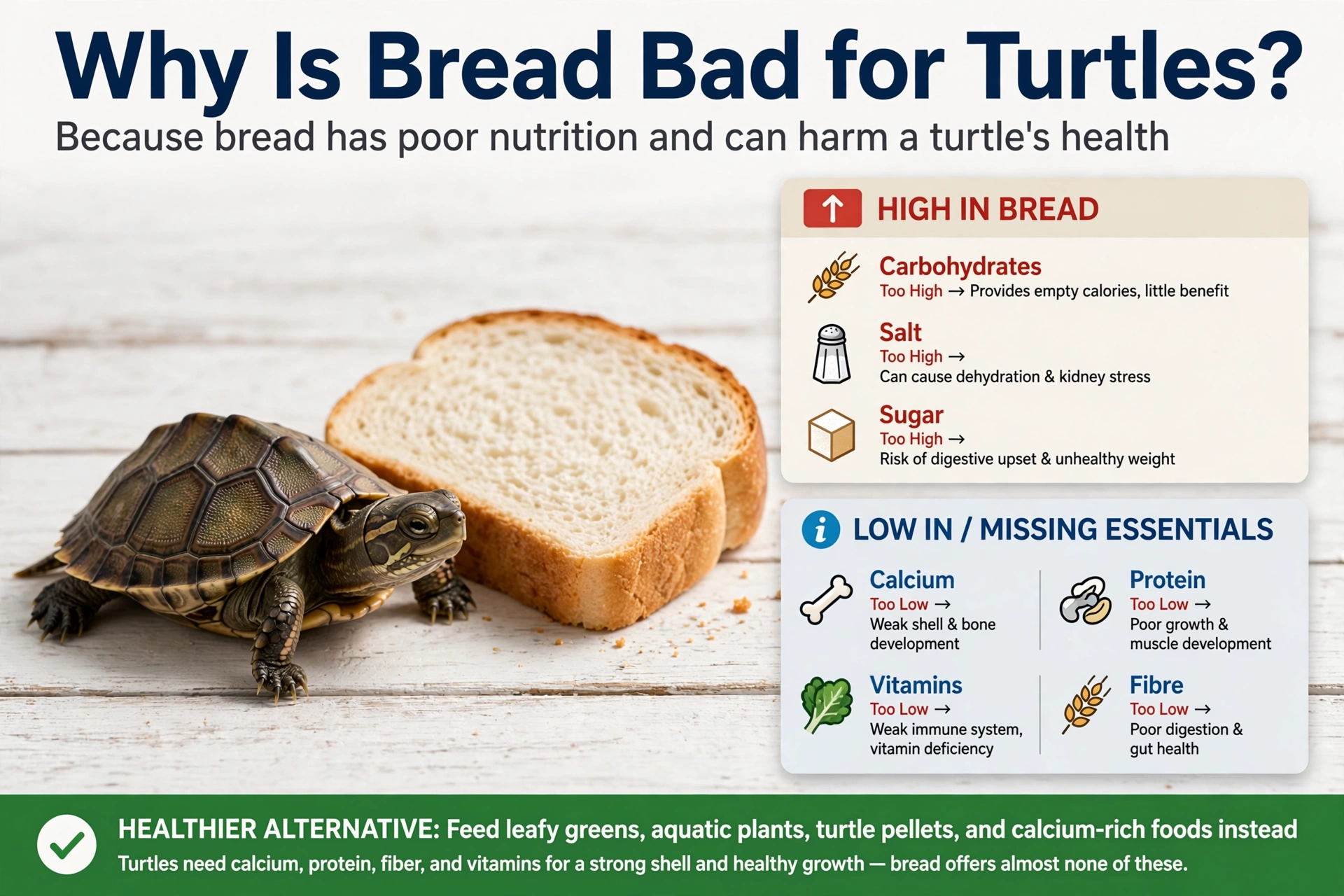
Bread is not toxic to turtles, but it is not a suitable food for them either. Unlike their natural diet, bread contains very little protein, calcium, vitamins, or fibre nutrients that turtles need for healthy growth, shell development, and overall well-being. Instead, bread is high in carbohydrates and often contains added salt, sugar, preservatives, and other ingredients that provide little nutritional benefit.
Feeding bread occasionally is unlikely to harm a healthy turtle. However, making it a regular part of a turtle’s diet can contribute to nutritional deficiencies, unhealthy weight gain, digestive problems, and poor shell development over time. This is especially true for young turtles, which require a nutrient-rich diet to support rapid growth.
Whether you have a pet turtle or are feeding turtles at a local pond, it’s always better to offer foods that resemble what they would naturally eat rather than processed human foods like bread.
The exact nutritional requirements vary between species and age groups, but veterinarians generally recommend feeding turtles a balanced diet that closely resembles what they would eat in the wild rather than processed human foods. Merck Veterinary Manual’s guide to turtle nutrition
Can Turtles Digest Bread?
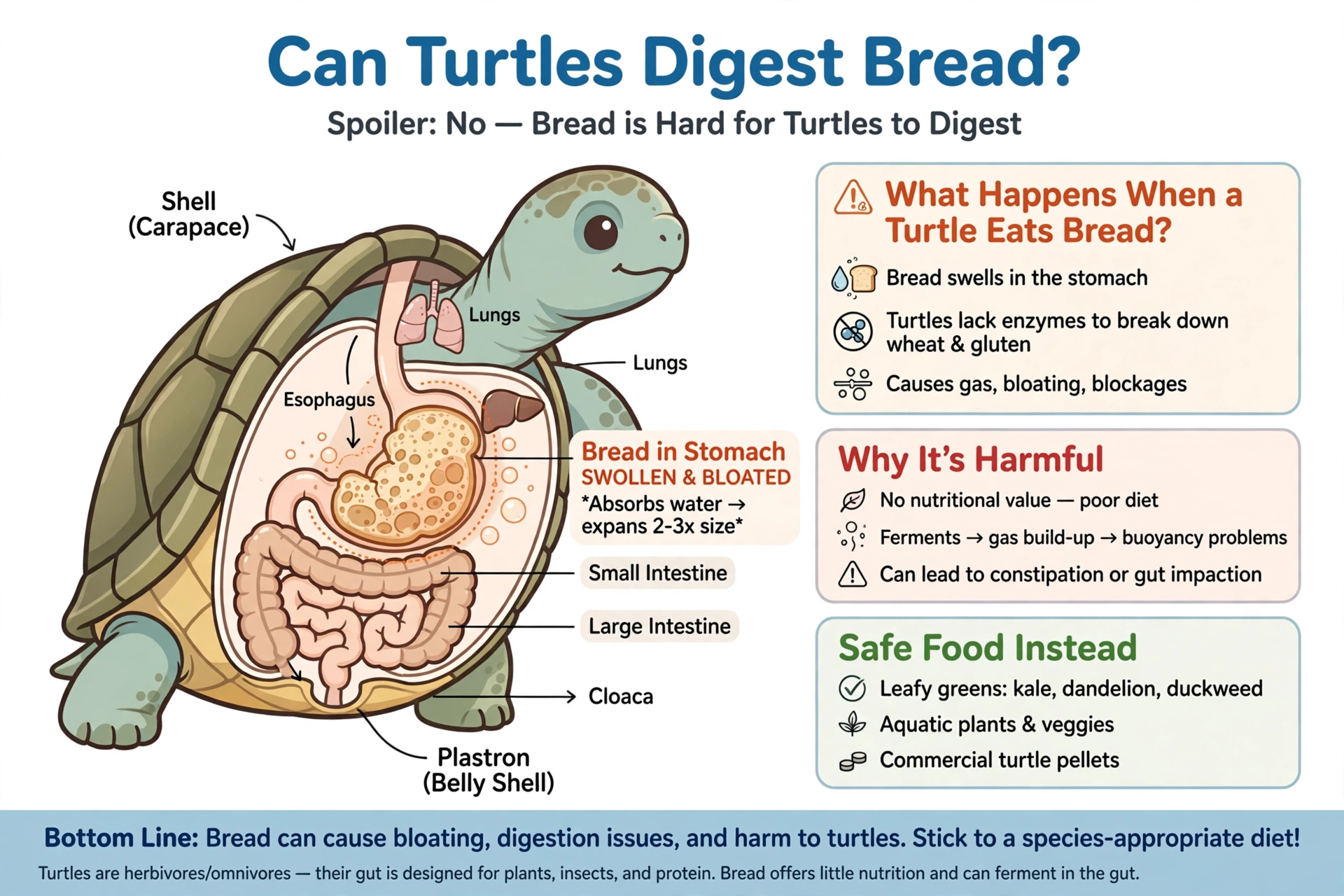
Yes, turtles can digest small amounts of bread, but that doesn’t mean it’s good for them. A turtle’s digestive system is adapted to process the foods it naturally eats, such as aquatic plants, leafy greens, insects, worms, snails, fish, and other natural food sources. Bread is a processed human food that contains refined flour and often includes ingredients like salt, sugar, yeast, and preservatives, which are not part of a turtle’s natural diet.
An occasional small bite of bread is unlikely to cause serious harm to a healthy turtle. However, feeding bread regularly can replace more nutritious foods, leading to vitamin and mineral deficiencies over time. Young turtles are especially vulnerable because they require a diet rich in protein and calcium to support healthy growth and shell development.
If your turtle accidentally eats a small piece of bread, there is usually no need to panic. Simply avoid feeding bread again and continue providing a balanced diet that meets your turtle’s nutritional needs.
Why Do Turtles Eat Bread If It’s Bad for Them?
If you’ve ever visited a park or pond, you’ve probably seen turtles swimming toward people and eagerly eating pieces of bread. This often leads people to believe that bread is a favourite food or that it’s healthy for turtles. In reality, neither is true.
Turtles are opportunistic feeders, meaning they will eat many foods that are easy to find, especially when they associate people with being fed. Bread floats on the water’s surface, making it easy for turtles to spot and eat. However, just because a turtle willingly eats bread doesn’t mean it benefits from it.
Wild turtles naturally feed on aquatic plants, algae, insects, worms, snails, small fish, crustaceans, fruits, and other foods available in their habitat. These foods provide the protein, vitamins, minerals, and calcium needed for healthy growth and shell development. Bread, on the other hand, fills their stomach without supplying the nutrients they need.
Over time, regularly feeding bread to turtles can encourage them to rely on human food instead of foraging naturally. This can reduce the variety of nutrients in their diet and may contribute to long-term health problems, particularly in areas where turtles are frequently fed by visitors.
Can Baby Turtles Eat Bread?
No, baby turtles should not eat bread. During their first few years of life, baby turtles require a diet rich in protein, calcium, vitamins, and other essential nutrients to support healthy growth, strong bones, and proper shell development. Bread provides very little of these nutrients, making it an unsuitable food for young turtles.
Most baby turtles are naturally more carnivorous than adults. In the wild, they feed on insects, worms, snails, small fish, tadpoles, and other protein-rich prey. Pet baby turtles should be fed a balanced diet that includes high-quality commercial turtle pellets, insects, and other foods appropriate for their species.
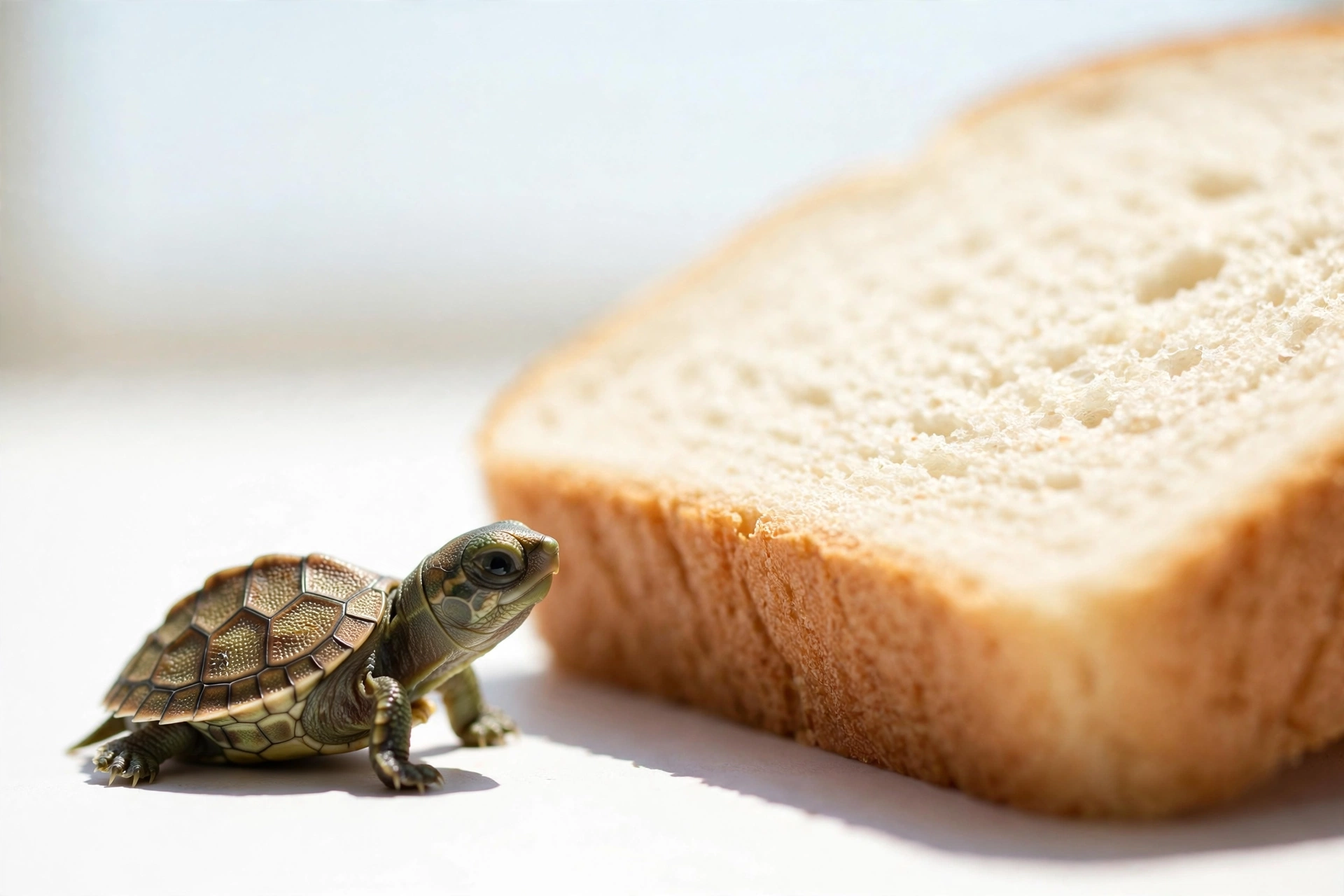
If a baby turtle accidentally eats a small crumb of bread, it is unlikely to cause serious harm. However, bread should never replace a nutritious, species-appropriate diet. Regularly feeding bread can contribute to poor growth, nutritional deficiencies, and shell problems over time.
Best foods for baby turtles include:
- High-quality turtle pellets
- Earthworms and mealworms
- Crickets and other feeder insects
- Small fish (for aquatic species)
- Leafy greens (for omnivorous species)
- Calcium supplements, if recommended for the species
Can Wild Turtles Eat Bread?
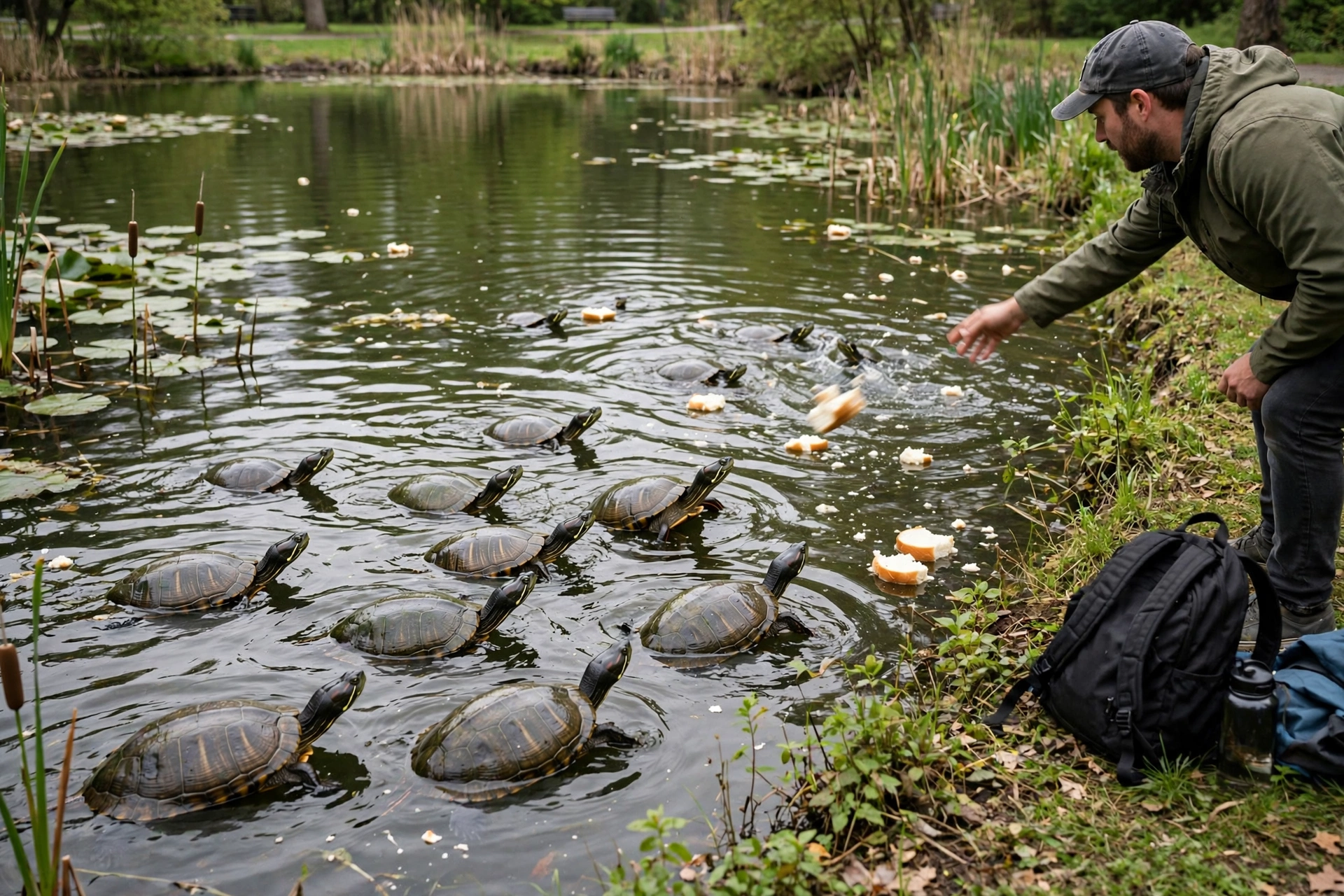
Wild turtles may eat bread if people throw it into ponds, lakes, or rivers, but that doesn’t mean they should. Like pet turtles, wild turtles need a varied diet that matches their natural habitat. Bread is a processed human food that lacks the nutrients turtles need to stay healthy.
Feeding bread to wild turtles can also change their natural behaviour. Instead of searching for aquatic plants, insects, snails, worms, and small fish, turtles may begin gathering in areas where people regularly feed them. This dependence on handouts can reduce their natural foraging habits and lead to an unbalanced diet over time.
Another concern is that uneaten bread can pollute the water. As bread breaks down, it can encourage algae growth, reduce water quality, and attract pests such as rats. This doesn’t just affect turtles—it can also harm fish, ducks, and other wildlife that share the same habitat.
If you enjoy watching turtles in the wild, the best way to help them is to let them find their own food naturally. If feeding wildlife is permitted in your area, choose foods that are safe and appropriate for turtles rather than processed foods like bread.
Does the Advice Change for Different Types of Turtles?
The answer is essentially the same for all turtle species—bread should not be part of their diet. However, different turtles have different nutritional requirements.
| Turtle Species | Natural Diet | Should Eat Bread? |
|---|---|---|
| Red-Eared Slider | Aquatic plants, insects, fish, commercial turtle pellets | ❌ Not Recommended |
| Pond Turtle | Aquatic plants, algae, worms, snails, insects, small fish | ❌ Not Recommended |
| Box Turtle | Insects, worms, mushrooms, berries, fruits, leafy vegetables | ❌ Not Recommended |
| Snapping Turtle | Fish, frogs, insects, crayfish, aquatic animals | ❌ Not Recommended |
| Terrapin | Crustaceans, molluscs, aquatic plants, small fish | ❌ Not Recommended |
| Tortoise | Grasses, weeds, flowers, leafy greens, hay | ❌ Not Recommended |
What Happens If a Turtle Eats Bread?
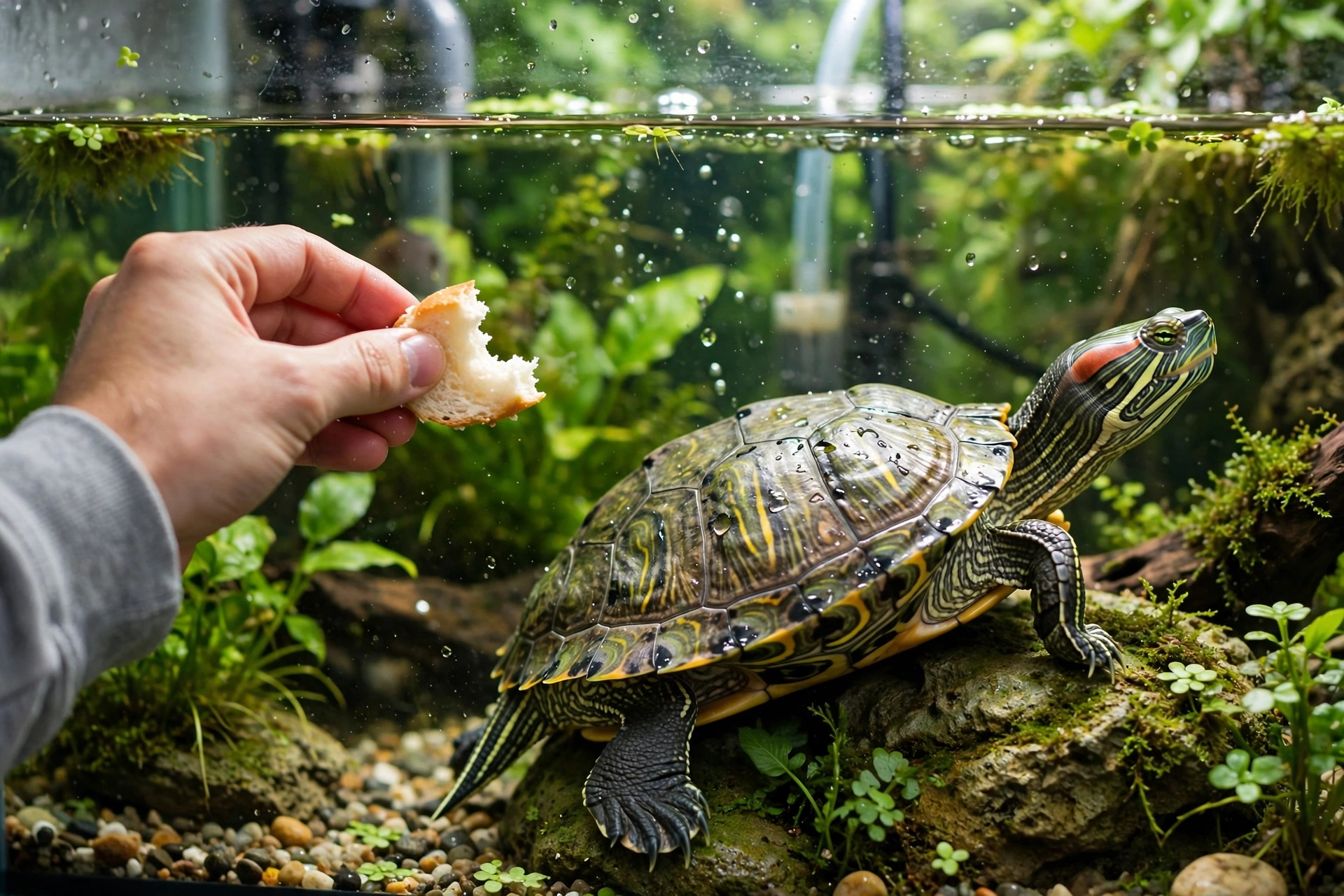
If your turtle accidentally eats a small piece of bread, there’s usually no need to panic. Bread is not toxic to turtles, and a single bite is unlikely to cause serious health problems. In most cases, a healthy turtle will digest a small amount without any immediate issues.
The concern arises when bread becomes a regular part of a turtle’s diet. Unlike their natural food, bread contains very little protein, calcium, vitamins, or other essential nutrients. Over time, frequent feeding can contribute to nutritional deficiencies, poor shell development, digestive problems, and an increased risk of obesity, particularly in pet turtles with limited activity.
If your turtle has eaten a large amount of bread or begins showing signs such as loss of appetite, vomiting, unusual lethargy, diarrhoea, or difficulty swimming, monitor it closely and consult a reptile veterinarian if the symptoms persist. While bread itself is rarely an emergency, these symptoms may indicate an underlying digestive problem that requires professional care.
You can locate a qualified reptile veterinarian through the Association of Reptile and Amphibian Veterinarians (ARAV)
Quick Tip: If your turtle accidentally eats a small piece of bread, don’t try to make it vomit or stop eating altogether. Simply return to its normal, balanced diet and provide clean drinking or swimming water. Monitor your turtle for any unusual behaviour over the next 24–48 hours.
What Should Turtles Eat Instead?
Instead of feeding bread, offer foods that closely match a turtle’s natural diet. The ideal diet depends on the turtle’s species and age, but most turtles thrive on a balanced combination of commercial turtle pellets, leafy greens, aquatic plants, insects, and occasional protein sources such as worms or small fish.
Baby turtles generally require more protein to support rapid growth, while many adult turtles gradually consume more vegetation as they mature. Feeding a varied diet helps provide the vitamins, minerals, calcium, and protein needed for healthy shell development, strong bones, and a robust immune system.
Some turtle species can also enjoy certain fruits as an occasional treat. However, not all fruits should be fed in large quantities because of their natural sugar content. If you’re wondering whether bananas are a safe option, read our guide on Can Turtles Eat Bananas? to learn when and how to feed them safely.
If you’re caring for a pet turtle, choose high-quality turtle food as the foundation of its diet and supplement it with fresh, species-appropriate foods. Wild turtles should be allowed to find their own food naturally whenever possible.
Commercial turtle pellets can form the foundation of a healthy diet for many pet turtles, but they should be supplemented with fresh vegetables, aquatic plants, and appropriate protein sources depending on the species. The Merck Veterinary Manual’s turtle nutrition guide provides additional information about species-appropriate diets.
| Food | Suitable For | Recommended |
|---|---|---|
| Commercial Turtle Pellets | Most Pet Turtles | ✔ Excellent |
| Leafy Greens (Romaine, Dandelion, Collard Greens) | Adult Turtles & Tortoises | ✔ Excellent |
| Aquatic Plants | Aquatic Turtles | ✔ Excellent |
| Earthworms & Mealworms | Baby & Omnivorous Turtles | ✔ Excellent |
| Crickets & Insects | Most Turtle Species | ✔ Excellent |
| Small Fish (Occasionally) | Carnivorous & Omnivorous Turtles | ✔ Occasionally |
| Fresh Fruit | Some Species Only | ✔ In Moderation |
| Bread | None | ✘ Avoid |
Foods You Should Never Feed Turtles
While bread is one of the most commonly offered human foods, it isn’t the only food that turtles should avoid. Many processed foods contain excessive salt, sugar, unhealthy fats, preservatives, or ingredients that turtles cannot digest properly. Feeding these foods regularly can lead to digestive problems, nutritional deficiencies, obesity, and other health issues.
As a general rule, if a food is heavily processed for humans, it probably isn’t suitable for your turtle. Stick to fresh, species-appropriate foods and high-quality turtle pellets instead.
If you’re unsure whether a particular food is safe, it’s always better to avoid feeding it until you can confirm that it is appropriate for your turtle’s species. Reptile nutrition recommendations continue to evolve as new research becomes available.
| Food | Should You Feed It? | Reason |
|---|---|---|
| Bread | ✘ Avoid | Low nutritional value and high in carbohydrates. |
| Crackers | ✘ Avoid | Often high in salt, refined flour, and preservatives. |
| Chips | ✘ Avoid | Contain unhealthy fats, salt, and artificial flavourings. |
| Pizza | ✘ Avoid | Contains cheese, processed meat, oil, and excessive sodium. |
| Chocolate | ✘ Never | Contains compounds that can be toxic to many animals. |
| Dairy Products | ✘ Avoid | Turtles are not adapted to digest milk or cheese. |
| Processed Meats | ✘ Avoid | High in salt, fat, and preservatives. |
| Sugary Snacks | ✘ Avoid | Offer little nutrition and may contribute to health problems. |
Expert Tip
When in doubt, don’t feed it. If you’re unsure whether a particular food is safe for your turtle, it’s better to skip it until you can verify that it’s appropriate for your turtle’s species. Offering a balanced diet of commercial turtle pellets, leafy greens, aquatic plants, insects, and other natural foods is always the safest choice.
Frequently Asked Questions
Can turtles eat bread crumbs?
Although a few bread crumbs are unlikely to seriously harm a healthy turtle, they are not recommended. Bread crumbs offer little nutritional value and should never become part of a turtle's regular diet. Instead, feed turtles foods such as leafy greens, insects, aquatic plants, fish, or commercial turtle pellets.
Is bread bad for turtles?
Yes. Bread is not toxic, but it is unhealthy for turtles because it lacks the protein, calcium, vitamins, and minerals they need. Feeding bread regularly may contribute to poor nutrition and long-term health problems.
Can turtles eat white bread or whole wheat bread?
No. Whether it's white, brown, or whole wheat bread, none are suitable for turtles. Whole wheat bread may contain slightly more fibre than white bread, but it still doesn't provide the balanced nutrition turtles require.
Do turtles like eating bread?
Many turtles will happily eat bread if people offer it, especially in parks and ponds. However, turtles are opportunistic feeders and will often eat foods that are easy to obtain, even if those foods are not healthy for them.
Can I feed bread to wild turtles?
No. Wild turtles should not be fed bread. It can reduce the quality of their diet and encourage them to depend on people instead of finding natural food sources. Uneaten bread may also pollute ponds and lakes.
What should turtles eat instead of bread?
Turtles should eat foods that closely match their natural diet. Depending on the species, this includes commercial turtle pellets, leafy greens, aquatic plants, insects, worms, snails, shrimp, and small fish.
What human foods can turtles eat?
Some turtles can safely eat small amounts of leafy vegetables, carrots, squash, or certain fruits, depending on the species. However, processed foods such as bread, crackers, chips, dairy products, and sweets should always be avoided.
What should I do if my turtle accidentally eats bread?
A small piece of bread is unlikely to cause serious harm. Continue feeding your turtle its normal balanced diet and monitor it for unusual symptoms. If your turtle eats a large amount of bread or shows signs of illness, consult a reptile veterinarian.
Conclusion
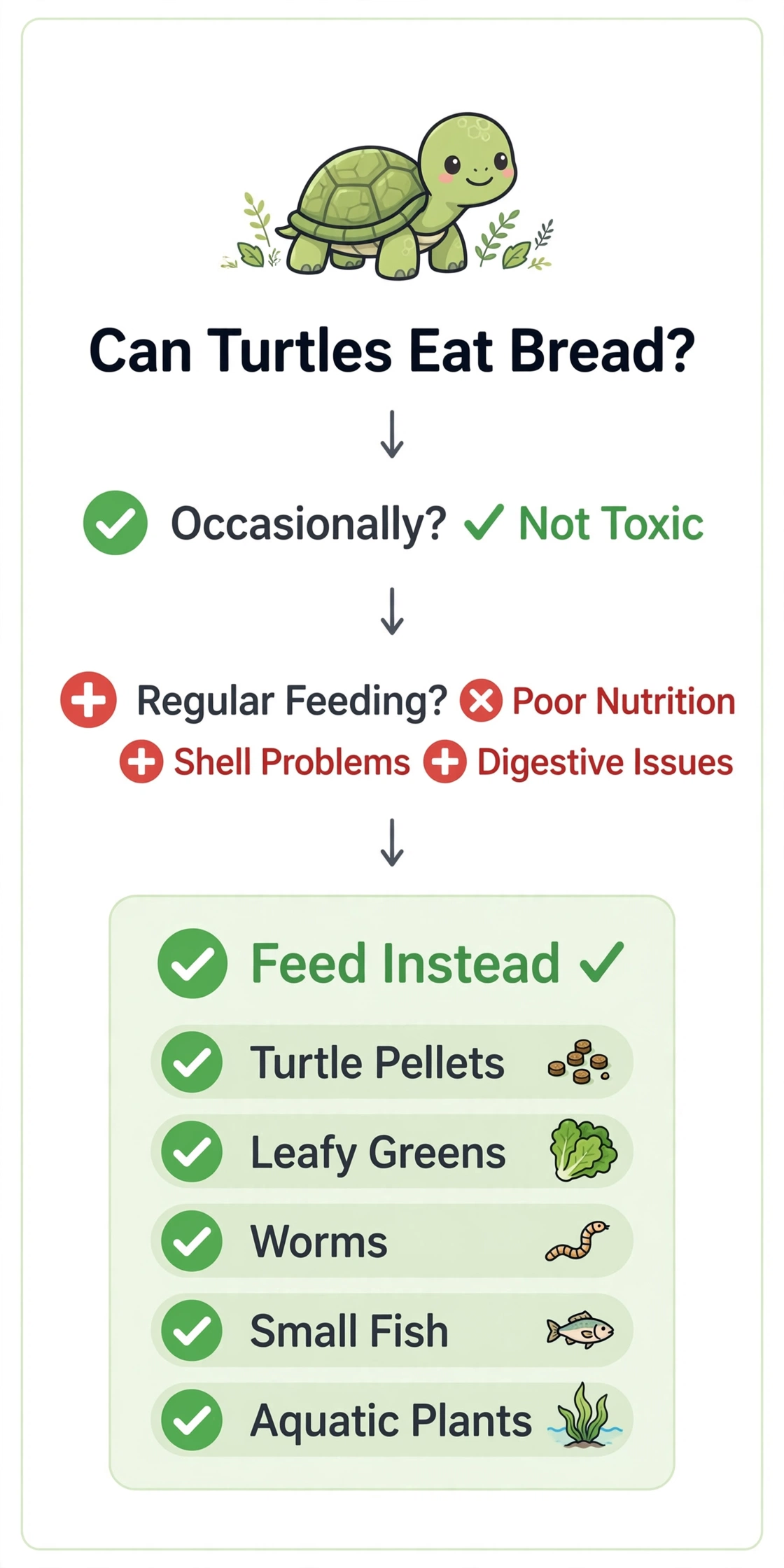
Bread may seem like a harmless treat, but it doesn’t meet a turtle’s nutritional needs. While a small piece is unlikely to harm a healthy turtle, it should never become a regular part of a turtle’s diet. Pet and wild turtles thrive on foods that closely resemble what they would naturally eat, including leafy greens, aquatic plants, insects, worms, small fish, and high-quality turtle pellets.
If you’re ever unsure whether a particular food is safe, it’s always better to avoid feeding it until you can confirm it’s suitable for your turtle’s species. Providing a balanced, species-appropriate diet is one of the best ways to support healthy growth, a strong shell, and a long, active life.
So, can turtles eat bread? Technically yes, but they should not. Although bread is unlikely to be toxic in small amounts, it offers little nutritional value and is not a healthy choice for pet or wild turtles.



0 Comments