

How much is motorcycle insurance? The answer depends on several factors, including your age, location, riding experience, motorcycle type, and the level of coverage you choose. While some riders may pay as little as $150 per year for basic liability insurance, others can spend over $2,500 annually for full coverage. In this guide, you’ll learn the average cost of motorcycle insurance, what affects your premium, and practical ways to lower your insurance costs.
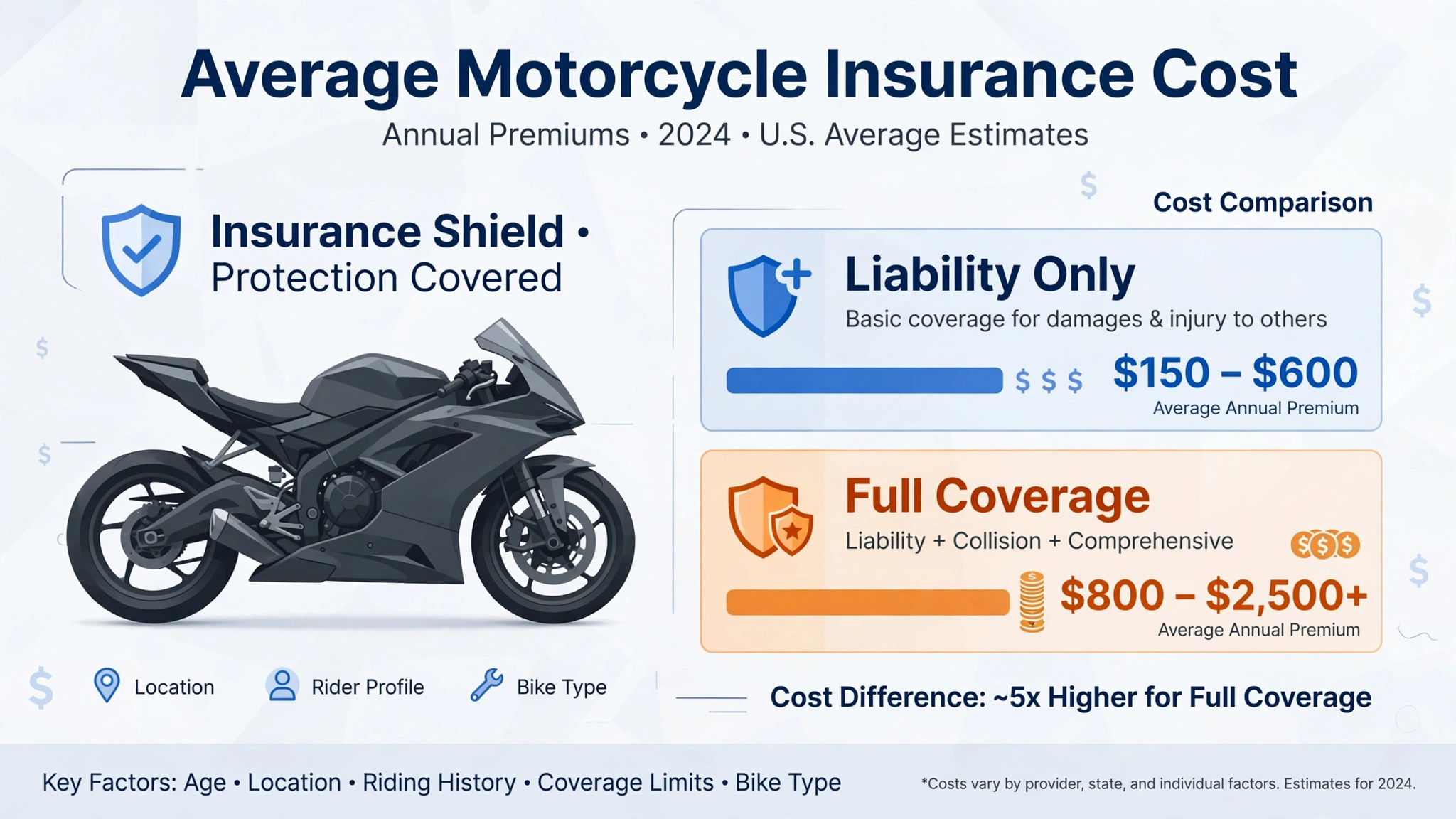
Average Motorcycle Insurance Cost
The average cost of motorcycle insurance varies widely depending on your coverage, riding history, and where you live. Riders who choose liability-only insurance typically pay much less than those with full coverage, which includes collision and comprehensive protection.
In general, motorcycle insurance can range from around $150 to over $2,500 per year. Riders with smaller motorcycles, clean driving records, and several years of riding experience usually enjoy lower premiums. Younger riders, owners of high-performance motorcycles, and those living in areas with higher accident or theft rates often pay significantly more.
Here’s a general estimate of annual motorcycle insurance costs:
| Coverage Type | Average Annual Cost |
|---|---|
| Liability Only | $150–$600 |
| Full Coverage | $800–$2,500+ |
Since motorcycle insurance is a recurring expense, finding ways to reduce your monthly costs can free up money for other financial goals. You may also enjoy our guide on manifesting better money habits.
Tip: Compare Multiple Insurance Quotes
Motorcycle insurance premiums can vary significantly between insurance companies, even for the same rider and motorcycle. Comparing quotes from several providers can help you find better coverage, lower premiums, and discounts that match your riding experience and insurance needs.
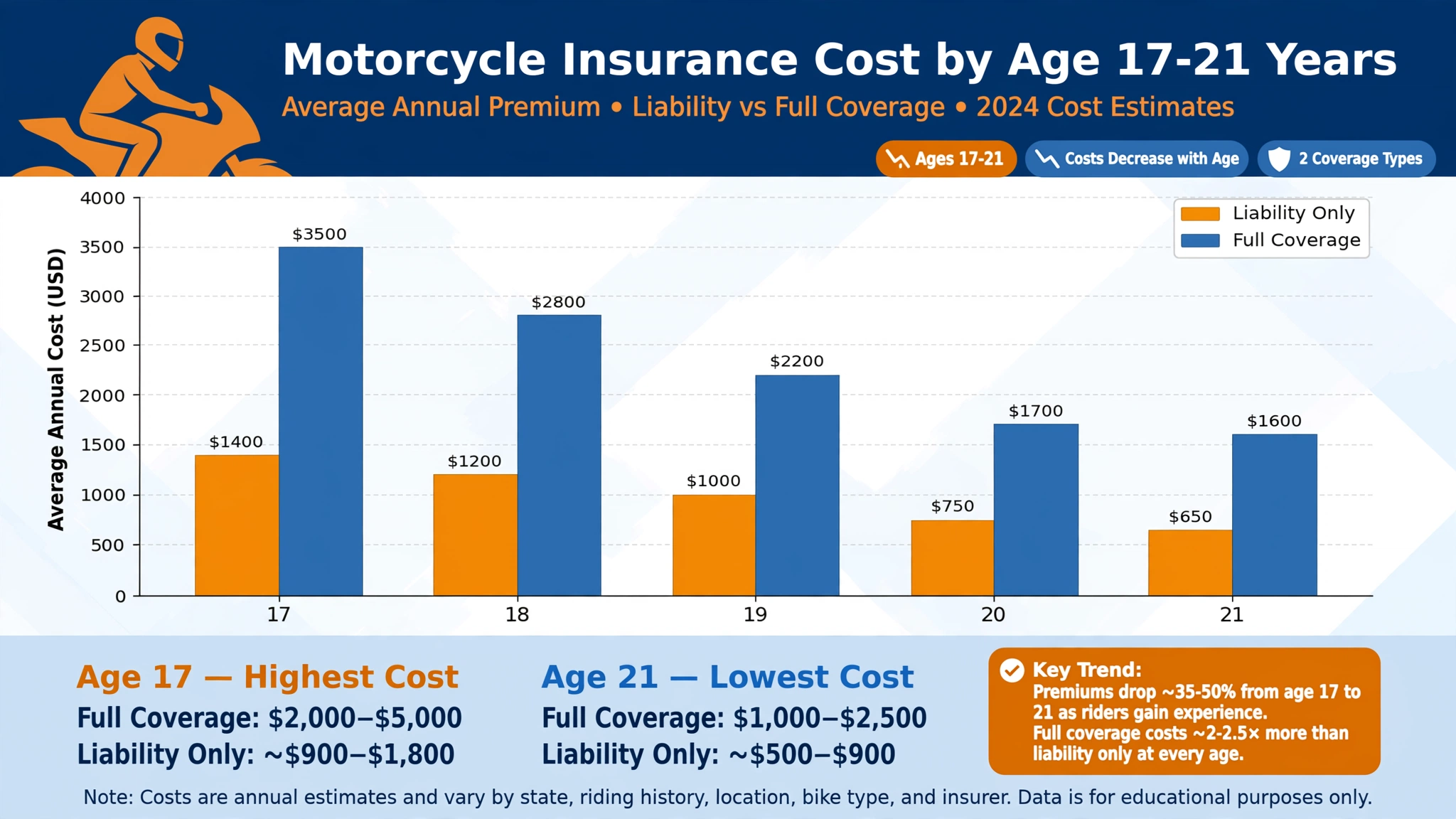
Motorcycle Insurance Cost by Age (17–21 Years)
Age is one of the biggest factors that insurance companies consider when calculating motorcycle insurance premiums. Younger riders are statistically more likely to be involved in accidents, which makes them a higher risk to insure. As riders gain experience and maintain a clean driving record, insurance costs generally begin to decrease.
Although every insurer uses its own pricing formula, the following estimates provide a general idea of what young riders can expect to pay for motorcycle insurance.
| Rider Age | Liability Only | Full Coverage |
|---|---|---|
| 17 Years | $500–$1,600 | $2,000–$5,000 |
| 18 Years | $450–$1,400 | $1,800–$4,000 |
| 19 Years | $400–$1,200 | $1,500–$3,500 |
| 20 Years | $350–$1,000 | $1,200–$3,000 |
| 21 Years | $300–$900 | $1,000–$2,500 |
These estimates are based on typical market trends and should be used as a general guide rather than guaranteed rates. Your actual premium may vary depending on factors such as your location, motorcycle model, coverage limits, deductible, driving history, and the insurance company you choose.
Why Does Motorcycle Insurance Get Cheaper With Age?
Most insurers reward riders who demonstrate safe riding habits over time. As you gain experience and avoid accidents or traffic violations, you’re generally viewed as a lower-risk customer. This often results in lower premiums, especially after turning 21 or accumulating several years of claim-free riding.
Even if you’re under 21, you can often reduce your insurance costs by choosing a smaller motorcycle, completing a certified motorcycle safety course, maintaining a clean driving record, and comparing quotes from multiple insurance providers.
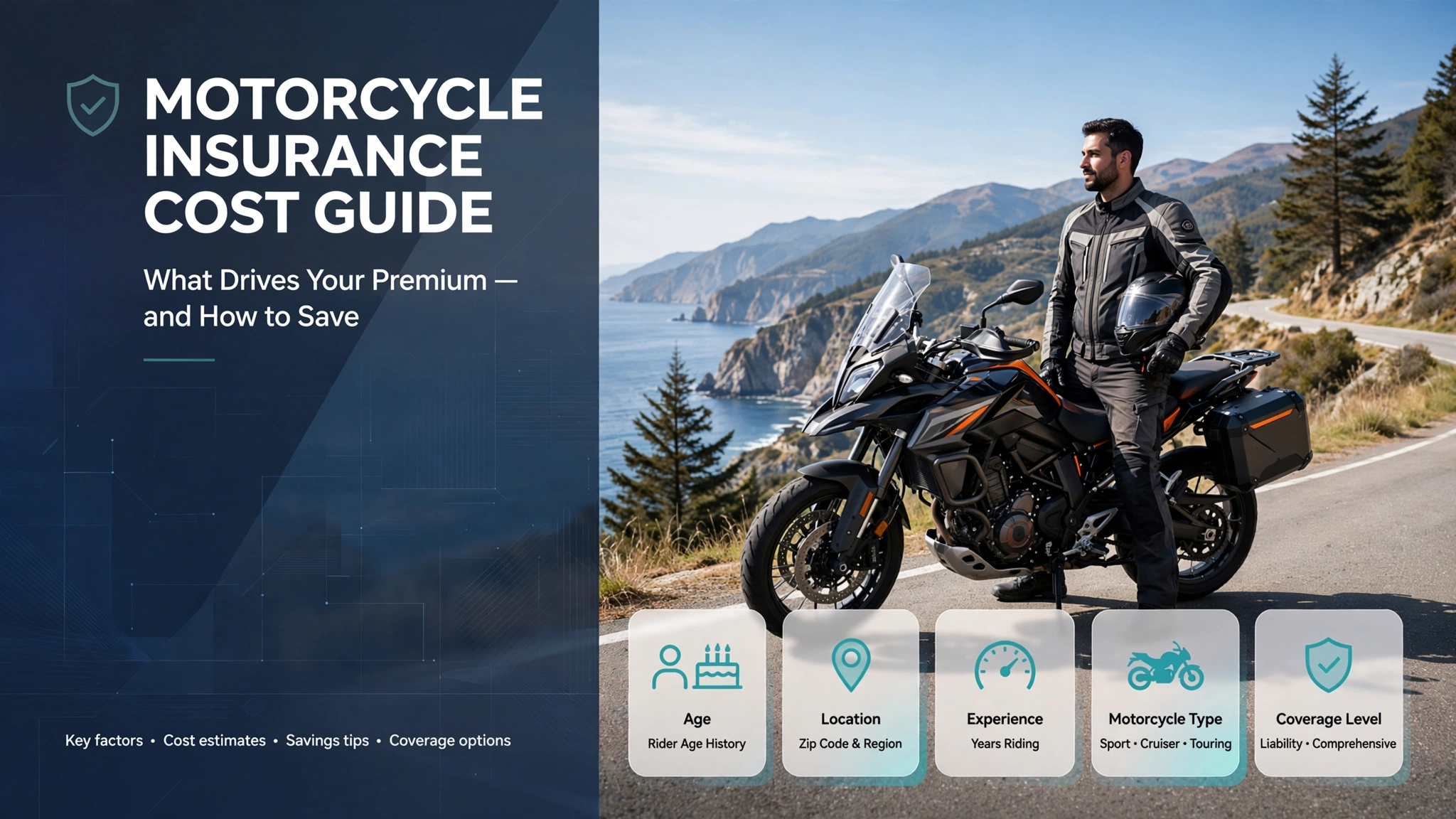
What Affects Motorcycle Insurance Costs?
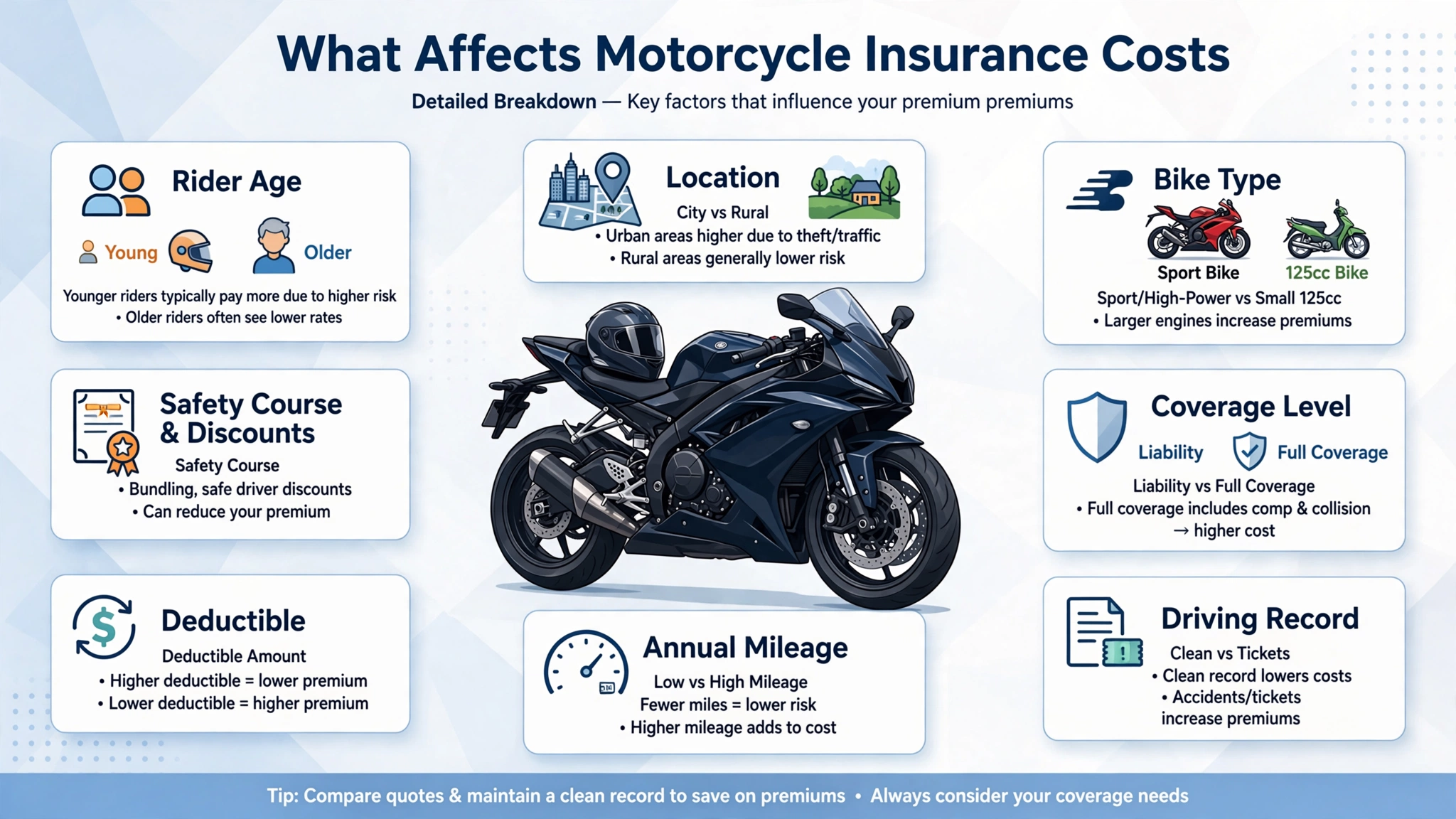
Understanding what influences your motorcycle insurance premium can help you choose the right coverage and find ways to reduce your costs. Insurance companies evaluate several risk factors before calculating your premium. While each insurer uses its own pricing model, the following factors have the greatest impact on how much you’ll pay.
Age and Riding Experience
Age is one of the biggest factors affecting motorcycle insurance costs. Younger riders, especially those between 16 and 21 years old, typically pay higher premiums because they have less riding experience and are statistically more likely to be involved in accidents. As you gain experience and maintain a clean riding record, your insurance costs often decrease over time.
Your Location
Where you live also affects your premium. Riders in busy cities usually pay more because of higher traffic density, increased accident rates, and greater motorcycle theft risk. Those living in rural or suburban areas often enjoy lower insurance costs due to fewer claims and reduced traffic.
Motorcycle Type and Engine Size
The make, model, and engine capacity of your motorcycle significantly influence your insurance rate. Sport bikes and high-performance motorcycles generally cost more to insure because they’re faster, more expensive to repair, and statistically involved in more claims. Smaller motorcycles with lower engine sizes, such as 125cc to 300cc, are often less expensive to insure.
Coverage Level
The amount of coverage you choose has a direct impact on your premium. Liability-only insurance is the most affordable option because it covers damage you cause to others. Full coverage, which typically includes liability, collision, and comprehensive protection, offers greater financial protection but comes with a higher premium.
Driving Record
Insurance companies carefully review your driving history. Riders with speeding tickets, traffic violations, previous accidents, or insurance claims are generally considered higher risk and pay higher premiums. Maintaining a clean driving record is one of the most effective ways to lower insurance costs over time.
Annual Mileage
The more frequently you ride, the greater your chances of being involved in an accident. Riders who use their motorcycles only occasionally or for recreational purposes may qualify for lower premiums than those who commute daily or ride long distances throughout the year.
Deductible Amount
Your deductible is the amount you agree to pay out of pocket before your insurance policy covers a claim. Choosing a higher deductible usually lowers your monthly or annual premium. However, you’ll need to pay more yourself if you need to file a claim, so it’s important to choose a deductible you can comfortably afford.
Discounts and Safety Courses
Many insurance companies offer discounts that can significantly reduce your premium. Completing an approved motorcycle safety course, bundling multiple insurance policies, installing anti-theft devices, maintaining continuous insurance coverage, and remaining claim-free may all qualify you for lower rates.
Tip: Ask About Available Discounts
Before purchasing a motorcycle insurance policy, ask your insurer about every available discount. You may qualify for savings by completing a motorcycle safety course, maintaining a clean driving record, bundling multiple insurance policies, or installing anti-theft devices. Even small discounts can add up to significant savings over the life of your policy.
Average Motorcycle Insurance Cost by Motorcycle Type
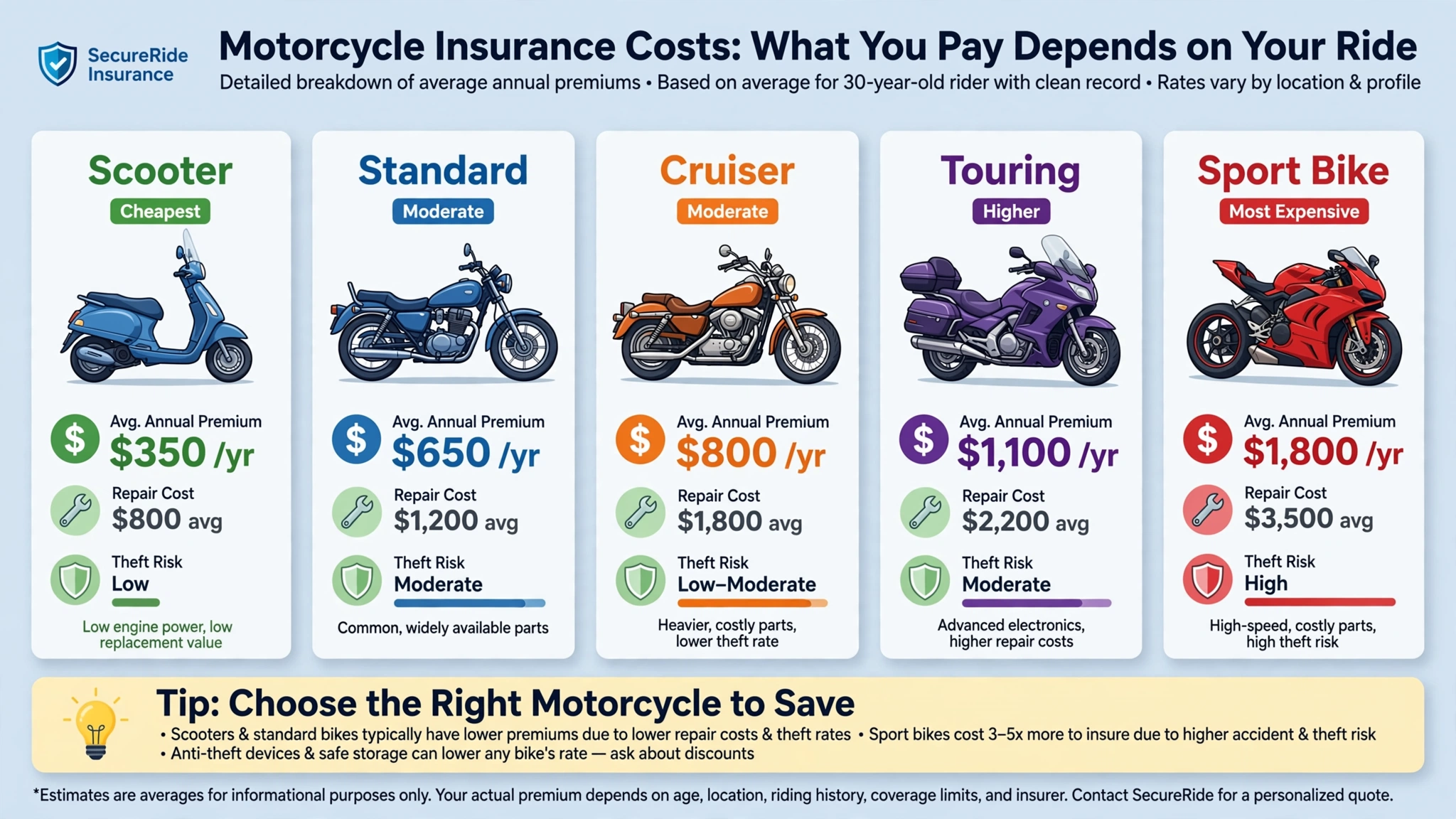
The type of motorcycle you own has a significant impact on your insurance premium. Insurance companies consider factors such as the bike’s value, engine size, repair costs, theft rate, and accident statistics when calculating your premium. In general, motorcycles that are more powerful, expensive, or costly to repair tend to have higher insurance rates.
The table below provides estimated annual insurance costs for different types of motorcycles. Keep in mind that your actual premium will also depend on your age, location, driving record, coverage level, and the insurance provider you choose.
| Motorcycle Type | Average Annual Cost | Typical Insurance Cost |
|---|---|---|
| Scooters & 125cc Bikes | $150–$500 | Lowest |
| Standard Motorcycles | $250–$900 | Low |
| Cruisers | $300–$1,000 | Moderate |
| Adventure & Dual-Sport | $350–$1,200 | Moderate |
| Touring Motorcycles | $500–$1,500 | High |
| Sport Bikes | $1,000–$3,500+ | Very High |
Why Are Sport Bikes More Expensive to Insure?
Sport bikes are usually the most expensive motorcycles to insure because they are built for speed and performance. Their higher acceleration, increased accident risk, and expensive repair costs make them more costly for insurance companies to cover. As a result, riders of sport bikes often pay significantly higher premiums than those who own standard or cruiser motorcycles.
Which Motorcycles Are the Cheapest to Insure?
Scooters, commuter motorcycles, and bikes with smaller engines—typically between 125cc and 300cc—are generally the least expensive to insure. These motorcycles are more affordable to repair, are less likely to be involved in high-speed accidents, and are often ridden for daily commuting rather than recreational high-speed riding. New riders looking to save money on insurance often choose these motorcycles because they combine lower purchase prices with lower insurance premiums.
Tip: Choose the Right Motorcycle to Save on Insurance
If you're buying your first motorcycle or want to keep insurance costs low, consider a smaller motorcycle with a modest engine size. Bikes with lower repair costs and fewer theft claims typically have lower insurance premiums. It's also a good idea to compare insurance quotes before purchasing a motorcycle, as the same bike can cost significantly different amounts to insure depending on the provider.
Types of Motorcycle Insurance Coverage
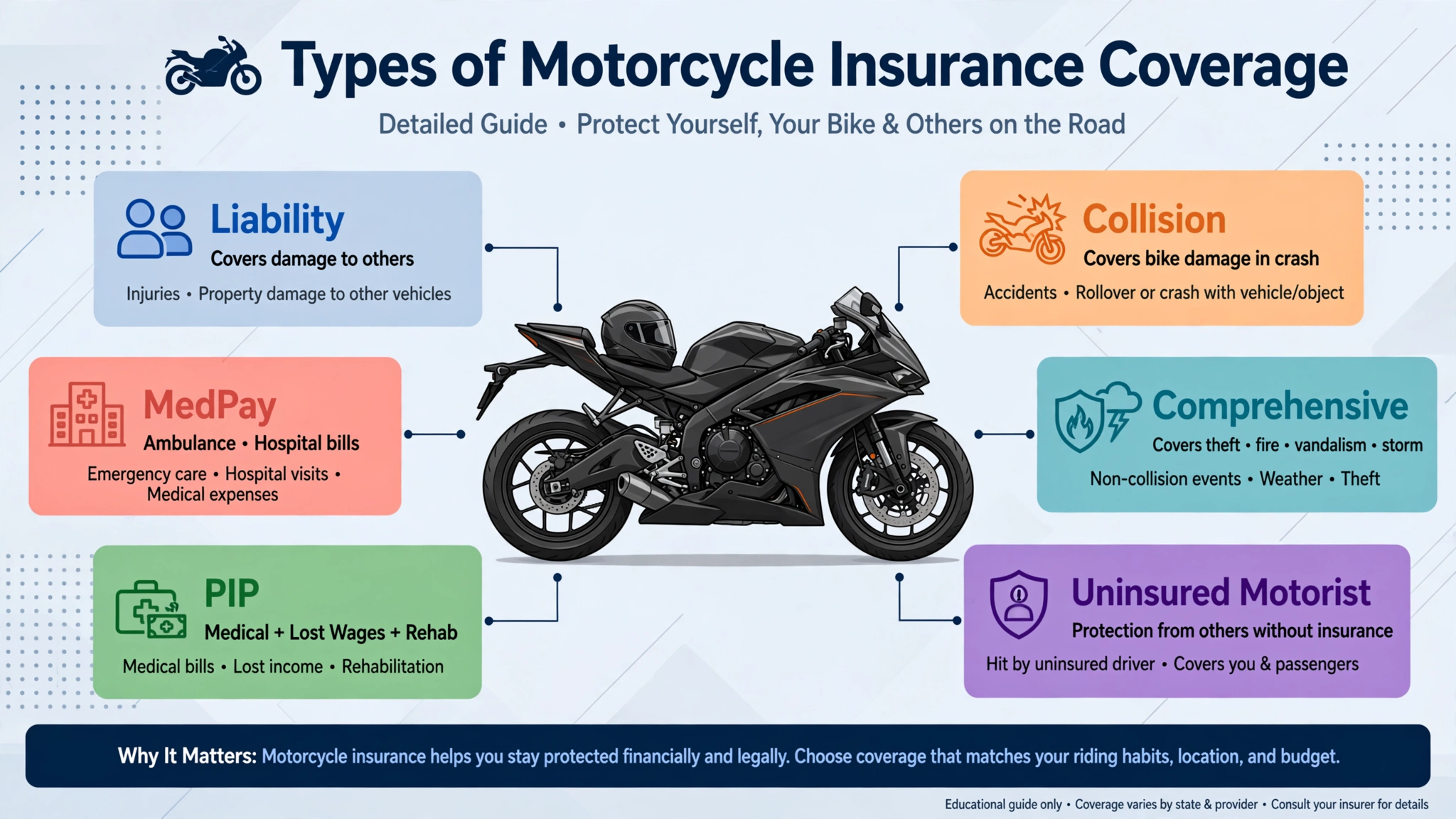
Understanding the different types of motorcycle insurance coverage can help you choose a policy that fits your budget and provides the protection you need. While some coverage options are required by law in many states, others are optional but can offer valuable financial protection in the event of an accident, theft, or damage.
To better understand common insurance terms and coverage options, you can also visit the Insurance Information Institute (III), which provides educational resources for consumers.
Liability Insurance
Liability insurance is the minimum coverage required in many states. It helps pay for injuries and property damage you cause to other people if you’re responsible for an accident. However, it doesn’t cover damage to your own motorcycle or your medical expenses. Because it provides basic protection, liability insurance is usually the most affordable option.
Collision Coverage
Collision coverage pays for repairs or replacement of your motorcycle if it’s damaged in a collision with another vehicle or object, regardless of who caused the accident. This coverage is especially valuable if you own a newer or more expensive motorcycle.
Comprehensive Coverage
Comprehensive coverage protects your motorcycle against non-collision events such as theft, fire, vandalism, storms, floods, or falling objects. Since motorcycles are more vulnerable to theft than many other vehicles, this coverage is often recommended for riders who park outdoors or own high-value bikes.
Uninsured and Underinsured Motorist Coverage
Not every driver carries enough insurance to cover the damage they cause. Uninsured and underinsured motorist coverage helps pay for your injuries and, in some cases, motorcycle damage if you’re involved in an accident with a driver who has little or no insurance.
Medical Payments (MedPay)
Medical Payments coverage, commonly known as MedPay, helps pay medical expenses for you and your passenger after a motorcycle accident, regardless of who was at fault. It can help cover ambulance fees, hospital bills, surgery, X-rays, and other medical costs that may not be fully covered by your health insurance.
Personal Injury Protection (PIP)
Personal Injury Protection (PIP) is available in some states and offers broader protection than MedPay. Depending on your policy, it may cover medical expenses, lost wages, rehabilitation costs, and certain essential services if you’re injured in a motorcycle accident. Availability and coverage limits vary by state.
Which Type of Coverage Should You Choose?
The right motorcycle insurance coverage depends on your motorcycle’s value, your budget, and how often you ride. If you own an older motorcycle with a lower market value, liability insurance may provide sufficient protection. However, riders with newer or financed motorcycles often choose full coverage—including liability, collision, and comprehensive insurance—to protect against costly repairs, theft, and other unexpected losses.
Tip: Don't Choose Coverage Based on Price Alone
The cheapest motorcycle insurance policy isn't always the best value. Compare coverage limits, deductibles, exclusions, and available discounts before making a decision. Paying slightly more for better protection can save you thousands of dollars after an accident or theft.
How to Lower Your Motorcycle Insurance Premium
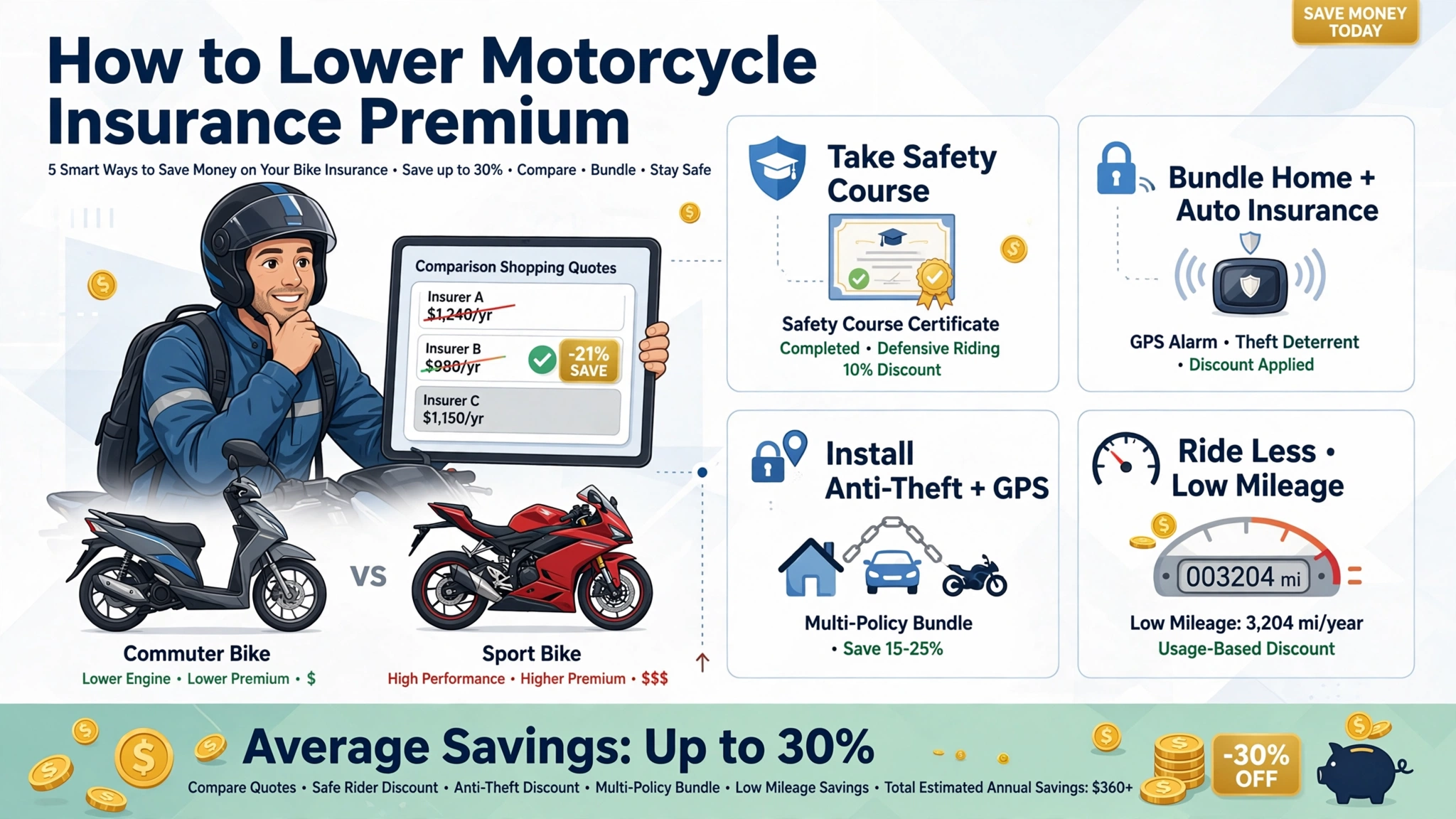
Paying less for motorcycle insurance doesn’t always mean sacrificing coverage. Many insurance companies offer discounts and pricing options that can significantly reduce your premium. By making smart choices and maintaining a good riding record, you can enjoy quality coverage while keeping your insurance costs under control.
Compare Quotes from Multiple Insurance Companies
Insurance rates can vary widely between providers, even for the same motorcycle and rider profile. Requesting quotes from several insurance companies allows you to compare prices, coverage options, deductibles, and discounts before making a decision.
Maintain a Clean Driving Record
Safe riders are rewarded with lower insurance premiums. Avoiding accidents, speeding tickets, and traffic violations demonstrates responsible riding and can help you qualify for better rates over time.
Choose a Higher Deductible
Increasing your deductible usually lowers your monthly or annual premium. However, you’ll need to pay more out of pocket if you file a claim, so choose a deductible that fits your financial situation.
Complete a Motorcycle Safety Course
Many insurers offer discounts to riders who complete an approved motorcycle safety course. These courses improve riding skills, reduce accident risk, and may help lower your insurance premium.
Improving your riding skills can also reduce your accident risk. The National Highway Traffic Safety Administration (NHTSA) offers valuable motorcycle safety information and riding resources.
Bundle Your Insurance Policies
If you already have auto, home, or renters insurance, consider purchasing your motorcycle insurance from the same company. Many insurers offer multi-policy discounts that can reduce your overall insurance costs.
Install Anti-Theft Devices
Motorcycles are more vulnerable to theft than cars. Installing approved anti-theft devices, alarms, GPS tracking systems, or secure locking systems may qualify you for additional discounts while reducing the risk of theft.
Choose the Right Motorcycle
High-performance sport bikes generally cost more to insure than standard motorcycles, cruisers, or smaller commuter bikes. If keeping insurance costs low is important, selecting a motorcycle with a smaller engine and lower repair costs can make a noticeable difference in your premium.
Ride Fewer Miles Each Year
Insurance companies often ask for your estimated annual mileage. Riders who use their motorcycles occasionally for recreation typically pay less than those who commute daily or travel long distances throughout the year.
Conclusion
Although you can’t control every factor that affects your motorcycle insurance premium, taking advantage of available discounts, riding safely, and comparing insurance quotes can help you find affordable coverage without compromising on protection. Even small changes can lead to meaningful savings over time.
Tip: Review Your Policy Every Year
Motorcycle insurance rates can change from year to year. Before renewing your policy, compare quotes from other insurers and review your coverage to ensure you're not paying for protection you no longer need. A quick annual review could save you hundreds of dollars.
Frequently Asked Questions
A 20-year-old rider can expect to pay approximately $350–$1,000 per year for liability-only insurance and $1,200–$3,000 or more for full coverage. The exact premium depends on factors such as location, motorcycle type, riding experience, and driving history.
Motorcycle insurance for an 18-year-old generally costs more because younger riders are considered higher risk. Liability coverage often ranges from $450 to $1,400 per year, while full coverage may cost $1,800 to $4,000 or more.
Yes. Many riders see lower premiums after turning 21, especially if they have a clean driving record and several years of riding experience without claims.
Liability-only insurance is usually the least expensive option because it only covers damage or injuries you cause to others. It doesn't cover damage to your own motorcycle.
Scooters, commuter motorcycles, and bikes with smaller engines—typically between 125cc and 300cc—are usually the least expensive to insure due to lower repair costs and reduced accident risk.
Young riders generally pay higher premiums because they have less riding experience and are statistically more likely to be involved in accidents, making them a higher insurance risk.
Yes. Motorcycles with larger engines and higher performance typically cost more to insure because they are faster, more expensive to repair, and often associated with higher claim rates.
You can reduce your premium by comparing quotes, maintaining a clean driving record, completing a motorcycle safety course, choosing a higher deductible, bundling insurance policies, and selecting a motorcycle with lower insurance costs.
Motorcycle Insurance Cost Comparison
| Rider Profile | Estimated Annual Cost |
|---|---|
| Minimum Liability Coverage | $150–$600 |
| Full Coverage | $800–$2,500+ |
| 17-Year-Old Rider | $500–$5,000 |
| 18-Year-Old Rider | $450–$4,000 |
| 19-Year-Old Rider | $400–$3,500 |
| 20-Year-Old Rider | $350–$3,000 |
| 21-Year-Old Rider | $300–$2,500 |
| Sport Bike Owner | $1,000–$3,500+ |
| Small Motorcycle (125cc–300cc) | $150–$700 |
The figures above are national estimates intended to provide a general comparison. Your actual premium may differ based on your location, insurer, riding experience, motorcycle model, chosen coverage, and applicable discounts.
Before purchasing a policy, review your state’s insurance requirements through the National Association of Insurance Commissioners (NAIC) to better understand coverage options and consumer protections.
Common Mistakes That Increase Motorcycle Insurance Costs
Buying a Sport Bike as Your First Motorcycle
Many new riders choose high-performance motorcycles without realizing they’ll pay much higher insurance premiums.
Choosing the Lowest Coverage Only
While liability insurance is affordable, it may not provide enough protection for newer or financed motorcycles.
Not Comparing Insurance Quotes
Premiums can vary significantly between insurance companies. Getting multiple quotes can help you find better coverage at a lower price.
Comparing coverage options not just prices can help you choose the right policy for your needs. Consumer advocacy organizations such as Consumer Reports regularly publish guidance on comparing insurance products.
Ignoring Available Discounts
Many riders miss discounts for safety courses, anti-theft devices, bundling policies, and maintaining a clean driving record.
Filing Small Claims
Frequent small claims may increase your premium over time. If the repair cost is only slightly higher than your deductible, paying out of pocket may sometimes be more economical.
Tip: Think Long-Term Before Choosing a Policy
The cheapest premium isn't always the best choice. Consider the coverage limits, deductible, customer service, and claims process before purchasing motorcycle insurance. A policy with better protection can save you far more after an accident than the small amount you save on premiums.
Final Thoughts
Motorcycle insurance costs vary widely because every rider has a unique risk profile. Factors such as age, motorcycle type, location, riding experience, and coverage level all influence your premium. While younger riders often pay more, maintaining a clean driving record, choosing the right motorcycle, and comparing quotes from multiple insurers can significantly reduce your costs.
Before purchasing a policy, take time to compare coverage options rather than focusing only on the lowest price. The right motorcycle insurance policy should provide the protection you need while fitting comfortably within your budget.



0 Comments