
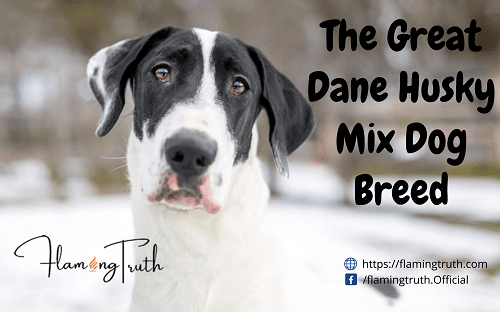

The Great Dane Husky Mix is a rare hybrid dog created by crossing a Great Dane with a Siberian Husky. Also known as a Husky Great Dane Mix, Great Dane and Husky Mix, or Great Dane mixed with Husky, this large designer breed combines the gentle size and loyalty of the Great Dane with the intelligence, energy, and striking appearance of the Husky. Because it’s a mixed breed, every puppy can inherit different traits from its parents, making each Great Dane Husky Mix unique in appearance, temperament, size, and care needs.
Why I Wrote This Guide
Since my first dog breed article trended on Google, I received numerous requests from readers asking me to write an informative guide about the Great Dane Husky Mix. While researching this fascinating hybrid, I realized that there weren’t many detailed and trustworthy resources covering everything prospective owners wanted to know.
As a dog lover, I understand how many questions come to mind before bringing home a new companion. Whether you’re considering a French Bulldog, a Golden Retriever, or a Great Dane Husky Mix, researching the breed is one of the most important steps you can take. That’s exactly why I created this comprehensive guide—to answer the most common questions about this remarkable crossbreed and help you decide whether it’s the right dog for your lifestyle.
Now, let’s explore everything you need to know about the Great Dane Husky Mix.
If you enjoy learning about unique hybrid breeds, you may also like our guide to the German Shepherd Husky Mix, another intelligent and energetic crossbreed with its own distinctive personality.
📑 Table of Contents
- Great Dane Husky Mix at a Glance
- History of the Great Dane Husky Mix
- Parent Breeds: Great Dane vs. Siberian Husky
- Great Dane Husky Mix Appearance
- Size & Growth
- Temperament & Personality
- Exercise Requirements
- Grooming & Coat Care
- Diet & Nutrition
- Training Guide
- Common Health Problems
- Lifespan
- Great Dane Husky Mix Puppies
- Pros & Cons
- Is a Great Dane Husky Mix Right for You?
- Frequently Asked Questions
- Conclusion
- References
Great Dane Husky Mix at a Glance
| Breed Type | Designer Hybrid Dog |
|---|---|
| Parent Breeds | Great Dane × Siberian Husky |
| Height | 21–35 inches (53–89 cm) |
| Weight | 60–150 lbs (27–68 kg) |
| Lifespan | 7–15 years |
| Temperament | Loyal, Intelligent, Protective, Energetic |
| Coat Type | Short to Medium Double Coat |
| Coat Colors | Black, White, Gray, Brown, Fawn, Tan, Merle |
| Shedding | Moderate to Heavy |
| Exercise Needs | 90–120 Minutes Daily |
| Trainability | Moderate to High |
| Good With Children | Yes, with Early Socialization |
| Apartment Friendly | ❌ No |
What Is a Great Dane Husky Mix?
The Great Dane Husky Mix is a designer hybrid dog created by crossing a purebred Great Dane with a purebred Siberian Husky. Also known as the Husky Great Dane Mix, Great Dane and Husky Mix, or Great Dane × Husky, this crossbreed combines the gentle giant personality of the Great Dane with the intelligence, endurance, and striking appearance of the Siberian Husky.
Since this is a mixed breed, every Great Dane Husky Mix is unique. Some inherit the Great Dane’s tall, muscular build and calm temperament, while others take after the Husky with a more athletic body, thicker coat, and higher energy levels. Their appearance, size, coat colors, and even personality can vary depending on which parent’s genes are more dominant.
Although the Great Dane Husky Mix is not recognized as an official breed by major kennel clubs like the American Kennel Club (AKC), it has become increasingly popular among families and dog enthusiasts looking for a loyal, intelligent, and active companion. With proper training, socialization, and care, this hybrid can become a loving family pet and an excellent watchdog.
Meet the Parent Breeds
Before understanding the Great Dane Husky Mix, it’s important to learn about its parent breeds. The personality, appearance, size, and health of this hybrid largely depend on the traits inherited from the Great Dane and the Siberian Husky. While some puppies closely resemble the Great Dane, others inherit more Husky characteristics, making every Great Dane Husky Mix unique.
Great Dane
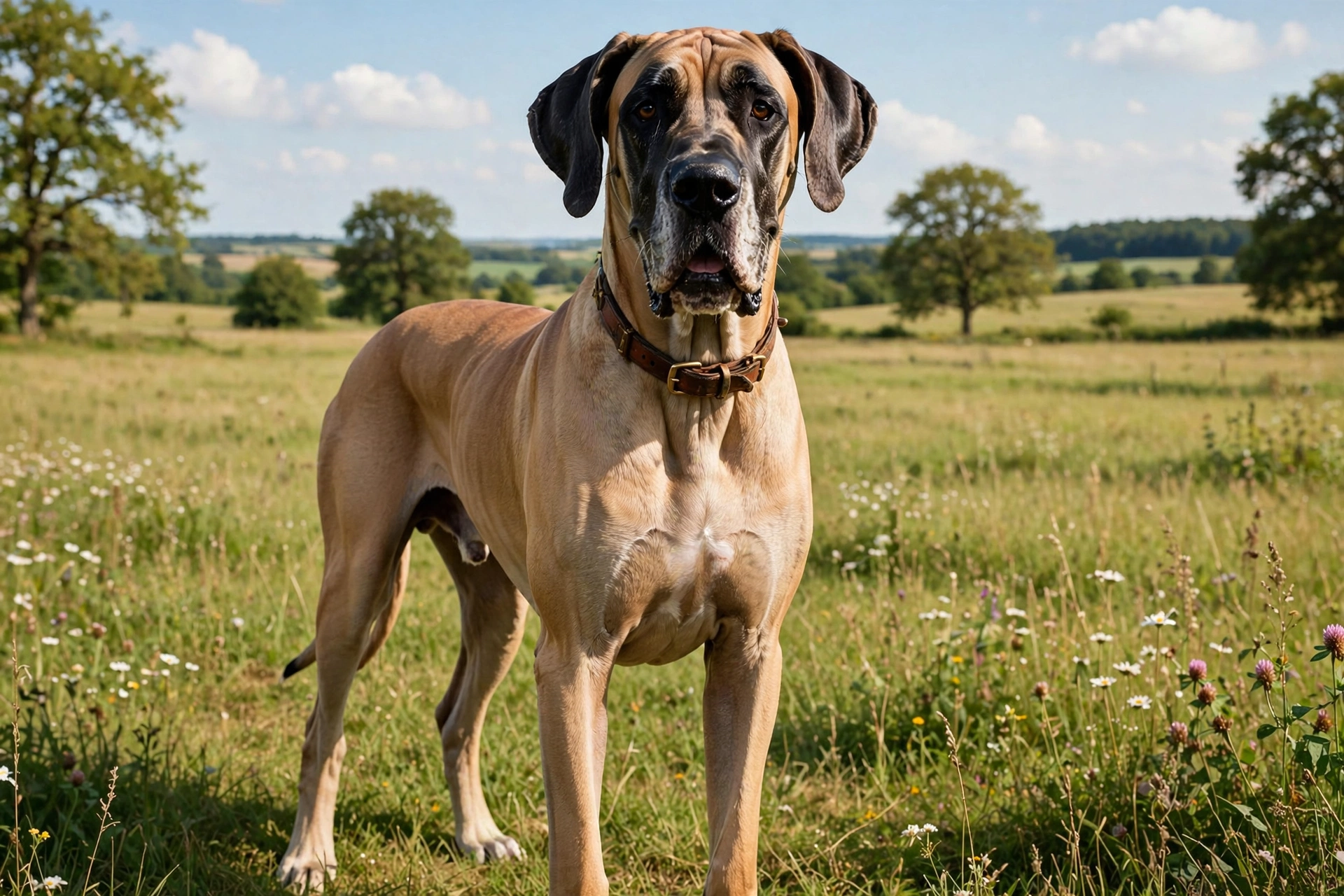
The Great Dane is one of the world’s tallest dog breeds and is often called the “gentle giant” because of its calm, affectionate, and friendly personality. Despite its massive size, the breed is known for being patient with children, loyal to its family, and eager to please its owners.
Originally developed in Germany, Great Danes were bred to hunt large game such as wild boar. Over time, selective breeding transformed them into dependable companion dogs with a gentle temperament. Today, they are admired for their impressive stature, intelligence, and protective instincts.
You can learn more about the Great Dane breed standard from the American Kennel Club (AKC).
Great Dane Breed Overview
| Characteristic | Details |
|---|---|
| Origin | Germany |
| Breed Group | Working Group |
| Height | 28–32 inches (71–81 cm) |
| Weight | 100–175 pounds (45–79 kg) |
| Lifespan | 7–10 years |
| Temperament | Gentle, Loyal, Friendly, Courageous |
| Energy Level | Moderate |
| Coat Type | Short, Smooth Coat |
| AKC Recognition | Yes |
Siberian Husky
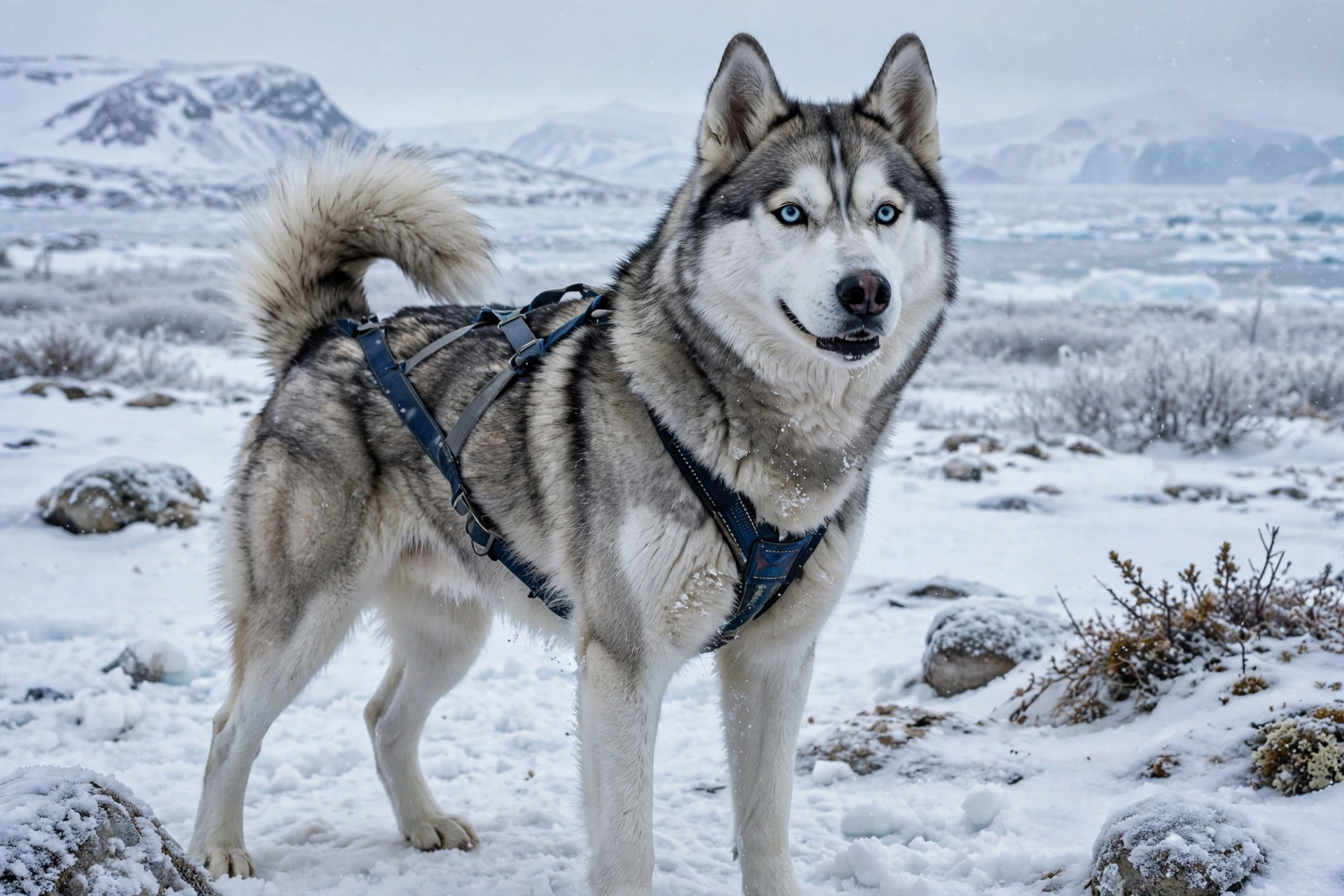
The Siberian Husky is an energetic working breed that originated in northeastern Asia, where the Chukchi people bred these dogs to pull sleds across long distances in harsh Arctic conditions. Their endurance, intelligence, and friendly personality have made them one of the most recognizable dog breeds in the world.
Unlike the calm Great Dane, Siberian Huskies are highly energetic and require regular physical activity and mental stimulation. Their thick double coat, striking blue or multicolored eyes, and wolf-like appearance contribute to their popularity among dog lovers.
The American Kennel Club also provides detailed information about the Siberian Husky’s temperament, activity level, and breed characteristics.
Siberian Husky Breed Overview
| Characteristic | Details |
|---|---|
| Origin | Siberia, Russia |
| Breed Group | Working Group |
| Height | 20–24 inches (51–61 cm) |
| Weight | 35–60 pounds (16–27 kg) |
| Lifespan | 12–15 years |
| Temperament | Intelligent, Friendly, Outgoing, Energetic |
| Energy Level | High |
| Coat Type | Thick Double Coat |
| AKC Recognition | Yes |
Why Do the Parent Breeds Matter?
The Great Dane Husky Mix inherits its appearance, temperament, size, and overall personality from both the Great Dane and the Siberian Husky. Since there is no fixed breed standard for this hybrid, every puppy is unique. Some Great Dane Husky Mix puppies closely resemble the Great Dane with their towering height, calm nature, and muscular build, while others inherit the Siberian Husky’s athletic body, thick coat, striking eyes, and boundless energy.
Understanding the strengths and characteristics of both parent breeds helps you know what to expect before bringing home a Great Dane Husky Mix. It also makes it easier to prepare for the breed’s exercise needs, grooming requirements, training challenges, and long-term health care.
Great Dane Husky Mix Appearance
One of the most fascinating things about the Great Dane Husky Mix is that no two dogs look exactly alike. Since this hybrid inherits genes from both the Great Dane and the Siberian Husky, its appearance can vary significantly from one puppy to another. Some dogs closely resemble the towering Great Dane, while others inherit more of the Husky’s athletic build and wolf-like features.
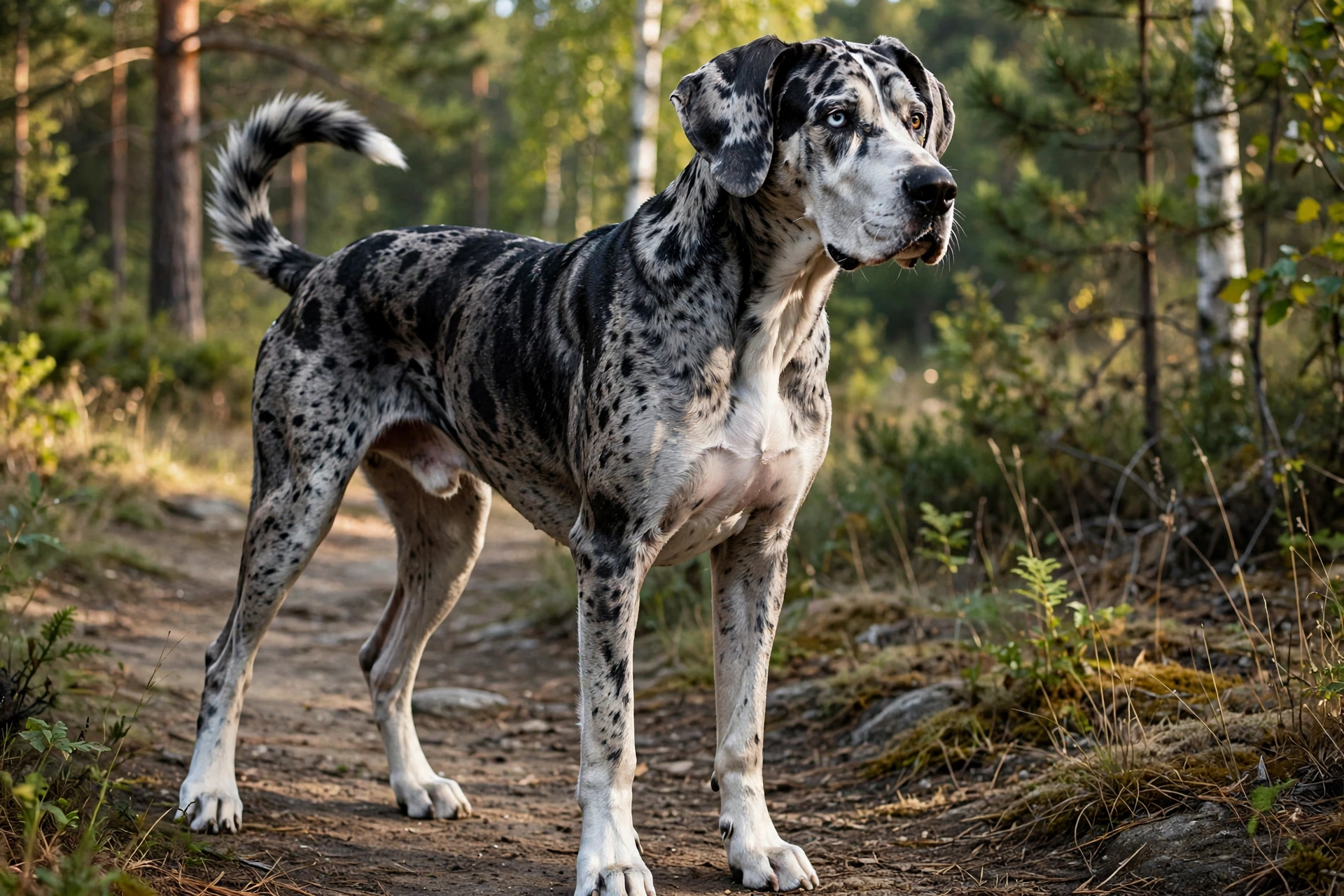
Most Great Dane Husky Mixes have a strong, muscular body with long legs, a deep chest, and a balanced, athletic frame. Their ears may stand upright like a Husky’s or hang slightly like a Great Dane’s, while their eyes can be brown, blue, amber, or even one of each—a striking feature inherited from the Husky.
Their coat is usually short to medium in length and may be dense enough to provide protection in colder climates. Common coat colors include black, white, gray, fawn, tan, brown, and various combinations of these shades. Some dogs may also inherit unique facial markings or merle patterns from their Great Dane lineage, making each Great Dane Husky Mix truly one of a kind.
Although appearance varies, most owners are drawn to this hybrid because it combines the impressive size of the Great Dane with the beautiful coat and expressive eyes of the Siberian Husky.
| Feature | Typical Appearance |
|---|---|
| Body Build | Large, Muscular, Athletic |
| Head | Broad with a Long Muzzle |
| Eyes | Brown, Blue, Amber, or Heterochromia |
| Ears | Upright or Semi-Floppy |
| Nose | Usually Black or Brown |
| Coat Length | Short to Medium |
| Coat Texture | Smooth to Dense Double Coat |
| Common Colors | Black, White, Gray, Brown, Fawn, Tan |
| Tail | Long and Bushy or Slightly Curved |
Great Dane Husky Mix Growth Chart
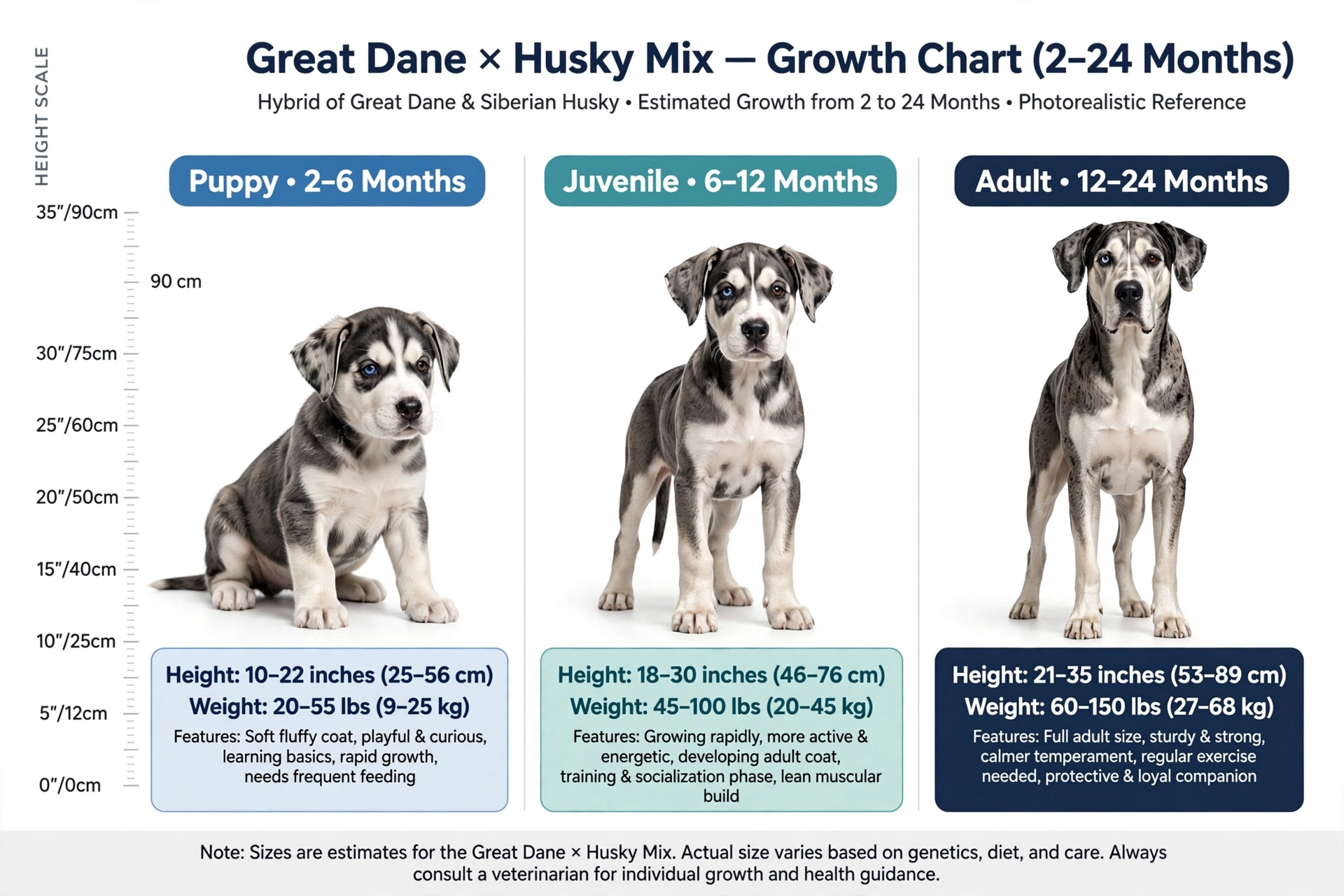
One of the biggest surprises for new owners is the size of a Great Dane Husky Mix. Because this hybrid inherits genes from two very different parent breeds, there is no exact size standard. Some dogs grow closer to the Siberian Husky’s medium-large frame, while others inherit the Great Dane’s towering height and powerful build.
A full-grown Great Dane Husky Mix typically stands between 21 and 35 inches (53–89 cm) tall at the shoulder and weighs anywhere from 60 to 150 pounds (27–68 kg). Males are generally larger and heavier than females, although genetics, diet, and exercise all play a role in determining adult size.
Like most large and giant breeds, the Great Dane Husky Mix grows rapidly during its first year but may continue filling out until it is 18 to 24 months old. Providing a balanced diet, regular exercise, and routine veterinary care during this growth period is essential for healthy bone and joint development.
| Growth Stage | Typical Height | Typical Weight |
|---|---|---|
| Puppy (2–6 Months) | 10–22 inches (25–56 cm) | 20–55 lbs (9–25 kg) |
| Juvenile (6–12 Months) | 18–30 inches (46–76 cm) | 45–100 lbs (20–45 kg) |
| Adult (12–24 Months) | 21–35 inches (53–89 cm) | 60–150 lbs (27–68 kg) |
Your content goes here. Edit or remove this text inline or in the module Content settings. You can also style every aspect of this content in the module Design settings and even apply custom CSS to this text in the module Advanced settings.
Great Dane Husky Mix Temperament
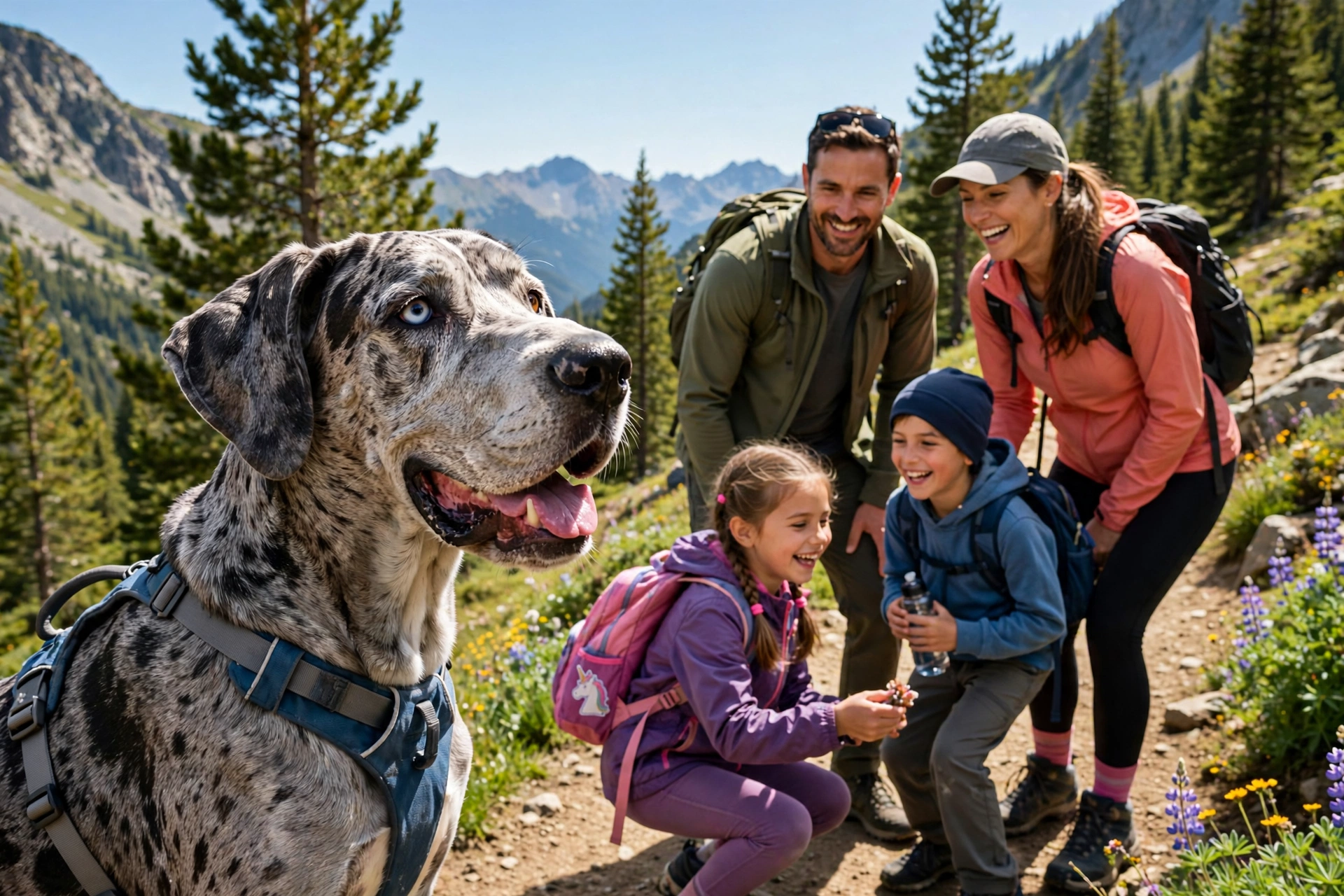
The Great Dane Husky Mix is an intelligent, loyal, and energetic companion that inherits personality traits from both parent breeds. While every dog is unique, most Great Dane Husky Mixes are affectionate with their families, protective of their homes, and eager to spend time with their owners. Their combination of the Great Dane’s gentle nature and the Siberian Husky’s playful spirit creates a dog that is both loving and full of energy.
Because this hybrid can inherit different characteristics from either parent, temperament varies from one dog to another. Some Great Dane Husky Mixes are calm and easygoing like the Great Dane, while others display the Husky’s independent personality, curiosity, and strong desire to explore. Early socialization and consistent training help shape these natural instincts into positive behaviors.
Although they are generally friendly, Great Dane Husky Mixes thrive on companionship and do not enjoy being left alone for long periods. Without enough physical activity and mental stimulation, they may become bored and develop unwanted behaviors such as excessive barking, digging, or chewing. Daily interaction, structured exercise, and engaging activities help keep them happy and well-balanced.
With proper training, this hybrid usually gets along well with children and other pets, especially when introduced at a young age. However, because of their large size and high energy level, playtime with small children should always be supervised to prevent accidental injuries.
Is the Great Dane Husky Mix a Good Family Dog?
Yes, the Great Dane Husky Mix can make an excellent family companion for active households that have enough space to accommodate a large dog. They form strong bonds with their families and enjoy participating in daily activities, whether it’s going for long walks, hiking, playing outdoors, or simply spending time with their owners.
Families who can provide regular exercise, early training, and consistent attention are more likely to enjoy the loyal and affectionate nature of this hybrid. Because of their intelligence and eagerness to interact with people, they generally respond well to positive reinforcement and become devoted lifelong companions.
| Temperament Trait | Rating |
|---|---|
| Intelligence | ★★★★★ Excellent |
| Loyalty | ★★★★★ Excellent |
| Affection Toward Family | ★★★★★ Excellent |
| Energy Level | ★★★★★ Very High |
| Trainability | ★★★★☆ High |
| Protective Instinct | ★★★★☆ High |
| Friendliness | ★★★★☆ High |
| Good With Children | ★★★★☆ With Supervision |
| Good With Other Pets | ★★★★☆ With Early Socialization |
| Stranger Friendly | ★★★☆☆ Moderate |
Great Dane Husky Mix Daily Exercise Plan
The Great Dane Husky Mix is an active and intelligent dog that requires regular exercise to stay healthy, happy, and mentally stimulated. Since this hybrid inherits energy from the Siberian Husky and strength from the Great Dane, it needs more than just a short daily walk. Without enough physical activity, boredom can quickly lead to destructive behaviors such as chewing furniture, digging, excessive barking, or trying to escape the yard.
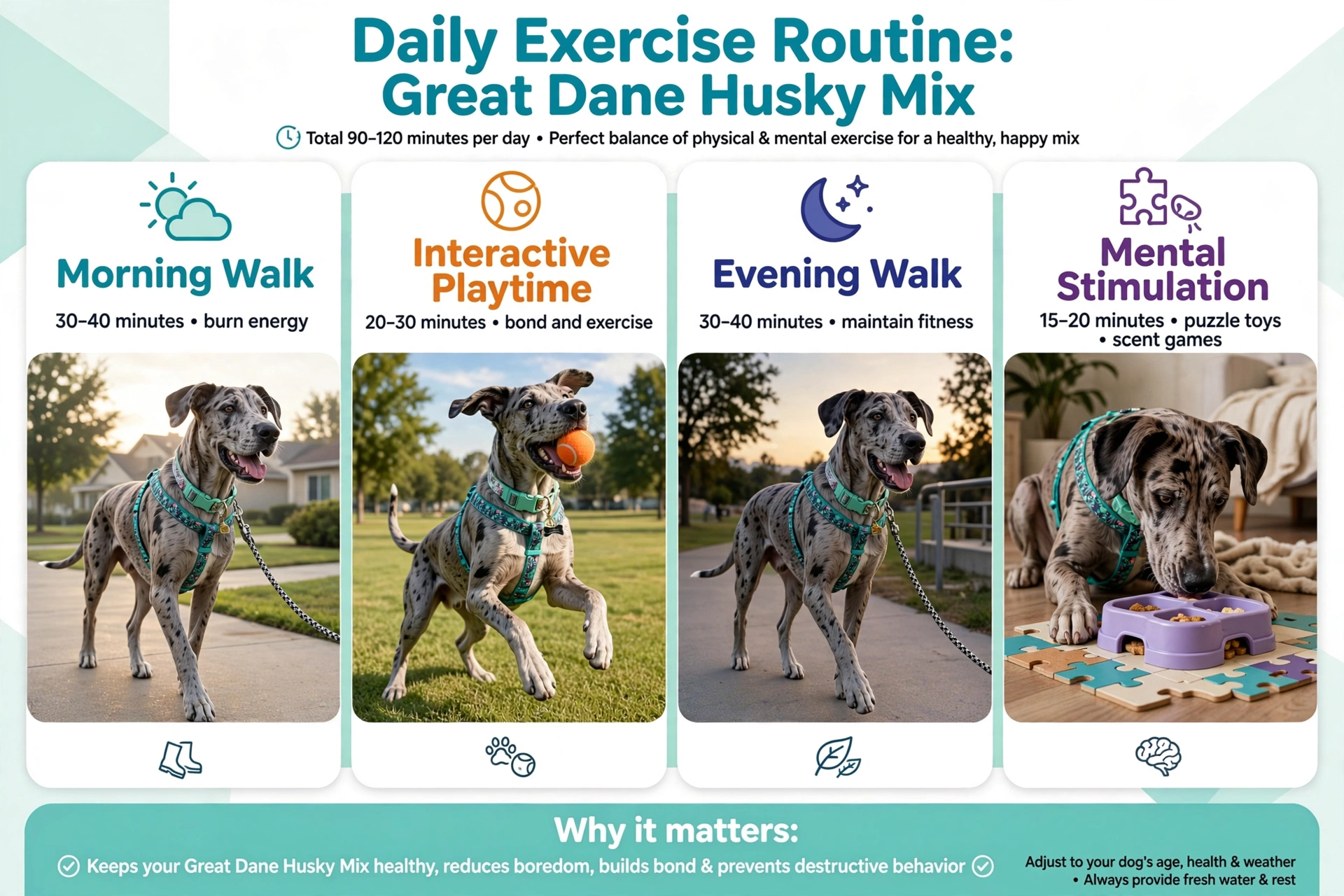
Most adult Great Dane Husky Mixes need 90 to 120 minutes of exercise each day. This doesn’t have to be completed all at once. Splitting exercise into two or three sessions throughout the day helps prevent overexertion while keeping your dog physically and mentally engaged.
Daily walks, jogging, hiking, interactive games, and obedience training are excellent ways to burn energy. Puzzle toys and scent-based games also provide valuable mental stimulation, which is just as important as physical exercise for this intelligent hybrid.
Because of their large size, puppies should avoid intense jumping or long-distance running until their bones and joints are fully developed. Controlled exercise during the first 18 to 24 months helps reduce the risk of joint problems later in life.
Best Activities for a Great Dane Husky Mix
Regularly changing activities helps prevent boredom and keeps your dog mentally challenged. Some of the best exercises include:
- Daily walks
- Hiking
- Light jogging (for healthy adults)
- Fetch
- Tug-of-war
- Agility exercises
- Puzzle toys
- Obedience training
- Scent games
- Interactive play with family members
| Activity | Recommended Time | Purpose |
|---|---|---|
| Morning Walk | 30–40 Minutes | Burn energy and establish a healthy daily routine. |
| Interactive Playtime | 20–30 Minutes | Strengthen the bond with your dog while providing physical exercise. |
| Evening Walk | 30–40 Minutes | Maintain fitness and help your dog relax before bedtime. |
| Mental Stimulation | 15–20 Minutes | Use puzzle toys, obedience training, or scent games to prevent boredom. |
Signs Your Dog Needs More Exercise
Watch for these common signs that your Great Dane Husky Mix may not be getting enough activity:
- Excessive barking or whining
- Chewing furniture or household items
- Digging holes in the yard
- Hyperactive behavior indoors
- Restlessness or pacing
- Weight gain
- Difficulty settling down after playtime
Providing a consistent exercise routine not only improves physical health but also helps create a calmer, better-behaved companion.
Great Dane Husky Mix Grooming & Coat Care
The Great Dane Husky Mix is relatively easy to groom compared to many long-haired breeds, but its coat care requirements depend on which parent it takes after. Dogs with a thicker Husky-like double coat tend to shed more throughout the year, especially during seasonal coat changes. Those that inherit the Great Dane’s shorter coat usually require less maintenance but still benefit from regular brushing.
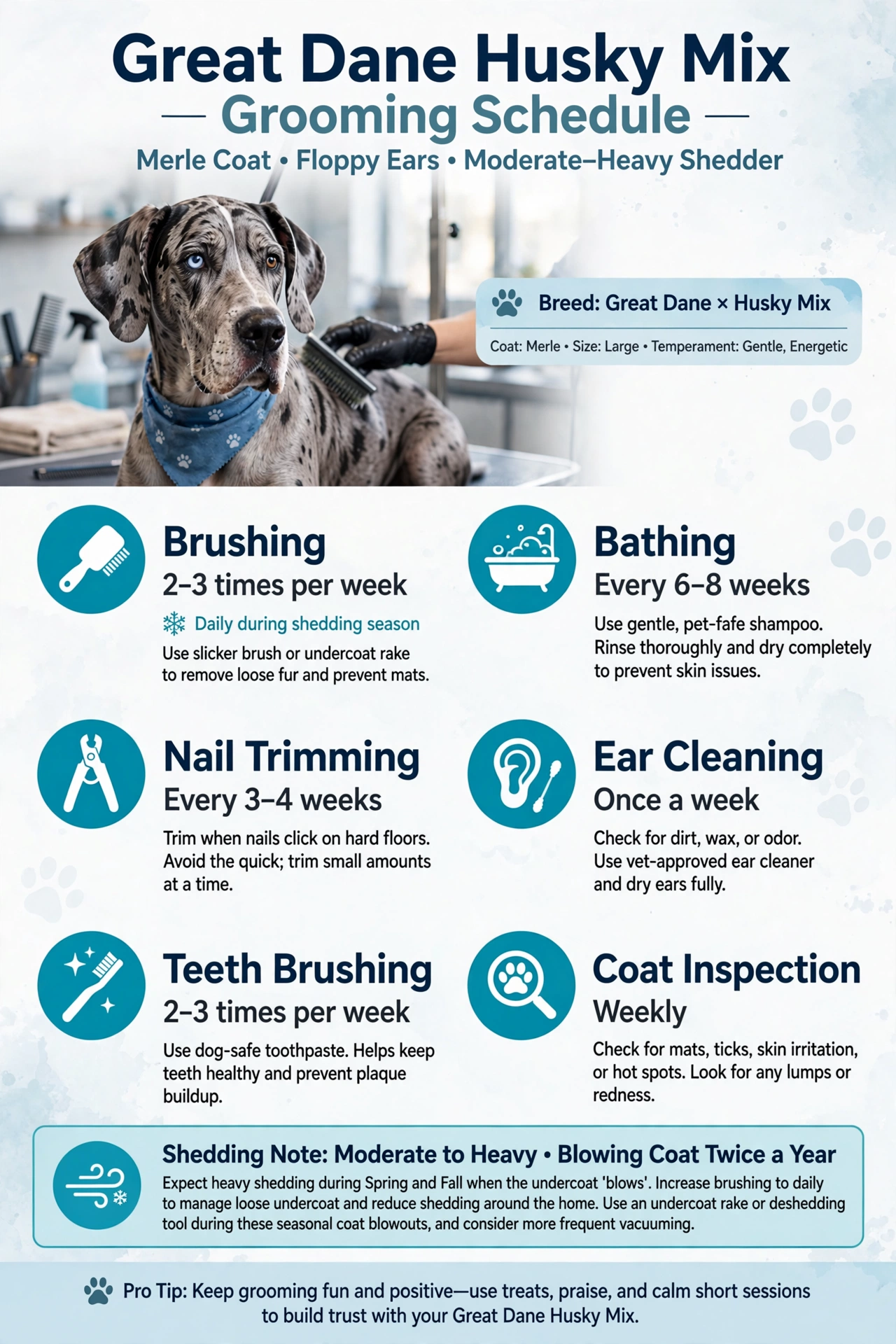
Brushing your Great Dane Husky Mix two to three times per week helps remove loose hair, distribute natural skin oils, and reduce shedding around the home. During spring and fall shedding seasons, daily brushing may be necessary to manage the increased hair loss.
Bathing should only be done when needed, typically every 6 to 8 weeks, or whenever your dog becomes particularly dirty. Overbathing can strip the coat of its natural oils and lead to dry, irritated skin.
In addition to coat care, remember to trim your dog’s nails regularly, clean its ears to prevent wax buildup and infections, and brush its teeth several times a week to maintain good oral health. A consistent grooming routine not only keeps your dog looking its best but also allows you to spot skin issues, parasites, or injuries early.
Does the Great Dane Husky Mix Shed?
Yes. Most Great Dane Husky Mixes shed a moderate to heavy amount, particularly if they inherit the Siberian Husky’s dense double coat. Seasonal shedding, often called “blowing the coat,” typically occurs twice a year and can result in significant hair loss over several weeks.
Using a high-quality slicker brush or undercoat rake during these periods can help remove loose fur and keep the coat healthy. Regular grooming also reduces the amount of hair left on furniture, clothing, and floors.
| Grooming Task | Recommended Frequency | Purpose |
|---|---|---|
| Brushing | 2–3 Times Per Week (Daily During Shedding Season) | Removes loose hair, reduces shedding, and keeps the coat healthy. |
| Bathing | Every 6–8 Weeks or As Needed | Cleans the coat without stripping away natural skin oils. |
| Nail Trimming | Every 3–4 Weeks | Prevents discomfort, overgrowth, and walking problems. |
| Ear Cleaning | Once Per Week | Helps prevent wax buildup and ear infections. |
| Teeth Brushing | 2–3 Times Per Week (Daily Is Ideal) | Reduces plaque, bad breath, and dental disease. |
| Coat Inspection | Once Per Week | Checks for parasites, skin problems, or injuries early. |
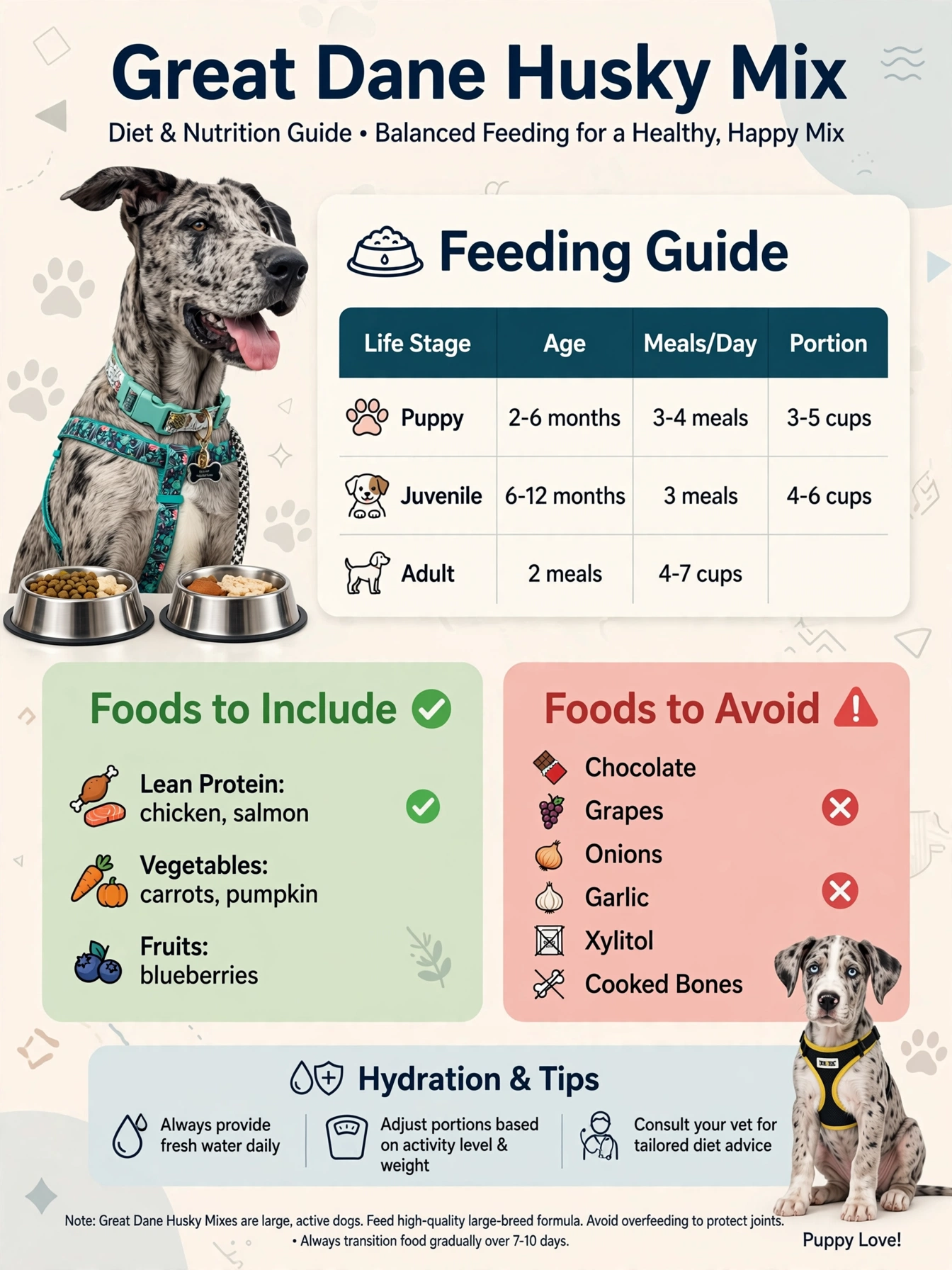
Great Dane Husky Mix Diet & Nutrition
A Great Dane Husky Mix requires a well-balanced diet to support its large frame, active lifestyle, and overall health. Because this hybrid combines the rapid growth of the Great Dane with the high energy level of the Siberian Husky, proper nutrition plays a vital role throughout every stage of life.
Choose a high-quality dog food that lists real meat as the primary ingredient and is formulated for your dog’s age and size. Large-breed puppies benefit from diets designed to support controlled growth, while adult dogs need a balanced combination of protein, healthy fats, vitamins, and minerals to maintain muscle mass and energy.
The exact amount of food depends on factors such as age, weight, activity level, and metabolism. Rather than offering one large meal, divide the daily food intake into two or three meals to support digestion and reduce the risk of stomach discomfort. Fresh, clean water should always be available.
Avoid overfeeding, as excess weight places additional stress on the joints and increases the risk of health problems such as hip dysplasia and obesity. Regular veterinary checkups can help ensure your dog’s diet remains appropriate as it grows and its activity level changes.
| Life Stage | Meals Per Day | Daily Food* | Recommended Food Type |
|---|---|---|---|
| Puppy (2–6 Months) | 3–4 Meals | 3–5 Cups | Large-breed puppy food rich in protein, calcium, and essential nutrients. |
| Juvenile (6–12 Months) | 3 Meals | 4–6 Cups | High-quality large-breed formula to support healthy growth and muscle development. |
| Adult (12+ Months) | 2 Meals | 4–7 Cups | Premium large-breed adult food with balanced protein, healthy fats, and joint support. |
*Feeding amounts are general guidelines and may vary depending on your dog's age, weight, activity level, metabolism, and the calorie content of the food. Always consult your veterinarian or follow the feeding recommendations provided by the dog food manufacturer.
Foods to Include
A healthy Great Dane Husky Mix diet may include:
- High-quality commercial dog food for large breeds
- Lean protein sources such as chicken, turkey, beef, or salmon
- Healthy fats containing Omega-3 and Omega-6 fatty acids
- Vegetables such as carrots, green beans, and pumpkin
- Fruits like blueberries and apples (without seeds)
- Fresh drinking water available at all times
Foods to Avoid
Some foods are toxic or unhealthy for dogs and should never be fed, including:
- Chocolate
- Grapes and raisins
- Onions and garlic
- Xylitol (artificial sweetener)
- Alcohol
- Cooked bones
- Macadamia nuts
- Excessively salty or sugary foods
Great Dane Husky Mix Training
Training a Great Dane Husky Mix requires patience, consistency, and positive reinforcement. This hybrid inherits intelligence from both the Great Dane and the Siberian Husky, making it capable of learning commands quickly. However, it may also inherit the Husky’s independent nature, which can make training more challenging for first-time dog owners.
The best time to begin training is during puppyhood. Early obedience training and socialization help your dog develop good manners and become comfortable around people, children, other pets, and unfamiliar environments. Exposing your puppy to different sights, sounds, and experiences from a young age can reduce fear-based behaviors later in life.
Positive reinforcement techniques, such as praise, treats, toys, and playtime, are far more effective than punishment. Keeping training sessions short, engaging, and consistent helps maintain your dog’s attention while preventing boredom. Most Great Dane Husky Mixes respond best to sessions lasting 10 to 15 minutes, repeated several times throughout the day.
Because this is a large and powerful breed, teaching basic commands such as Sit, Stay, Come, Heel, and Leave It should be a priority. Proper leash training is equally important, as an untrained adult Great Dane Husky Mix can become difficult to control due to its size and strength.
With regular practice, patience, and positive experiences, most Great Dane Husky Mixes grow into well-mannered, confident, and obedient companions.
Training Tips for Success
To make training more effective, keep these tips in mind:
- Start training as early as possible.
- Use rewards instead of punishment.
- Keep sessions short and enjoyable.
- Be consistent with commands and routines.
- Socialize your puppy with people and other animals.
- Exercise your dog before training to improve focus.
- Be patient and avoid harsh corrections.
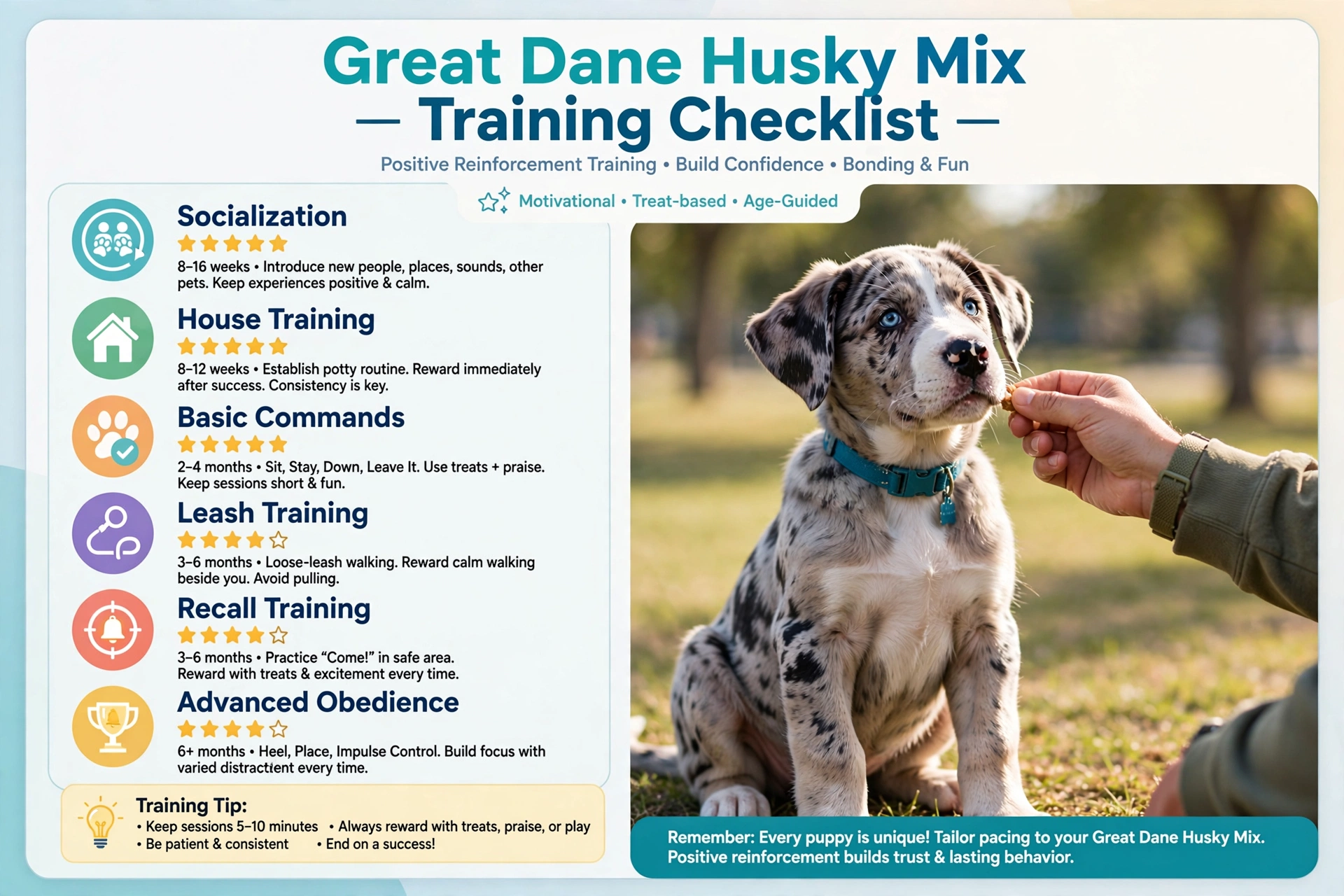
| Training Area | Importance | Recommended Age | Purpose |
|---|---|---|---|
| Socialization | Essential | 8–16 Weeks | Builds confidence and helps your puppy become comfortable around people, pets, and new environments. |
| House Training | Essential | 8–12 Weeks | Establishes good bathroom habits and a daily routine. |
| Basic Commands | Essential | 2–4 Months | Teaches commands such as Sit, Stay, Come, Down, and Leave It. |
| Leash Training | High | 3–6 Months | Encourages calm walking behavior and improves control during outings. |
| Recall Training | High | 3–6 Months | Helps your dog return reliably when called, improving safety. |
| Advanced Obedience | Recommended | 6+ Months | Develops advanced commands, impulse control, and better overall behavior. |
Common Health Problems in Great Dane Husky Mixes
Like all mixed breeds, the Great Dane Husky Mix can inherit health conditions from either parent. While hybrid dogs may benefit from greater genetic diversity than some purebred dogs, they are not immune to hereditary diseases. Regular veterinary checkups, a balanced diet, daily exercise, and preventive care can significantly improve your dog’s quality of life and help detect health issues early.
Because this hybrid combines a giant breed with an active working breed, owners should pay special attention to joint health, heart health, and digestive conditions. Understanding the most common health risks allows you to recognize symptoms early and seek veterinary treatment before problems become serious.
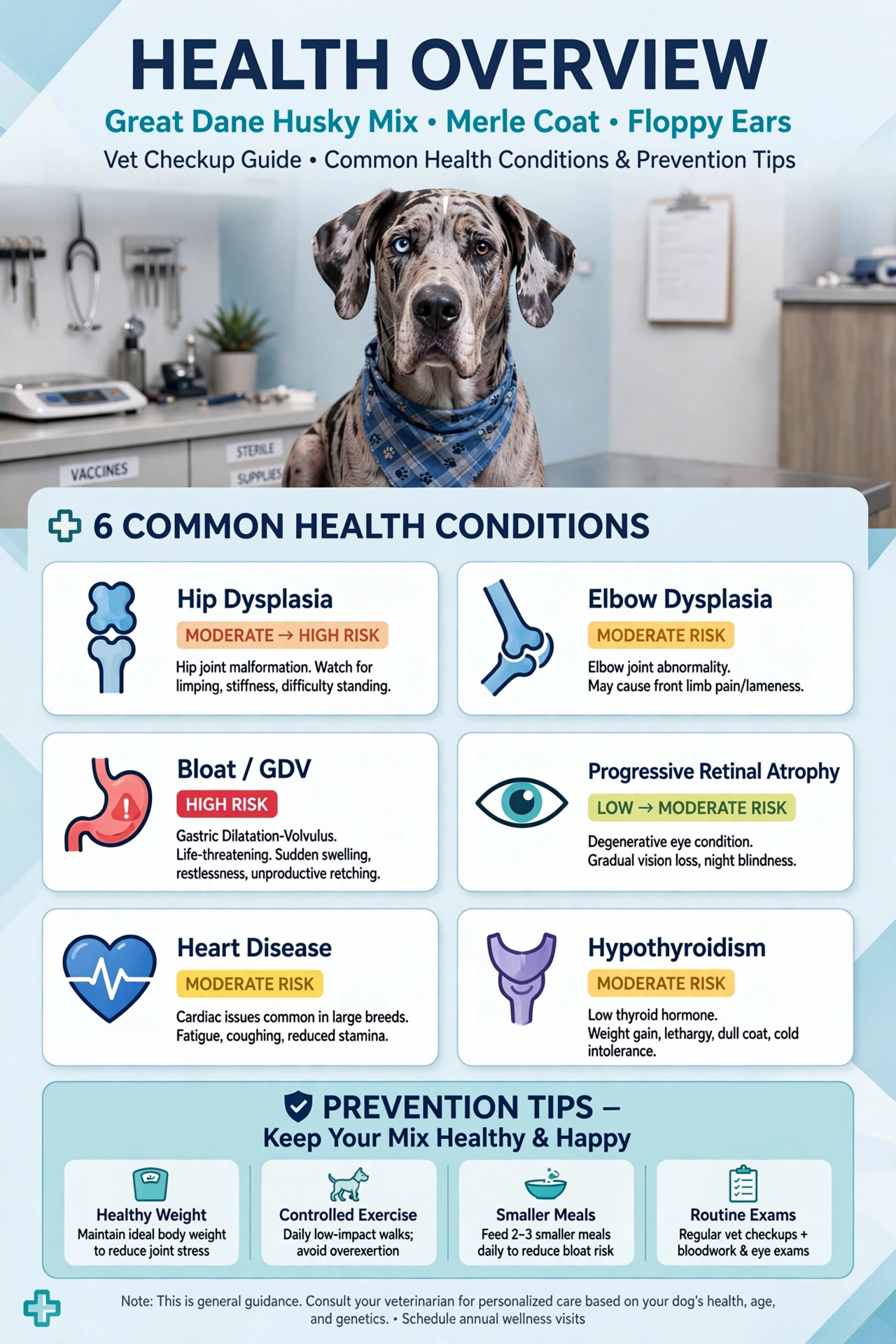
Common Health Conditions
Hip Dysplasia
Hip dysplasia is one of the most common orthopedic conditions affecting large dog breeds. It occurs when the hip joint develops improperly, leading to pain, stiffness, and reduced mobility. Maintaining a healthy weight and avoiding excessive exercise during puppyhood can help reduce the risk.
Elbow Dysplasia
Some Great Dane Husky Mixes may inherit elbow dysplasia, a condition that affects the elbow joint and can cause limping or discomfort. Early diagnosis and appropriate treatment can improve long-term mobility.
Gastric Dilatation-Volvulus (Bloat)
Because of their deep chest, Great Dane mixes have a higher risk of developing bloat, a life-threatening condition in which the stomach fills with gas and may twist. Feeding smaller meals throughout the day, avoiding vigorous exercise immediately before or after eating, and recognizing the warning signs can help reduce the risk.
Progressive Retinal Atrophy (PRA)
Progressive Retinal Atrophy is an inherited eye disease that gradually leads to vision loss. Although there is currently no cure, regular veterinary eye examinations can help monitor your dog’s eye health.
Heart Disease
Some Great Dane Husky Mixes may inherit heart conditions, including dilated cardiomyopathy, from their Great Dane lineage. Routine veterinary examinations are important for early detection and management.
Hypothyroidism
Hypothyroidism occurs when the thyroid gland does not produce enough hormones. Symptoms may include weight gain, fatigue, dry skin, and coat changes. With proper medication and regular monitoring, affected dogs can live healthy lives.
Hip dysplasia is one of the most common orthopedic conditions affecting large breeds. PetMD explains its symptoms, causes, and available treatment options in greater detail.
Keeping Your Great Dane Husky Mix Healthy
You can help your dog live a longer, healthier life by following these simple practices:
- Feed a high-quality, balanced diet.
- Maintain a healthy body weight.
- Provide daily exercise and mental stimulation.
- Schedule routine veterinary checkups.
- Keep vaccinations and parasite prevention up to date.
- Monitor for changes in appetite, energy, or mobility.
- Brush teeth regularly and maintain good grooming habits.
| Health Condition | Risk Level | Common Symptoms | Prevention / Management |
|---|---|---|---|
| Hip Dysplasia | Moderate to High | Limping, stiffness, difficulty standing or climbing stairs. | Maintain a healthy weight, avoid excessive exercise during growth, and schedule regular veterinary checkups. |
| Elbow Dysplasia | Moderate | Front-leg limping, pain, reduced range of motion. | Early diagnosis, weight management, and veterinary treatment when necessary. |
| Bloat (GDV) | High | Swollen abdomen, restlessness, excessive drooling, unsuccessful attempts to vomit. | Feed smaller meals, avoid vigorous exercise before and after meals, and seek emergency veterinary care if symptoms appear. |
| Progressive Retinal Atrophy (PRA) | Low to Moderate | Night blindness, reduced vision, gradual vision loss. | Routine eye examinations and regular veterinary monitoring. |
| Heart Disease | Moderate | Fatigue, coughing, breathing difficulties, reduced exercise tolerance. | Annual cardiac screenings and regular veterinary examinations. |
| Hypothyroidism | Moderate | Weight gain, lethargy, dry skin, hair loss, dull coat. | Blood tests, prescribed medication, and ongoing veterinary monitoring. |
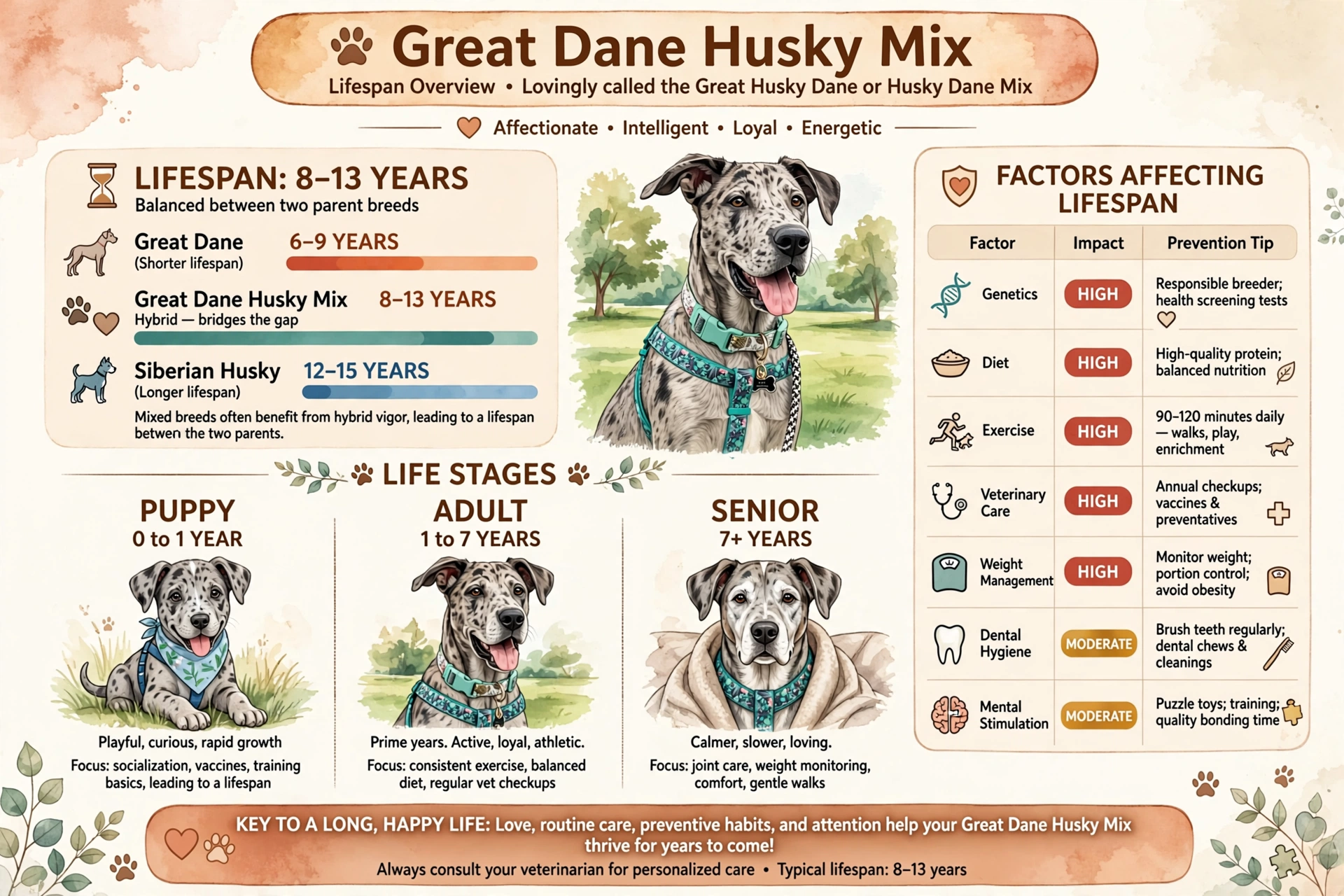
Great Dane Husky Mix Lifespan
The Great Dane Husky Mix typically lives between 8 and 13 years, although some dogs may live longer with excellent care and favorable genetics. Since this hybrid combines the Great Dane, which has a relatively short lifespan, with the longer-lived Siberian Husky, its life expectancy usually falls somewhere between the two parent breeds.
A dog’s lifespan depends on much more than genetics alone. Proper nutrition, regular exercise, routine veterinary care, and maintaining a healthy body weight all play a significant role in helping your Great Dane Husky Mix enjoy a long and active life. Preventive care, including vaccinations, parasite control, and annual health screenings, can also help detect potential health problems before they become serious.
Because this is a large to giant mixed breed, protecting the joints throughout puppyhood and adulthood is especially important. Feeding a balanced diet, avoiding obesity, and providing appropriate daily exercise can reduce unnecessary strain on the hips, elbows, and spine.
While no owner can guarantee how long a dog will live, providing consistent care and a loving home gives your Great Dane Husky Mix the best opportunity to enjoy a healthy and fulfilling life.
Factors That Affect a Great Dane Husky Mix’s Lifespan
- Genetics: Puppies from healthy, health-tested parents generally have a lower risk of inherited diseases.
- Diet & Nutrition: A balanced, high-quality diet supports healthy growth, muscle development, and immune function.
- Regular Exercise: Daily physical activity helps maintain a healthy weight while supporting cardiovascular and joint health.
- Routine Veterinary Care: Annual wellness exams allow veterinarians to identify health issues early.
- Weight Management: Preventing obesity reduces stress on joints and lowers the risk of several chronic diseases.
- Dental Care: Regular tooth brushing and professional cleanings help prevent oral disease that can affect overall health.
- Mental Stimulation: Training, interactive toys, and social interaction contribute to a happier, healthier dog.
| Factor | Impact on Lifespan | Recommendation | Why It Matters |
|---|---|---|---|
| Genetics | High | Choose a responsible breeder or adopt from a reputable rescue. | Healthy bloodlines reduce the risk of inherited diseases. |
| Diet & Nutrition | High | Feed a balanced, high-quality diet formulated for large breeds. | Supports healthy growth, muscle development, and a strong immune system. |
| Exercise | High | Provide 90–120 minutes of daily physical activity. | Helps maintain a healthy weight and supports heart and joint health. |
| Veterinary Care | High | Schedule annual wellness exams, vaccinations, and preventive care. | Detects health issues early and improves long-term well-being. |
| Weight Management | High | Maintain an ideal body condition throughout your dog's life. | Reduces stress on joints and lowers the risk of obesity-related diseases. |
| Dental Hygiene | Moderate | Brush your dog's teeth several times a week and schedule professional cleanings when needed. | Prevents dental disease that can affect overall health. |
| Mental Stimulation | Moderate | Provide training sessions, puzzle toys, and interactive play. | Reduces boredom, encourages good behavior, and supports cognitive health. |
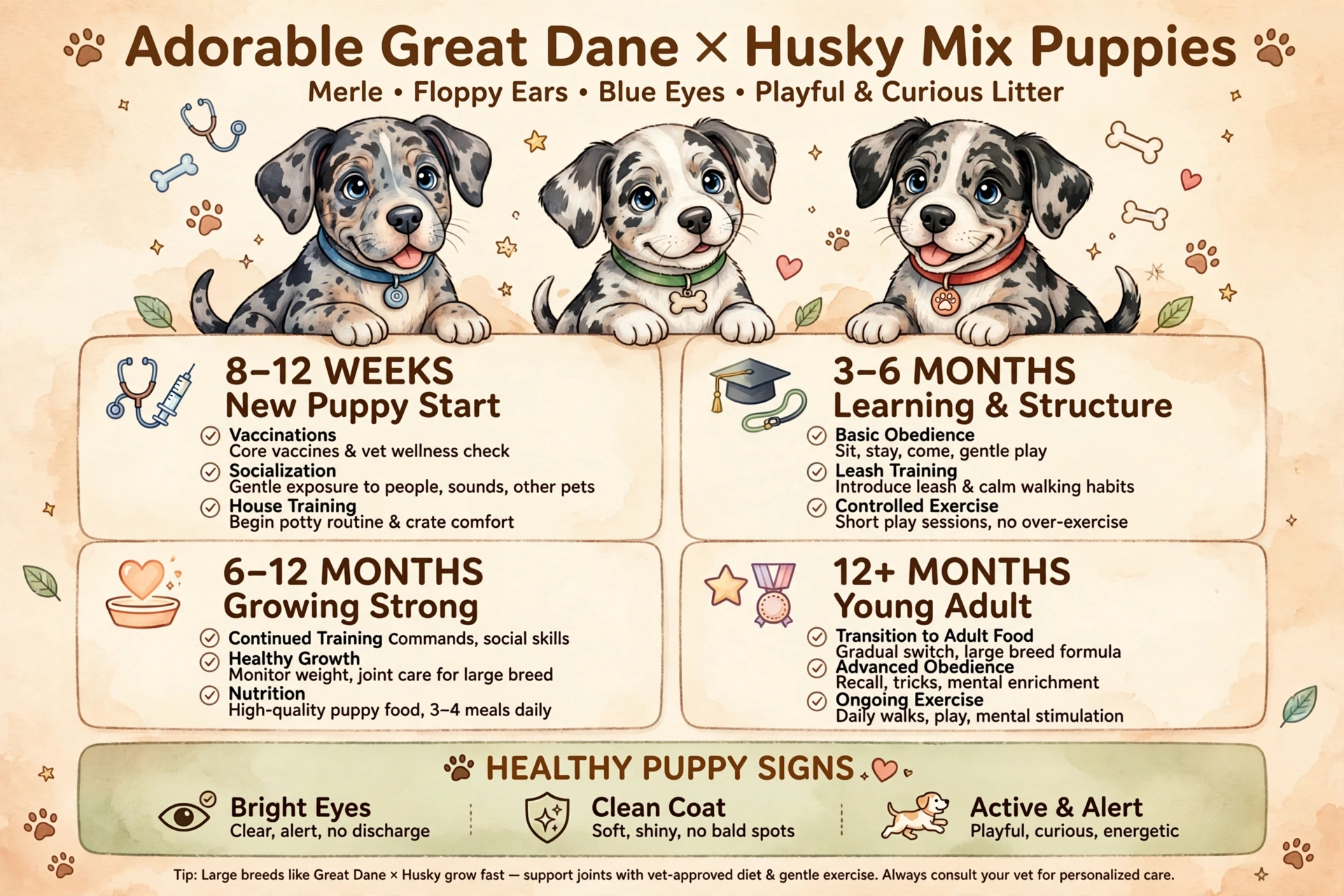
Great Dane Husky Mix Puppy Care Timeline
Great Dane Husky Mix puppies are playful, curious, and full of energy. During the first few months of life, they grow rapidly and require proper nutrition, early socialization, and consistent training to develop into healthy, well-behaved adult dogs. Because this is a hybrid breed, each puppy is unique. Some inherit the Great Dane’s calm and gentle personality, while others display the Siberian Husky’s energetic and independent nature.
When choosing a Great Dane Husky Mix puppy, look for one that is alert, active, and comfortable interacting with people. Healthy puppies should have bright eyes, a clean coat, and show no signs of limping, coughing, or unusual lethargy. Whether you adopt from a rescue organization or purchase from a breeder, ask about the puppy’s medical history, vaccinations, deworming schedule, and the health testing performed on the parent dogs.
The first year of your puppy’s life is the most important for physical and behavioral development. Early obedience training, positive socialization, regular veterinary checkups, and a balanced large-breed puppy diet all contribute to raising a confident and healthy companion.
Your veterinarian can recommend an appropriate vaccination schedule based on your puppy’s age, health status, and local disease risks.
Choosing a Healthy Great Dane Husky Mix Puppy
Before bringing a puppy home, consider the following:
- Meet the puppy in person whenever possible.
- Observe its interaction with littermates and people.
- Ask for veterinary records and vaccination history.
- Request information about health testing for the parent dogs.
- Avoid breeders who cannot provide basic health documentation.
- Prepare your home with food, bedding, toys, and a secure space before your puppy arrives.
| Age | Primary Focus | Key Activities | Why It Matters |
|---|---|---|---|
| 8–12 Weeks | Early Socialization | Vaccinations, house training, crate training, meeting new people and environments. | Builds confidence, reduces fear, and establishes good habits from an early age. |
| 3–6 Months | Basic Obedience | Teach Sit, Stay, Come, leash walking, and continue socialization. | Develops good manners and improves communication between you and your puppy. |
| 6–12 Months | Healthy Growth | Continue training, feed a balanced large-breed diet, and provide controlled daily exercise. | Supports healthy bone development while preventing obesity and behavioral issues. |
| 12+ Months | Adult Transition | Switch to adult food (if recommended by your veterinarian), continue advanced obedience training, and maintain regular exercise. | Prepares your Great Dane Husky Mix for a healthy and well-balanced adult life. |
Pros and Cons of Owning a Great Dane Husky Mix
Like every hybrid breed, the Great Dane Husky Mix has both strengths and challenges. While many owners appreciate its intelligence, loyalty, and striking appearance, this breed also requires time, training, and regular exercise. Understanding both the advantages and potential drawbacks can help you decide whether this energetic companion is the right fit for your lifestyle.
If you have an active household, enough living space, and the commitment to provide proper training and care, the Great Dane Husky Mix can become a devoted family member. However, first-time dog owners or families with limited time for exercise may find this breed more demanding than expected.
Who Should Own a Great Dane Husky Mix?
This breed is an excellent choice for people who:
- Have an active lifestyle.
- Enjoy hiking, walking, or outdoor adventures.
- Have experience with medium or large dog breeds.
- Can dedicate time to daily exercise and training.
- Have enough indoor and outdoor space for a large dog.
It may not be the best choice for people who:
- Live in very small apartments without regular outdoor access.
- Are away from home for long periods every day.
- Prefer a low-maintenance or low-energy dog.
- Have little time for grooming, training, or exercise.
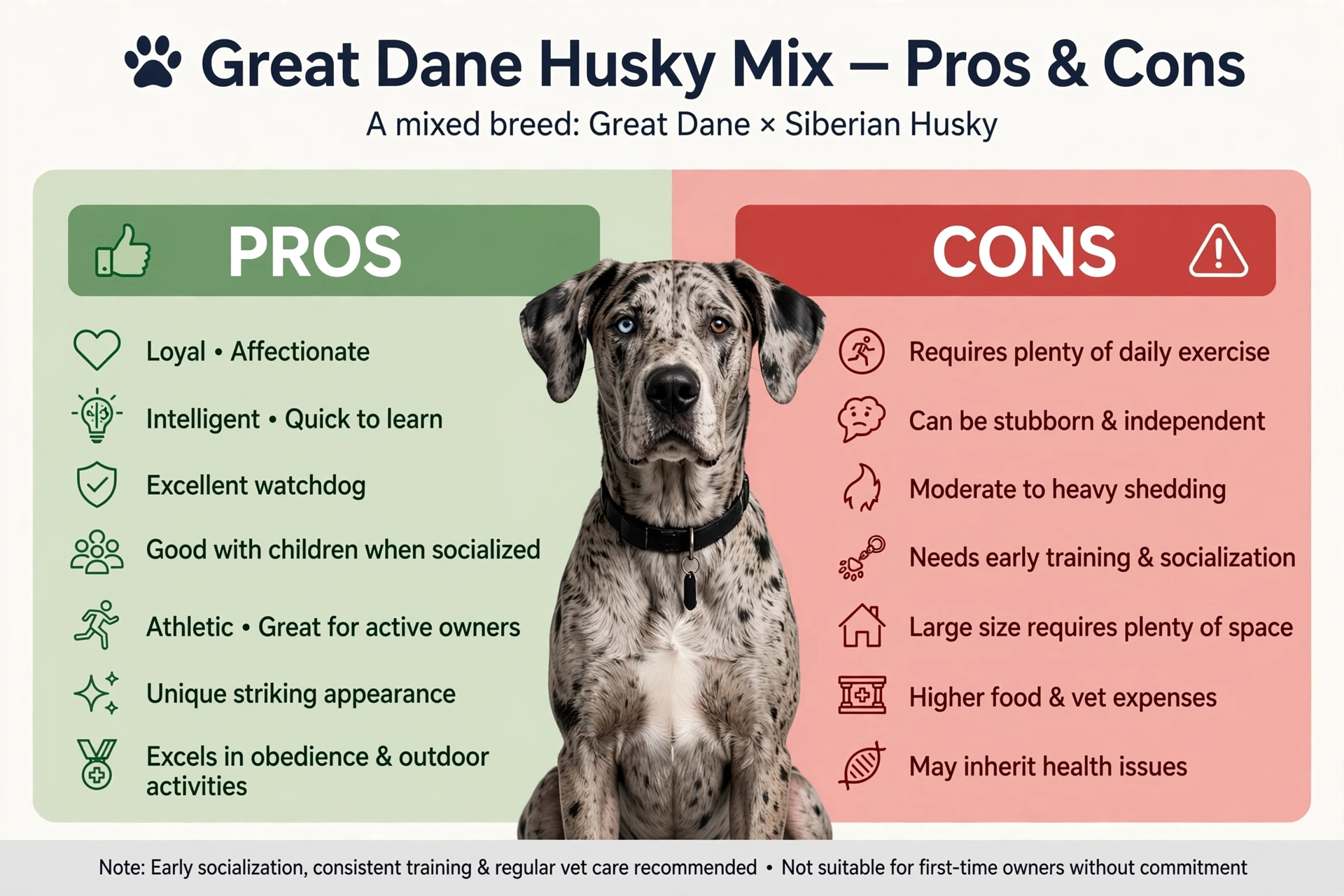
| ✅ Advantages | ⚠️ Challenges | 💡 What It Means for Owners |
|---|---|---|
| Loyal and affectionate with family | Requires plenty of daily exercise | Ideal for active owners who can dedicate time to physical activity and companionship. |
| Highly intelligent and quick to learn | Can be stubborn and independent | Responds well to consistent, positive training but may challenge inexperienced owners. |
| Excellent watchdog with protective instincts | Needs early socialization | Proper socialization helps develop a confident, well-mannered companion. |
| Good with children when properly trained | Large size may accidentally knock over small children | Supervised interactions help ensure safe playtime for everyone. |
| Athletic and great for outdoor activities | Needs a spacious home or regular outdoor exercise | Best suited for families with an active lifestyle and enough room to move. |
| Unique appearance with striking features | Moderate to heavy seasonal shedding | Regular brushing helps control loose hair and keeps the coat healthy. |
| Can become a loyal lifelong companion | Higher food and veterinary expenses due to its large size | Owners should be prepared for the long-term financial commitment of caring for a giant breed. |
Is a Great Dane Husky Mix Right for You?
The Great Dane Husky Mix is an excellent choice for dog lovers who want a loyal, intelligent, and energetic companion. Combining the gentle nature of the Great Dane with the adventurous personality of the Siberian Husky, this hybrid can become a wonderful family pet when given the right care, training, and attention.
Before bringing one home, consider whether your lifestyle matches the breed’s needs. Great Dane Husky Mixes thrive in homes where they receive daily exercise, mental stimulation, and regular interaction with their family. Because of their large size and active personality, they are best suited to owners who have enough living space and the time to meet their physical and emotional needs.
If you enjoy outdoor activities such as walking, hiking, jogging, or spending time in the yard, this breed can be an outstanding companion. On the other hand, if you are looking for a low-maintenance or low-energy dog that is comfortable spending long hours alone, the Great Dane Husky Mix may not be the ideal choice.
Like any dog, this hybrid requires a long-term commitment. Training, grooming, quality nutrition, veterinary care, and companionship all contribute to raising a healthy, happy dog. Owners who are prepared for these responsibilities are often rewarded with a devoted friend that brings years of loyalty and affection.
Is This Breed a Good Match?
A Great Dane Husky Mix may be the right choice if you:
✔️ Live an active lifestyle.
✔️ Have experience with medium or large dog breeds (or are committed to training).
✔️ Can provide 90–120 minutes of daily exercise.
✔️ Have enough indoor and outdoor space for a large dog.
✔️ Want a loyal, intelligent, and protective family companion.
✔️ Have time for regular grooming, training, and socialization.
This breed may not be the best choice if you:
❌ Prefer a low-energy or low-maintenance dog.
❌ Spend most of the day away from home.
❌ Have limited space and no access to regular outdoor exercise.
❌ Are not prepared for the higher food, grooming, and veterinary costs associated with a large breed.
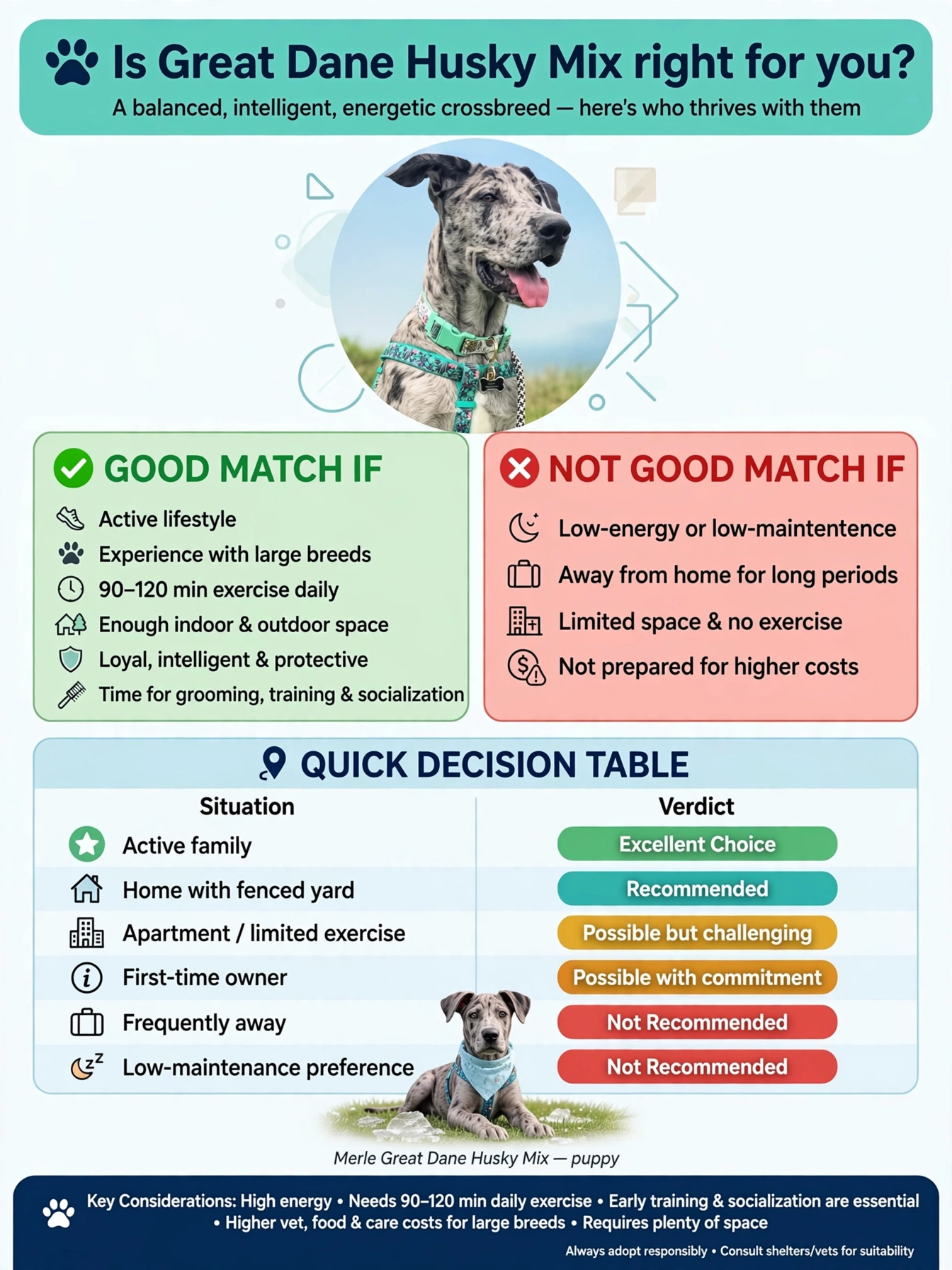
| Your Lifestyle | Compatibility | Reason |
|---|---|---|
| Active Individual or Family | ✅ Excellent Choice | The breed thrives with plenty of daily exercise, outdoor activities, and family interaction. |
| Home with a Fenced Yard | ✅ Recommended | A secure yard provides space to run, play, and burn off energy safely. |
| Apartment Living | ⚠️ Possible but Challenging | Can adapt if given 90–120 minutes of daily exercise, but limited space may not suit every dog. |
| First-Time Dog Owner | ⚠️ Possible with Commitment | Early training, socialization, and consistency are essential because this hybrid can be independent and strong-willed. |
| Frequently Away from Home | ❌ Not Recommended | This breed enjoys companionship and may become bored or develop destructive behaviors when left alone for long periods. |
| Looking for a Low-Maintenance Dog | ❌ Not Recommended | The Great Dane Husky Mix requires regular exercise, grooming, training, and ongoing care. |
Frequently Asked Questions About the Great Dane Husky Mix
How big does a Great Dane Husky Mix get?
An adult Great Dane Husky Mix typically stands 21 to 35 inches tall and weighs between 60 and 150 pounds. The exact size depends on which parent breed it inherits more characteristics from.
What is the lifespan of a Great Dane Husky Mix?
Most Great Dane Husky Mixes live between 8 and 13 years. A nutritious diet, regular exercise, preventive veterinary care, and healthy genetics all contribute to a longer lifespan.
Are Great Dane Husky Mixes good family dogs?
Yes. They are generally affectionate, loyal, and protective. When properly socialized from an early age, they usually get along well with children and other pets.
Does a Great Dane Husky Mix shed a lot?
Yes. Most Great Dane Husky Mixes shed moderately to heavily, particularly during seasonal coat changes. Brushing several times a week helps manage loose hair.
How much exercise does a Great Dane Husky Mix need?
Adult dogs generally require 90 to 120 minutes of daily exercise, including walks, playtime, and mental stimulation.
Is the Great Dane Husky Mix easy to train?
They are intelligent and eager to learn but may inherit the Husky's independent personality. Positive reinforcement and consistent training produce the best results.
How much should a Great Dane Husky Mix eat?
Most healthy adults eat approximately 4 to 7 cups of high-quality dog food per day, divided into two meals. Individual requirements vary depending on age, weight, and activity level.
What health problems can a Great Dane Husky Mix have?
Potential inherited conditions include hip dysplasia, elbow dysplasia, bloat (GDV), hypothyroidism, heart disease, and progressive retinal atrophy (PRA).
Can a Great Dane Husky Mix live in an apartment?
It can, provided it receives sufficient daily exercise and mental stimulation. However, homes with a fenced yard are generally better suited to this active hybrid.
Is a Great Dane Husky Mix suitable for first-time owners?
Yes, but only if the owner is committed to training, daily exercise, and early socialization. Previous experience with large breeds can be an advantage.
Conclusion
The Great Dane Husky Mix is a remarkable hybrid that combines the gentle strength of the Great Dane with the intelligence and adventurous spirit of the Siberian Husky. Its striking appearance, loyal personality, and energetic nature make it an appealing companion for families and individuals who can meet its physical and mental needs.
While this breed requires regular exercise, consistent training, proper nutrition, and ongoing grooming, the rewards of responsible ownership are well worth the effort. A well-socialized Great Dane Husky Mix can become a loving family member, a dependable protector, and an enthusiastic partner for outdoor adventures.
Before bringing one home, take the time to evaluate your lifestyle, available space, and long-term commitment. Large hybrid breeds thrive when they receive daily attention, quality veterinary care, and positive reinforcement throughout their lives. Whether you choose to adopt from a rescue organization or purchase from a responsible breeder, investing in your dog’s health and training from the beginning will help build a strong and lasting bond.
If you’re looking for a large, intelligent, affectionate, and active companion, the Great Dane Husky Mix may be the perfect addition to your family. By understanding its temperament, exercise needs, grooming requirements, health considerations, and nutritional needs, you’ll be well prepared to provide the loving home this impressive hybrid deserves.



0 Comments