


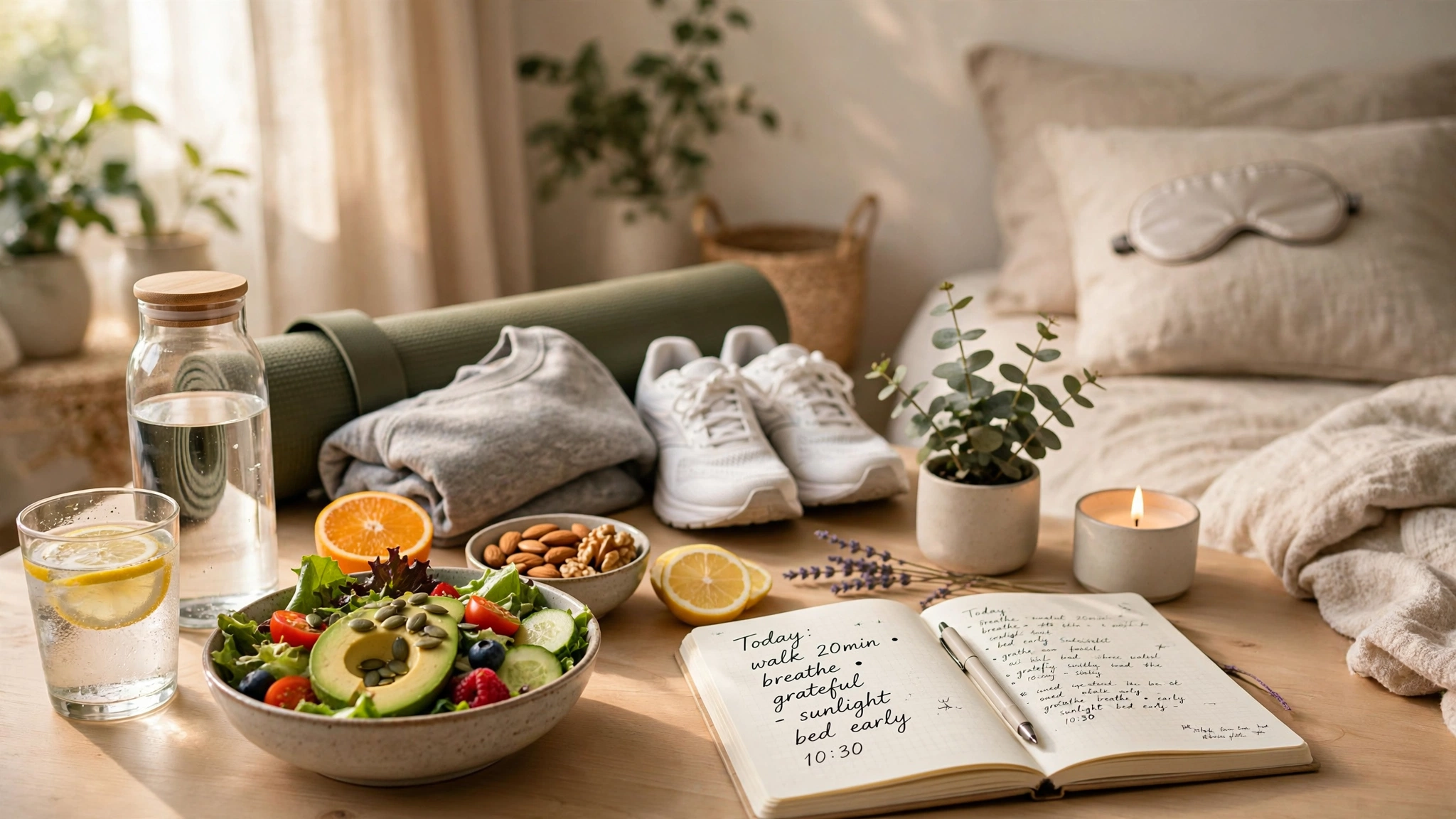
A healthy lifestyle is not about following a strict diet, spending hours at the gym, or changing everything about your life overnight. It is the combination of everyday choices that support your physical health, mental well-being, energy, and overall quality of life. Eating nutritious foods, staying active, getting enough sleep, drinking enough water, managing stress, and developing positive habits can all contribute to a healthier way of living. The key is to make realistic changes that you can maintain consistently rather than searching for a quick fix.
Learning how to manage everyday pressure is another important part of maintaining a healthy lifestyle. If stress is affecting your daily routine, explore these ways to cope with stress.
What Is a Healthy Lifestyle?
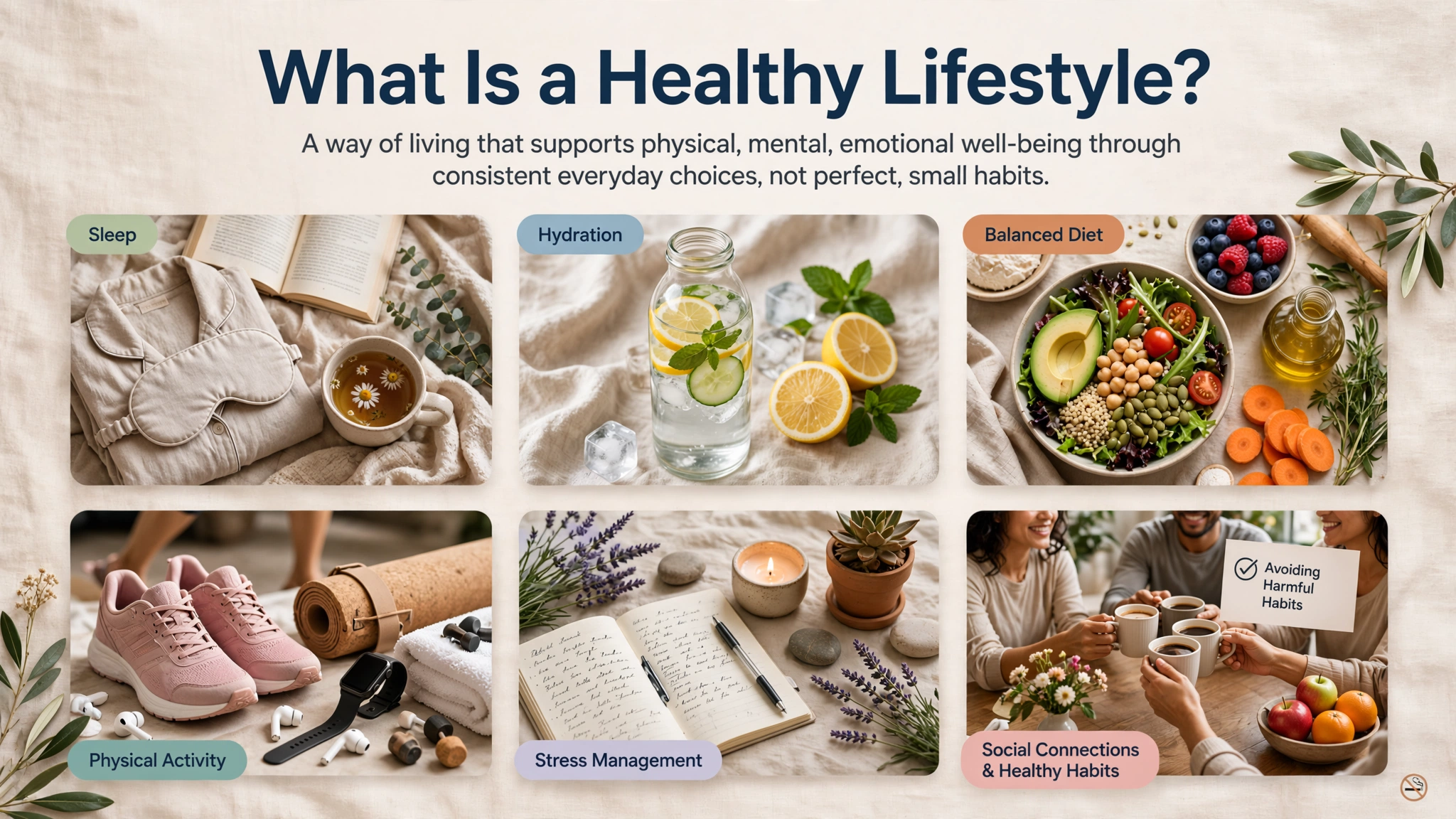
A healthy lifestyle is a way of living that supports your physical, mental, and emotional well-being through consistent everyday choices. It does not mean being perfect or avoiding every unhealthy food or activity. Instead, it means creating habits that help you feel better, stay active, manage stress, and reduce the risk of health problems over time.
Planning your meals in advance can also make healthy eating easier when you’re busy. Learn more about the benefits of meal planning and how it can support healthier eating habits.
A healthy lifestyle includes more than exercise and nutrition. Getting sufficient sleep, drinking enough fluids, eating a balanced diet, staying physically active, managing stress, maintaining social connections, and avoiding harmful habits can all play an important role. Even small improvements can make a meaningful difference when they become part of your regular routine.
The goal is not to change everything at once. A sustainable healthy lifestyle is built gradually by making practical choices that fit your daily life and maintaining them consistently.
1. Stay Hydrated
Staying hydrated is an important part of a healthy lifestyle because your body needs water to carry out many essential functions. Water helps regulate body temperature, transport nutrients, support digestion, and maintain normal physical and mental performance. When you do not drink enough fluids, you may experience symptoms such as thirst, dry mouth, tiredness, headache, or darker-colored urine.

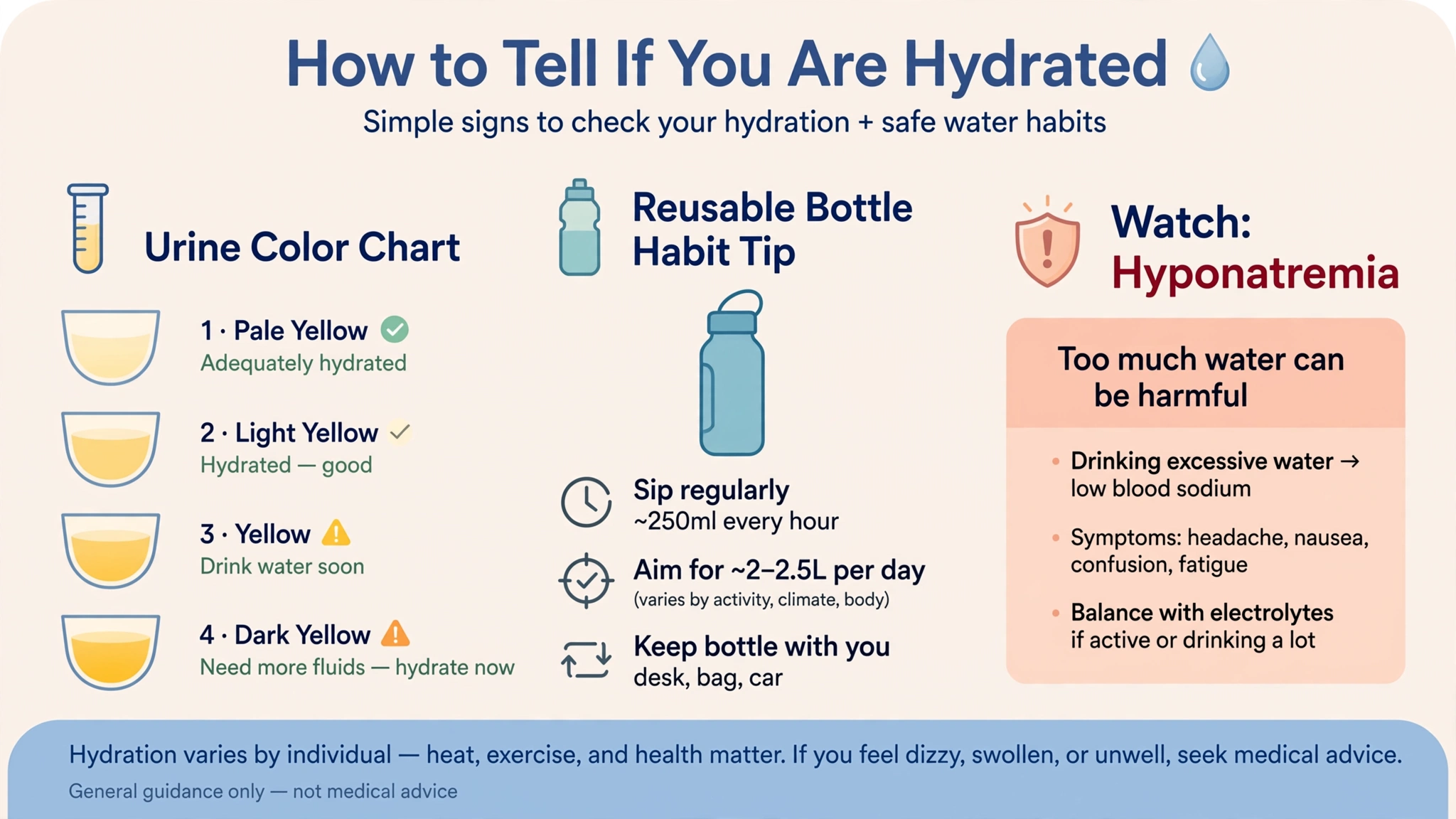
How Can You Tell If You Are Hydrated?
Urine color can provide a useful general indication of hydration. Pale yellow urine often suggests that you are adequately hydrated, while consistently dark yellow urine may indicate that you need more fluids. However, urine color can also be affected by certain foods, supplements, and medications, so it should not be treated as a perfect measure.
Can You Drink Too Much Water?
Yes. Drinking excessive amounts of water in a short period can be dangerous because it can dilute the sodium level in your blood, a condition known as hyponatremia. Instead of forcing yourself to drink as much water as possible, focus on drinking regularly and responding to your body’s fluid needs.
Healthy lifestyle tip: Keep a reusable water bottle nearby during the day, especially when working, exercising, traveling, or spending time outdoors. Making water easily available can make staying hydrated a simple daily habit.
2. Get Enough Quality Sleep
Getting enough quality sleep is one of the most important parts of a healthy lifestyle. While you sleep, your body and brain have time to recover, helping support memory, concentration, mood, immune function, and physical health. Consistently poor sleep can leave you feeling tired and unfocused during the day and may affect your overall well-being over time.

How Much Sleep Do You Need?
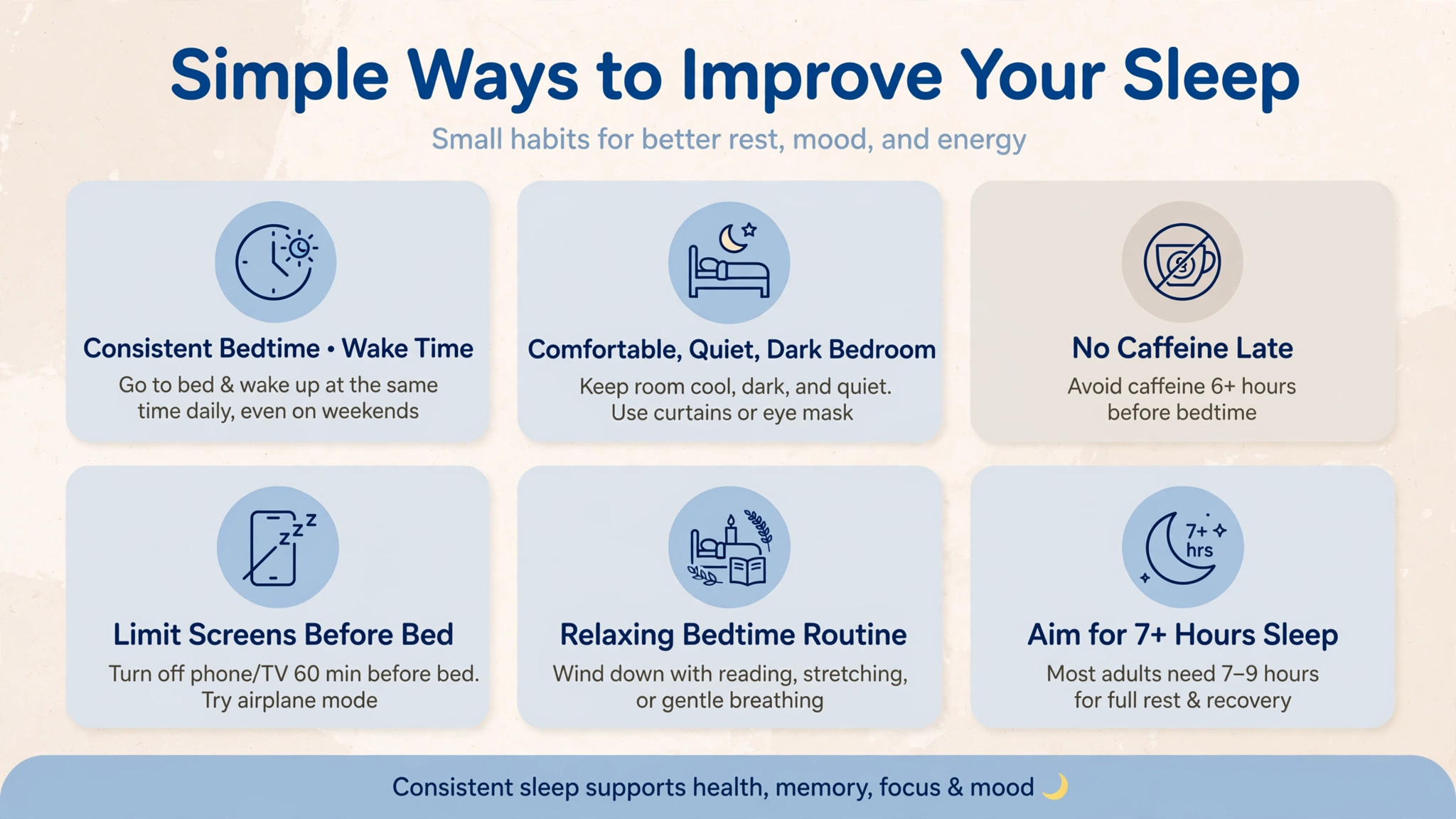
Sleep needs vary by age, but most adults generally need at least 7 hours of sleep each night. You can learn more about sleep recommendations for adults and how sleep needs vary throughout life.
Instead of focusing only on a specific number of hours, pay attention to your regular sleep pattern and how you feel during the day. If you regularly struggle to fall asleep, wake up frequently, or remain tired despite getting enough time in bed, it may be worth discussing the problem with a healthcare professional.
Simple Ways to Improve Your Sleep
You do not necessarily need complicated changes to develop better sleep habits. Small adjustments to your daily routine can make it easier to create a consistent sleep schedule and give your body and mind enough time to rest.
Keep a Consistent Sleep Schedule
Go to bed and wake up at similar times each day, including on weekends when possible. A consistent routine can make it easier to establish healthy sleep habits.
Create a Comfortable Sleep Environment
Keep your bedroom comfortable, quiet, and dark. A sleep environment that feels relaxing can make it easier to wind down at night.
Watch Your Caffeine Intake
Avoid consuming large amounts of caffeine late in the day, especially if you notice that it makes it harder for you to fall asleep.
Wind Down Before Bed
Limit stimulating activities and excessive screen use close to bedtime. Instead, follow a relaxing routine that gives your mind and body time to prepare for sleep.
Give Yourself Enough Time to Sleep
Avoid regularly sacrificing sleep for work, entertainment, or other activities. Make enough time for sleep part of your normal daily schedule.
Good sleep is not a luxury that you should sacrifice whenever life becomes busy. Making sleep a regular priority can help you have more energy, concentrate better, and maintain the other healthy habits that make up a balanced lifestyle.
If your sleep schedule is inconsistent, start by choosing a realistic bedtime and wake-up time and follow it as consistently as possible. Small improvements are easier to maintain than dramatic changes.
3. Move Your Body Every Day
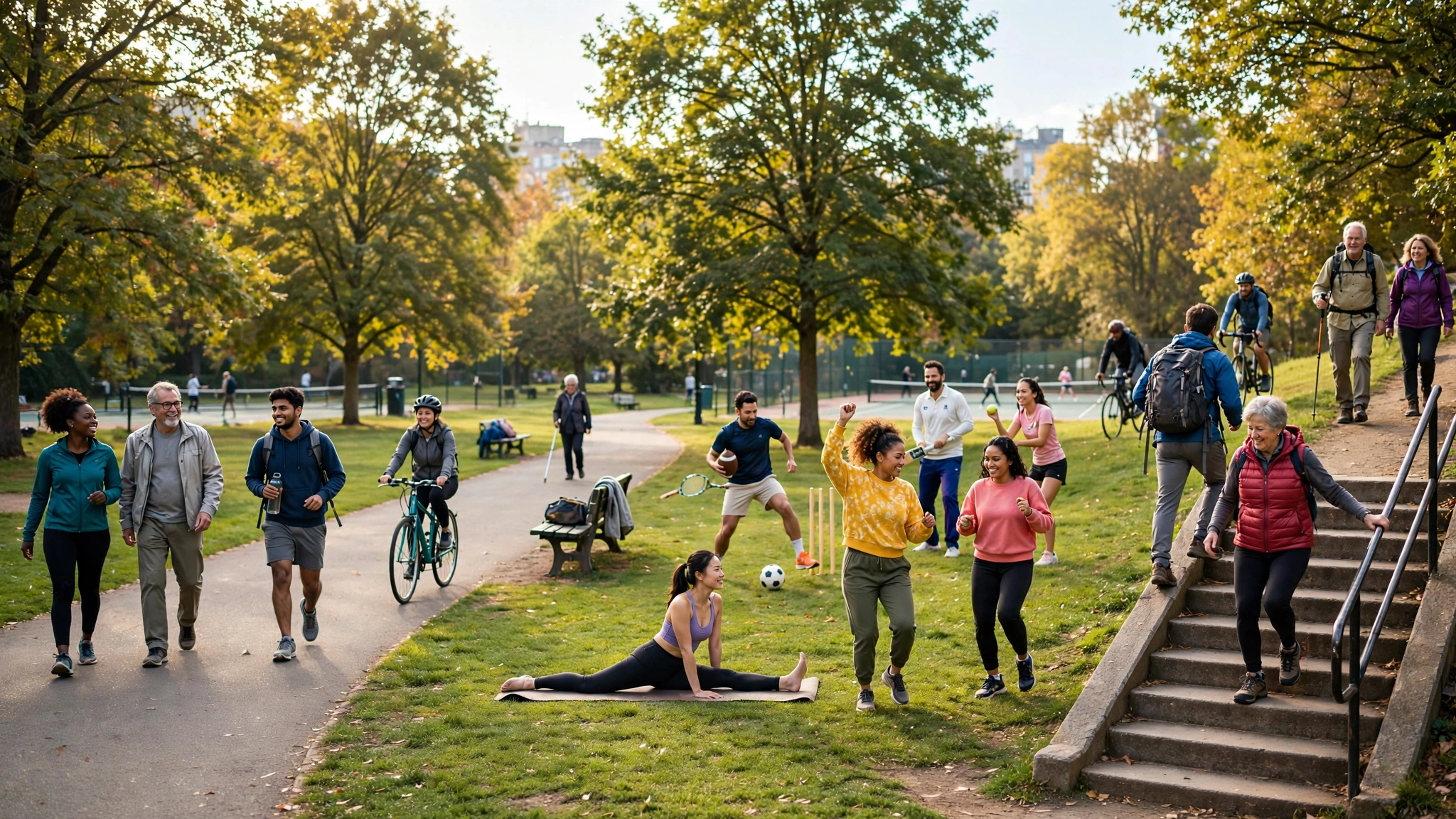
Regular physical activity is a fundamental part of a healthy lifestyle. The physical activity guidelines from the World Health Organization provide recommendations for different age groups and activity levels. You do not have to spend hours in a gym or become a professional athlete to benefit from exercise. Walking, cycling, stretching, playing sports, climbing stairs, dancing, or simply spending less time sitting can all help you stay active.
Regular movement can support cardiovascular health, muscle strength, bone health, mobility, balance, and overall fitness. Physical activity can also contribute to better sleep and help you maintain a healthy weight when combined with balanced nutrition.
Walking, cycling, swimming, and other activities can help you stay active and support your overall fitness. If you want to understand how cardiovascular exercise works, learn more about cardio exercise.
Find an Activity You Enjoy
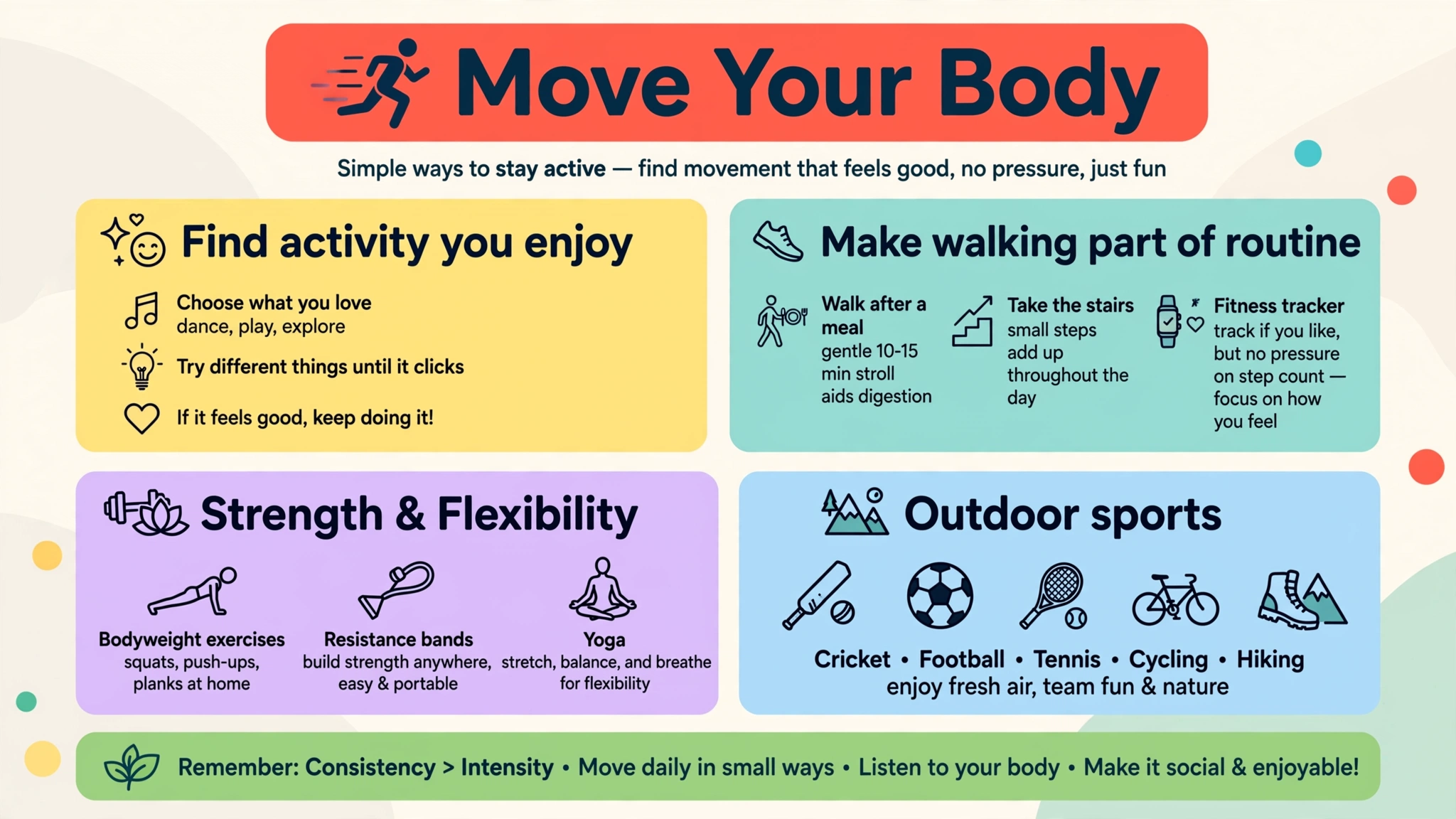
The best exercise routine is one that you can maintain consistently. If you dislike running, you do not have to force yourself to run every day. Try walking, swimming, cycling, dancing, strength training, or playing a sport instead.
Enjoyable activities are easier to turn into long-term healthy habits.
Make Walking Part of Your Routine
Walking is one of the simplest ways to become more physically active. You do not need special equipment or a gym membership. A walk after a meal, walking to nearby destinations, taking the stairs, or adding a short walk to your daily routine can help you spend less time sitting.
You can also use a fitness tracker or pedometer to monitor your activity if tracking your progress motivates you. However, you do not need to reach a particular step count to benefit from walking. Focus on gradually becoming more active and choosing realistic goals.
Staying hydrated is an important part of a healthy lifestyle because your body needs water to carry out many essential functions. If you want to understand more about why hydration matters, explore our guide to the benefits of drinking water.
Do Not Forget Strength and Flexibility
A healthy lifestyle is not only about cardiovascular exercise. Strengthening your muscles can help you perform everyday activities, while stretching and mobility exercises can help you maintain flexibility and range of motion.
Depending on your fitness level, your routine might include bodyweight exercises, resistance bands, free weights, yoga, or other forms of strength training. Start at a comfortable level and increase the challenge gradually.
Enjoy Outdoor Activities and Sports
Outdoor activities can make exercise more enjoyable while giving you another reason to stay active. Cricket, football, tennis, cycling, hiking, and other recreational activities can provide opportunities to move your body while spending time with friends or family.
The important thing is consistency. You do not need a perfect workout routine to live a healthy lifestyle. What matters is finding ways to move regularly and making physical activity a normal part of your day.
Exercise should not be viewed as something you do for a few weeks and then abandon. Building sustainable habits can help you stay active throughout different stages of life. Read our guide to lifetime fitness for more ideas.
If you currently spend most of your day sitting, do not try to transform your routine overnight. Start with short walks or brief movement breaks and gradually build more activity into your day.
4. Eat a Balanced and Nutritious Diet
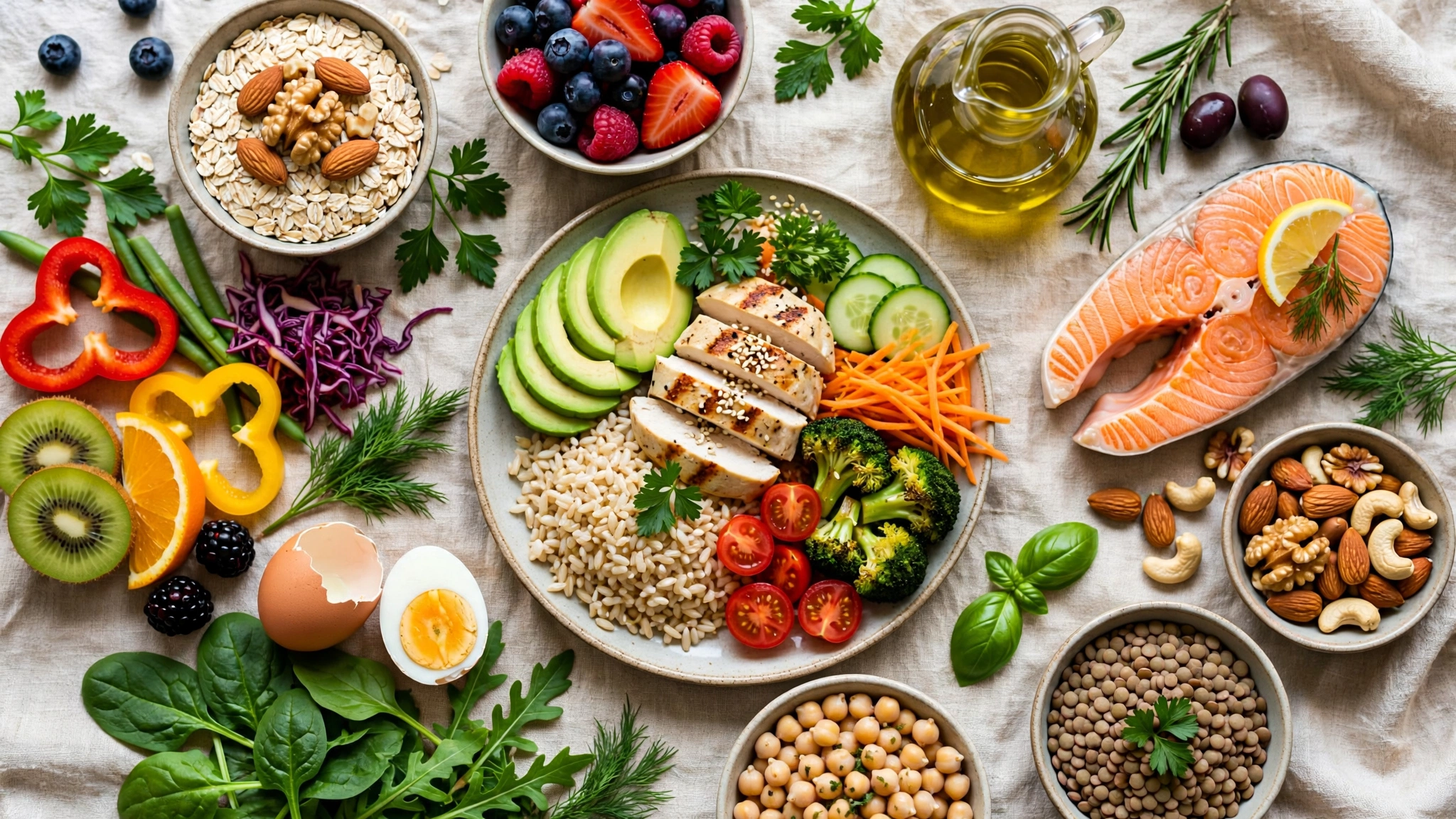
What you eat has a major influence on your overall health, energy, and well-being. Following a healthy diet does not require following a restrictive diet or completely eliminating the foods you enjoy. A healthy lifestyle does not require following a restrictive diet or completely eliminating the foods you enjoy. Instead, focus on eating a varied and balanced diet that provides the nutrients your body needs.
Eat More Fruits and Vegetables
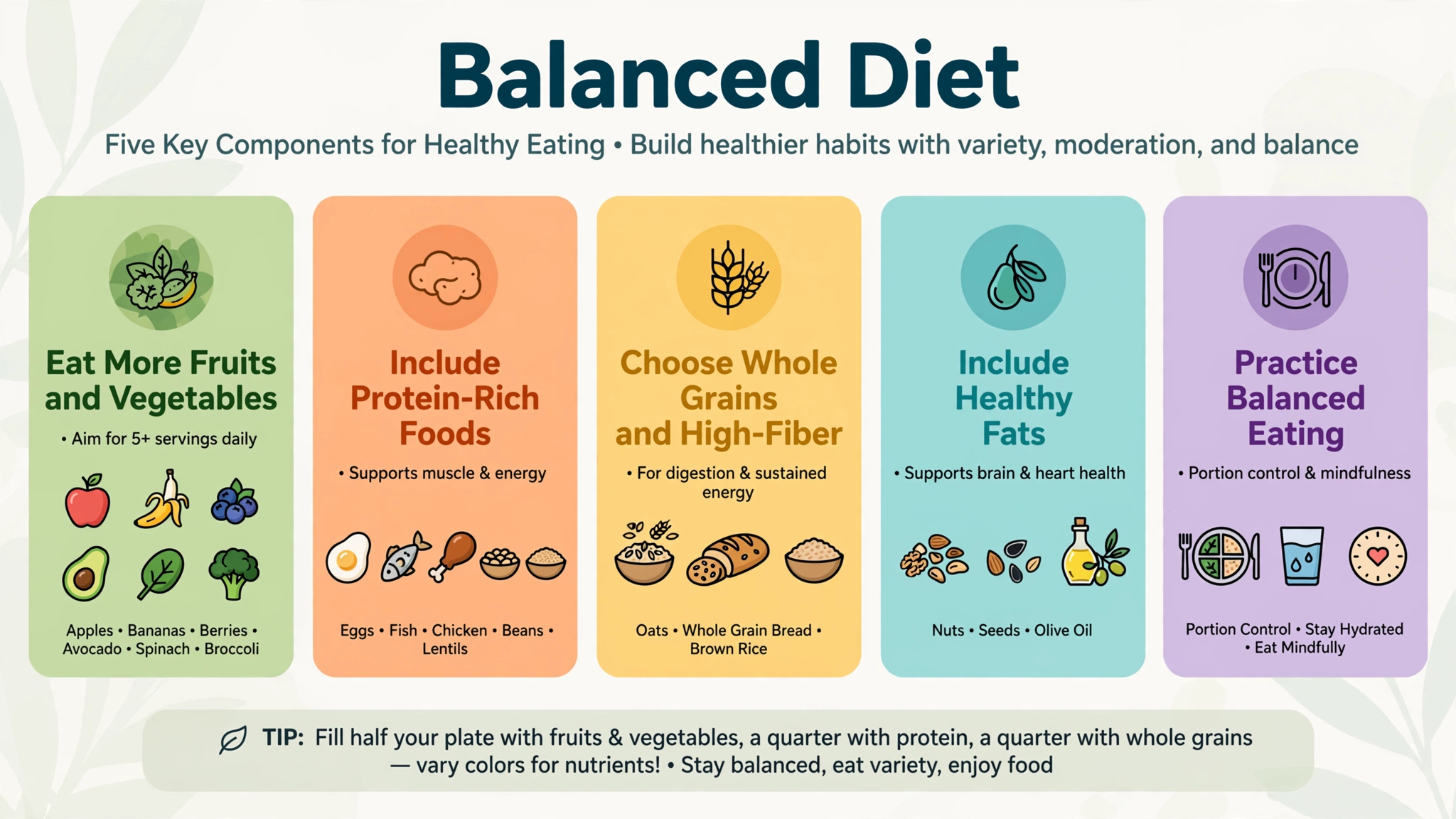
Fruits and vegetables provide important vitamins, minerals, fiber, and other nutrients. Try to include a variety of colors and types in your meals rather than relying on the same foods every day.
Apples, bananas, oranges, berries, and avocados can provide valuable nutrients, while vegetables such as spinach, carrots, tomatoes, broccoli, and sweet potatoes can add fiber, vitamins, and minerals to your meals.
Fresh, frozen, and appropriately prepared vegetables and fruits can all be part of a healthy diet.
Include Protein-Rich Foods
Protein is important for maintaining and repairing body tissues and supporting muscle health. Depending on your dietary preferences, good sources can include eggs, fish, chicken, lean meat, beans, lentils, peas, nuts, seeds, and other protein-rich foods.
Try to include a source of protein in your meals, particularly when it helps you create a more satisfying and balanced meal.
Eating a variety of nutritious foods is one of the foundations of a healthy lifestyle. If you want a deeper look at what makes a nutritious eating pattern, read our guide to what a balanced diet means.
Choose Whole Grains and High-Fiber Foods
Whole grains and other high-fiber foods can support digestive health and help make meals more filling. Foods such as oats, whole-grain bread, brown rice, beans, lentils, fruits, and vegetables can contribute to your daily fiber intake.
When possible, choose whole or minimally processed foods more often and build meals around a variety of nutrient-rich ingredients.
Include Healthy Fats
Not all dietary fats are the same. Foods such as avocados, nuts, seeds, olive oil, and some types of fish provide unsaturated fats that can be part of a balanced diet.
Rather than trying to remove all fat from your diet, focus on choosing healthier sources and keeping portions appropriate.
Practice Balanced Eating
Healthy eating is also about how you approach food. Avoid making individual foods unnecessarily “good” or “bad.” A nutritious diet can include foods you enjoy while emphasizing nutrient-rich choices most of the time.
Planning meals, preparing food at home, paying attention to portion sizes, and eating a variety of foods can make healthy eating easier to maintain.
Breakfast can be part of a healthy routine if you enjoy it and find it useful, but there is no need to treat breakfast as a mandatory meal for everyone. What matters most is the overall quality and balance of your diet throughout the day.
Instead of trying to completely change your diet in one day, improve one meal at a time. Add an extra serving of vegetables, replace a sugary drink with water, or choose a whole-grain option. Small changes can become sustainable habits when you repeat them consistently.
5. Limit Junk Food and Unhealthy Habits
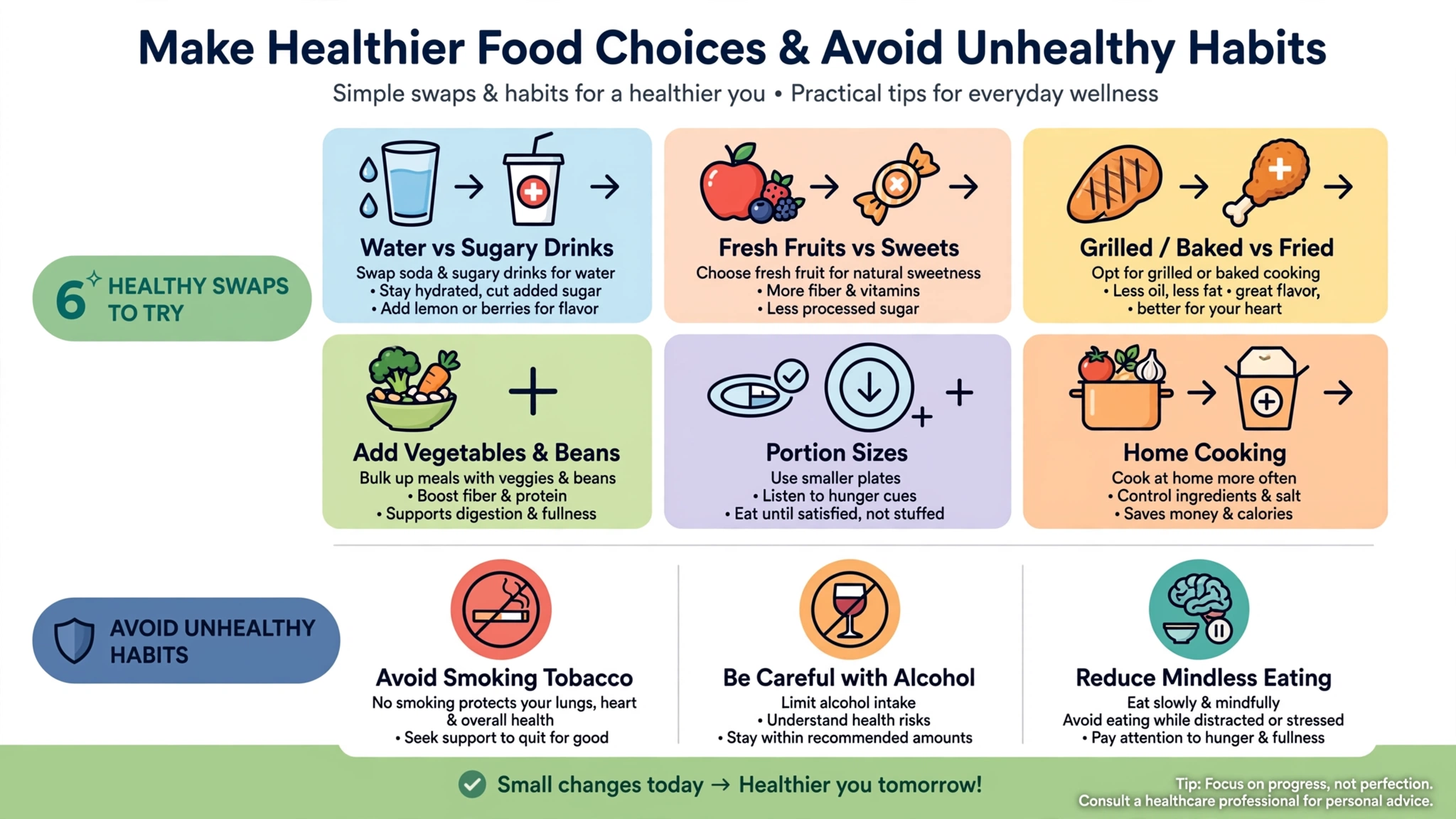
Following a healthy lifestyle does not mean you can never enjoy a burger, pizza, dessert, or your favorite snack. The bigger concern is when highly processed foods, sugary drinks, and other less nutritious choices become a regular part of your diet.
Many fast foods and highly processed foods can be high in sodium, added sugars, saturated fat, and calories while providing relatively few essential nutrients. Eating these foods frequently may make it harder to maintain a balanced diet and can contribute to poor health over time.

Make Healthier Food Choices
You do not have to completely eliminate your favorite foods. Instead, try to make nutritious choices more often.
For example, you can:
- Choose water or unsweetened drinks instead of sugary soft drinks.
- Eat fresh fruits instead of relying on sweets for snacks.
- Choose grilled or baked foods more often than heavily fried options.
- Add vegetables, beans, or other nutrient-rich foods to your meals.
- Pay attention to portion sizes when eating calorie-dense foods.
- Prepare more meals at home when possible so you have greater control over the ingredients.
The goal is not perfection. A healthy lifestyle is about the overall pattern of your choices rather than feeling guilty about an occasional treat.
Avoid Smoking and Other Tobacco Products
Unlike occasionally eating fast food, tobacco use is not simply a food choice that needs moderation. Smoking and other tobacco products expose the body to harmful substances and are associated with serious health risks.
If you smoke, quitting is one of the most valuable changes you can make for your health. Learn more about the health risks of smoking and the benefits of quitting. If you do not smoke, avoiding tobacco products is an important part of maintaining a healthy lifestyle.
Be Careful With Alcohol
Alcohol can also affect health, and drinking less generally means lower health risks. Learn more about the health effects of alcohol and how alcohol can affect different parts of the body. If you drink alcohol, understanding recommended limits and avoiding excessive consumption can help reduce potential harm.
For people who do not drink, there is no health reason to start drinking.
Reduce Mindless Eating
Your eating habits matter as much as the individual foods you choose. Eating while distracted, constantly snacking, or consuming large portions without paying attention can make it difficult to recognize when you are satisfied.
Try to eat more mindfully by slowing down, paying attention to your food, and recognizing your body’s hunger and fullness signals.
Do not try to eliminate every food you consider unhealthy at once. Start by replacing one regular unhealthy choice with a better option. For example, swap a sugary drink for water or add vegetables to a meal. Sustainable changes are easier to maintain than extreme restrictions.
6. Take Care of Your Mental and Emotional Well-Being
A healthy lifestyle is not only about what you eat or how often you exercise. Your mental and emotional well-being also deserves attention. Everyday stress, work responsibilities, family pressures, and a lack of rest can affect how you feel and how well you take care of yourself.
Taking time to relax, connect with people you care about, enjoy activities you love, and manage everyday stress can help create a healthier and more balanced life.

A healthy lifestyle is not only about physical fitness. Mental and emotional well-being are also important parts of overall health. For a deeper discussion, read our comparison of physical and mental health.
Make Time for Things You Enjoy
Reading, listening to music, spending time outdoors, pursuing a hobby, playing a game, or watching something that makes you laugh can give your mind an opportunity to relax. Making time for enjoyable activities can help create a more balanced lifestyle.
Practice Meditation or Mindfulness
Meditation and mindfulness can help you slow down and pay attention to the present moment. Some people find these practices useful for managing everyday stress, improving focus, and creating a sense of calm. Even a few quiet minutes each day can be a simple place to start.
Stay Connected With People
Spending quality time with family members, friends, or people you trust can provide companionship, encouragement, and a sense of belonging. Maintaining meaningful relationships is an important part of overall well-being.
Develop a Positive but Realistic Outlook
Maintaining a positive attitude does not mean pretending that problems do not exist. A healthier approach is to acknowledge challenges while focusing on practical ways to deal with them. Set realistic goals, focus on what you can control, celebrate small improvements, and give yourself time to recover from setbacks.
7. Build Healthy Habits You Can Maintain
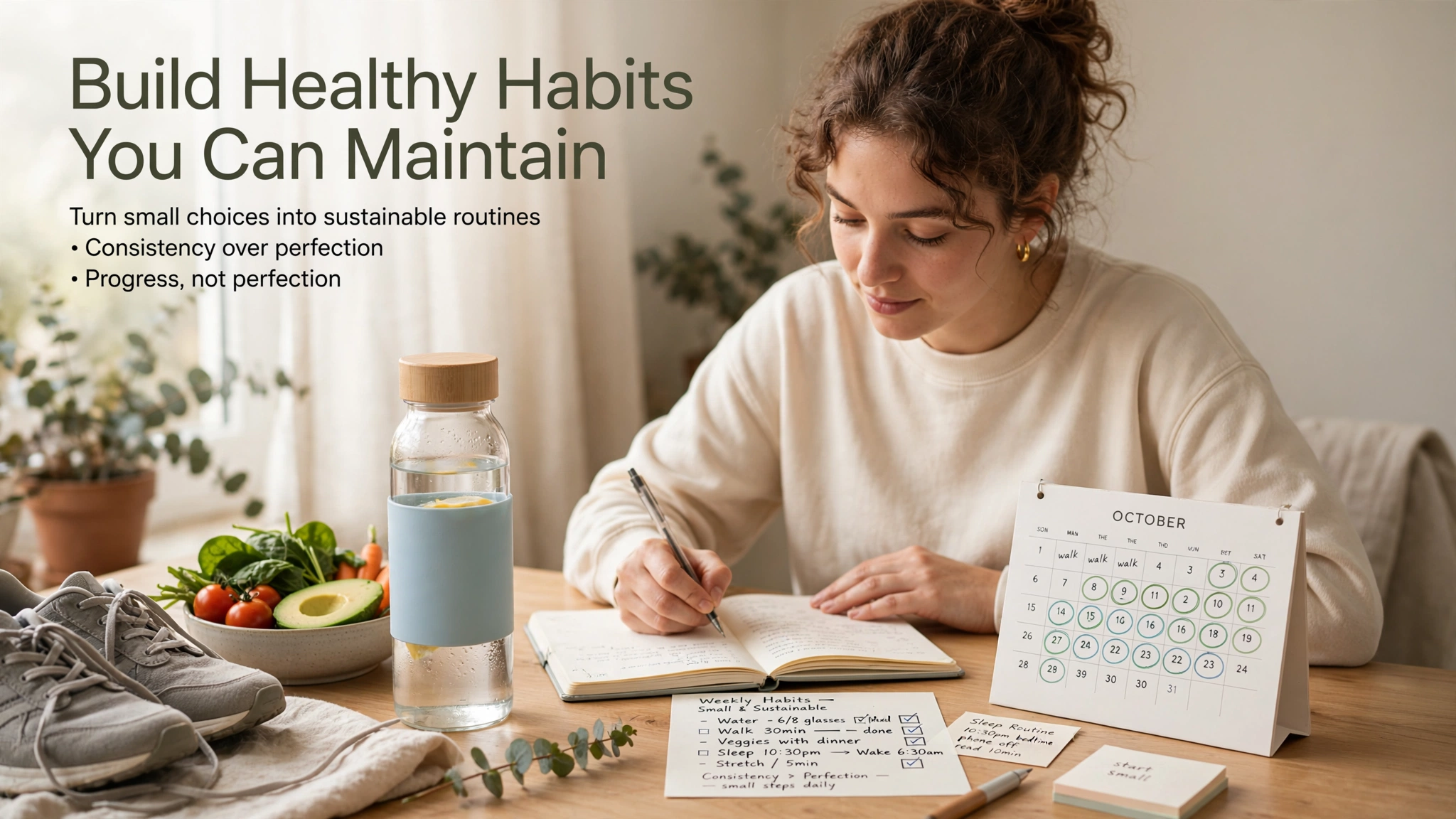
Knowing what makes a healthy lifestyle is only the beginning. The real challenge is turning healthy choices into habits that fit naturally into your everyday life. You do not need to change everything at once. Small, realistic improvements are often easier to maintain and can gradually become part of your normal routine.
Instead of looking for a perfect routine, focus on consistency. A healthy lifestyle should work with your schedule, responsibilities, preferences, and current level of fitness.
Start With Small Changes
Trying to change your entire lifestyle overnight can quickly become overwhelming. Start with one or two achievable goals, such as drinking more water, taking a daily walk, adding vegetables to a meal, or going to bed at a consistent time. Once these habits become easier, gradually introduce another positive change.
Create a Routine
Healthy habits are easier to maintain when they become part of your regular routine. Plan when you will exercise, prepare nutritious meals in advance, keep water nearby, and establish a consistent sleep schedule. A simple routine can reduce the need to make the same decisions every day.
Track Your Progress
Tracking your habits can help you understand what is working and where you need to improve. You might record your walks, workouts, meals, sleep routine, or other goals. The purpose is not to judge yourself but to recognize progress and identify patterns that can help you stay on track.
Stay Consistent After Setbacks
Missing a workout, eating an unhealthy meal, or losing motivation for a few days does not mean you have failed. Setbacks are a normal part of changing habits. Instead of giving up, return to your routine at the next opportunity and continue moving forward.
Remember that a healthy lifestyle is a long-term process rather than a short-term challenge. Focus on progress instead of perfection, and give yourself enough time to build habits that you can realistically maintain.
Choose one healthy habit you can realistically start today and repeat it consistently. Once it becomes part of your routine, build on it with another small improvement. Sustainable progress is more valuable than trying to make dramatic changes that are difficult to maintain.
A Simple Daily Healthy Lifestyle Routine
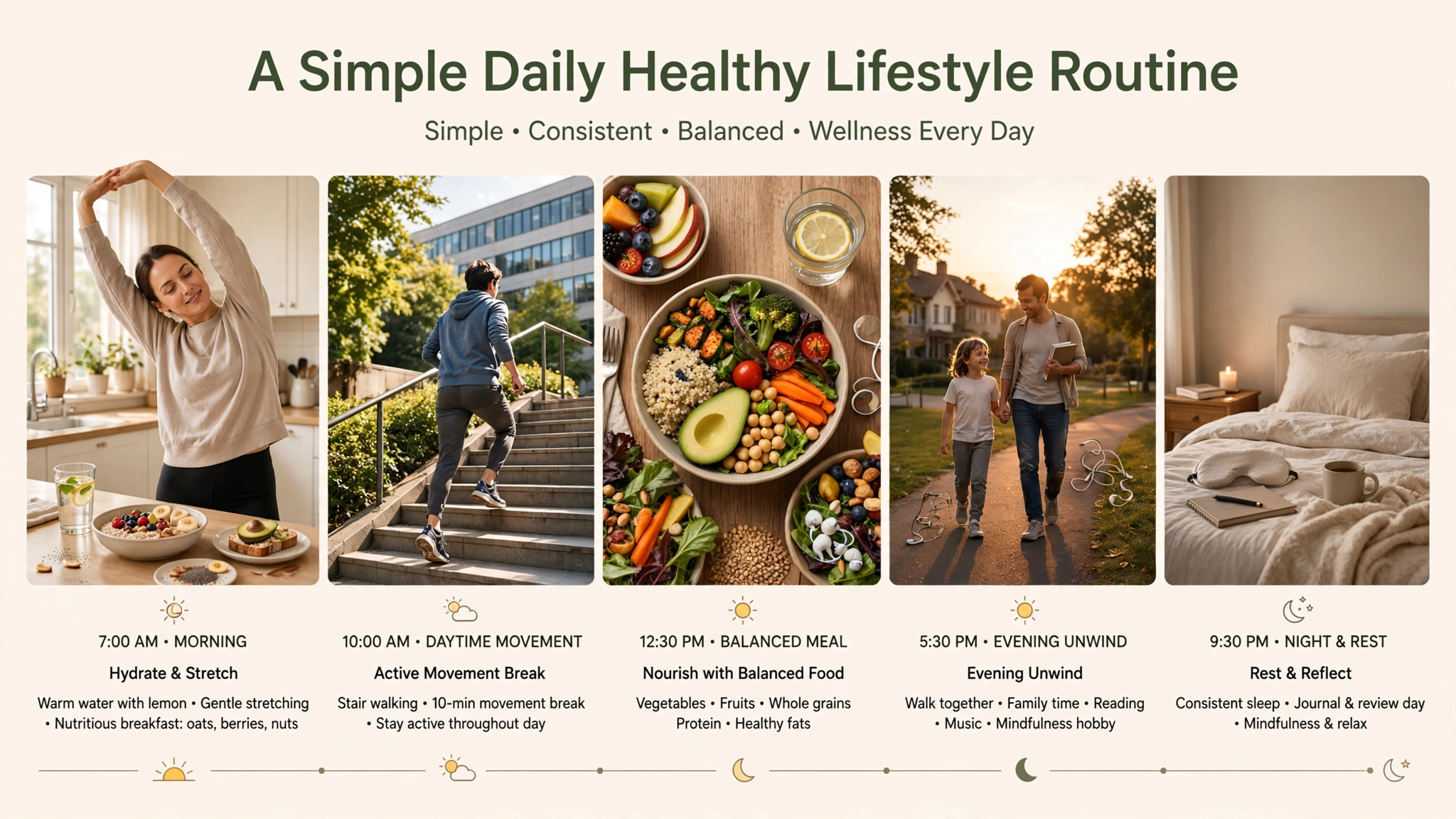
Building a healthy lifestyle becomes easier when healthy choices are incorporated into your normal daily routine. You do not need to follow a complicated schedule or make every part of your day perfect. The goal is to create a simple routine that includes nutritious food, regular movement, adequate hydration, quality sleep, and time for your mental well-being.
Start Your Morning Well
Begin your day by drinking some water and giving yourself enough time to get ready without unnecessary rushing. If you enjoy breakfast, choose a nutritious combination that provides foods such as whole grains, fruit, protein, or other nutrient-rich ingredients. A few minutes of stretching or light movement can also help you start the day actively.
Stay Active During the Day
Look for opportunities to move throughout the day instead of remaining seated for long periods. Take short movement breaks, walk when practical, use the stairs when appropriate, or schedule a dedicated workout. Even small amounts of movement can help make an otherwise inactive day more active.
Choose Balanced Meals
Build your meals around a variety of nutritious foods, including vegetables, fruits, whole grains, protein-rich foods, and healthy sources of fat. Drink water regularly and limit sugary drinks and highly processed foods. Planning meals ahead of time can also make healthier choices easier when you are busy.
Make Time to Unwind
Give yourself some time in the evening to relax and step away from work and other daily responsibilities. You might take a walk, spend time with family, read, listen to music, practice mindfulness, or enjoy a hobby. Creating a relaxing transition toward bedtime can help make your routine more balanced.
Prioritize Quality Sleep
Try to maintain a consistent sleep and wake schedule and give yourself enough time to rest. Keep your bedroom comfortable and reduce activities that make it harder to wind down before bed. Making sleep a regular priority helps support the other healthy habits you practice during the day.
Review Your Day
Before ending the day, take a moment to consider what went well and what you could improve tomorrow. Avoid judging yourself for an occasional unhealthy choice or missed workout. Use the experience to make one small, realistic adjustment and continue building your healthy lifestyle.
Do not try to follow a perfect routine every day. Choose a few healthy habits that fit your schedule and repeat them consistently. As those habits become easier, gradually add another positive change.
How to Start a Healthy Lifestyle?
Starting a healthy lifestyle does not require changing everything overnight. The easiest approach is to identify a few areas that need improvement and make realistic changes one at a time. The following simple plan can help you turn the principles discussed in this article into practical daily habits.
| Area | Simple Change | Healthy Habit to Build |
|---|---|---|
| Hydration | Keep water available throughout the day. | Drink fluids regularly and pay attention to your body's needs. |
| Sleep | Set a consistent bedtime and wake-up time. | Make adequate, quality sleep a regular priority. |
| Physical Activity | Add walking or another activity you enjoy. | Move regularly and avoid sitting for long periods. |
| Nutrition | Add more vegetables, fruits, whole grains, and protein-rich foods. | Build balanced meals and choose nutritious foods more often. |
| Junk Food | Reduce frequent fast food and sugary drinks. | Make healthier choices most of the time without demanding perfection. |
| Mental Well-Being | Set aside time to relax and connect with people you care about. | Make stress management and enjoyable activities part of your routine. |
| Healthy Habits | Choose one realistic change to work on first. | Build consistency before adding another major change. |
You do not need to improve every area at the same time. Choose one habit that feels realistic, practice it consistently, and gradually build on your progress. A sustainable healthy lifestyle is created through repeated everyday choices, not overnight perfection.
Frequently Asked Questions About a Healthy Lifestyle
What is a healthy lifestyle?
A healthy lifestyle is a way of living that supports your physical, mental, and emotional well-being through consistent everyday choices. It can include eating a balanced diet, staying physically active, getting enough quality sleep, staying hydrated, managing stress, maintaining social connections, and avoiding harmful habits.
What are the most important healthy lifestyle habits?
Some of the most important healthy lifestyle habits include eating nutritious foods, staying physically active, getting adequate sleep, drinking enough fluids, managing stress, maintaining meaningful relationships, and avoiding tobacco and other harmful habits. Consistency is more important than trying to follow a perfect routine.
How can I start a healthy lifestyle?
Start with one or two realistic changes rather than trying to change everything at once. For example, you could begin by walking regularly, drinking more water, improving your meals, or establishing a consistent sleep schedule. Once a habit becomes easier to maintain, gradually add another healthy change.
How much exercise do I need for a healthy lifestyle?
The amount of physical activity you need depends on factors such as your age, fitness level, and overall health. A healthy lifestyle generally includes regular physical activity along with reducing long periods of inactivity. Walking, strength exercises, sports, cycling, and other activities you enjoy can all contribute to a more active lifestyle.
What should I eat for a healthy lifestyle?
Aim for a varied and balanced diet that includes vegetables, fruits, whole grains, protein-rich foods, healthy sources of fat, and other nutrient-rich foods. You do not need to follow a restrictive diet. Instead, focus on nutritious choices most of the time while keeping highly processed foods and sugary drinks limited.
Why is sleep important for a healthy lifestyle?
Quality sleep gives your body and brain time to recover and supports areas such as memory, concentration, mood, immune function, and physical health. Most adults generally need at least 7 hours of sleep each night, although individual sleep needs can vary.
Can a healthy lifestyle help with weight management?
Healthy lifestyle habits can support maintaining a healthy weight. Regular physical activity, nutritious foods, adequate sleep, and appropriate portions can all contribute to overall health and weight management. However, body weight is influenced by many factors, so healthy living should not be viewed only through the goal of losing weight.
How long does it take to develop healthy habits?
There is no fixed amount of time that applies to everyone. Developing a healthy habit depends on the behavior, the individual, and how consistently it is practiced. Rather than focusing on a specific number of days, concentrate on repeating realistic habits until they gradually become part of your normal routine.
Conclusion
Achieving a healthy lifestyle does not happen overnight. It is a gradual process built through the choices you make every day. Staying hydrated, getting enough quality sleep, moving your body regularly, eating a balanced diet, limiting unhealthy habits, caring for your mental well-being, and developing sustainable habits can all contribute to a healthier and more balanced life.
You do not have to make every change at once. Start with one realistic habit, give yourself time to build it, and gradually work toward the other areas of your health. If you experience setbacks, do not treat them as failure. Simply return to your routine and continue moving forward.
Most importantly, remember that a healthy lifestyle is not about being perfect. It is about making better choices more often and creating habits that you can realistically maintain for years to come. Be patient with yourself, celebrate your progress, and focus on building a healthier life one day at a time.
Remember
Stay consistent: Small healthy choices repeated regularly can become powerful long-term habits.
Think beyond appearance: A healthy lifestyle is about supporting your physical, mental, and emotional well-being.
Focus on progress: You do not need a perfect routine. What matters is continuing to make healthier choices over time.



0 Comments