


Finance plays a vital role in managing money, making investment decisions, and ensuring financial stability for individuals, businesses, and governments. Understanding the features of finance, its major areas, and its importance helps explain how money is raised, allocated, and managed to achieve financial goals. Whether it is corporate finance, public finance, or personal finance, every financial decision influences economic growth, business success, and long-term wealth creation.
If you’re interested in growing your wealth through smart financial decisions, you may also enjoy our guide on 4 Reasons Why Property Is a Good Investment.

What Is Finance?
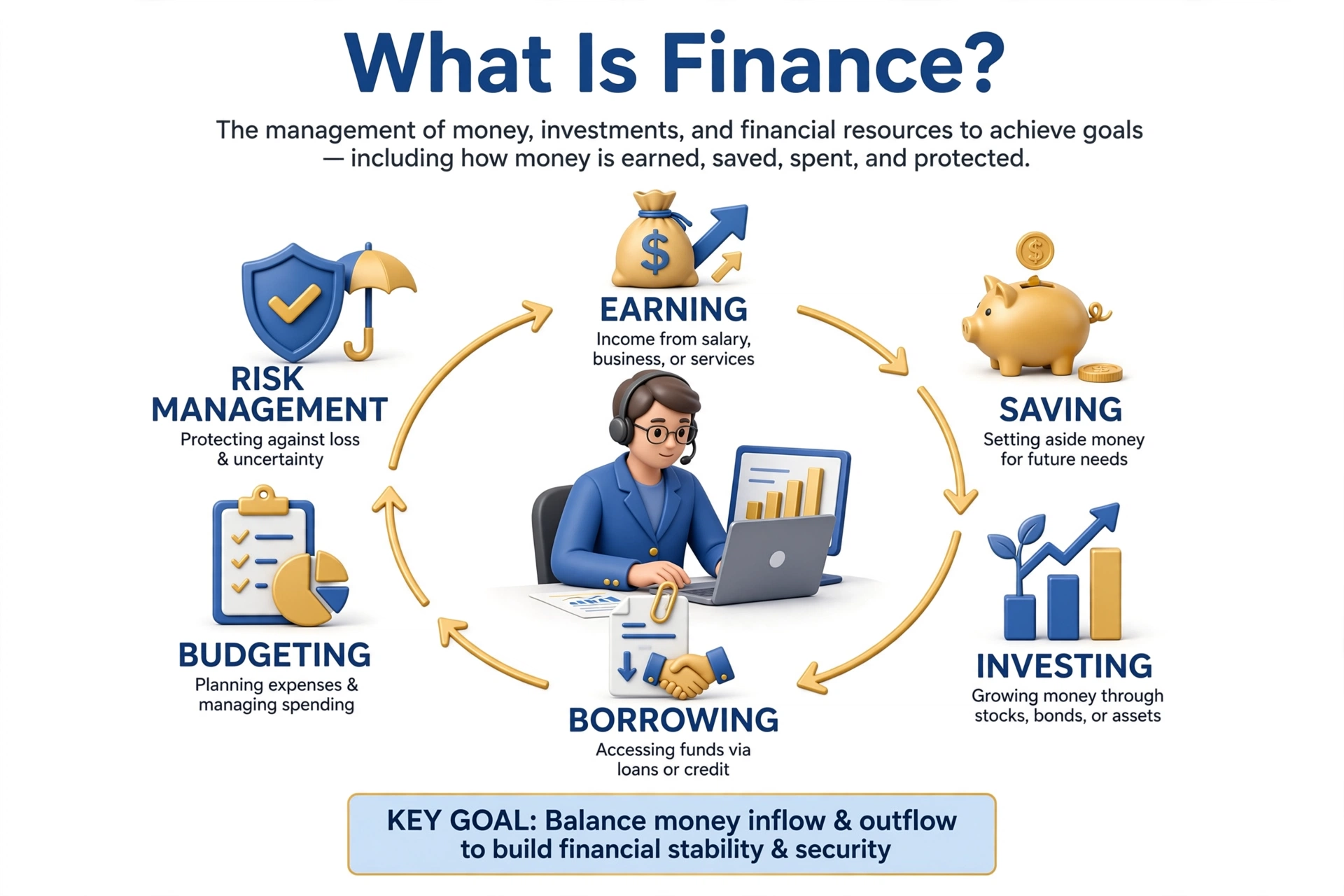
Finance is the process of planning, managing, and using money to achieve personal, business, or government financial goals. It involves activities such as earning, saving, investing, borrowing, lending, budgeting, and managing risks. In simple terms, finance helps individuals and organizations make informed decisions about how to obtain funds and use them efficiently.
Finance plays a central role in every economy. Individuals rely on it to manage household expenses and prepare for future needs, businesses use it to fund operations and expand, and governments depend on it to finance public services and infrastructure. Effective financial management ensures that available resources are allocated wisely while minimizing financial risks.
Today, finance extends beyond traditional banking. It includes investment management, insurance, taxation, financial markets, retirement planning, wealth management, and corporate decision-making. As technology continues to evolve, digital banking, online investing, and financial technology (FinTech) have made financial services more accessible than ever before.
Whether you’re managing your personal budget or running a multinational company, understanding the fundamentals of finance is essential for making sound financial decisions and achieving long-term success.
Key Points About Finance
- Definition: Finance is the management, creation, and study of money and financial resources.
- Main Goal: To allocate money efficiently and achieve financial objectives.
- Primary Users: Individuals, businesses, governments, and financial institutions.
- Core Activities: Budgeting, investing, borrowing, lending, saving, and risk management.
- Importance: Finance supports economic growth, business expansion, and long-term financial security.
Did You Know?
The word "finance" comes from the Old French word finance, meaning "to settle a debt" or "payment." Today, finance covers everything from personal budgeting and investing to global financial markets worth trillions of dollars.
What Are the 4 Major Areas of Finance?
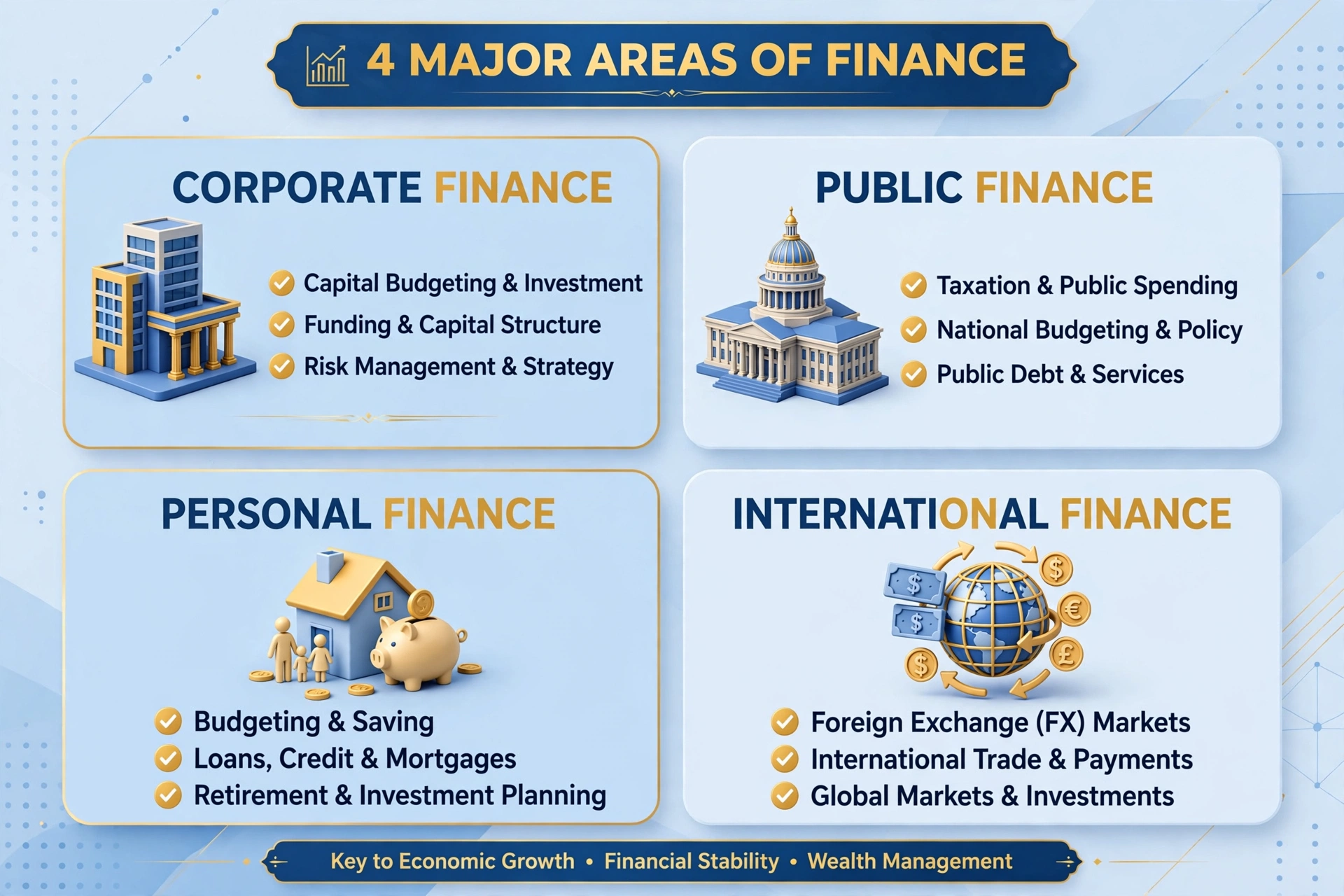
Finance is generally divided into four major areas, each focusing on different aspects of managing money and financial resources. Together, these areas help individuals, businesses, and governments make informed financial decisions, manage risks, and achieve long-term financial goals.
The four major areas of finance are:
- Corporate Finance
- Public Finance
- Personal Finance
- International Finance
Let’s explore each area in detail.
1. Corporate Finance
Corporate finance focuses on how businesses raise capital, invest resources, and maximize shareholder value. Financial managers make decisions about funding, budgeting, mergers, acquisitions, and long-term investments to ensure the company’s financial success.
The primary objective of corporate finance is to increase a company’s value while balancing profitability and financial risk. It also involves managing cash flow, evaluating investment opportunities, and determining the best mix of debt and equity financing.
Corporate Finance Includes
- Capital budgeting
- Financial planning
- Risk management
- Investment decisions
- Mergers and acquisitions
- Dividend policy
- Working capital management
2. Public Finance
Public finance deals with how governments collect, manage, and spend public money. It focuses on taxation, government budgets, public expenditure, and national debt to promote economic stability and improve public welfare.
Governments use public finance to fund essential services such as healthcare, education, infrastructure, defense, and social welfare programs. Effective public financial management helps ensure sustainable economic growth and responsible use of taxpayer money.
Public Finance Includes
- Tax collection
- Government budgeting
- Public expenditure
- National debt management
- Economic policy
- Infrastructure funding
3. Personal Finance
Personal finance refers to managing an individual’s or family’s financial resources. It involves budgeting, saving, investing, retirement planning, insurance, and debt management to achieve both short-term and long-term financial goals.
Good personal finance habits help people build financial security, prepare for emergencies, and make informed decisions about spending and investing.
Personal Finance Includes
- Budgeting
- Saving money
- Retirement planning
- Insurance
- Investment planning
- Tax planning
- Debt management
4. International Finance
International finance focuses on financial transactions between countries. It examines foreign exchange markets, international trade, cross-border investments, multinational corporations, and global financial systems.
As businesses increasingly operate across international markets, international finance has become essential for managing currency risks, international investments, and global economic relationships.
International Finance Includes
- Foreign exchange (Forex)
- International trade
- Global investments
- Exchange rate management
- International banking
- Cross-border financing
Quick Comparison of the 4 Major Areas of Finance
Corporate Finance
Focuses on managing a company's capital, investments, cash flow, and financial decisions to maximize business growth and shareholder value.
Public Finance
Deals with government revenue, taxation, budgeting, and public spending to support economic development and public services.
Personal Finance
Helps individuals manage income, savings, investments, insurance, debt, and retirement planning for long-term financial security.
International Finance
Covers global trade, foreign exchange, international investments, and cross-border financial transactions between countries.
Did You Know?
Although the principles of finance are universal, each area serves a different purpose. Personal finance helps individuals build wealth, corporate finance drives business growth, public finance supports government operations, and international finance connects economies through global trade and investment. Together, these four areas form the backbone of the modern financial system.
What Are the Main Features of Finance?
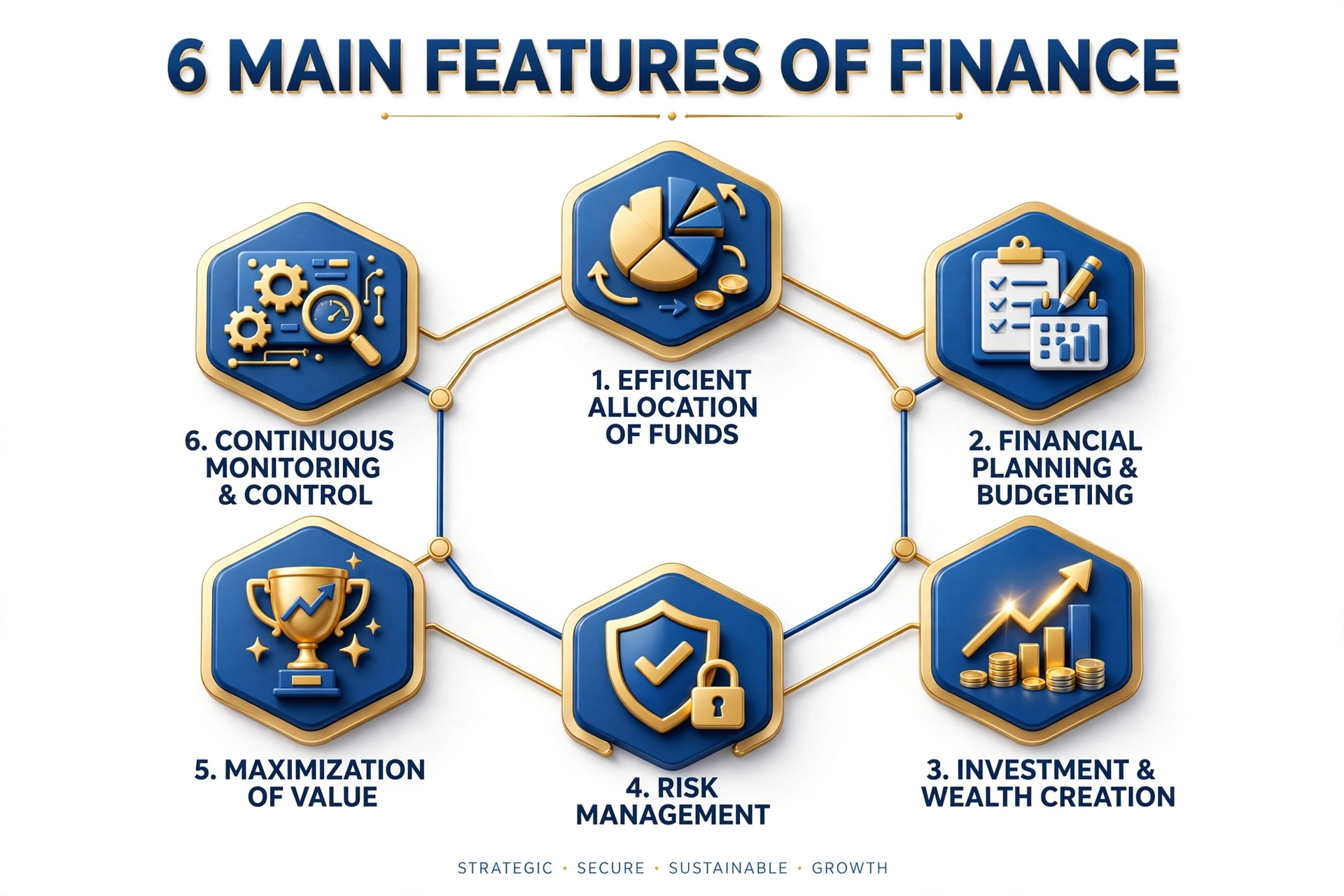
The features of finance explain how money is planned, managed, allocated, and monitored to achieve financial objectives. Whether in personal life, business, or government, finance ensures that available resources are used efficiently while balancing profitability, growth, and financial risk.
The following are the key features of finance that make it an essential part of every economy.
Efficient Allocation of Funds
One of the primary features of finance is allocating funds where they create the greatest value. Businesses invest in profitable projects, governments finance public services, and individuals spend or invest based on their financial priorities.
Proper allocation helps avoid unnecessary expenses while maximizing returns and supporting long-term growth.
Financial Planning and Budgeting
Finance involves careful planning before money is spent. Budgeting helps individuals and organizations estimate income, control expenses, prepare for unexpected situations, and achieve financial goals.
A well-planned budget improves decision-making and keeps finances on track.
Investment and Wealth Creation
Finance enables individuals and organizations to grow wealth by investing in assets that generate future returns. Selecting the right investment opportunities while balancing risk and reward is a key part of financial management. Successful investments contribute to financial stability and sustainable economic growth.
Risk Management
Every financial decision carries some level of risk. Finance helps reduce uncertainty through insurance, diversification, emergency funds, and careful financial analysis. Managing financial risks protects assets and improves long-term financial security.
Maximization of Value
Businesses use finance to maximize shareholder value, while individuals aim to increase personal wealth. Governments also rely on finance to maximize public welfare by using resources efficiently.
The ultimate objective is to generate the greatest possible value from available financial resources.
Continuous Monitoring and Control
Finance is an ongoing process rather than a one-time activity. Income, expenses, investments, and cash flow should be monitored regularly to ensure financial goals remain on track.
Continuous evaluation allows individuals and organizations to identify problems early and make informed financial decisions.
Key Features of Finance at a Glance
Efficient Allocation: Ensures money is invested where it creates the highest value and supports financial growth.
Financial Planning: Helps prepare budgets, forecast future needs, and make informed financial decisions.
Wealth Creation: Encourages smart investments that generate long-term financial returns.
Risk Management: Protects financial resources through planning, diversification, and insurance.
Value Maximization: Focuses on achieving the greatest possible financial benefit for individuals, businesses, and governments.
Continuous Monitoring: Regularly tracks financial performance to improve future planning and decision-making.
Did You Know?
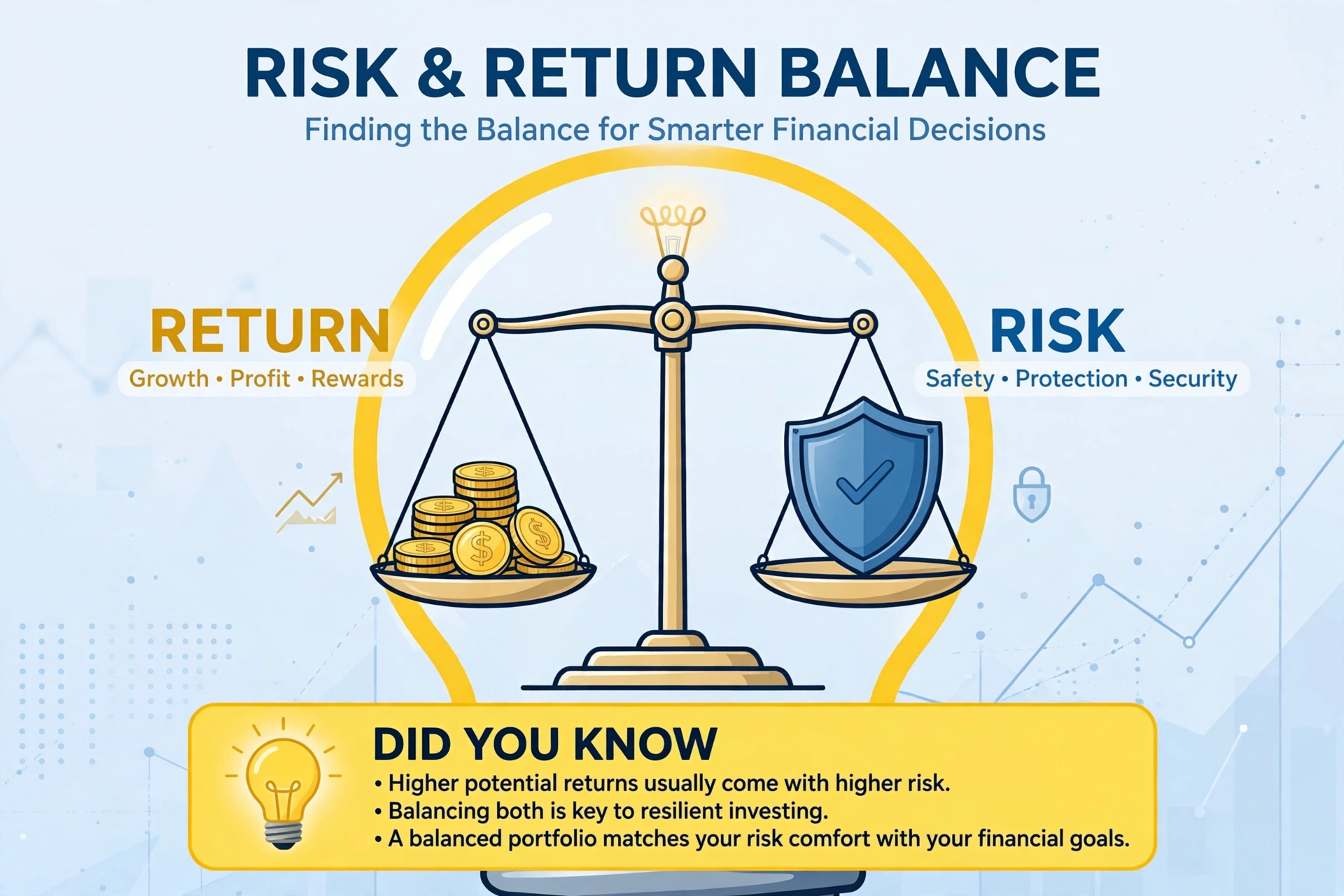
One of the most important features of finance is balancing risk and return. Every investment, whether it's buying stocks, expanding a business, or saving for retirement, requires evaluating potential rewards against possible risks. This principle guides financial decisions at every level of the economy.
How Does Finance Work?
Finance works by managing the flow of money from its source to its most productive use. It helps individuals, businesses, and governments acquire funds, allocate resources wisely, monitor spending, and achieve both short-term and long-term financial goals.
The financial process begins with generating or raising funds through income, investments, loans, taxes, or business profits. These funds are then carefully allocated to different activities such as daily operations, business expansion, public services, or personal expenses. Throughout this process, financial managers continuously monitor cash flow, evaluate risks, and make adjustments to ensure financial stability.
A well-managed financial system also supports economic growth by encouraging saving, investing, lending, and responsible spending. Financial institutions such as banks, investment firms, insurance companies, and stock markets play an important role by connecting people who have surplus money with those who need capital for productive purposes.
In simple terms, finance follows a continuous cycle of planning, funding, spending, monitoring, and improving financial performance.
How Finance Works in Simple Steps
- Generate or Raise Funds – Money is obtained through income, investments, loans, taxes, or business revenue.
- Plan the Budget – Financial goals are established, and budgets are created to control spending and allocate resources effectively.
- Allocate Resources – Funds are distributed to investments, operations, projects, or essential expenses based on priorities.
- Manage Financial Risks – Risks are reduced through diversification, insurance, emergency funds, and financial planning.
- Monitor Performance – Income, expenses, investments, and cash flow are reviewed regularly to ensure financial goals are being achieved.
- Improve Financial Decisions – Financial performance is analyzed to make better investment, budgeting, and business decisions in the future.
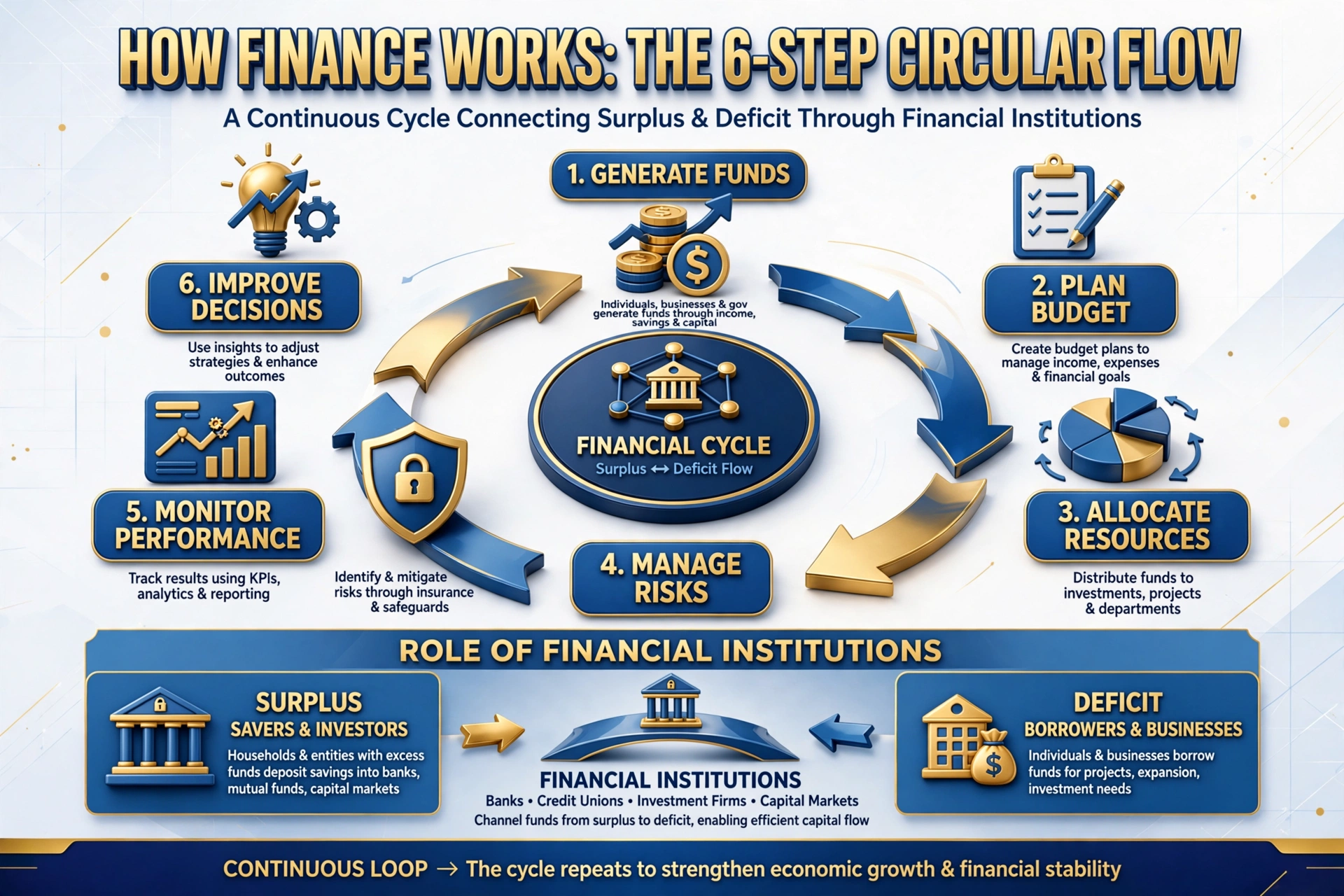
How Finance Works at a Glance
Raise Funds: Obtain money through income, investments, loans, or business revenue.
Plan Finances: Create budgets and financial strategies to achieve specific goals.
Allocate Resources: Invest and spend funds where they generate the greatest value.
Manage Risks: Protect financial resources through planning, insurance, and diversification.
Monitor Results: Track financial performance and adjust strategies for continuous improvement.
Did You Know?
Modern financial markets handle trillions of dollars in transactions every day, connecting investors, businesses, banks, and governments worldwide. This continuous movement of capital helps drive innovation, create jobs, support infrastructure projects, and fuel economic growth.
Importance of Finance
Finance is the foundation of every successful individual, business, and economy. It helps manage financial resources efficiently, supports informed decision-making, and ensures that money is available when it is needed most. Without effective financial management, achieving personal goals, expanding businesses, or funding public services would be extremely difficult.
For individuals, finance encourages responsible budgeting, saving, investing, and retirement planning. It provides financial security and helps people prepare for unexpected expenses while working toward long-term wealth.
For businesses, finance ensures sufficient capital for daily operations, business expansion, research, innovation, and managing risks. Strong financial management enables companies to remain competitive and maximize profitability.
Governments rely on finance to collect revenue, prepare budgets, develop infrastructure, provide healthcare and education, and promote economic stability. Effective public finance contributes to sustainable national development and improves the quality of life for citizens.
In today’s global economy, finance also supports entrepreneurship, international trade, technological innovation, and job creation, making it one of the most important drivers of economic growth.
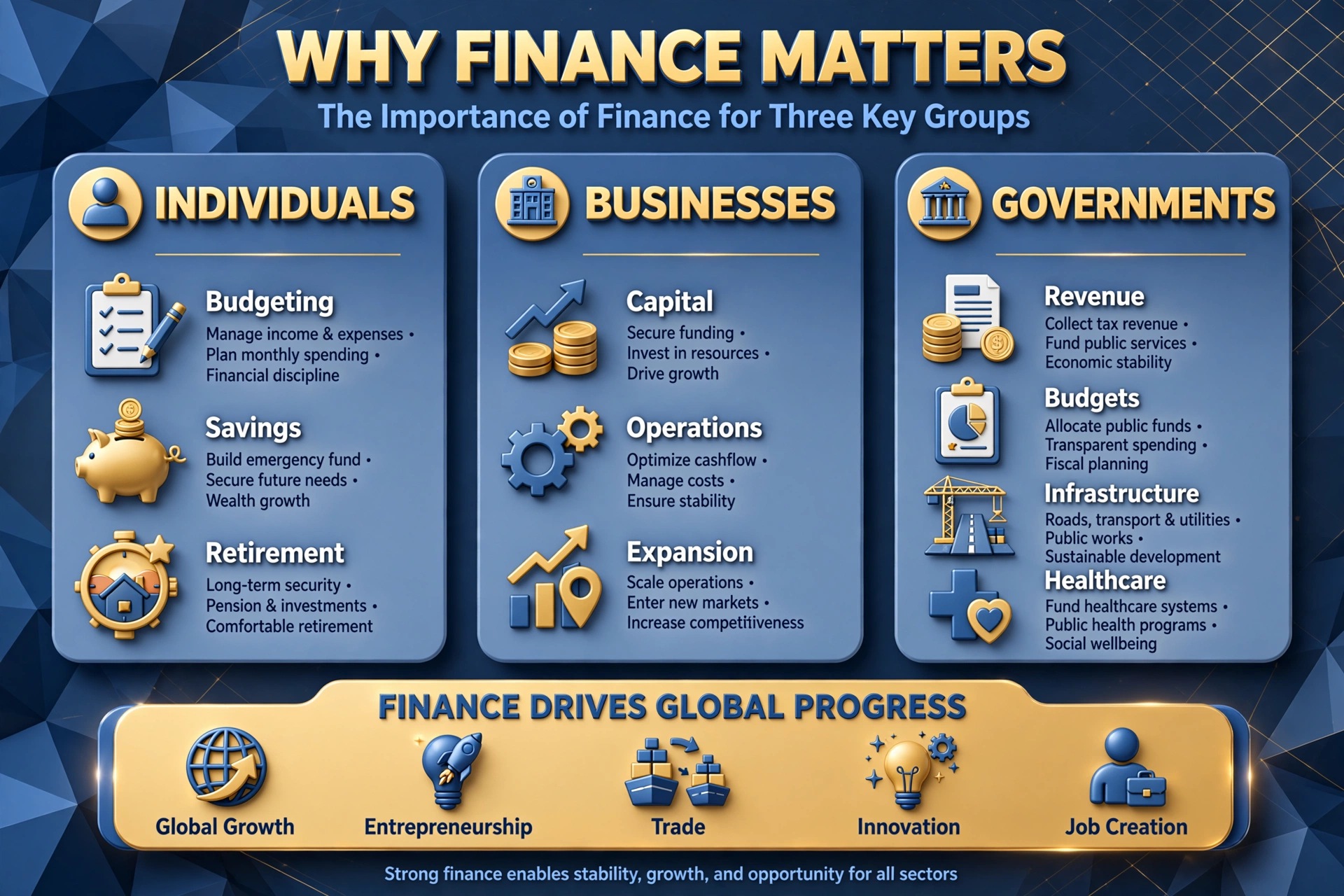
Why Is Finance Important?
Personal Financial Security: Helps individuals budget wisely, save regularly, and achieve long-term financial goals.
Business Growth: Provides the capital needed for operations, expansion, innovation, and long-term profitability.
Economic Development: Supports governments in funding infrastructure, healthcare, education, and public services.
Investment Opportunities: Enables individuals and organizations to grow wealth through informed investment decisions.
Risk Reduction: Promotes financial planning, insurance, and diversification to minimize financial uncertainty.
Did You Know?
Every major business decision—whether launching a new product, opening a new branch, or investing in technology—begins with a financial analysis. Good financial planning helps organizations reduce risk, allocate resources efficiently, and achieve sustainable growth.
Benefits of Finance
Finance offers numerous benefits to individuals, businesses, and governments by helping them manage money effectively and make informed financial decisions. Proper financial management not only improves day-to-day operations but also supports long-term growth, stability, and wealth creation.
For individuals, finance promotes disciplined spending, encourages saving, and helps achieve personal financial goals such as buying a home, funding education, or planning for retirement. Businesses benefit from finance by securing capital, managing cash flow, evaluating investment opportunities, and improving profitability. Governments use finance to fund public services, develop infrastructure, and maintain economic stability.
By understanding the principles of finance, people and organizations can reduce financial risks, maximize available resources, and build a stronger financial future.
Key Benefits of Finance
- Supports effective budgeting and financial planning.
- Helps individuals and businesses make informed financial decisions.
- Encourages saving, investing, and long-term wealth creation.
- Improves cash flow management and financial stability.
- Reduces financial risks through proper planning and diversification.
- Provides funding for business growth and expansion.
- Promotes economic development by supporting investments and public projects.
- Helps achieve short-term and long-term financial goals.

Top Benefits of Finance
Better Money Management: Finance helps control income, expenses, savings, and investments efficiently.
Business Growth: Provides the capital and financial strategies needed to expand operations and increase profitability.
Achievement of Financial Goals: Supports planning for education, home ownership, retirement, and other life objectives.
Risk Reduction: Encourages diversification, insurance, and emergency planning to protect financial resources.
Economic Growth: Facilitates investments, entrepreneurship, innovation, and job creation that strengthen the economy.
Did You Know?
Financial literacy is closely linked to better money management. People who understand basic financial concepts such as budgeting, saving, investing, and managing debt are generally better prepared to handle unexpected expenses and achieve long-term financial success.
Common Challenges in Finance
Managing finances is not always easy. Individuals, businesses, and governments face various financial challenges that can affect their ability to achieve long-term goals. Understanding these challenges is the first step toward making better financial decisions and developing effective financial strategies.
Whether it’s managing cash flow, controlling debt, or dealing with economic uncertainty, good financial planning can help reduce risks and improve financial stability.
Limited Financial Resources
One of the biggest challenges in finance is managing limited resources. Individuals and organizations often have more financial needs than available funds, making it essential to prioritize spending and investments wisely.
Poor Budgeting
Without a proper budget, it becomes difficult to control expenses or save for future goals. Poor budgeting can lead to overspending, increased debt, and financial stress.
Cash Flow Management
Businesses must maintain a healthy cash flow to pay employees, suppliers, and operating expenses on time. Even profitable businesses can experience financial difficulties if cash flow is not managed effectively.
Investment Risks
Every investment carries some level of risk. Market fluctuations, inflation, and economic downturns can reduce investment returns, making diversification and research essential before investing.
Debt Management
Borrowing money can support growth and investment, but excessive debt may increase financial pressure. Responsible borrowing and timely repayment are important for maintaining financial health.
Economic Uncertainty
Changes in interest rates, inflation, government policies, and global economic conditions can significantly impact personal finances, businesses, and financial markets. Preparing for uncertainty helps reduce financial risks.
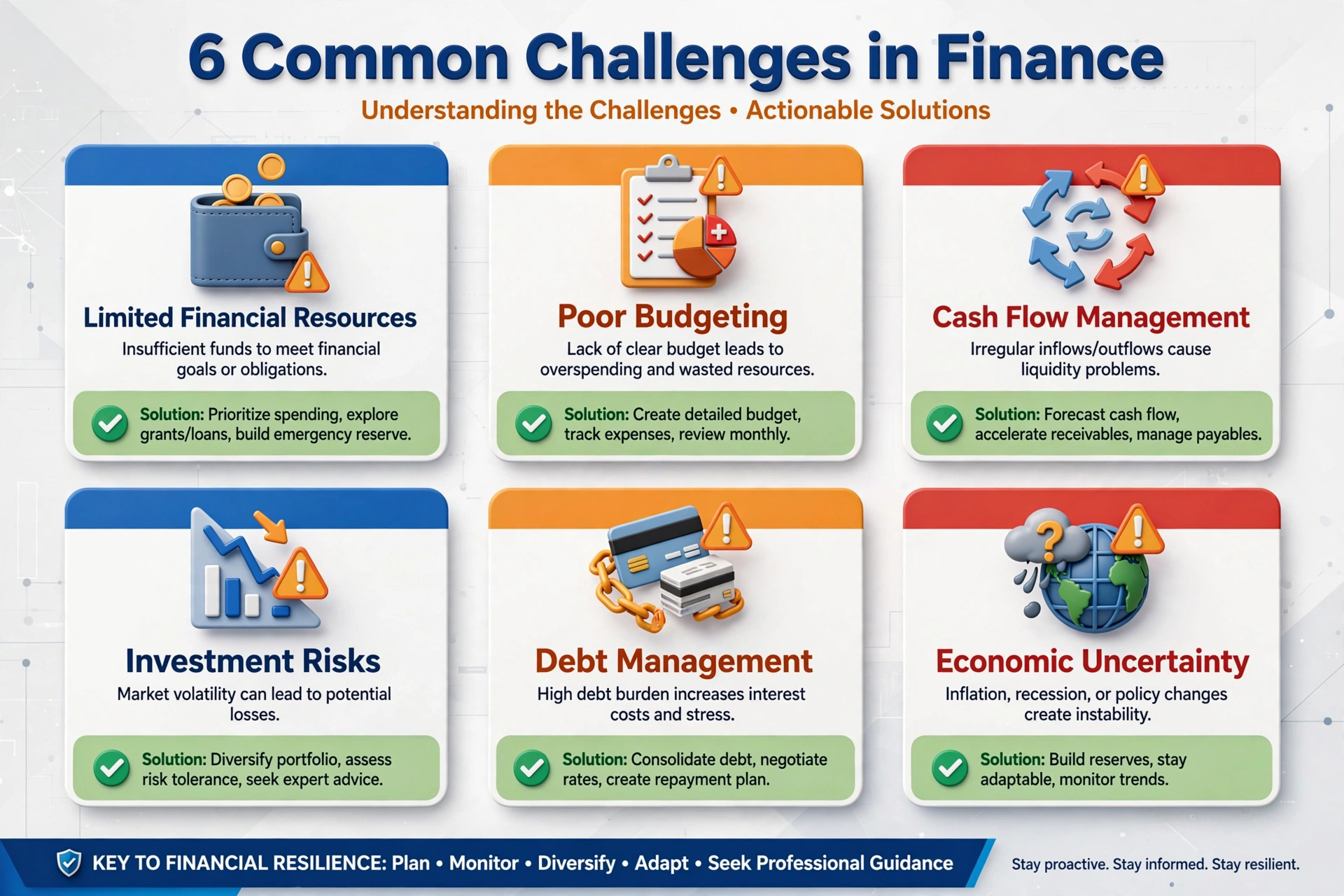
Common Financial Challenges
Limited Resources: Managing limited funds while meeting multiple financial needs.
Poor Budgeting: Overspending and lack of financial planning can lead to long-term financial problems.
Cash Flow Issues: Maintaining sufficient cash for daily expenses and business operations.
Investment Risk: Market volatility and economic changes can affect investment performance.
Debt Management: Balancing loans and repayments without creating financial strain.
Economic Uncertainty: Inflation, interest rates, and global events influence financial decisions.
Did You Know?
One of the biggest reasons businesses fail is poor cash flow management, not a lack of profit. A company can be profitable on paper but still struggle if it doesn't have enough cash available to cover day-to-day expenses.
What is finance in simple words?
Finance is the process of managing money and financial resources. It includes budgeting, saving, investing, borrowing, lending, and financial planning to achieve personal, business, or government goals.
What are the four major areas of finance?
The four major areas of finance are Corporate Finance, Public Finance, Personal Finance, and International Finance. Each focuses on different aspects of managing financial resources.
What are the main features of finance?
The key features of finance include financial planning, allocation of funds, investment management, budgeting, risk management, wealth creation, and continuous financial monitoring.
Why is finance important?
Finance helps individuals, businesses, and governments manage money effectively, reduce financial risks, make informed decisions, and achieve long-term financial goals.
What is the difference between finance and accounting?
Finance focuses on managing money and making future financial decisions, whereas accounting records, organizes, and reports past financial transactions.
What are the benefits of finance?
Finance improves money management, supports budgeting, encourages investing, reduces financial risks, promotes business growth, and contributes to economic development.
What is corporate finance?
Corporate finance focuses on managing a company's finances, including raising capital, investment decisions, cash flow management, and maximizing shareholder value.
What is personal finance?
Personal finance involves managing an individual's income, expenses, savings, investments, insurance, taxes, and retirement planning for long-term financial security.
Finance plays a vital role in every aspect of modern life, from managing personal budgets to making corporate investment decisions and supporting economic development. Understanding the major areas of finance, including corporate finance, public finance, personal finance, and international finance, provides a strong foundation for making informed financial decisions.
By learning the features of finance, such as financial planning, budgeting, risk management, and efficient allocation of resources, individuals and organizations can improve financial stability and achieve long-term goals. Whether you’re a student, business owner, investor, or simply looking to manage your money more effectively, building financial knowledge is an investment that pays lifelong dividends.
As the global economy continues to evolve, developing strong financial skills will help you adapt to changing market conditions, reduce financial risks, and create better opportunities for future growth.
To build stronger money management skills, explore trusted educational resources on financial literacy.



0 Comments