
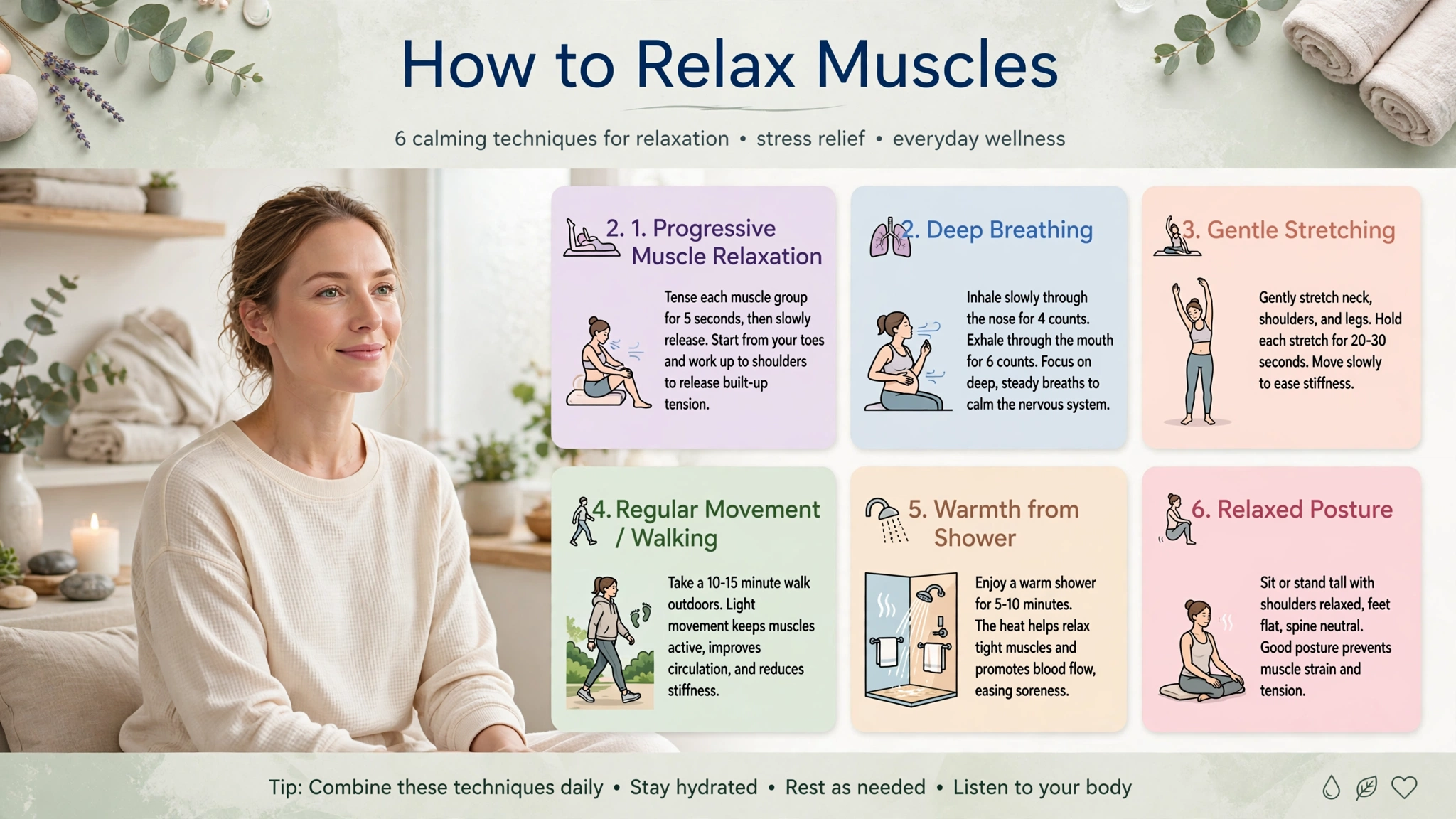
Muscles relaxation techniques can help reduce muscle tension, ease physical stress, and encourage a greater sense of relaxation. Stress, anxiety, prolonged sitting, physical activity, and poor posture can all contribute to tight or tense muscles, particularly around the neck, shoulders, back, and legs. Simple techniques such as progressive muscle relaxation, controlled breathing, gentle stretching, and consciously releasing tension can help your body relax. In this article, we explain how to relax muscles, how progressive muscle relaxation works, and practical techniques you can use as part of a regular relaxation routine.
What Causes Muscle Tension?
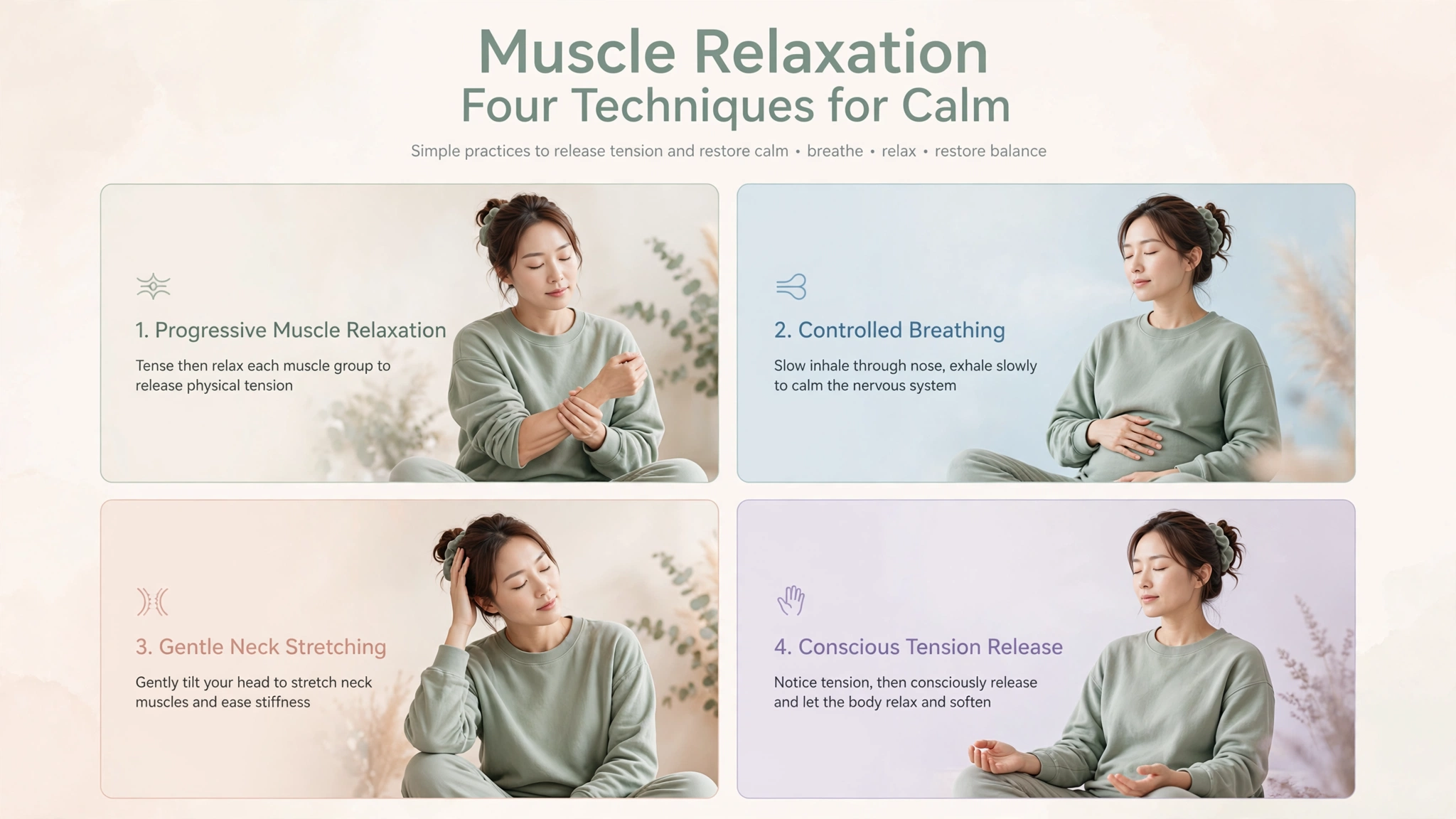
Muscle tension occurs when muscles remain tight or contracted instead of fully relaxing. Stress and anxiety are common causes, as the body’s natural response to stressful situations can cause muscles to tense up. This may be especially noticeable in the neck, shoulders, jaw, back, and legs.
Muscle tension can also develop from sitting in the same position for a long time, poor posture, physical activity, repetitive movements, or lack of movement. In some cases, tiredness and everyday stress can make the feeling of tightness more noticeable.
Learning to recognize when your muscles are tense is an important first step toward relaxation. Once you notice areas of tension, techniques such as progressive muscle relaxation, controlled breathing, gentle stretching, and regular movement can help your body release that tension.
How to Relax Muscles
There are several simple ways to relax tense muscles and reduce feelings of physical stress. The best approach may depend on what is causing the tension, but regular relaxation practices can help you become more aware of when your muscles are tight and learn how to release that tension.
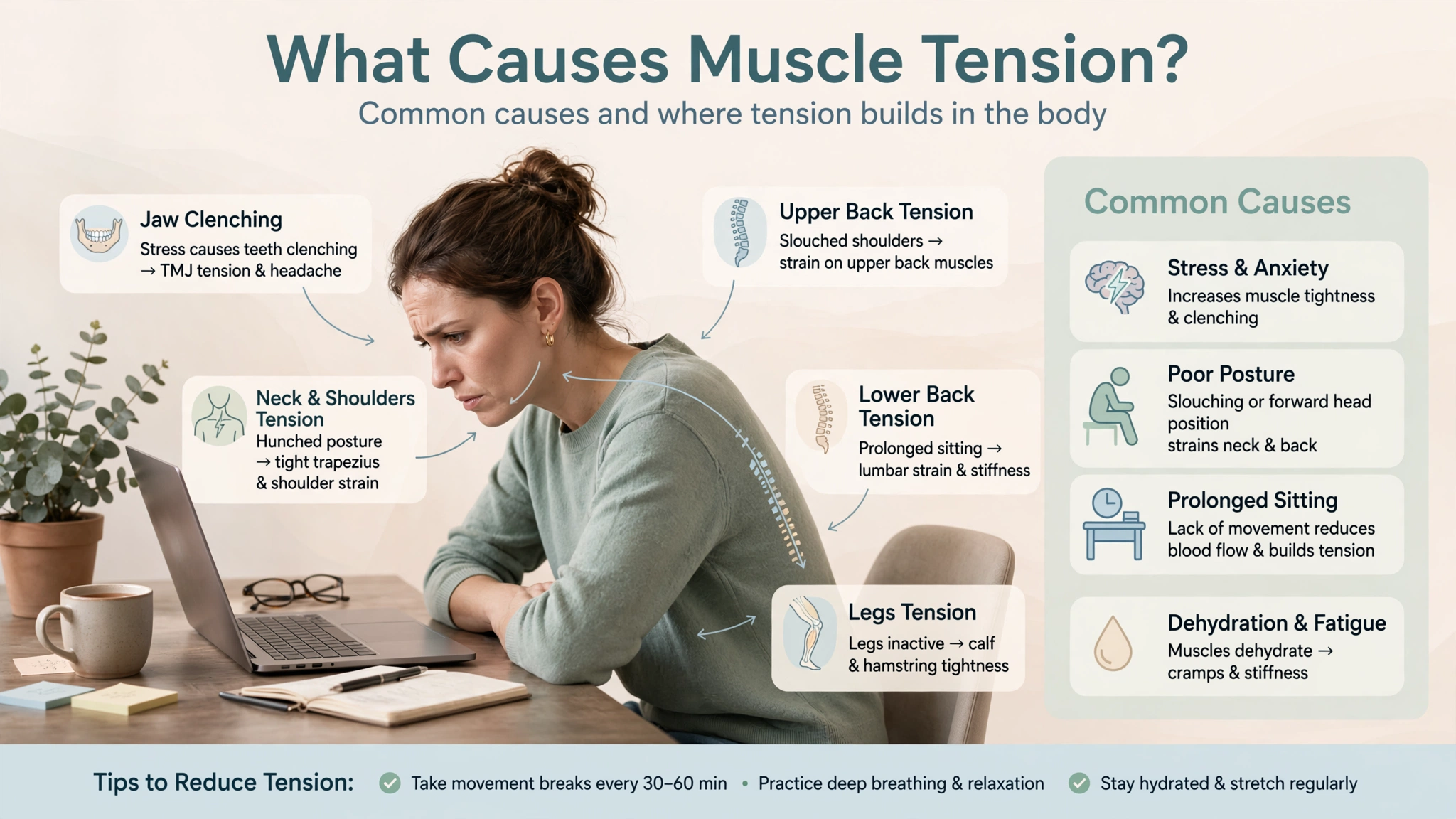
Some effective ways to relax muscles include:
Progressive Muscle Relaxation
Gently tense and then relax different muscle groups one at a time. This can help you recognize muscle tension and learn how to release it.
Practice Deep Breathing
Slow, controlled breathing can help calm your body during stressful moments and encourage tense muscles to relax.
Try Gentle Stretching
Gentle stretches can help loosen tight areas, particularly the neck, shoulders, back, and legs. Avoid forcing a stretch or moving into painful positions.
Keep Your Body Moving
Standing up, walking, and changing position regularly can help prevent stiffness and muscle tension caused by staying in one position for too long.
Use Warmth
A warm shower or bath can be a relaxing part of your routine and may help you feel less tense after a stressful or physically demanding day.
Relax Your Posture
Pay attention to areas where you may unconsciously hold tension, such as raised shoulders, a clenched jaw, or tightly contracted hands.
You do not need to use every technique at once. Start with one or two methods that feel comfortable and practice them regularly. Over time, you may become better at recognizing muscle tension and responding to it before it becomes more uncomfortable.
Progressive Muscle Relaxation
Progressive muscle relaxation is a technique that involves gently tensing and then relaxing different muscle groups in a specific order. The process helps you become more aware of the difference between muscle tension and relaxation. It can be particularly useful when stress or anxiety causes you to unconsciously tighten your muscles.
The goal is not to tense your muscles as hard as possible. Use only enough tension to notice the feeling, then release it and allow the muscle to relax. With regular practice, you may become better at recognizing tension and relaxing your muscles before the tightness becomes uncomfortable.
Before You Begin
Choose a quiet and comfortable place where you can sit or lie down without distractions. Wear loose, comfortable clothing and allow yourself enough time to complete the exercise without rushing.
If a particular movement causes pain or you have an injury affecting the muscles you want to exercise, avoid that movement and consider speaking with a healthcare professional before practicing progressive muscle relaxation.
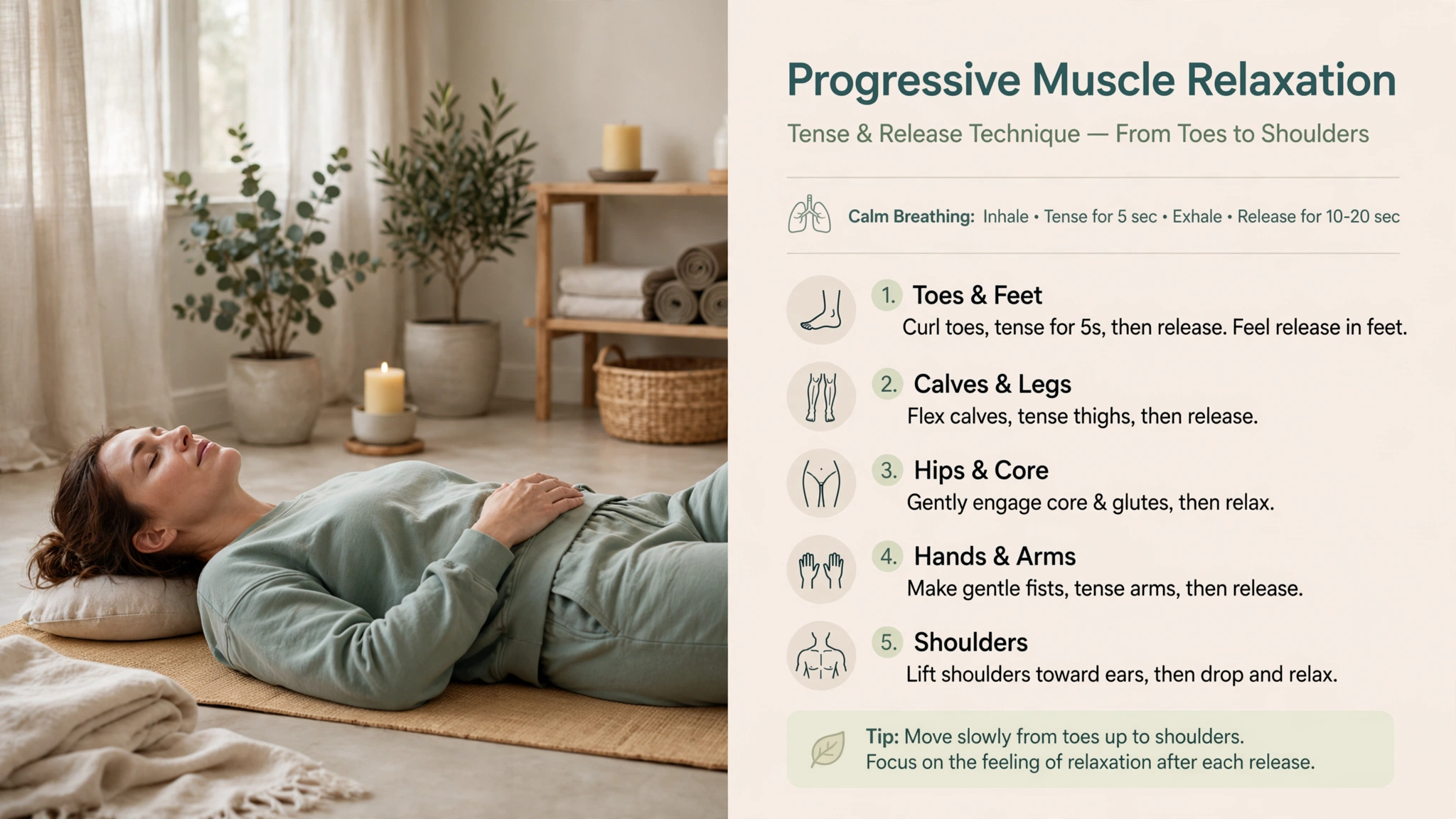
How to Practice Progressive Muscle Relaxation
Progressive muscle relaxation works by moving through different muscle groups and briefly tensing each area before allowing it to relax. Start with a comfortable position, breathe slowly, and focus your attention on how each muscle feels before and after you release the tension.
Follow these steps:
How to Practice Progressive Muscle Relaxation
Get Comfortable
Sit in a comfortable chair or lie down in a quiet place. Let your arms rest naturally and take a few slow breaths.
Tense the Muscle
Choose one muscle group and gently tighten it for about 4–5 seconds. You should notice the tension without causing pain or cramping.
Release
Relax the muscles and allow them to become loose for around 10–15 seconds. Notice how different the relaxed feeling is.
Breathe Slowly
Continue taking slow, comfortable breaths as you move from one muscle group to the next.
Move Through Your Body
Gradually work through your hands, arms, face, shoulders, chest, stomach, back, hips, and legs.
Finish Slowly
Remain relaxed for a few moments, take a few deeper breaths, and gradually become aware of your surroundings before getting up.
If a muscle group feels painful when you tense it, skip that area rather than forcing the movement. The purpose of progressive muscle relaxation is to release tension, not create additional discomfort.
Muscle Groups to Relax
When practicing progressive muscle relaxation, work through your body gradually rather than trying to relax every muscle at the same time. Start with the hands and arms, then move toward the face, shoulders, chest, stomach, back, hips, and legs.
For each muscle group, gently create tension for a few seconds and then release it. Pay attention to how the muscles feel before and after you relax them. If any movement causes pain, cramping, or discomfort, skip that muscle group.
The following sequence can help you practice the technique:
Hands and Forearms
Make a gentle fist with one hand, hold the tension briefly, and then release. Repeat with the other hand.
Upper Arms
Bend your arms gently toward your shoulders to create light tension, then let your arms relax.
Forehead
Raise your eyebrows gently and hold the tension briefly before releasing.
Eyes and Cheeks
Close your eyes gently and tighten the muscles around your eyes and cheeks, then relax them.
Jaw and Mouth
Gently tighten your jaw or open your mouth slightly, then release the tension.
Neck
Be particularly gentle with your neck. Avoid forceful movements and simply notice any tension before allowing the muscles to relax.
Shoulders
Raise your shoulders toward your ears, hold briefly, and then let them drop naturally.
Chest and Stomach
Take a comfortable breath and notice the muscles around your chest and abdomen. Then slowly release any unnecessary tension.
Back
Gently bring your shoulder blades closer together for a few seconds, then allow your back and shoulders to relax.
Hips and Buttocks
Gently tighten these muscles, hold briefly, and then release the tension.
Thighs
Tighten one thigh at a time, then relax it completely before moving to the other side.
Lower Legs and Feet
Gently tighten the muscles in your lower legs and feet. Avoid excessive stretching or movements that could cause cramping.
You do not have to complete the entire sequence every time. As you become familiar with the exercise, you can focus on the areas where you commonly notice tension, such as your shoulders, neck, jaw, or back.
Benefits of Muscle Relaxation Techniques
Regular muscle relaxation can be useful when stress, anxiety, prolonged sitting, or everyday activities leave your body feeling tense. By learning to recognize and release muscle tension, you can make relaxation a more regular part of your daily routine.
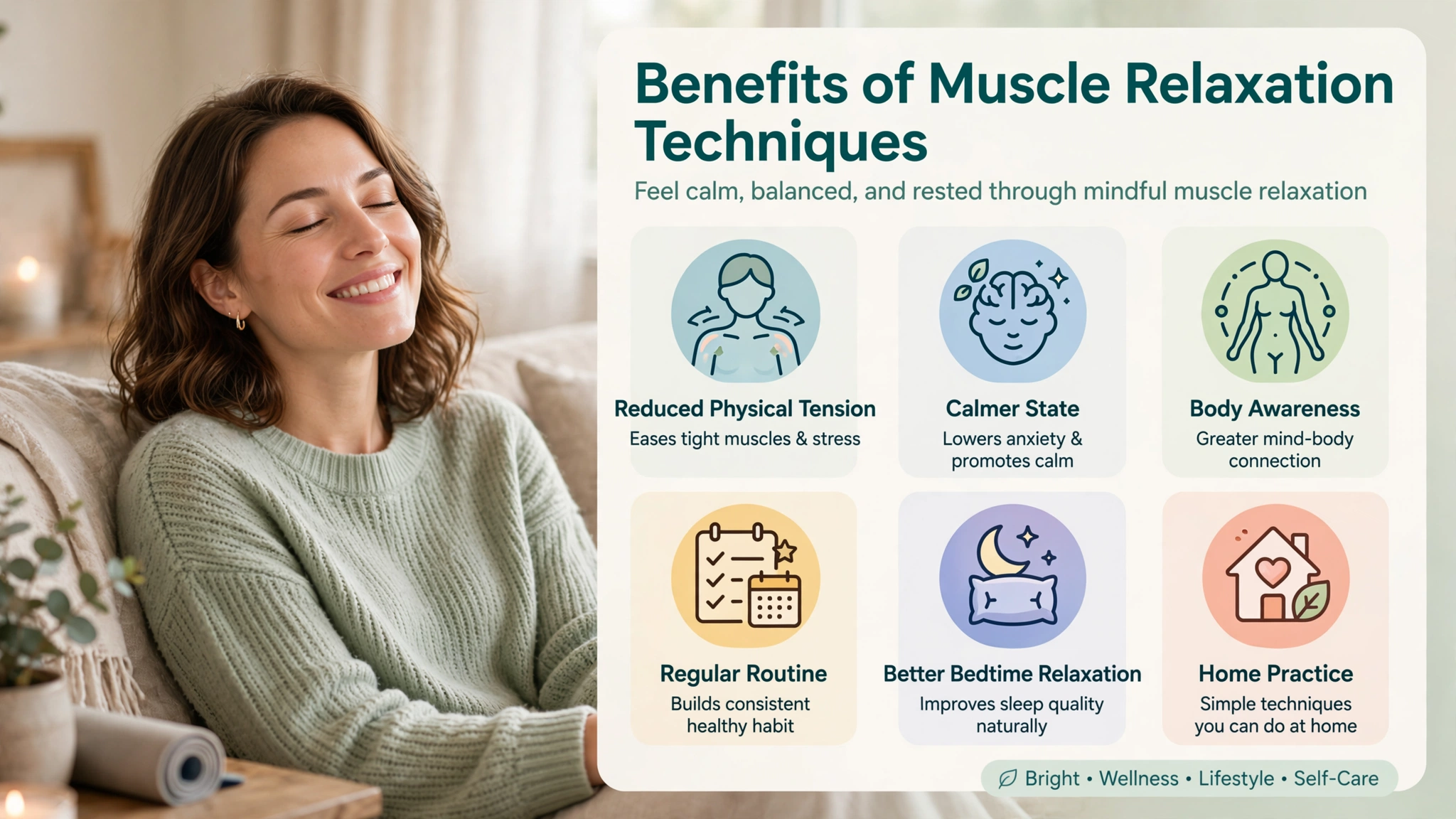
Some potential benefits of muscle relaxation techniques include:
- Helping reduce feelings of physical tension
- Encouraging a calmer state when you feel stressed
- Increasing awareness of where you hold tension in your body
- Helping you develop a regular relaxation routine
- Supporting relaxation before bedtime
- Giving you a simple technique you can practice at home
Muscle relaxation techniques are not a replacement for medical care when muscle pain or tension is persistent, severe, or caused by an underlying condition. However, they can be a useful self-care practice for many people who experience everyday muscle tension and stress.
When Should You Practice Muscle Relaxation?
You can practice muscle relaxation at different times of the day depending on when you usually experience tension or stress. The key is to choose a time when you can focus on the exercise without rushing.
In the morning, a short relaxation session can help you start the day calmly and become more aware of unnecessary muscle tension.
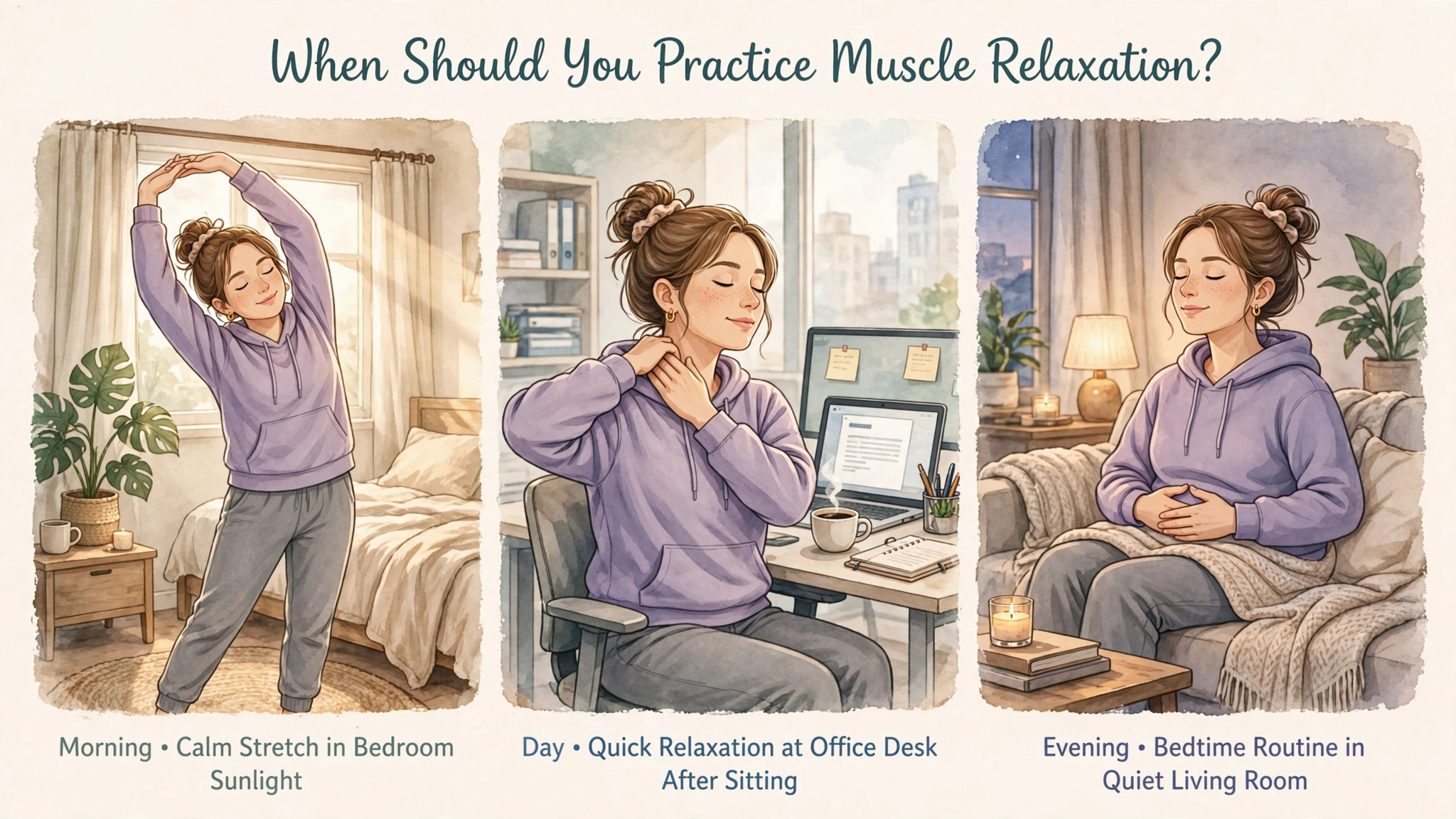
During the day, relaxation exercises can be useful after long periods of sitting, stressful tasks, or situations where you notice that your shoulders, jaw, or other muscles have become tense.
In the evening, muscle relaxation can become part of a calming bedtime routine. Practicing in a quiet environment may help you transition from the activities of the day to a more relaxed state.
You do not need a long session to practice these techniques. Start with a few minutes and gradually build a routine that feels comfortable and sustainable. Consistency is more important than practicing for a long period occasionally.
Tips for Making Muscle Relaxation More Effective
Muscle relaxation techniques become easier with regular practice. A few simple habits can make your sessions more comfortable and help you focus on releasing tension rather than creating more of it.
Here are some practical tips to keep in mind:
Start Slowly
Begin with a short session and gradually increase the time as you become more comfortable with muscle relaxation.
Focus on One Muscle Group at a Time
Pay attention to how the muscle feels when it is tense and how that feeling changes when you relax it.
Do Not Tense Your Muscles Too Strongly
The goal is to notice tension and release it, not to create additional discomfort or pain.
Keep Your Breathing Steady
Slow, comfortable breathing can help you remain relaxed and focused throughout the exercise.
Choose a Quiet Place
Reducing noise and other distractions can make it easier to concentrate on the relaxation exercise.
Practice Regularly
A consistent routine can help you become more familiar with the technique and recognize muscle tension more easily.
Stop If Something Hurts
Relaxation exercises should not cause significant pain, cramping, dizziness, or other concerning symptoms.
Muscle Relaxation Techniques and Stress
Muscle tension and stress can often occur together. When you experience stress or anxiety, your body may respond by tightening certain muscle groups, particularly around the shoulders, neck, jaw, and back. If this tension continues for a long time, it may become uncomfortable and make it harder to feel relaxed.
Muscle relaxation techniques can help you become more aware of this physical response. By deliberately tensing and then relaxing different muscle groups, you can learn to recognize the difference between tension and relaxation.
However, muscle relaxation is only one way to manage stress. Combining it with other healthy habits, such as regular physical activity, adequate sleep, controlled breathing, and taking breaks from stressful activities, may provide a more complete approach to managing everyday stress.
If muscle tension is persistent, severe, keeps returning without an obvious reason, or is accompanied by other concerning symptoms, it is better to speak with a healthcare professional rather than relying only on relaxation exercises.
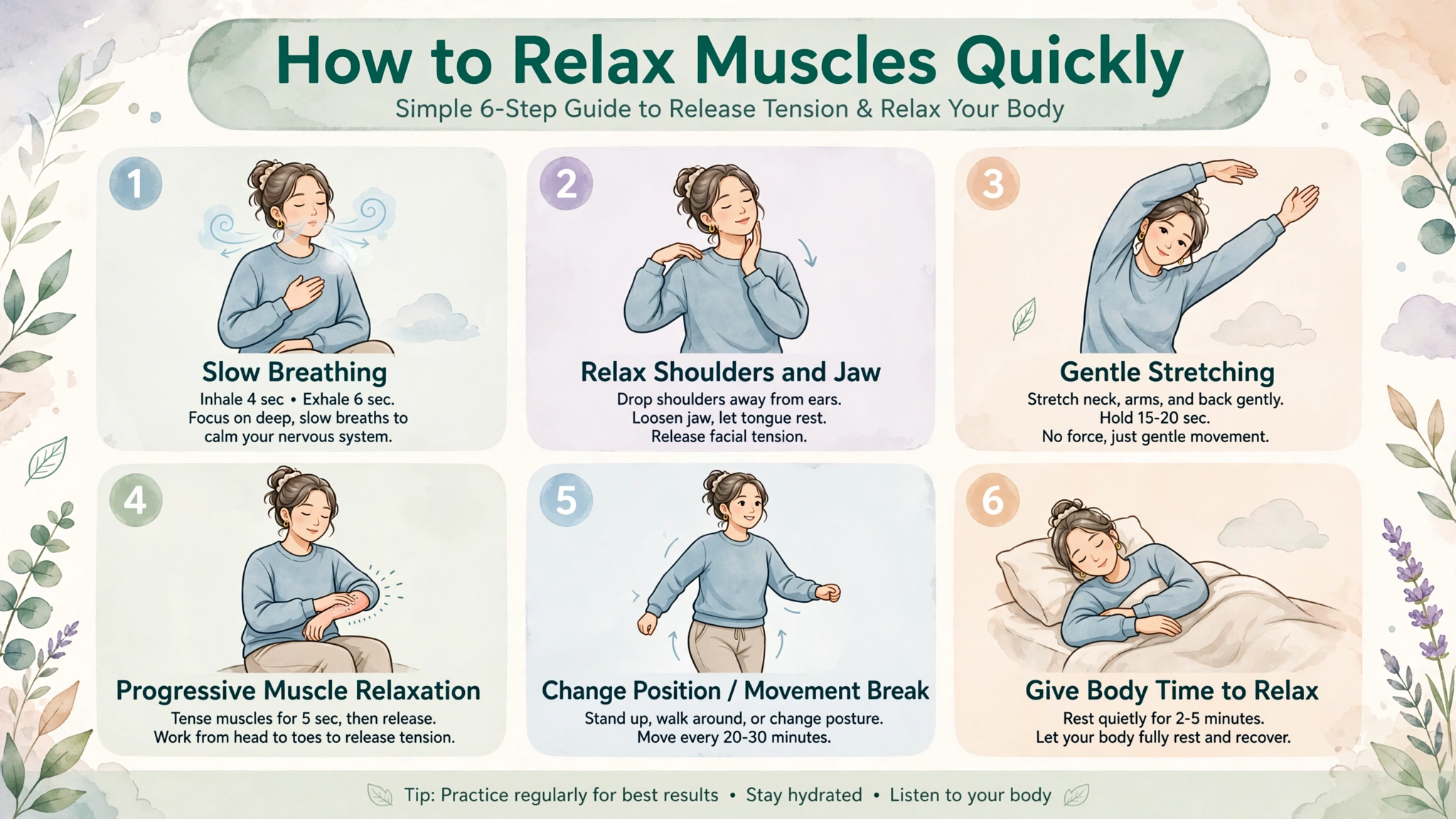
How to Relax Muscles Quickly
When your muscles become tense because of stress, anxiety, prolonged sitting, or physical activity, simple relaxation methods can help reduce that tension. The best approach depends on what is causing the tightness, but slow breathing, gentle stretching, and progressive muscle relaxation are useful places to start.
1. Slow Down Your Breathing
Take slow, comfortable breaths and avoid holding your breath. Breathing slowly can help you settle your body when stress is contributing to muscle tension. Try inhaling gently, then exhaling slowly while consciously allowing your shoulders and jaw to loosen.
2. Relax Your Shoulders and Jaw
Stress often causes people to unconsciously tighten their shoulders, neck, or jaw. Lower your shoulders away from your ears and let your jaw rest naturally. Repeat this several times whenever you notice yourself tensing up.
3. Try Gentle Stretching
Gentle stretching can help loosen muscles that feel tight after sitting, working, exercising, or staying in one position for a long time. Move slowly and avoid forcing a stretch or stretching into pain.
4. Use Progressive Muscle Relaxation
Progressive muscle relaxation involves deliberately tensing and then relaxing different muscle groups. Start with one area, notice the difference between tension and relaxation, and gradually work through other areas of the body.
5. Change Your Position
Remaining in the same position for an extended period can contribute to muscle stiffness. If you have been sitting or standing for a long time, change position and take a short movement break. Even gentle movement can help you become more aware of areas that are becoming tense.
6. Give Your Body Time to Relax
Muscle relaxation is a skill that can improve with regular practice. Instead of waiting until your muscles become extremely tense, make relaxation part of your daily routine. Practicing for a few minutes at a time can make it easier to recognize and release tension.
If muscle tension is severe, persistent, repeatedly returns without an obvious reason, or occurs with significant pain, weakness, numbness, swelling, or another concerning symptom, it is better to speak with a healthcare professional rather than relying only on relaxation techniques.
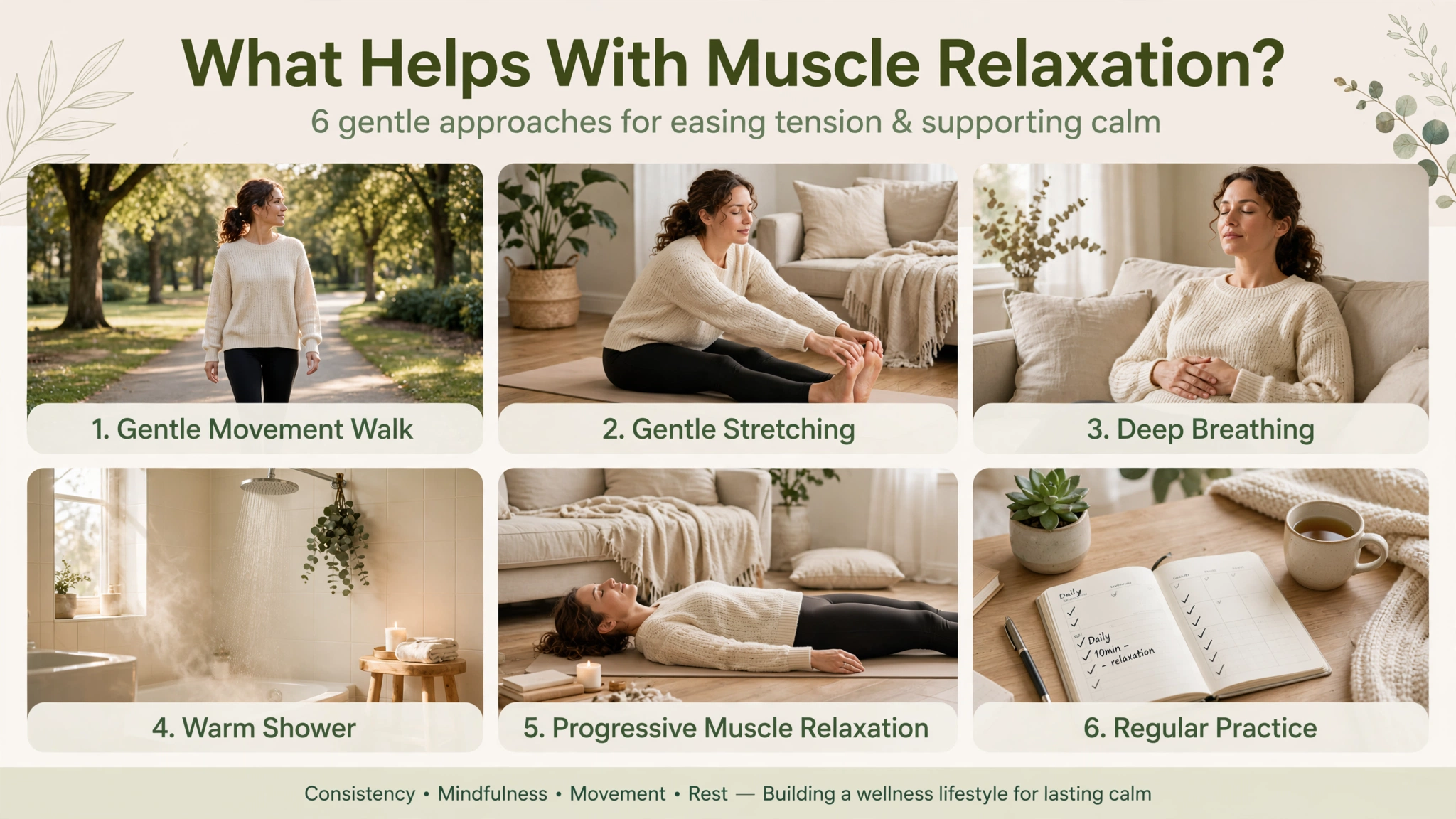
What Helps With Muscle Relaxation?
Muscle relaxation does not always require a complicated routine. Small changes in your daily habits can help reduce the tension that builds up from stress, anxiety, physical activity, or staying in one position for too long. The following approaches can make it easier for your muscles to relax.
Gentle Movement
Light movement can help reduce stiffness and prevent muscles from remaining tense for long periods. A short walk, gentle mobility exercises, or changing your position regularly can be useful, especially if you spend much of the day sitting.
Gentle Stretching
Slow, comfortable stretches can help loosen areas that feel tight. Focus on moving gradually rather than forcing a muscle to stretch. Stop if a particular movement causes pain.
Deep Breathing
Slow, controlled breathing can be useful when stress or anxiety is contributing to muscle tension. As you breathe out, consciously release tension from areas such as your shoulders, jaw, hands, and neck.
Warmth
A warm shower or a comfortable source of warmth may help you feel more relaxed when your muscles feel stiff or tense. Avoid excessive heat, particularly if you have reduced sensation in the affected area.
Progressive Muscle Relaxation
Progressive muscle relaxation can help you recognize the difference between tense and relaxed muscles. By deliberately tightening and then relaxing individual muscle groups, you can gradually become more aware of how your body responds to stress and tension.
Regular Relaxation Practice
Muscles may become easier to relax when you practice consistently rather than only when you are already feeling tense. Spending a few minutes each day on relaxation techniques can help make them a regular part of your routine.
Muscle Relaxation Techniques for Different Situations
Muscle tension can happen for different reasons, so the most useful relaxation approach may depend on what you are experiencing. Identifying the situation can help you choose a technique that is comfortable and practical for you.
When Stress or Anxiety Causes Muscle Tension
Stress can cause you to unconsciously tighten your shoulders, jaw, hands, or other muscles. When this happens, slow breathing combined with progressive muscle relaxation can help you become aware of the tension and deliberately release it.
After Sitting for a Long Time
Remaining in one position for an extended period can leave muscles feeling stiff or tight. Stand up, change your position, walk around for a few minutes, and gently move the areas that feel tense.
After Physical Activity
Muscles can feel tight after exercise or other physical activity. Gentle movement and comfortable stretching may help you relax. Give your body enough time to recover rather than immediately returning to strenuous activity.
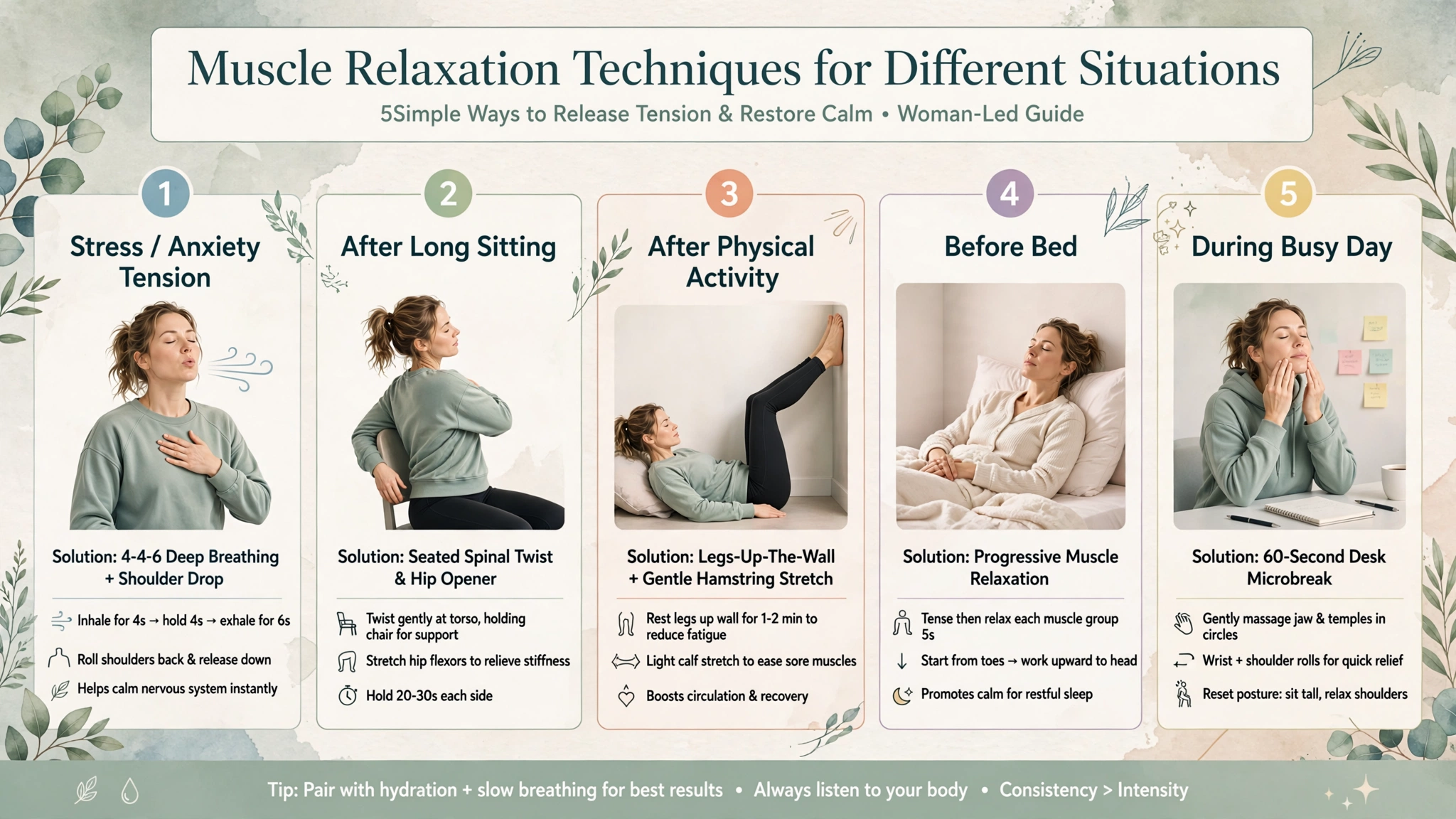
Before Going to Bed
If muscle tension makes it difficult to settle down at night, a short relaxation routine may help you prepare for sleep. Try slow breathing, gently relaxing each muscle group, and keeping your surroundings quiet and comfortable.
During a Busy Day
You do not always need a long relaxation session. When you notice your muscles becoming tense, take a short pause, relax your shoulders and jaw, slow your breathing, and change your position. These small breaks can help prevent tension from building throughout the day.
When Muscle Tension Keeps Returning
If you regularly experience muscle tension despite making changes to your routine, consider paying attention to possible triggers such as stress, prolonged sitting, repetitive activities, or inadequate recovery. Persistent or unexplained muscle tension should be discussed with a healthcare professional.
How Long Does It Take for Muscles to Relax?
The time it takes for muscles to relax can vary depending on the cause of the tension, how long the muscles have been tight, and which relaxation technique you use. Some people may notice a sense of relaxation within a few minutes of slow breathing or progressive muscle relaxation, while tension that has developed over a longer period may take more time and regular practice to improve.
If stress is causing your muscles to tighten, slowing your breathing and consciously releasing tension may help you feel more relaxed during the same session. Gentle movement or stretching may also help when stiffness is related to prolonged sitting or staying in one position.
Regular practice can make it easier to recognize muscle tension and respond to it earlier. Instead of waiting until your muscles feel very tight, try incorporating short relaxation sessions into your daily routine.
Factors That Can Affect Muscle Relaxation
Several factors can influence how quickly your muscles feel relaxed:
Factors That Can Affect Muscle Relaxation
Cause of the Tension: Stress-related tension may respond differently from stiffness caused by prolonged sitting or physical activity.
Duration of the Tension: Muscles that have been tense for a long time may require more consistent relaxation and movement.
Relaxation Technique: Breathing exercises, progressive muscle relaxation, gentle stretching, and movement may work differently for different situations.
Regular Practice: Practicing relaxation techniques consistently can help you become more familiar with recognizing and releasing tension.
Physical Discomfort: Pain, injury, or an underlying condition may make ordinary relaxation techniques less effective.
How can I relax my muscles quickly?
Slow breathing, consciously relaxing tense areas such as the shoulders and jaw, gentle stretching, and progressive muscle relaxation may help you feel more relaxed. The most suitable technique depends on what is causing the muscle tension.
What is the fastest way to relax tense muscles?
There is no single fastest method for everyone. Taking slow, comfortable breaths and consciously releasing tension from areas such as the shoulders, jaw, and hands can be a simple place to start. Gentle movement may also help when stiffness is related to staying in one position.
How long does it take for muscles to relax?
Some people may notice a greater sense of relaxation within a few minutes of practicing breathing or progressive muscle relaxation. However, tension that has developed over a longer period may take more consistent practice to improve.
Does progressive muscle relaxation help with muscle tension?
Progressive muscle relaxation can help you become more aware of the difference between tense and relaxed muscles. It involves gently tensing and then relaxing different muscle groups while paying attention to how they feel.
Can stress cause muscle tension?
Yes. Stress can cause the body to tighten certain muscle groups, particularly around the neck, shoulders, jaw, and back. Relaxation techniques can help you become more aware of this tension and deliberately release it.
Should I relax my muscles if stretching causes pain?
No. Relaxation exercises and stretching should not cause significant pain. If a movement causes pain, cramping, or makes an existing problem worse, stop that movement and consider seeking professional advice.
Conclusion
Muscle relaxation techniques can be a simple way to reduce everyday muscle tension and encourage a greater sense of physical and mental relaxation. Techniques such as progressive muscle relaxation, slow breathing, gentle stretching, regular movement, and consciously releasing tension can be practiced at home and incorporated into a daily routine.
The key is to start slowly and choose techniques that feel comfortable for your body. Regular practice can help you become more aware of where you hold tension and make it easier to relax before tightness becomes more uncomfortable.
If muscle tension is severe, persistent, repeatedly returns without an obvious reason, or occurs with symptoms such as significant pain, weakness, numbness, or swelling, relaxation exercises should not replace professional medical advice.



Thank you for this amazing information ❤️